
NEWS
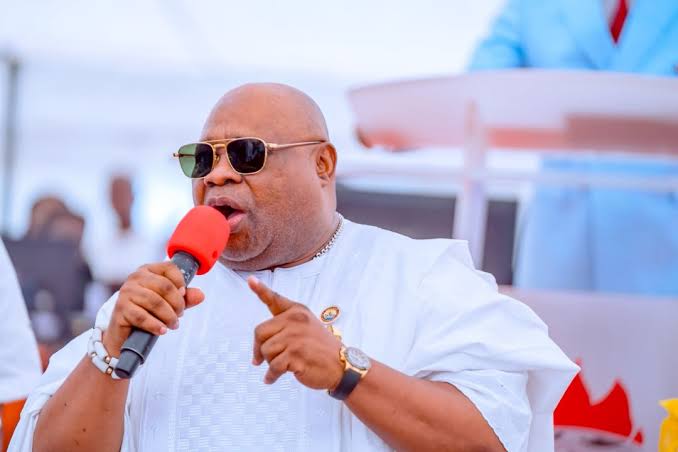
Gunmen Attack Adeleke’s Convoy, Kill One in Osogbo

From Ayinde Akintade, Osogbo
Tension gripped Osogbo, the Osun State capital, on Wednesday after suspected gang members attacked the convoy of Governor Ademola Adeleke shortly after his visit to the palace of the Ataoja of Osogbo, Oba Jimoh Oyetunji, in an incident that left one person dead.
The shooting occurred hours after Adeleke received his Certificate of Return from the Independent National Electoral Commission (INEC), following his victory in the August 15 governorship election.
Adeleke had arrived at the Ataoja’s palace at about 3:15pm in a convoy of about 20 vehicles after leaving the INEC office in Osogbo.
He was received by the traditional ruler, to whom he reportedly presented his Certificate of Return.The meeting ended with prayers, after which the governor and his close aides left the palace hall through an exit reserved for the monarch and his wives.
According to eyewitnesses, gunfire erupted moments later as suspected attackers arrived in an unregistered Sienna space bus through the Ita-Olokan axis and allegedly opened fire around the palace.
Security personnel attached to the governor responded, leading to an exchange of gunfire that lasted between 12 and 15 minutes. The attackers were subsequently forced to retreat from the area.
The police, however, later disclosed that the incident may have been triggered by an attempt to gain access to music star David Adeleke, popularly known as Davido, who accompanied the governor to Osogbo.
Osun State Police Public Relations Officer, Abiodun Ojelabi, said preliminary investigations indicated that members of the Eye Confraternity were allegedly after Davido.
According to Ojelabi, one Adebayo Taoreed, popularly known as “Small Rugged,” an ex-convict and suspected member of the confraternity, allegedly attempted to gain access to Davido but was resisted by members of his security team.
The confrontation, he said, attracted other suspected gang members in the vicinity, who allegedly blocked the palace entrance and obstructed the movement of the governor’s convoy.
The police spokesman said the suspects later left the area but allegedly shot 60-year-old Tajudeen Yusuf at Ita-Olokan.
Yusuf was rushed to the University Teaching Hospital, Osogbo, where he was pronounced dead by doctors.
The development marked a sharp turn in an otherwise celebratory day for Adeleke, who had earlier received his Certificate of Return amid cheers from supporters.
Speaking at the presentation ceremony, the governor promised to work harder to improve the welfare of residents and expressed concern over the loss of lives during political activities.
“No election, political office or ambition is worth the life of a single citizen,” Adeleke said, while recalling victims of electoral violence.
He also announced plans by the Adeleke family, through the Springtime Development Foundation, to provide scholarships up to university level for children and dependants of those killed in electoral violence. The state government, he added, would establish a ₦500 million Election Violence Victims Endowment Fund.
Meanwhile, the shooting around the Ataoja’s palace sent traders, residents and other members of the public fleeing for safety. Witnesses said some shops were hurriedly shut as gunshots rang out.
A trader near the palace, identified as Munirat, said the attackers damaged part of the palace gate during the confrontation and later moved towards the Osogbo Central Mosque before escaping through the Ita-Olokan axis of the Osogbo-Ilesa Road.
Osun State Commissioner for Information and Public Enlightenment, Kolapo Alimi, earlier confirmed the attack on the governor’s convoy, saying the governor’s security personnel successfully repelled the assailants.
The police have commenced a full-scale investigation and intensified efforts to identify and arrest the fleeing suspects.
The Commissioner of Police (Election), Osun State Command, CP Samuel Etaifo, condemned the killing and urged residents to remain calm and avoid taking the law into their own hands.
As of the time of filing this report, security personnel remained deployed around the palace and adjoining streets, while the incident continued to generate tension in the state capital.
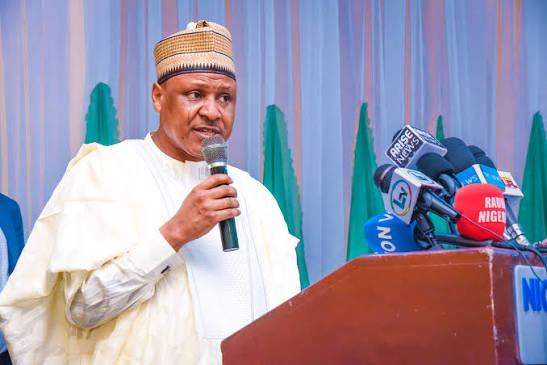
Fiscal Reforms Prevented Deeper Economic Crisis’ – Oyedele
The Federal Government has defended the removal of the petrol subsidy and other economic reforms introduced by President Bola Tinubu, saying the measures have generated substantial fiscal resources, strengthened Nigeria’s economic position and helped avert a deeper financial crisis.
Presenting the administration’s “Nigeria’s Reform Scorecard: The Benefits, Costs and Harms Prevented” in Abuja on Wednesday, the Minister of Information and National Orientation, Mohammed Idris, said the reforms had created fiscal space for investment in infrastructure, security, human capital development and social protection.
The Minister of Finance and Coordinating Minister of the Economy, Taiwo Oyedele, disclosed that between June 2023 and December 2025, the removal of the petrol subsidy generated ₦15.8tn in savings for the Federation. Of this amount, ₦5.4tn accrued to the Federal Government, while ₦10.4tn was shared among states and local governments.
Oyedele said the Federal Government also generated ₦3.1tn in incremental independent revenue and obtained ₦11.9tn in incremental borrowing, bringing its total incremental resources to ₦20.4tn during the period.
However, the additional resources did not remain unused. The Federal Government’s incremental expenditure stood at ₦30.64tn, with wage-related expenses and external debt servicing accounting for a significant portion.
According to Oyedele, ₦9.39tn was spent on wage adjustments, minimum wage increases and allowances for public-sector workers. He stressed that the amount was higher than the entire savings from subsidy removal that accrued directly to the Federal Government.
“The incremental amount that the Federal Government spends paying higher wages is more than the entire savings that the Federal Government earned from subsidy removal,” he said.
Another ₦9.37tn went into servicing external debt, largely because of the sharp depreciation of the naira. Oyedele explained that dollar-denominated obligations became significantly more expensive when converted into naira.
“If we’re paying $1bn, but instead of ₦460, it’s now ₦1,415, that’s more naira than we need to incur,” he explained, adding that debt obligations could not simply be postponed because delays or defaults would carry serious consequences.
The figures provide one of the clearest explanations yet of how the savings from the controversial subsidy removal have been absorbed since President Tinubu announced the policy in May 2023.
Oyedele, however, cautioned against presenting the reforms as an unqualified success. He acknowledged that Nigerians had borne significant costs, including higher petrol prices and a sharp increase in the monetary policy rate.
He noted that petrol prices had risen from about ₦185 per litre to more than ₦1,100, describing the increase as a “major felt cost” that the government could not ignore.
“We are not saying all of it is rosy,” Oyedele said, arguing that a credible assessment must account for both the gains and the pain associated with the reforms.
He maintained that the proper assessment should also consider the consequences Nigeria might have faced if the previous subsidy and foreign-exchange policies had remained in place.
The Finance Minister said the scorecard was intended to give Nigerians, journalists and independent analysts access to the government’s methodology and figures, promising that supporting data would be made available through the Ministry of Finance for verification.
The government also highlighted improvements in several macroeconomic indicators. Oyedele said headline inflation had eased to 15.91 per cent as of June 2026, while gross foreign reserves stood at $52.5bn and real GDP growth had risen to 3.89 per cent.
He further cited Nigeria’s improved standing in international financial markets, including a sovereign credit-rating upgrade by S&P Global and the country’s removal from international anti-money-laundering deficiency lists.
Despite these gains, the government acknowledged that the reform programme remains unfinished, particularly in translating macroeconomic improvements into better household welfare and reductions in poverty.
Minister of Budget and Economic Planning, Abubakar Atiku Bagudu, said the reforms were necessitated by the weak fiscal position inherited by the administration, including Nigeria’s historically low revenue-to-GDP ratio.
According to Bagudu, the government had to confront fiscal leakages and restore confidence in the economy to create room for spending on security, infrastructure, human capital and development across the country.
He said interventions had also been introduced to cushion vulnerable Nigerians from the effects of the reforms, while improved revenues were expected to strengthen the government’s capacity to meet its constitutional and developmental responsibilities.
Idris said the administration remained committed to explaining the consequences of its economic policies and ensuring that improved fiscal stability eventually translates into better living standards, greater economic opportunities and stronger public services.
The government’s latest scorecard therefore presents a mixed picture: the subsidy reform has generated significant resources and improved some key economic indicators, but much of the fiscal gain has been absorbed by higher wages, debt costs and other expenditure pressures, while millions of Nigerians continue to grapple with the immediate cost of economic adjustment.
The Nigeria Customs Service (NCS), Zone ‘A’, has unveiled its inaugural Inter-Command Games to promote fitness, teamwork and camaraderie among officers across its commands.
The Zonal Coordinator, Assistant Comptroller-General of Customs (ACG), Mohammed Babandede, disclosed this at the opening ceremony of the games on Tuesday at the Customs Training College in Lagos.
The competition was declared open by Comptroller Chidi Nwokorie, Chairman, Zone ‘A’ Sports Committee, who represented Babandede.
Babandede said the initiative was founded on the conviction that a healthy workforce would guarantee improved performance and greater productivity in the service.
He thanked the Comptroller-General of Customs, Dr Bashir Adeniyi, for approving the games and urged participating officers to compete fairly while upholding the spirit of sportsmanship.
“Winning must never become more important than the reason we are gathered here,” he told participants at the opening ceremony.
The zonal coordinator reminded the officers that despite representing different commands, they remained part of one service.
“We all wear one greater uniform, the uniform of the Nigeria Customs Service,” he said.
Babandede urged the participants to “compete hard, compete fairly, stay safe and enjoy the games,” ahead of the grand finale scheduled for Sept. 5.
Meanwhile, the Customs Area Controller, Apapa Customs Command, Comptroller Emmanuel Oshoba, said sports remained indispensable to paramilitary organisations and essential to officers’ professional development and wellbeing.
Oshoba said sports instilled discipline, enhanced physical and mental fitness and promoted bonding and social interaction among personnel across commands.
The Comptroller, Post Clearance Audit, Zone ‘A’, Florence Madu, described the games as a landmark initiative that would unite officers and strengthen relationships among commands.
Similarly, the Acting Controller, Port and Terminal Multi-Services Ltd. (PTML), Deputy Comptroller Nura Miko, said the programme aligned with the Comptroller-General’s work-life balance initiative aimed at boosting cohesion and morale among officers.
The Zone ‘A’ Public Relations Officer, Edeminam Akaninyene, said the opening football matches saw Tincan Island Command defeat Western Marine Command 1-0, while Apapa Command edged Lilypond Command by the same scoreline.
Akaninyene said the competition would continue with participation from commands and units across Zone ‘A’, culminating in the grand finale on Sept. 5.
The Minister of Marine and Blue Economy, Dr Adegboyega Oyetola says the United States Coast Guard (USCG) has lifted the 12-year Condition of Entry (CoE) imposed on vessels arriving in the United States from Nigeria.Oyetola made the disclosure in a statement issued by Edward Osagie, Head, Public Relations, Nigeria Maritime Administration and Safety Agency (NIMASA) on Tuesday in Lagos.
He said the decision ended enhanced security requirements imposed on vessels calling at designated Nigerian ports before accessing U.
S. waters since June 25, 2014.According to the minister, the development serves as a major breakthrough for the maritime sector and a recognition of the country’s progress in strengthening maritime security.
He said the CoE had subjected vessels that called at designated Nigerian ports within their previous five port calls to additional security scrutiny before entering U.S. waters.
Oyetola said the lifting of the restriction affirmed Nigeria’s progress in implementing the International Ship and Port Facility Security (ISPS) Code across its ports and maritime facilities.
He attributed the achievement to sustained efforts by the Federal Ministry of Marine and Blue Economy, through NIMASA, in collaboration with relevant agencies, port operators and shipping stakeholders.
According to him, the coordinated efforts focused on addressing security gaps and demonstrating sustained compliance with internationally accepted maritime security standards and protocols.
“Over the past two years, the USCG conducted four assessments of Nigeria’s maritime security framework and port facilities in March 2024, April 2024, March 2025 and April 2026.
“The assessments showed significant progress in Nigeria’s implementation of the ISPS Code and overall maritime security performance, paving the way for the restriction’s removal,” he said.
Oyetola described the development as a significant achievement that reflected sustained regulatory oversight, institutional collaboration and the commitment of NIMASA to maritime security.
“The lifting is a major milestone. It affirms our progress in maritime security and ISPS Code implementation,” he said, pledging to sustain the momentum toward safe and competitive shipping.
He commended NIMASA Director-General, Dr Dayo Mobereola, and his team, saying the feat demonstrated the impact of effective regulation and stakeholder collaboration.
The minister said the benefits of the development extended beyond security to improved port competitiveness, operational efficiency and stronger positioning for Nigeria in the global maritime economy.
He said the lifting of the restriction was expected to facilitate faster vessel turnaround, improve schedule reliability and reduce costs associated with additional documentation, inspections and entry-related delays.
Oyetola added that the development could attract more shipping lines to Nigerian ports, boost trade and investment, create jobs and increase port revenues.
He explained that for more than a decade, the CoE had imposed additional security costs, inspections, delays and insurance burdens on vessels calling at Nigerian ports, raising concerns over the competitiveness of the country’s ports.
The minister said that with the restriction lifted, vessels departing Nigerian ports for the United States would no longer face the additional USCG security requirements



Gunmen Attack Adeleke’s Convoy, Kill One in Osogbo
ShareFrom Ayinde Akintade, Osogbo Tension gripped Osogbo, the Osun State capital, on Wednesday after suspected gang members attacked the convoy...
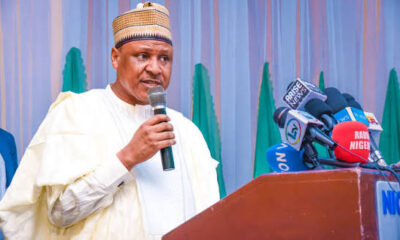

FG Saves N15.8tn from Subsidy Removal, Spends N30.64tn
ShareFiscal Reforms Prevented Deeper Economic Crisis’ – Oyedele The Federal Government has defended the removal of the petrol subsidy and...

ICPC Moves to End Workforce Imbalance
ShareThe Independent Corrupt Practices and Other Related Offences Commission (ICPC) is set to address existing workforce imbalances and ensure the...

NLC Demands Immediate Action on Health Workers’ Pay to Avert Strike
ShareThe Nigeria Labour Congress (NLC) has urged the Federal Government to urgently resolve health workers’ salary concerns to avert another...
Customs Zone A Unveils Inaugural Inter-command Games
ShareThe Nigeria Customs Service (NCS), Zone ‘A’, has unveiled its inaugural Inter-Command Games to promote fitness, teamwork and camaraderie among...
USCG Lifts 12-year Security Restriction on Nigerian Vessels
ShareThe Minister of Marine and Blue Economy, Dr Adegboyega Oyetola says the United States Coast Guard (USCG) has lifted the...
FG Demands Equal Access for Women in Green Economy
ShareThe Federal Government has called for the removal of structural barriers limiting women’s leadership in the green economy, while calling...


Ododo Extols Ex-presidential Aide, Akanmode on 76th Birthday Anniversary
ShareKogi State Governor, Ahmed Ododo has felicitated former Secretary to the State Government, Prince Olusola Akanmode, on his 76th birthday...
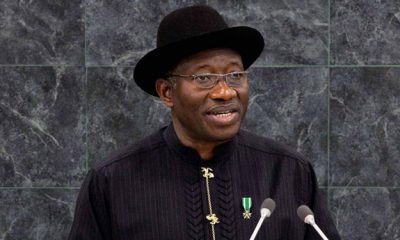

Jonathan Seeks Urgent Intervention in High-profile Interference in Off-cycle Elections
ShareFormer President Goodluck Jonathan has called for an urgent national stakeholders’ engagement to address the emerging trend of serving governors,...

Flood: Wike Orders Demolition of Houses Built on Waterways in Abuja
ShareThe Minister of the Federal Capital Territory (FCT), Nyesom Wike has directed the FCT Department of Development Control to immediately...