
Health
Healthcare Expert Canvasses Suicide Prevention Awareness

A Healthcare Administrator, Nkem DenChukwu on Wednesday, called for suicide prevention and mental health awareness to curb the rising spate of suicides across the country.
DenChukwu, who is also an Author and Filmmaker made the call in an interview in Yenagoa saying suicide was preventable.
She advocated the establishment of more specialized mental health facilities as well as capacity building for existing mental health practitioners alongside the mental health awareness to promote access to mental health facilities.
She noted that rising cases of suicide was worrisome and required concerted efforts to encourage people to seek mental health services as soon as the early warning signals of depression were noticed.
DenChukwu explained that the cultural practices that prevented people from admitting that depression was a medical condition with remedies and not a taboo should be discarded
She said that rising cases of suicide pointed to the poor mental health attitude in the society leading to avoidable deaths if preventive measures were taken by seeking help.
According to her, at every point in time people were either contemplating suicide, attempting suicide or committing’ suicide due to several factors.
“Suicide is an act of cowardice, an escape, a selfish act, a disease, lack of faith in self or in life, Some commit suicide after being raped, losing a loved one, feeling hopeless or weak, delusion.
“We can all help prevent suicide because the warning signs are always there, I mean the signs and warning signals are always very glaring. We have to be 110% attentive to the smallest signs, a little attention can save a life.
“Many that take to suicide do not want to die. They want what’s causing their pain or grief to stop or be relieved. They often, won’t ask for help and want to be left alone.
“Understanding how they are feeling is very important to know. Don’t tell them you understand because you don’t. You are not in their shoes to understand. Every shoe feels differently.
“Taking each day and each moment, one breath at a time matters, and can save a life. Encourage someone with suicide tendency to find a happy place they can always go to, and then, share with others.
“We should always be there to listen and not to judge and encourage them to share their thoughts, no matter how bad they may seem. Remind them that strength and power they possess within to overcome,” she stressed.









By Laide Akinboade, Abuja
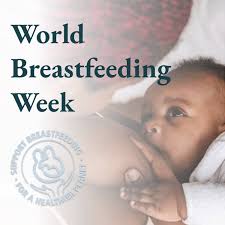
The Ministry of Health and Social Welfare, revealed it has concluded arrangements in joining the rest of the world to observe the World Breastfeeding Week from the 1st to 7th August, 2024.
I’m a statement issued by the Ministry, made available to journalists and signed by Patricia DeworitsheDirector, Press & Public Relations FMOH in Abuja, she said the World Breastfeeding Week is a yearly global campaign instituted to raise awareness on the health and wellbeing outcomes of breastfeeding, on infants, young children mothers, families and society at large.
The statement reads, “The global theme for this year’s World Breastfeeding Week, is ‘Closing the Gap, Breastfeeding Support for All’ The theme emphasizes the collective responsibility of all, to ensure that every mother receives the support she needs to make breastfeeding a successful and fulfilling experience.
“In order to successfully breastfeed their babies, mothers need support from the health system, family members, community members and workplace. This support is critical to the success of breastfeeding because knowledge sharing, encouragement, support with household chores, call-ups and creation of an enabling environment makes the act of breastfeeding easier for the mother. It is essential that no-one is left behind especially vulnerable mothers who may need additional assistance to reduce breastfeeding inequalities. Women in all settings need and deserve support to optimally breastfeed their babies.
“Hence, the Ministry has dedicated 1st to 7th August, 2024 to celebrate the week long event with a series of planned activities. The week will be flagged-off on the 1st August with a record breaking event for most lactating women breastfeeding simultaneously, which will be followed by community outreaches, training of health workers, media campaign, among others.
The Ministry also recommends early initiation of breastfeeding within an hour of birth, exclusive breastfeeding for the first six months of life, continued breastfeeding up to two years of age or beyond, with the introduction of appropriate complementary food as from six months.
“The general public, is being reminded that breastfeeding provides many unmatched proven health benefits for babies and mothers, as well as potential economic benefits for households and communities. Breastfed babies have stronger immunity, reduced risk of infections and many childhood illnesses. Breastmilk is the ideal food for infants, it is readily available, cheap, safe, clean and gives the first form of protection against many common childhood illnesses.
“Breastmilk provides all the energy and nutrients that the child needs for the first six months of life, and it continues to provide up to half or more of a child’s nutritional needs during the second half of the first year, and up to one third during the second year of life.
“It is no doubt that breastfeeding is important both to the mother and the child, a practice that all fathers, family members and society should support without fail.
“The Ministry therefore urges all citizens to support mothers to practice optimal breastfeeding as you join us to celebrate the week and support all mothers to breastfeed as recommended. Your support contributes to our nation’s health, economy and future workforce”.

Dr Uchechukwu Okenwa, the Director, Public Health and Disease Control, Enugu State Ministry of Health, has urged Nigerians to desist from consuming anti malaria drugs when having fever.
Okenwa gave the advice on Saturday during the inauguration of the Advocacy Communication and Social Mobilisation (ACSM) Core-Group for Malaria Elimination Programme (IMPACT) in Enugu.
Those inaugurated were representatives of National Orientation Agency, Academics, Media, Traditional Rulers, Ministries of Environment, Information, Justices, Health and Non Governmental organisations on malaria among others.
Okenwa, while inaugurating the representatives, noted that before now Nigerians used to take anti-malaria drugs like groundnut once they feel feverish without knowing if the fever is caused by pneumonia, stress or other things.
According to him, many Nigerians believe that every fever is malaria, making them to take anti malaria drugs to cure it.
“I want them to understand that not all fever is malaria. When you have fever, you should go for test and if it shows malaria, treat it.
“If it is negative, you look for other thing that is causing it which may not necessarily be malaria and that is what we are advocating for,” he said.
The director regretted even when most results showed negative, some health officers still went ahead to treat malaria.
He explained that testing had been designed in a way that it would not take days to get result, stressing that within 20 minutes, the result could be ready.
“It is about our commitment to make a behavioural changes towards malaria,” he stressed.
On the effort the state was making to eradicate malaria, Okenwa said that Gov. Peter Mbah had paid counterpart fund for malaria programme, adding that the state had trailer loads of malaria drugs in their stores waiting for distribution to Enugu people.
“We have also secured warehouses waiting for arrival of mosquito nets which will be distributed for Enugu residents,” he said.
Presenting what was expected from ACSM members, the Social Behaviour Change, National Malaria Elimination Programme, Abuja, Owoya Samuel, said that the members should ensure promotion of positive behaviour towards prevention and control of malaria at all levels.
She tasked them on advocacy, communication and social mobilisation to eliminate and tackle the issue of malaria in the state.
Speaking on the Malaria Indication Survey (MIS) in Enugu, Owoya said that the result showed that 25 per cent did not have access to mosquito net, 47 per cent had it but not using it, while 16 and 14 per cent said net was not need at night due to absence of mosquitos at night.
“Eight and 10 per cent said net is dirty and old respectfully while 38 per cent said they are not using net because of hot weather. Environment and nature may informed these decisions,” Samuel said.
Earlier, Dr Ifeoma Otiji, the Enugu State Malaria Programme Manager and Coordinator, said that the meeting was first of its kind on malaria in the state.
She reiterated the state’s commitment to improving and increasing malaria advocacy, communication by sensitising citizens of the state especially rural dwellers about the dangers of malaria.
According to her, for years, the state has malaria programmes but now wants to accelerate it.
“We brought everyone together here to start advocacy and communication coverage as well as bridging the gap by getting the communities know what is on ground and what they should do to create demand for malaria services,” Otiji said. (NAN)
The Nigeria Centre for Disease Control (NCDC) has unveiled an Integrated Disease Testing and Surveillance Laboratory for Malaria, Neglected Tropical Diseases (NTDs) and other infectious diseases.
The NCDC’s Director-General, Dr Jide Idris, during the unveiling at the NCDC Central Public Health Laboratory in Yaba, Lagos, said that the laboratory was aimed at strengthening the fight against diseases of public health importance in the country.
Idris said the integrated laboratory would be a game-changer in the fight against infectious diseases of public health importance to the country.
Idris said the establishment of the laboratory was made possible through partnership with the U.
S. Consulate Mission in Nigeria, the CDC Foundation, Public Health Initiative (APIN) and The Taipei Economic and Cultural Representative Office (TECRO) in Nigeria.Idris said: “Nigeria has one of the highest diversity and burden of public health diseases with global significance in sub-Saharan Africa and response to diagnosis-related challenges for infectious diseases.
“We have identified the need to develop capacity for advanced diagnostic services and laboratory-based surveillance capacity for NTDs, malaria, mycotic diseases,and similar diseases of public health importance
“The establishment of this integrated laboratory diagnosis facility will be a game-changer in the fight against infectious diseases by providing accurate,early,and comprehensive diagnosis,informative decision making for enhanced patient care.
“It will ensure proactive disease surveillance, outbreak management,optimise antimicrobial stewardship.
“It will also ensure reduced antimicrobial resistance, inform research and development for new diagnostic tests and treatments, improved patient safety and reduce healthcare costs, enhanced global health security through rapid detection and response”.
The D-G expressed gratitude to the U.S. CDC, CDC Foundation, , APIN and TECRO for their commitment and support to complement the effort of the President Bola Tinubu-led administration to enhance the country’s health sector.
Speaking also, the representative of the U.S. Consul General to Nigeria, Mr Will Stevens, said Nigeria had one of the highest burden of global malaria cases and deaths, noting that the establishment of the integrated laboratory was critical.
Stevens said there was need to provide Africa Solutions to Africa problem, noting that the country’s response and resilience in curbing the spread of Ebola and COVID-19 outbreak was impressive
“Nigeria is a regional leader and as leader, we need more African solutions to these African problems and African solutions to global problems.
“This laboratory will bring world-class healthcare, world-class research, world-class monitoring and detection systems to the people of Nigeria and allow Nigerians to continue to be a global leader,” he said.
Also, the Chief of Mission to the Taiwanese Government in Nigeria, Andy Liu, said it was a honour for Taiwan government to collaborate with the U.S and the CDC Foundation to support and strengthen Nigeria health system through the establishment of the laboratory and donation of world class equipment.
“This is significant and it is important for the international body to help build a world class laboratory with advanced equipment for Nigerians.
“We are looking forward to more collaboration to build more capacity in the health sector and strengthen our relationship with the country,” he said.
Prof. Akin Abayomi, the Lagos State Commissioner for Health, in his remarks described the establishment of the integrated laboratory as a move in the right direction.
Abayomi emphasised on the importance of collaboration in strengthening and building capacity to address health challenges affecting the country.
Speaking also, the Senior Programme Officer of CDC Foundation, Cassandra Webster, said the partnership with the NCDC, CDC Nigeria, and other collaborators would help strengthen the public health infrastructure in Sub-Saharan Africa.
According to Webster, the gesture will boost Nigeria’s ability to prevent, detect and respond to infectious disease threats in the country.
“I’m glad to be here for the launch of such an important partnership, the CDC Foundation is an independent, U.S.-based nonprofit body created by the U.S. Congress to help advance and extend the life-saving work of CDC and the public health through public-private partnership.
“This continued progress against malaria and neglected tropical diseases is critical to saving lives, and our efforts to strengthen this laboratory, using advanced technology.
“I thank TECRO for their critical and generous support for this important effort, and I also want to thank the CDC Nigeria and NCDC teams for their partnership,” she said.
Report says that advanced medical equipment were donated to the NCDC for the establishment of integrated laboratory (NAN)

Tinubu Approves Management Unit for Health Sector Renewal Investment Initiative
SharePresident Bola Tinubu has approved the establishment of the Sector-wide Coordinating Office-Programme Management Unit (SCO-PMU) domiciled in the Office of...


FG Denies Slash in Students’ Allowances
Share The Federal Government says it has no plan to slash scholarship students’ allowances as recently projected in the media.The...


Planned Protests: CAN calls for calm and patience
ShareBy Laide Akinboade, Abuja The Christian Association of Nigeria, CAN, on Friday, has urged Nigerians to calm and patient with...


Senate Consultant Scores Benue LG Bureau High on Projects Execution
ShareThe Consultant for Senate Standing Committee on States and Local Government Administration, Engineer Kayode Adegbayo has described the quality of...


Doctor Mark Ogbodo: A Man Destined for Success
ShareBy Paul Ugah Henry Miller once said, “Every man has his own destiny, the only imperative is to follow it,...


Ignore Anti -government Protests, Wike Begs Abuja Residents
ShareBy Laide Akinboade, Abuja Minister of the Federal Capital Territory, Barr. Ezenwo Nyesom Wike has called on residents of the...
Reps Commit to Ensure Legislations for Better Skills Acquisition, Management
ShareBy Ubong Ukpong, Abuja The House of Representatives on Thursday pledged its continuous commitment to ensure legislations that would align...


Economic Sabotage: Senate Summons Petroleum Minister, NNPCl, CBN, NPA, Others for Interrogation
ShareBy Eze Okechukwu, Abuja The Senate is blowing hot over alleged economic sabotage by stakeholders within the petroleum sector, thus...
Dialogue with Organisers of August 1 Protest, AANI Urges FG
ShareBy Johnson Eyiangho, Abuja The Alumni Association of the National Institute (AANI) has advised the Federal Government to dialogue with...


Stigmatization: CSO Urges Kogi Gov to Assent Bill Protecting HIV Patients
ShareFrom Joseph Amedu, Lokoja Civil Society Organisation, Initiative for Grassroot Advancement in Nigeria (INGRA), has called on the Kogi State...