
NEWS
Housing Minister Reaffirms Commitment to Slums Upgrade, Modernising Urban Landscape in Nigeria

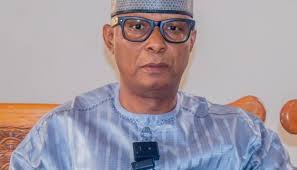
By Raphael Atuu, Abuja
Minister of Housing and Urban Development, Muttaqha Rabe Darma, has reaffirmed the commitment of the federal government to transforming Nigeria’s informal settlements into dignified, liveable communities, describing it as a priority of the present administration.
Darma made this commitment during a courtesy visit to his office by the Nigeria Institute of Town Planners (NITP), led by its National President, Dr.
Ogbonna Chime.The Minister identified specific areas in Nigeria, such as Makoko in Lagos state, Gishiri in Abuja, some settlements in Kano and Port Harcourt that requires upgrading from slum conditions, pledging that the ministry’s forthcoming urban development policy would prioritise upgrading these areas to make them habitable for the people living there.
Acknowledging that a regional and urban development law enacted in 1992 has yet to be implemented, Minister Darma committed to thoroughly reviewing the law, noting that collaboration with the RegionalDevelopment Ministry would be essential in determining how to achieve full implementation, He also invited the NITP to provide further guidance on the matter.
On encouraging the use of indigenous experts, the Minister reaffirmed the administration’s unwavering commitment to utilising indigenous consultants exclusively, describing this as a deliberate strategy to drive employment, transfer skills, and grow local capacity in the built environment sector.
“The Ministry already trained individually about 2000 of them to get skills in the built environment, and these young people are all over Nigeria applying what they learnt”, he informed.
Addressing the challenge of replacing retired staff earlier mentioned by the guests from NITP, Darma called on professionals and public servants to embrace innovation and Artificial Intelligence (AI), noting that technology would increasingly shape the future of work.
He stressed that AI would not replace people who understand and effectively use technology, encouraging continuous learning and upskilling among professionals.
Responding to the funding request the Minister told the NITP and professional bodies to think outside the box and find ways and means that will keep them on stream as they are considered professionals.
Accordingly, Darma invited the Institute to submit further recommendations and professional input for consideration in the Ministry’s forthcoming strategic development plan.
On the invitation to the upcoming NITP 60th anniversary in October, the Minister offered to attend the event personally, hoping that the already scheduled political activities do not conflict with it.
The National President of the NITP, Dr. Ogbonna Chime, told the minister that their visit was to formally welcome him to the Ministry and reaffirm the Institute’s readiness to work and support the Ministry in achieving its mandate.
He appealed to the Minister to sustain efforts towards the full implementation of the 1992 Urban and Regional Planning Law, describing it as critical to effective physical planning and urban development in the country.
Dr. Ogbonna also called for increased attention to urban development initiatives, engagement of indigenous town planning consultants for government projects, replacement of retired town planners and other built environment professionals in the Ministry, as well as improved funding for regulatory bodies in the sector to strengthen professional standards and reduce unemployment.
He further invited the Minister to the 60th anniversary celebration and 57th International Conference of the Nigerian Institute of Town Planners scheduled to hold in Lagos State, in October this year.
Kano Censorship Board Suspends Two Kannywood Actors over Indecent Video
From Aliyu Askira, Kano
The Kano State Censorship Board has slammed a one-year suspension on two Kannywood actors, Amina Uba Hassan and Adam Garba, over a viral video which violates the state’s moral and cultural standards.
A statement issued by Abdullahi Sulaiman for the Executive Secretary of the board, Abba El-Mustapha, said the controversial video triggered widespread criticism from residents who described the content as indecent and unacceptable.
According to the statement, the actors were suspended following their appearance in a video that sparked controversy among residents of Kano State over allegations of indecent content.
The board said the disciplinary action was aimed at protecting societal values and enforcing regulations guiding the Kannywood industry.
“The two actors were suspended after appearing in a video that generated controversy among residents of Kano State over alleged indecent content,” the statement said.
“The suspension bars the actors from participating in any film-related activities in Kano State for one year,” it added.
According to the statement, the censorship agency has legal powers to punish actors and filmmakers found breaching its rules, warning that anyone who ignores the suspension order risks facing stiffer sanctions.
“The law establishing the board empowers it to suspend any Kannywood practitioner found violating its regulations, while defiance of the directive could attract stricter sanctions,” the statement noted.
The board also directed producers and directors in the Hausa film industry to stop engaging the suspended actors in any production during the ban period.
Executive Secretary Abba El-Mustapha warned Kannywood practitioners against acts capable of tarnishing the image of the industry, insisting that filmmakers must operate within the cultural and moral expectations of Kano State.
Amina Uba Hassan was a former wife of popular Kannywood producer Adam Zango, They Have one son named Haidar.
By Raphael Atuu, Abuja
The Federal Ministry of Livestock Development has reaffirmed its commitment to transforming Nigeria’s livestock sector following an engagement with members of the Miyetti Allah Fulako Yeso Yeso Development Association (MAFYDA), who pledged their support for President Bola Ahmed Tinubu’s livestock transformation agenda and the proposed national ranching policy.
Speaking on behalf of President Bola Ahmed Tinubu at the end of the interactive engagement held recently in Abuja, the Minister of Livestock Development, Idi Mukhtar Maiha, noted that the delegation’s visit demonstrated growing confidence in the Federal Government’s livestock transformation agenda and the national ranching policy being championed by the administration.
“They have shown their willingness and commitment to align with Mr. President’s vision in changing and transforming the livestock sector from its present subsistence animal husbandry system to a modern ranching system,” Mukhtar said.
He added that the Federal Government remains focused on rehabilitating grazing reserves, promoting pasture cultivation, strengthening animal health management systems, and supporting pastoralists with modern livestock production techniques capable of enhancing productivity and reducing conflicts associated with open grazing.
The Minister disclosed that the Ministry would commence a pilot artificial insemination programme targeting between 1,000 and 3,000 animals nationwide as part of efforts to improve local breeds and establish a sustainable framework for livestock genetic improvement.
“We are actually going to start this year with the insemination of about 1,000 to 3,000 animals across the country. This is just the first pilot to test run the adaptability and the proof of concept of this animal upgrade.
“We are going to procure seeds this year and distribute them to the pastoralists to start planting pasture so that by next year’s dry season, very few animals will now be seen roaming the countryside in search of fodder,” he added.
In her remarks, the Permanent Secretary of the Ministry, Dr. Chinyere Ijeoma Akujobi, stated that the interactive session would provide pastoralists with the opportunity to directly engage with the Government on issues affecting their livelihoods.
She commended the Association for their commitment to peacebuilding, which she described as one of the key priorities of the Ministry.
The Chief Veterinary Officer of Nigeria, Samuel Anzaku, disclosed that the Ministry had resumed annual livestock vaccination exercises against diseases such as CBPP, PPR, anthrax, hand Foot-and-Mouth Disease, and assured the pastoralists of government’s commitment to improving animal healthcare and taking veterinary services directly to livestock owners across the country.
“We’re going to do this as a yearly exercise so that our pastoralists who are right in the bush will feel the impact because we believe the animals are not in the town, they are in the bush,” he added
In his remarks, the President of the association, Alhaji Abubakar Suleiman, commended President Tinubu for establishing the Federal Ministry of Livestock Development, describing it as a historic milestone for pastoral communities across Nigeria.
He informed the Minister that the association was seeking strategic collaboration with the Ministry on the implementation of national pastoral transformation programmes focused on livestock modernisation, ranch development, sustainable grazing systems, livestock value chain expansion, climate-resilient pastoral practices, and youth employment within the livestock ecosystem.
From Sylvia Udegbunam, Enugu
The Our Water Our Right Africa Coalition (OWORAC) has raised concerns about Africa’s growing push towards water privatisation and the seeming exclusion of affected communities and groups in the implementation of the Africa Water Vision (AWV) 2063, warning that such an approach could undermine public accountability and, ultimately, access to safe water across the continent.
The coalition’s concerns followed a recent regional consultation in Abuja hosted by the African Ministers’ Council on Water (AMCOW) as part of ongoing continental consultations on the First Implementation Plan (2026–2033) of the Africa Water Vision 2063 and Policy.
The meeting, which brought together representatives of the African Union (AU), the Economic Community of West African States (ECOWAS), development partners, and regional institutions, comes at a significant political moment following the African Union’s adoption of 2026 as the Year of “Ensuring Sustainable Water Availability and Safe Sanitation Systems to Achieve the Goals of Agenda 2063.”
In a statement, OWORAC warned that the growing emphasis on private sector participation, blended financing models, and public-private partnerships in the water sector opens the door to increased privatisation of water services across Africa.
“Across Africa, such models have often resulted in rising water tariffs, weak public accountability, deteriorating labour conditions, and unequal access to water services,” the coalition stated. “When essential public services are transferred to corporate actors, the human right to water risks being subordinated to profit-driven interests.”
OWORAC also noted that water workers across the continent are increasingly becoming marginalised, victimised, or pushed into precarious working conditions under privatised systems, warning that any serious African water vision must recognise not only communities but also workers as central stakeholders in public water governance.
The coalition acknowledged the importance of investing in water infrastructure but warned against treating water primarily as an economic commodity.
“Water is first and foremost a public good and a human right,” the coalition stated. “Policies that prioritise investor confidence over universal access and public accountability, risk deepening inequality and worsening water insecurity for poor and vulnerable communities.”
The coalition also expressed worry over the exclusion of communities directly affected by water shortages and sanitation challenges, civil society organisations, and water workers’ unions from the Abuja consultation.
OWORAC noted that although the AWV 2063 commits to the inclusion of civil society in the co-design and implementation of the policy framework, the Abuja consultation appears to be dominated largely by government officials and regional institutions.
“The people most affected by water shortages and sanitation failures must not be sidelined from decisions about Africa’s water future,” the coalition said. “Community participation must be real, structured, and guaranteed.”
OWORAC further observed that the consultation offered little clarity on how the ambitious goals of AWV 2063 would be financed and implemented or what safeguards would exist to prevent rampant private sector control over public water systems.
The coalition said the concerns are particularly relevant given Senegal’s leadership role in continental water governance. Senegal currently chairs AMCOW and plays a central role in shaping Africa’s water policy direction.
OWORAC pointed to ongoing criticism surrounding urban water management in Senegal where water distribution is managed by Sen’Eau, a company largely controlled by the French multinational Suez, as an important case study for the rest of the continent.
Since the arrangement began in 2020, communities have raised concerns over rising water costs, poor service delivery, transparency issues, and the weakening of public oversight. This is coupled with allegations of aggressive intimidation and retaliation against unionised workers exercising their right to advocate for more humane working conditions, spurring international condemnation.
The coalition also referenced Nigeria’s own water challenges, noting that millions of Nigerians still lack reliable access to safe drinking water even with the country’s prominent role in regional policy discussions.
“Across Nigeria, many communities depend on private water vendors, boreholes, and other informal sources because public water systems have suffered years of neglect and underinvestment stemming from a dogmatic pursuit of the false solution of privatisation,” the statement noted. “Despite various privatisation and commercialisation drives within the sector over the years, water delivery has not significantly improved for ordinary people, while valuable public resources are diverted into creating an “enabling environment” for corporations. Instead, access challenges, inequality, and the financial burden on households have continued to deepen.”
OWORAC therefore called on African governments, regional institutions, and development partners to ensure that the implementation of the Africa Water Vision 2063 is guided by transparency, inclusiveness, public accountability, and a commitment to public control of water.
The coalition urged governments across the continent to strengthen public water systems, reject policies that encourage privatisation, and guarantee meaningful participation of communities, workers, civil society organisations in water governance decisions.
“Water is a public good,” OWORAC stated. “Its future must be determined by the people who depend on it for life and dignity, not by profit.”
OWORAC is a network of grassroots organisations, community movements, activists, trade unions, and civil society groups from nearly a dozen African countries united by the belief that access to clean, affordable water is a fundamental right, not a commodity for profit.



Housing Minister Reaffirms Commitment to Slums Upgrade, Modernising Urban Landscape in Nigeria
ShareBy Raphael Atuu, Abuja Minister of Housing and Urban Development, Muttaqha Rabe Darma, has reaffirmed the commitment of the federal...
ShareKano Censorship Board Suspends Two Kannywood Actors over Indecent Video From Aliyu Askira, Kano The Kano State Censorship Board has...
Pastoralists Commit to Tinubu’s Livestock Vision, Back National Ranching Policy
ShareBy Raphael Atuu, Abuja The Federal Ministry of Livestock Development has reaffirmed its commitment to transforming Nigeria’s livestock sector following...
Vision 2063: OWORAC Cautions on Water Privatisation
ShareFrom Sylvia Udegbunam, Enugu The Our Water Our Right Africa Coalition (OWORAC) has raised concerns about Africa’s growing push towards...
LGC Boss Rewards Outstanding Students, Teachers at MAIFATA Prize Award Day in Kano
ShareFrom Rabiu Sanusi, Kano The Chairman of Bichi Local Government Council, Hon. Hamza Sule Maifata, has reaffirmed his administration’s commitment...


AFAN Seeks Early Distribution of Farm Inputs to Boost Food Production in Benue
ShareFrom Attah Ede, Makurdi All Farmers Association of Nigeria (AFAN), Benue State chapter, has called on Federal and State governments...


Dangote Industrialising Africa, Says NCCIMA DG
ShareThe Director General of the Niger Chamber of Commerce, Industry, Mines and Agriculture (NCCIMA), Adamu Salihu, has described the Dangote...
Kaduna Senatorial Aspirants Sign Peace Pact Ahead APC Primaries
ShareFrom Agbo Emmanuel, Kaduna Ahead of the forthcoming party primaries, senatorial aspirants across the three senatorial zones of Kaduna State...
2027: Adekoya Drops Senatorial Ambition, Picks House of Reps Nomination Form
ShareBy Mike Odiakose, Abuja The former Deputy Minority Whip of the House of Representatives, Hon. Abdel-Majid Adesegun Adekoya, has formally...
NDC Chairman Pushes For Credible Candidates in 2027 General Elections
ShareFrom Ene Asuquo, Calabar As 2027 general elections in the Country gathers momentum, the Cross River State Chairman of Nigeria...