
NEWS
How Newborn Baby Abandoned At Birth Rescued in Benue Forest

From Attah Ede, Makurdi
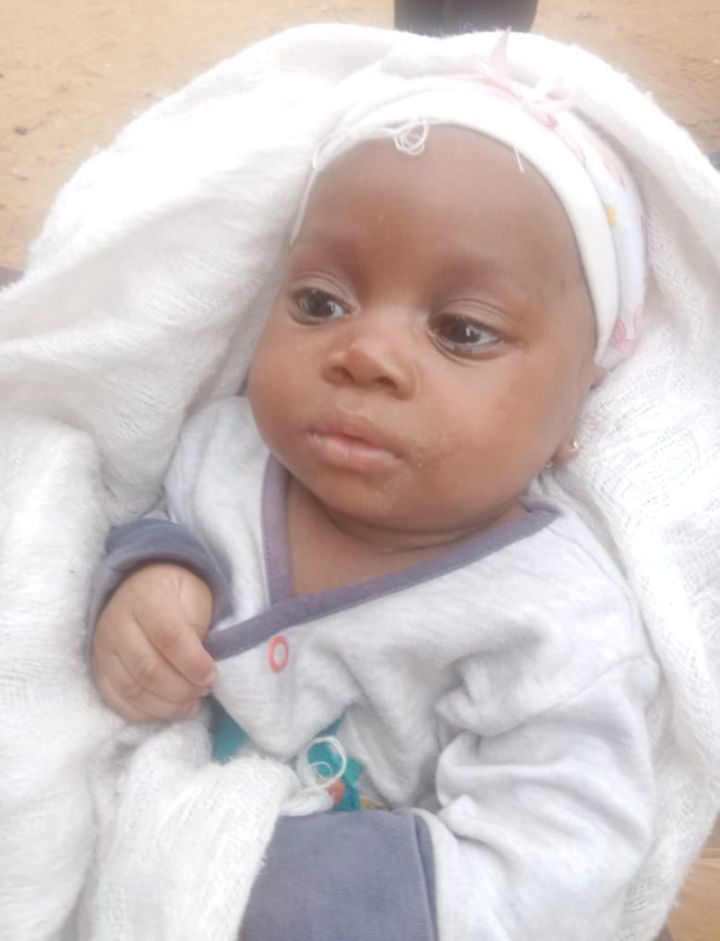
An abandoned newborn baby girl has been rescued alive near Ashar forest at Wuese community in Konshisha Local Government Area of Benue State by some good Samaritans.
The baby, who was seen wrapped up in clothes and packed up in a carton by her unknown mother, was picked up on Saturday August 29, 2026 by one Mbakasev Yisa with maggots allegedly found around the baby and a foul smell emanating from the carton.
An eye witness who identified himself as Terkumbur Gabriel Mbaukaan, told journalists on phone in Makurdi on Sunday, that the baby was in an extremely critical condition when she was rescued and immediately evacuated to Dooshima Clinic in Wuese for medical attention.
He narrated that the passerby Mbakasev Yisa, first discovered the abandoned newborn in the forest and immediately reported the situation to the police outpost in the area.
“As a councillor representing the area, I visited the scene to personally assess the situation and ascertain the condition of the abandoned child.
“So, when the policemen came to the scene, they carried out necessary documentation of the discovery and equally directed that Yisa take the baby to a medical facility for urgent medical attention. And because the baby’s condition was so critical, the first clinic we approached could not admit the child.
“We later took the baby to Dooshima Clinic in Wuese, Konshisha LGA, where is being treated and fed with glucose and NAN infant formula as medical personnel work to stabilise the infant”, he said.
He said tests have been conducted to ensure the baby is healthy. However, she remains under observation at the hospital’s intensive care unit after being exposed to harsh external conditions immediately after birth.
“I have made a financial donation towards the child’s upkeep and appeal to the medical personnel to ensure that the infant receives continuous and effective treatment.
“I am using this opportunity to appeal to individuals, humanitarian organisations, community leaders, government agencies and other people of goodwill to support the baby’s treatment and welfare.
“We are managing the situation at our own level as a community. We have told those police officers attached to the police outpost here in our community not to take the matter to the divisional office in Tse- Agbaragba yet because we are following up the matter. We will do our best to ensure that the newborn baby gets well. Am also making concerted efforts to get across to the local government council chairman. He is yet to be informed”, he said.
Similarly, the youth leader of the Wuese community, Udigi Waya, equally confirmed the rescue of the newborn baby.
Waya lamented over the situation, saying that the baby may have spent approximately three days in the abandoned condition before she was rescued.
He maintained that the baby cried out whenever the carton was opened which was the only indication and apparent sign that the infant was still alive.
When contacted, the Benue State command Police Public Relations Officer (PPRO), Peter Orchia Aondongu, said he was yet to get such a report.
“I have called the DPO of the Konshisha local government area and he told me that he is not aware of such a situation yet. So, I will still call him and get back to the press thanks”, he said.
The identity of the mother, the circumstances surrounding the delivery and what led her to abandon the newborn are the questions that still beg for answers.
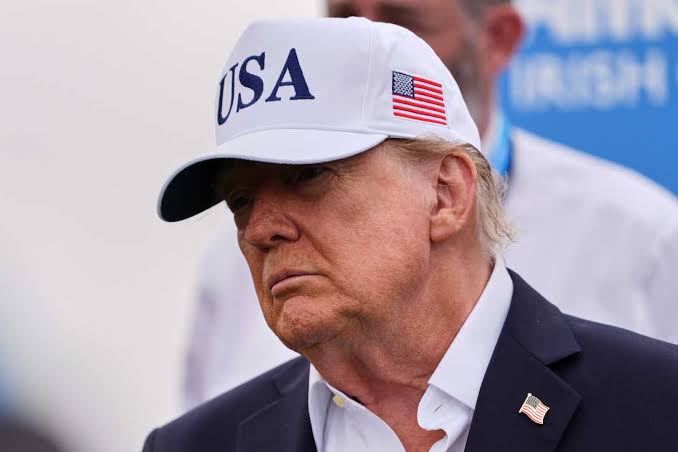
President Donald Trump has infused his ongoing feud with the White House press with a new level of acrimony.
Journalists from three major media outlets – CNN, Politico and MS Now – were denied access and had their press credentials confiscated on Saturday morning as they attempted to enter the White House grounds for work.
As media watchdog organisations and the White House Correspondents Association cry foul, Trump appears set to press ahead with a sweeping effort to punish these outlets.
In his Truth Social post announcing his decision on Friday, he said he was “banning” the organisations because “of their constant ‘reporting’ of fake news”.
In remarks later that day, he complained that “something is wrong with a country that can allow people to write purposely negative stories”.“If they want to write them, that’s fine,” he continued. “I don’t have to let them into the people’s house”, he said, referring to the White House.
The president’s frustration at the media, however, came after a week of setbacks in which major institutions handed him a series of losses across his agenda.
First, the Supreme Court blocked his plan to restrict mail-in voting ahead of the midterms. This prompted Trump to lash out at the court’s justices including those he had appointed. “These are not the people I interviewed to serve on the United States Supreme Court,” he said.
The Federal Reserve, the US central bank, then raised interest rates after Trump had spent months arguing they should be cut. This was followed by a judge ordering his administration to give 30 days’ notice before making any changes to the Kennedy Center arts venue in Washington DC after the president warned it could be “ripped down”.
These headlines, combined with approval ratings that recently sunk to record lows for his second term, suggest Trump is facing challenging political headwinds.
His latest attack on the press, however, raises clear legal questions.
The First Amendment to the US Constitution forbids Congress from “abridging” the freedom of the press. It is language that courts have long interpreted as preventing the government from discriminating against the media based on the content of their coverage.
All three targeted news outlets have promised to file lawsuits challenging Trump’s decision.
Although the breadth of this move is unprecedented, it is far from the first time the Trump administration has attempted to limit or deny access to the White House to members of mainstream media outlets.
In his first term, the administration revoked CNN correspondent Jim Acosta’s press credentials, setting off a legal battle that was ultimately resolved in the journalist’s favour. It also temporarily suspended the pass of a reporter who had a heated argument with White House adviser Sebastian Gorka – a move that also was subsequently blocked by the courts.
Last year, the White House banned reporters for the Associated Press from participating in the president’s press pool – which allows media outlets access to smaller in-town and travelling presidential appearances – because the newswire service would not follow Trump’s move to rename the Gulf of Mexico as the Gulf of America.
That dispute also led to a protracted – and yet to be fully resolved – legal battle, prompting the White House to change press pool rules to drop the guaranteed spot for all wire services.
The White House bans, however, represent a dramatic escalation.
The restrictions include access to the entirety of the White House grounds, not just the press pool. And they target entire news organisations, not just a single disfavoured correspondent.
While Trump has been clear about the motives behind his decision, he has shed little light on why he has acted now. He has regularly criticised his press coverage since he first entered national politics more than a decade ago, but he said on Friday there was no specific incident that prompted his announcement.
At the moment, however, the president is embattled.
Even beyond the week of clear setbacks, he is in the midst of an unpopular and difficult-to-resolve war of choice in Iran, which has led to a surge in energy and other consumer prices, deflating his standing with the American public.
Polls also suggest his party faces an uphill battle to retain control of the House of Representatives and perhaps the Senate in November’s crucial midterm congressional elections.
His attempts to improve the public’s mood by touting his accomplishments in campaign events and at his Republican Party’s convention earlier this month in Texas have, at least so far, proven ineffective.
There may be more behind Trump’s decision to lash out at the media this weekend. But it could also simply be an indication of presidential frustration in the face of events and circumstances, some of his own making, that are turning against him.
By David Torough, Abuja
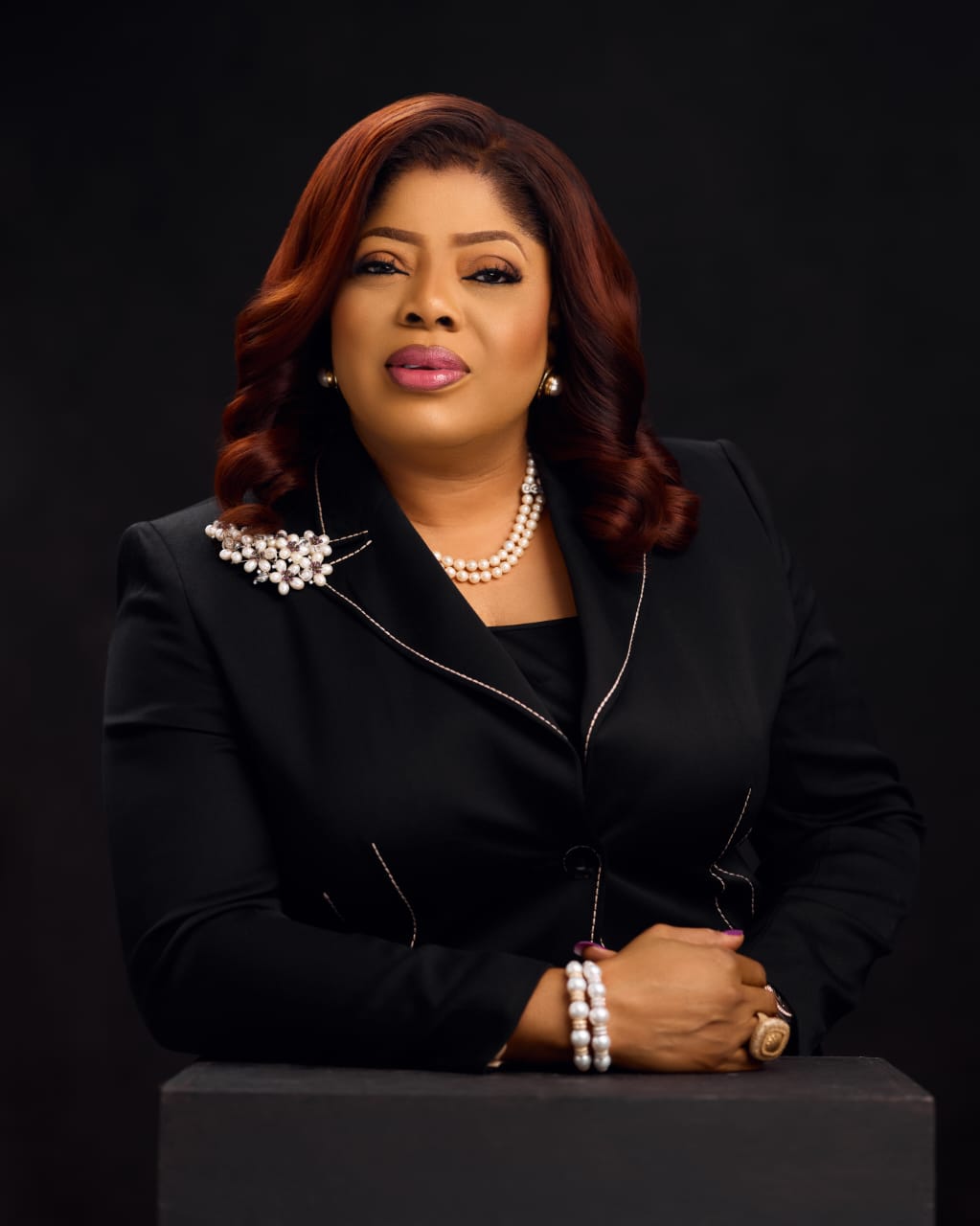
Fidelity Bank Plc has reaffirmed its commitment to strengthening its partnership with DAILY ASSET Newspaper following a visit by a delegation from the bank to the newspaper’s corporate office in Abuja.
The delegation, which arrived from Lagos, was led by the Head of Media and Internal Communication, Fidelity Bank Plc, Adebowale Banzi.
The visit was aimed at appreciating DAILY ASSET for its support over the years, while exploring ways to further deepen collaboration and strengthen the relationship between the financial institution and the newspaper.
The Editor, David Torough, who received the delegation on behalf of the management of DAILY ASSET, expressed the newspaper’s appreciation for the visit and reaffirmed its commitment to maintaining a strong professional relationship with the bank.
Torough assured Fidelity Bank of the newspaper’s continued support through accurate, objective and responsible journalism, noting that DAILY ASSET would continue to provide a credible platform for showcasing the bank’s activities, initiatives and contributions to Nigeria’s economic development.
He said the newspaper remained committed to reporting issues in a balanced and professional manner while highlighting developments and initiatives capable of contributing to national growth.
The meeting provided an opportunity for both organisations to exchange ideas on areas of mutual interest and explore avenues for further collaboration.
By David Torough, Abuja
The Management of Asset Newspapers Limited, Publishers of DAILY ASSET, has announced the passage of the newspaper’s Deputy Editor-in-Chief, John Danusa Ocholi.
Ocholi, a veteran Sports Journalist died yesterday afternoon after a protracted illness.
He was 65.His death comes four days after the Newspaper lost its Politics Editor, Mike Odiakose after a brief illness. Odiakose is yet to be buried.
Publisher/Editor-in-Chief of the Newspaper, Dr Cletus Akwaya in a statement last night said the family confirmed the demise of the foremost journalist.
“It is with a heavy heart that we announce the demise of our colleague, our pioneer Editor and Deputy Editor-in-Chief, John Danusa Ocholi”, Akwaya wrote in the statement adding “ we shall miss him dearly”.
The Publisher said “Ocholi was a very dedicated person to the cause of the paper. He was the pioneer Editor, who did quite a lot to take the paper off the ground from inception and remained steadfast through difficult times in the bid to nurture the paper to maturity” Akwaya said.
“We are grateful to God for the gift of Ocholi, who was a team player, motivator and mentor, always full of smiles to reduce tensions in times of difficulties” the Publisher further stated.
He said the Management would await further information from the family on the unfortunate incident.
An indigene of Dekina LGA of Kogi state, Ocholi joined Daily Asset at inception as pioneer Editor in 2017. He was promoted to Managing Editor and then Deputy Editor- in- Chief, the position he held until 2023 when he had health challenges, which made him proceed on sick leave.
He joined DAILY ASSET from Daily Pilot where he worked as Editor of the Weekend Pilot and Deputy Editor of the Daily Pilot. He joined the Nigerian Pilot from Verbatim Magazine, where he served as Editor.
A graduate of Mass Communication, University of Lagos, 1983,
Ocholi began his journalism career with The Voice Newspaper in Makurdi, Benue State as Sports Reporter. He rose to the position of Sports Editor before he voluntarily resigned and joined Champion Newspapers in Lagos as a Sports Journalist. He rose through various positions and eventually became Editor of the highly respected Sporting Champion, Nigeria’s most respected weekly Sports Newspaper in the 1990s in the stable of Champion Newspapers Group.
In 2002, when the acclaimed South African soccer magazine Kick-Off launched its Nigerian edition, Ocholi was appointed to assist the head editor, Kunle Solaja.He later became the Magazine’s Editor before it stopped production.
He also worked at the Newswatch Magazine as Associate Editor and Head of Sports Desk, where he wrote very impactful stories on Nigerian sports and anchored highly celebrated interviews for the famous magazine.
In the course of his career, he covered major international sporting events including Many editions of the Senior and junior Football World Cups, African Cup of Nations (AFCON), international Club engagements, Commonwealth Games amongst others. He was clearly one of the nation’s most renowned Sports journalists.
In 2010, he was selected as a key member of the official Media Sub-Committee appointed by the Nigeria Football Federation (NFF) to oversee Nigeria’s media contingent and operations during the 2010 FIFA World Cup in South Africa.
A community development enthusiast, he was elected as the pioneer president of the Igala Journalists Forum
He left behind his wife and children.


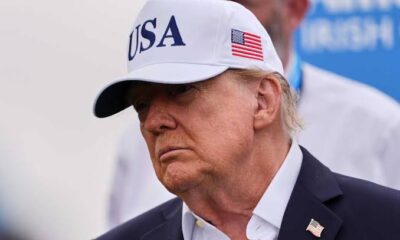

Trump Escalates Media Fight after Week of Setbacks
SharePresident Donald Trump has infused his ongoing feud with the White House press with a new level of acrimony. Journalists...
Nigeria; a Gen Z Will Soon Be President
ShareBy Prince Charles Dickson Two of my dogs fought with a bitterness I had never seen. The older one carried...
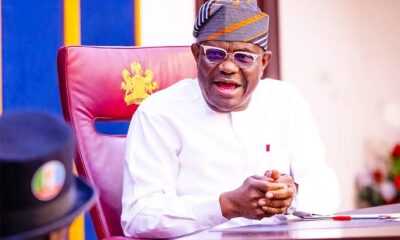

Wike, Performance and the Politics of Cross-Party Influence
ShareBy Raphael Atuu, Abuja Since assuming office as Minister of the Federal Capital Territory in August 2023, former Rivers State...
Niger 37 Tragedy: NSCDC Boss Must Go
ShareThe death of 37 detainees in the Nigeria Security and Civil Defence Corps (NSCDC) detention facility in Minna, Niger State,...
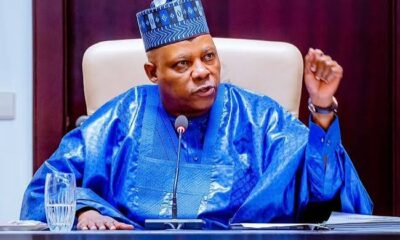

Shettima to Declare Editors’ Conference Open in Enugu Thursday
ShareVice President Kashim Shettima will on Thursday, September 24, 2026, declare open the 22nd All Nigeria Editors Conference (ANEC) of...


Police Raid FCT Crime Hotspots, Arrest 300 Suspects
ShareOperatives of the Federal Capital Territory Police Command have arrested approximately 300 persons, following a raid on identified crime flashpoints,...
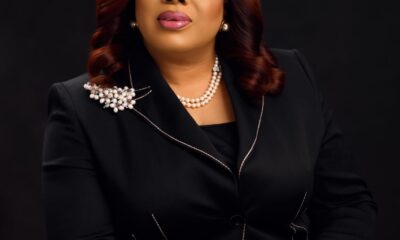

Fidelity Bank Deepens Partnership with DAILY ASSET
ShareBy David Torough, Abuja Fidelity Bank Plc has reaffirmed its commitment to strengthening its partnership with DAILY ASSET Newspaper following...

DAILY ASSET Loses Deputy Editor-in-Chief, Danusa Ocholi
ShareBy David Torough, Abuja The Management of Asset Newspapers Limited, Publishers of DAILY ASSET, has announced the passage of the...


Fidelity Bank Deepens Partnership with DAILY ASSET
ShareBy David Torough, Abuja Fidelity Bank Plc has reaffirmed its commitment to strengthening its partnership with DAILY ASSET Newspaper following...


Niger 37: Bago Vows Full Probe as NSCDC Detains 24 Personnel
ShareFrom Dan Amasingha, Minna Niger State Governor, Umaru Bago, has vowed to uncover the circumstances surrounding the deaths of 37...