
NEWS
i-DICE Programme will Redefine Nation’s Digital, Creative Landscape – Shettima

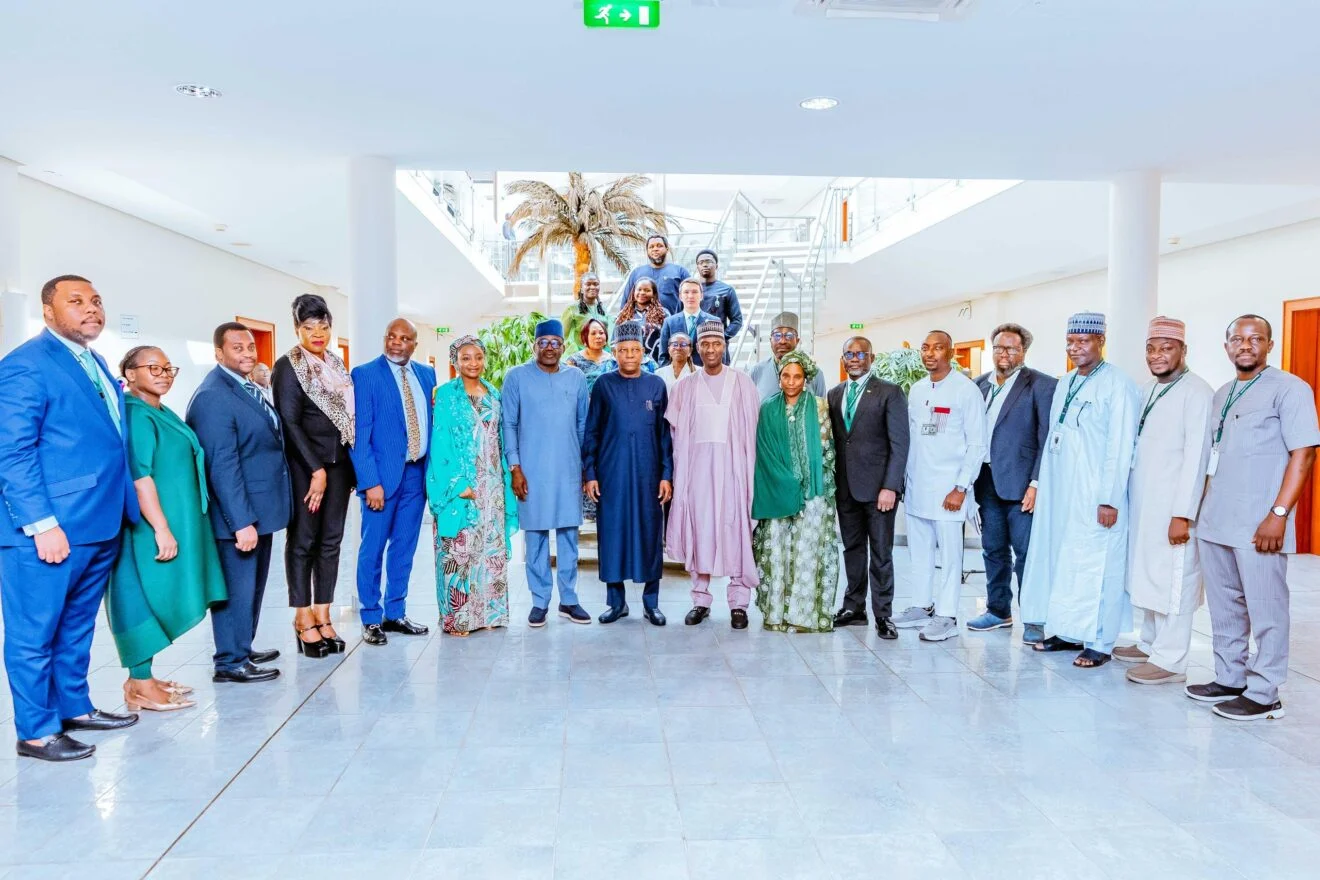
The Vice-President, Kashim Shettima, has expressed optimism that the $617.7million Investment in Digital and Creative Enterprises (i-DICE) Programme would redefine the nation’s digital and creative landscape.
Shettima said this on Wednesday at the inauguration of a technical committee to kick start the programme, held at the Presidential Villa, Abuja.
I-DICE Programme, a collaborative effort between the government and international partners, including the Bank of Industry (BoI), African Development Bank (AfDB), French Development Agency (FDA) and Islamic Development Bank (IDB), aims to nurture and empower enterprises in the digital and creative sectors.
The National Economic Council (NEC) had, at its last meeting in March, endorsed the implementation of the programme in the 36 States of the federation and the Federal Capital Territory (FCT).
The Vice-President, who described the development as the dawn of a new era in Nigeria, revealed that the Ministry of Finance had been mandated to ensure the expeditious disbursement of funds for the iDICE Programme.
This, according to him, will pave the way for its swift implementation.
“We’ll embark on a journey of innovation, collaboration and boundless opportunities
“A journey that holds the power to redefine the trajectory of our nation’s digital and creative landscape.”
Shettima highlighted the significance of the partnerships forged with institutions, describing them as a “convergence of vision and purpose” in pursuit of shared prosperity.
He commended the meticulous preparations undertaken by the Ministry of Finance and partners, affirming the programme’s readiness to unleash its full potential.
“With every condition met, we stand poised to unleash the full force of i-DICE upon the world.”
He applauded the accomplishments of members of the programme coordination Unit, over the past year, including its establishment, procurement of fund managers and engagement with ecosystem stakeholders.
The Vice-President described them as a testament to Nigeria’s indomitable spirit of innovation.
According to Shettima, the programme represents a catalyst for transformation and a beacon of hope for future generations.
Earlier, Chairman of the Technical Committee on the I-DICE programme, Mr Tope Fasua, noted that i-DICE’s substantial financial backing underscored the programme’s potential to drive transformative change in Nigeria’s digital and creative sectors.
Fasua, who is also the Special Adviser to the President on Economic Matters, (Office of the Vice-President), disclosed that the selection of fund managers for the programme was being conducted through an open and transparent process.
According to him, the process is guided by the African Development Bank (AfDB) to ensure that the best-qualified firms are entrusted with managing the programme’s financial resources.
He said AfDB had completed all necessary documentation and was ready to disburse funds, subject to agreed terms.
“Similarly, the French Development Agency (AFD) has signed the required documents, pending internal processes.
“The Islamic Development Bank (ISDB) is in the final stages, with one last document awaiting approval from the Ministry of Finance.
“With the groundwork laid, the committee anticipates the first drawdown of funds on April 15th, marking a significant milestone in the programme’s implementation.”
Fasua expressed gratitude to President Bola Tinubu for the opportunity to serve, contribute and impact society and the nation’s human capital and economic development. (NAN)
African delegates attending seminars in China have condemned reported xenophobic attacks against foreign African nationals in South Africa and called for greater unity across the continent.
The delegates made the condemnation on the sidelines of training programmes organised by the Academy for International Business Officials (AIBO) under China’s Ministry of Commerce.
They described the reported attacks as disturbing and contrary to the ideals of Pan-Africanism, solidarity, and peaceful coexistence.
Yusupha Bojang of The Gambia’s National Council for Civic Education said Africans must see themselves as one people irrespective of colonial-era boundaries.
“We first have to recognise that in Africa we are all one. These boundaries are artificial creations. We should treat each other as brothers and sisters,” he said.
Bojang said frustrations over domestic challenges should not be directed at fellow Africans lawfully residing in another country.
“If you have any problem, it should be channelled to your government, not innocent citizens legitimately carrying out their activities,” he said.
He urged Africans to speak with one voice against xenophobia.
“We need to unite. When we see wrongs happening, we should all come out to condemn them because it can happen to anybody,” he added.
Also speaking, Jallow Gibbi, a journalist with Dunia Radio in The Gambia, said he was saddened by reports of Africans attacking fellow Africans.
“When I watched the news, I was embarrassed to see Africans fighting Africans. It is not humanitarian and it should not happen,” he said.
Gibbi called on African leaders and international organisations to promote peace and unity across the continent.
“We are all the same. One Africa, one people. We should unite and stay together,” he said.
He said information from Gambian diplomatic authorities indicated that no Gambian citizen had been reported affected, while advising nationals to remain vigilant.
Mr Richard Jombi James of South Sudan’s Ministry of Culture, Museum and National Heritage described African unity as essential to the continent’s progress.
“We are all Africans from the north to the south, east and west. We cannot attack ourselves. We are one Africa, one people,” he said.
Kawu Muhammed Lawan of Nigeria’s Federal Ministry of Arts, Culture, Tourism and Creative Economy said the reports were particularly troubling given the support many African countries provided during South Africa’s anti-apartheid struggle.
“Looking at all the efforts other African countries made to end apartheid in South Africa, it is embarrassing to witness hostility against fellow Africans today,” he said.
Lawan urged African leaders to take practical steps to protect citizens across the continent and strengthen regional integration.
Similarly, Emmanuel Nok, a legal practitioner with South Sudan’s Ministry of Culture, Museum and National Heritage, said Africans should reject violence and discrimination against one another.
“We feel hurt as Africans when we see fellow Africans being hunted by other Africans. We should condemn such behaviour because it goes against the spirit of African brotherhood,” he said.
Nok noted that many African countries host citizens from neighbouring states and stressed that peaceful coexistence remained vital for economic development and regional cooperation.
The delegates called on governments, regional organisations and civil society groups to promote tolerance, strengthen social cohesion and uphold the principles of African unity.
They also urged Africans to focus on common development goals, saying stronger cooperation would advance peace, prosperity and integration across the continent.

From Joseph Amedu, Lokoja
The Kogi State Government said it will reach over 240,000 children aged 5–14 years in 39 wards across 15 Local Government Areas (LGAs) in the 2026 Schistosomiasis Mass Administration of Medicines (MAM) exercise.
The campaign is scheduled for June 22–30, 2026.
The target was unveiled at a two-day state-level planning meeting convened Wednesday by the Ministry of Health, Department of Public Health – Neglected Tropical Diseases (NTDs), Control Programme in collaboration with Sightsavers.
The meeting aimed at developing strategies for 2026 treatment targets, validate drug quantification, strengthen micro-planning, and finalize the implementation timeline for schistosomiasis, also known as bilharzia.
Declaring the meeting open, the Commissioner for Health Dr Abdullazeez Adams, said schistosomiasis remains a public health challenge in Kogi, affecting school-age children, farmers, fishermen, and communities near freshwater bodies.
Represented by the Permanent Secretary Maji Enoch, the commissioner noted the disease reduces school attendance, affects productivity, and impacts health outcomes.
He said the meeting would review performance from previous rounds, strengthen social mobilization and training of teachers and Community Drug Distributors, CDDs, and focus on data quality, equity, and beneficiary safety.
He commended Sightsavers and the Federal Ministry of Health for technical and financial support, and urged LGAs to maintain strong collaboration “to reach the last child in the last community.”
The National Programme Manager, Dr Jacob Solomon of the Federal Ministry of Health (FMOH), said Nigeria is working toward WHO’s 2030 elimination target for schistosomiasis and soil-transmitted helminthiasis.
He described Kogi’s progress since baseline mapping as “significant” and urged participants to remain diligent to reach the “last mile.”
Solomon confirmed the programme targets all children 5–14 years, whether in school or out of school.
The State NTD Coordinator, Musa Momohjimoh, said the intervention will use Praziquantel in 39 wards identified as endemic from a 2015 survey and revised WHO strategy.
According to him, teachers will administer drugs in schools while health workers supervise, and CDDs will reach out-of-school children.
He said radio jingles and engagement of religious and community leaders will drive awareness.
Sightsavers Programme Officer, Phoebe Hindan, said treatment will cover only wards with demonstrated need based on evidence.
She described Praziquantel as safe and effective, used in Kogi for over 10 years, and urged parents to allow children to participate.
She noted misconceptions have caused refusals in the past, and warned untreated schistosomiasis can lead to other complications in the future.
The government said the campaign will cover public, private schools and out-of-school children, with parents directed to contact the State Ministry of Health for enquiries.
Salihu Usman, a participant and former Education Secretary of Kogi LGEA, assured the government of the participants’ commitment to a result-oriented MAM exercise that will deliver on its goals and objectives.

From Sylvia Udegbunam, Enugu
The Anambra State Government, under the leadership of Prof. Chukwuma Charles Soludo, has extended the “War Against Fake Native Doctors” to fake pastors and other individuals masquerading as genuine men and women of God while engaging in criminal practices.
This is disclosed in a public announcement signed by the Commissioner for information and value reformation Anambra state, Law Mefor, noting that it is part of the efforts of the Solution Government to rid the state of all forms of criminality and sanitise both traditional worship and religious practices in order to restore sanity, law and order in the state.
To this end, the government is calling on Ndị Anambra and all residents of the state with credible information on pastors, churches, or so-called “men of God” involved in criminality, extortion, fraud, deception, or any act that endangers lives and the peace of our communities or misleads the people in the state to please speak up. All information will be treated with absolute confidentiality.
Despite the negative claims made during the campaigns against the effort to clean up criminals pretending to be traditional healers and real religious leaders, this effort will actually protect the true freedom of traditional worship and religious practice.
Let us work together to take back our state from criminals hiding under religion, culture and tradition.
Call +2348034182108 or 5111 if you have any useful information.



Tinubu Visits Benue, Commissions Projects Tomorrow
ShareFrom Attah Ede, Makurdi Benue State is set to host the First Lady of the Federal Republic of Nigeria and National...

Fifa to Pay Somali Referee Artan Full World Cup fee
ShareSomali referee Omar Artan, who was denied entry to the United States to officiate at the World Cup, will still receive his full...
Delegates in China Denounce Xenophobic Attacks
ShareAfrican delegates attending seminars in China have condemned reported xenophobic attacks against foreign African nationals in South Africa and called for greater unity across the continent. The delegates made the...

Kogi Targets 240,000 Children for Schistosomiasis Mass Drug Administration
ShareFrom Joseph Amedu, Lokoja The Kogi State Government said it will reach over 240,000 children aged 5–14 years in 39 wards across 15 Local...


Anambra Urges Residents to Provide Information on Fake Pastors, Others
ShareFrom Sylvia Udegbunam, Enugu The Anambra State Government, under the leadership of Prof. Chukwuma Charles Soludo, has extended the “War Against Fake Native Doctors”...


Boat Mishap Kills 11 in Benue River
ShareFrom Attah Ede, Makurdi No fewer than 11 persons were Saturday night feared dead when a boat said to be conveying them...


Terrorism: After Gen Rabe’s Death, Buratai Warns of Darker Days Ahead
ShareBy David Torough, Abuja Nigeria’s deepening insecurity crisis has triggered fresh alarm across military, political and religious circles following the...


Black Sunday : Nigeria is bleeding – CAN
ShareBy Laide Akinboade Abuja The Christian Association of Nigeria (CAN), on Sunday, lamented the spate and incessant insecurity challenges across...


Zuba Braces for Major Sickle Cell Awareness Walk, Health Outreach
ShareBy David Torough, Abuja Preparations have reached an advanced stage for the World Sickle Cell Day 2026 Awareness Walk and...


Nasarawa Governor’s Aide Empowers 250 Women in Karu
ShareBy Tambaya Julius, Abuja Two hundred and fifty (250) women from Panda/Kare Electoral Ward in Karu Local Government Area, Nasarawa...