
NEWS
ICPC Unveils 5-year Anti-corruption Plan

The Independent Corrupt Practices and Other Related Offences Commission (ICPC)
has reiterated its commitment to tackle corruption head-on.
The ICPC Spokesperson, Mr Demola Bakare, said this in a statement on Monday in Abuja.
Bakare said that the commission was increasing the momentum by taking the fight to the corrupt, and empowering Nigeria’s youth to demand integrity.
According to him, the anti-graft agency will inaugurate its ambitious five-year Strategic Action Plan for 2024-2028, tagged “Operation Integrity”.
He said that the action plan aimed at combating corruption and promoting transparency.
Bakare said that the commission would also unveil its foremost digital media Podcast programme called Ethicspod, the first of its kind by any anti-corruption body in West Africa.
”The launch of the Strategic Action Plan marks the commencement of a new five-year roadmap following the successful implementation of the 2019-2023 plan.
”The Strategic Action Plan 2024-2028 will continue to focus on combating corruption through innovative methods and sustained action.
”More importantly, the Commission will also launch its bi-weekly Podcast programme aimed at amplifying anti-corruption efforts in Nigeria through the power of digital media.
”The launch of the Podcast tagged “EthicsPod”, a youth-focused podcast spearheaded by ICPC, will be unveiled by the Attorney General of the Federation, Lateef Fagbemi, SAN.,” he said.
He said that ”EthicsPod aimed to educate and engage young Nigerians on the importance of transparency, accountability, and taking a stand against corruption.
”’The bi-weekly podcast will bring together experts, beneficiaries, victims, and key actors to discuss corruption, sharing real-life stories to expose its impact and empower listeners with practical tools to resist and report corrupt practices.
”EthicsPod is an integral part of ICPC’s mission to increase public reporting of corruption cases by the end of the 2024-2028 Strategic Action Plan.
”Through these initiatives, ICPC continues to lead the charge against corruption, fostering a culture of integrity and accountability across Nigeria,” he said.
According to him, the event will feature prominent government officials, including the Secretary to the Government of Nigeria, Senator George Akume, who will represent President Bola Tinubu.
He said that the programme was supported by Rule of Law and Anti-Corruption Programme (RoLAC) supports(NAN)

Kenya has sharply raised the cost of petroleum, with diesel prices rising by a record margin despite a fuel tax cut, as the conflict in Iran pushes up global oil prices.
In its latest review, the energy regulator raised the cost of diesel by 40 Kenya shillings to 206 ($1.
6; £1. 2) a litre, while petrol rose by 28 shillings to a similar level. It said this reflected higher global oil and shipping costs, even as the government cut value added tax to 13% from 16%.The new prices will last until 14 May when the next review is due.
Fuel shortages have been reported in parts of the country, although the government insists stocks are sufficient and accuses some fuel companies of hoarding supplies.
The reports of shortages have been overshadowed by controversy over an allegedly substandard consignment imported last month outside government-to-government arrangements and at a significantly higher cost.
Reports that the fuel may have entered the market after being blended with stocks in government storage tanks have sparked public outrage and calls for accountability.
The government has previously said it cancelled the consignment amid concerns over its quality and cost and barred oil marketers from selling it. The matter, which led to the arrest and resignation of senior energy officials, is still under investigation.
On Wednesday, the Energy and Petroleum Regulatory Authority (Epra) said the disputed consignment had not been included in the computation of the new prices.
The price rises come amid the global fuel crisis caused by the US-Israel war with Iran that began on 28 February.
Concerns remain that the energy crisis may deepen despite a conditional two-week ceasefire signed last Wednesday that included opening the Strait of Hormuz, a key shipping route for global oil and gas supplies.
Shipments through the strait have largely been at a standstill since the war began.
Countries have taken various measures to cope with the crisis and cushion consumers from the price shocks, including cutting taxes and minimising wastage.
Kenya’s directive to cut VAT on fuel is scheduled to last until July. South Africa announced a one-month cut in the fuel levy two weeks ago to limit pump prices.
Other African countries to have announced similar measures include Zambia, Namibia and Ghana, while South Sudan announced electricity rationing and Ethiopia prioritised certain sectors to deal with the crisis.
By David Torough, Abuja
As the rainy season sets in, the Federal Government on Wednesday unveiled the 2026 Annual Flood Outlook (AFO), warning that floods will impact Lagos, Bayelsa, Delta, Adamawa, Kebbi and 28 other states across the country.
The disclosure was made by the Minister of Water Resources and Sanitation, Joseph Utsev, during the public presentation of the AFO at the Presidential Banquet Hall in Abuja.
The event, organised by the Nigeria Hydrological Services Agency (NiHSA), was themed “Smart Water Resources Management: Moving from Oil to Water-Based Economy. ”Utsev emphasised the critical role of early warning systems, noting that timely information saves lives, protects livelihoods, safeguards infrastructure, and reduces economic losses.
He added that the Federal Government is modernising the nation’s hydrological monitoring networks to strengthen flood forecasting and preparedness.He also highlighted ongoing collaboration with the Nigerian Meteorological Agency (NiMet), aimed at integrating weather and water data for more reliable forecasts to support farmers, disaster managers, urban planners and other stakeholders.
Describing the AFO as more than a scientific document, the minister called it “a national call to action,” stressing that forecasts must translate into concrete preparedness measures at the community level. He assured that the ministry is working closely with relevant agencies to mitigate flood impacts nationwide.
The event was attended by President Bola Tinubu, represented by the Minister of Environment, Balarabe Lawal, alongside representatives from key federal ministries, the National Assembly, state governments, service chiefs, development partners and the media.
According to Utsev, the 2026 forecast identifies:
High Flood Risk: 14,118 communities across 266 Local Government Areas (LGAs) in 33 states and the Federal Capital Territory.
Moderate Flood Risk: 15,597 communities in 405 LGAs across 35 states.
Low Flood Risk: 923 communities in 77 LGAs across 24 states.
He further warned of likely flash and urban flooding in major cities including Abuja, Lagos, Ibadan, Port Harcourt, Kano and Makurdi, largely due to intense rainfall, poor drainage systems and inadequate flood-control infrastructure.
Coastal and riverine flooding is also expected in Bayelsa, Cross River, Delta, Lagos, Ogun, Rivers and Ondo states as a result of rising sea levels and tidal surges, posing risks to fishing, wildlife and river navigation.
“As we transition toward a water-based economy, we must recognise that water security is national security,” Utsev said, stressing the importance of effective water governance in achieving food security, economic diversification and improved living standards.
He urged state governments, local authorities, and communities to incorporate flood risk into land-use planning, strengthen drainage systems, and adopt proactive adaptation strategies.
“Preparedness remains the most effective strategy for reducing flood risks. When we plan ahead, we protect lives, safeguard infrastructure, and preserve economic gains,” he added.
In his remarks, the Director-General of NiHSA, Umar Ibrahim Mohammed, described the AFO as a vital national planning tool that has evolved into a comprehensive flood risk intelligence system.
He revealed that the 2026 outlook was developed using a Hybrid AI Integrated Modelling system to improve accuracy, reduce false alarms and enhance early warning timelines. He also noted that the process was conducted entirely in-house, marking a significant step in capacity development.
Mohammed added that NiHSA has upgraded its Flood Dashboard into a full-scale decision-support geo-intelligence platform, complemented by a mobile application for real-time access to flood alerts and data.
The Director-General of NiMet, Prof. Charles Anosike, acknowledged the persistent challenge of flooding in Nigeria and across Africa but expressed optimism that improved technology and inter-agency collaboration would strengthen mitigation efforts.
He reaffirmed NiMet’s commitment to working with NiHSA to enhance predictive capabilities and called for a renewed national focus on water resource management as a cornerstone of sustainable development.

By David Torough, Abuja
Nigeria has lost an estimated $226.734 billion following the suspension of crude oil production in Ogoni land since 1993, the Pipeline Infrastructure Nigeria Limited (PINL) has said.
The firm, which oversees the maintenance of the Trans Niger Pipeline, described the resumption of oil production in the area as a national priority, with the potential to generate over 500,000 barrels per day from Oil Mining Lease 11.
The General Manager, Community and Government Relations, PINL, Dr Akpos Mezeh, disclosed this during the company’s monthly stakeholders’ meeting in Port Harcourt on Wednesday.
He noted that OML-11, which comprises about 96 oil wells, has remained inactive for over three decades, resulting in significant revenue losses for the country.
“Available data shows that over $226.734 billion has been lost due to the suspension of crude oil production from 96 oil wells in Ogoni land over the past 32 years,” Mezeh said.
He stressed that restarting operations in the area would not only boost national revenue but also support ongoing efforts by President Bola Tinubu to increase crude oil production and curb economic sabotage in the Niger Delta.
Mezeh added that the company recorded zero infractions on the Trans Niger Pipeline in the last one month, attributing the development to improved stakeholder engagement and community sensitisation.
He, however, emphasised that any move to resume oil production must prioritise inclusive community participation and environmental sustainability.
“The Ogoni people must be fully involved as critical stakeholders in all decisions,” he said, noting that continued clean-up and restoration efforts would be key to rebuilding trust.
He also highlighted ongoing community interventions by the company, including scholarship schemes, women’s empowerment, medical outreach, and skills acquisition programmes.
According to him, Nigeria’s oil production has risen to about 1.84 million barrels per day, with a target of two million barrels per day in line with government objectives.
The event also featured the award of scholarships to 216 students across host communities in Rivers, Bayelsa, Imo, and Abia states.
Crude oil production in Ogoni land was halted in the early 1990s following widespread protests over environmental degradation, oil spills, and demands for greater resource control by local communities.
The agitation, led by groups such as the Movement for the Survival of the Ogoni People, brought global attention to environmental issues in the Niger Delta and led to the shutdown of oil operations in the area.
Since then, successive governments have made efforts to address the environmental damage, including the launch of the Ogoni clean-up programme recommended by the United Nations Environment Programme.
However, calls for the resumption of oil production have remained sensitive, with stakeholders insisting on environmental remediation, community inclusion, and sustainable development as key conditions for any restart.


Kogi Pledges Support for Basketball Development
ShareThe Kogi State Government has pledged to prioritise the development of basketball in the state to boost the sport’s profile and promote youth engagement. The Commissioner for Youth...

US Lawmaker Demands FIFA pay World Cup Transport Bill amid Ticket Hikes
ShareA top US lawmaker called on FIFA to pay for World Cup public transportation costs on Tuesday following a report that local authorities in New Jersey are planning...

Kenya Fuel Prices Rise Sharply Despite Reduction in Tax
ShareKenya has sharply raised the cost of petroleum, with diesel prices rising by a record margin despite a fuel tax cut, as the conflict in Iran pushes up global oil prices. In its latest...
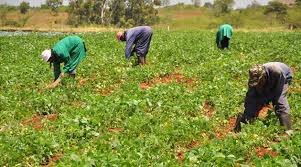

Tomato Farmers Predict Steady Price Hike from May
ShareThe Tomatoes Growers and Processors Association of Nigeria (TOPAN) has predicted a steady increase in the price of the produce between May and June 2026. The Kaduna State Chairman TOPAN,...
Benin, Togo, Niger Owe Nigeria $9.55m Electricity Debt
ShareThree West African countries of Benin, Togo and Niger have collectively failed to pay Nigeria $9.55m for electricity supplied to them in the...


FG Predicts Floods in Benue, Plateau, Lagos, Adamawa, 28 Other States
ShareBy David Torough, Abuja As the rainy season sets in, the Federal Government on Wednesday unveiled the 2026 Annual Flood...

Nigeria Loses $226.7bn to Ogoni Oil Shutdown Since 1993 – Report
ShareBy David Torough, Abuja Nigeria has lost an estimated $226.734 billion following the suspension of crude oil production in Ogoni...

Nigeria’s Hidden Killings: One-Man Rule Looms – Adebayo
ShareIn a searing and emotionally charged interview, a presidential aspirant and leader of the Social Democratic Party recounts his harrowing...
Heading Towards Elections with Democracy on Crutches
ShareBy Chidi Amuta Nigerian politicians have once again carried out another successful coup against the people. They have fired up...

2027: Ahmadiyya Leader Sees Hope in Adewole Adebayo if Youths Organise
ShareBy Mike Odiakose, Abuja The Amir and National Head of the Ahmadiyya Muslim Jama’at of Nigeria, Alatoye Abdulazeez, has urged...