
NEWS
I’m Scared of My Wife’s Charms, Domestic Violence, Man Tells Court


An estranged husband, Ismail Adegoke, on Wednesday, told a Mapo Grade A Customary Court at Mapo in Ibadan, that he abandoned his matrimonial home because of his wife’s inclination for charms.”
In his testimony, Adegoke told the court that though his cohabitation with his wife, Tawa, had produced two children, “I had to run away from our matrimonial home because I wanted to save my life.
“As if that was not enough, I came across charms inside Tawa’s bag one day and I challenged her, but she went mad with me and swore that there would no longer be peace in the house.
”Adegoke testified that he was forced to move into his personal house due to his wife’s constant bickering and domestic violence, meted out on him and members of his family and co-tenants.
He told the court that he had done everything within his power to satisfy Tawa’s yearnings, including opening several shops for her at different times.
“One day, Tawa told me that she would no longer stay in the shop because it was boring, adding that it was only old women who stay put in a particular place for trading.
“Then, she rented another shop far away from the house which permitted her to leave home at 7 a.m and return late in the night, mostly around 9 p.m.
“As a result, I was forced to start taking care of our two children, including taking them to school.
“It was as a result of her ceaseless domestic violence with people that my mother told me to go and complete my building.
“To stay alive, I abandoned my matrimonial home and rented an apartment until the dust settled,” Adegoke told the court.
He pleaded with the court to grant his application for dissolution of the marriage as all entreaties from both families had failed to assuage Tawa’s anger and become remorseful.
But Tawa, who did not oppose the application for dissolution of their marriage, however, accused Adegoke of adultery.
“My lord, Adegoke womanizes and ran away for a whole year with a lady called Auntie near our house.
“He doesn’t take any responsibility for the children’s education as I was forced to sell off my wares to be able to send the children to school.
“Worst still, Adegoke has been physically abusing me since 2003; in fact, I’m ready to part ways with him,” Tawa said.
Delivering judgment, the President of the court, Mrs. S.M. Akintayo, held that there was nothing to be dissolved between Adegoke and Tawa because there was no valid marriage between them based on the evidence available to the court.
Akintayo however, granted custody of the two children of the union to the respondent and directed the petitioner to be responsible for their medical and educational needs.
She ordered the duo to be jointly responsible for the welfare of the children.








By David Torough, Abuja
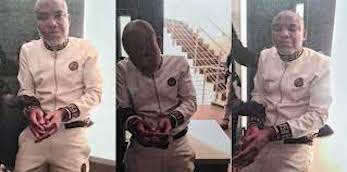
The Institute of Security, Nigeria (ISN) has called for a fundamental overhaul of Nigeria’s approach to terrorism, banditry and kidnapping, warning that criminal groups are becoming increasingly organised and capable of challenging the authority of the state.
The institute made the call while reacting to the reported invasion of Talata Mafara market in Zamfara State, where non-state actors allegedly imposed a ₦50 million levy and demanded 100 livestock, giving residents a seven-day ultimatum.
The ISN said the development exposed the need for security agencies to move beyond reactive operations and adopt stronger intelligence-led strategies capable of identifying and dismantling criminal networks before they launch attacks.
In a statement signed by its Deputy President and Chief Executive Officer, Barr. Adebayo Akinade, the institute said the activities of terrorists and bandits were no longer limited to isolated attacks but increasingly involved the control of economic activities, collection of illegal levies and disruption of legitimate livelihoods.
It warned that such activities could gradually establish a parallel system of criminal authority in affected communities if left unchecked.
The institute consequently urged the Federal and state governments to establish a coordinated security framework bringing together federal security agencies, state security outfits and vetted community guards.
It also called for the creation of a National Security Fusion Centre, supported by state-level fusion desks, to facilitate real-time intelligence sharing and faster responses to emerging threats.
According to the ISN, security agencies should penetrate criminal networks operating around markets, cattle-rustling routes and illicit livestock value chains while targeting the logistics and financial structures sustaining banditry.
It recommended regulated livestock markets and improved tracking systems to prevent stolen cattle from being absorbed into legitimate commercial channels.
The institute further proposed special courts for terrorism, kidnapping and banditry cases, arguing that a faster judicial process would strengthen the fight against organised criminal groups.
It urged the government to deploy modern technologies, including forest geo-fencing, livestock tracking, drones and citizen-reporting platforms, alongside improved tactical mobility and air surveillance.
The ISN also called for a two-hour rapid-response mechanism in vulnerable areas and increased investment in night-vision equipment and other specialised capabilities.
Beyond security operations, the institute advocated stronger community-based early-warning systems and local peace and security forums involving traditional rulers, farmers, market unions, faith organisations and civil society groups.
It urged citizens to report threats rather than surrendering to ransom and illegal levy demands, while encouraging communities to document attacks and preserve evidence for investigations and prosecution.
The institute said professional training in terrorism studies, intelligence management and counter-banditry operations should be strengthened as part of efforts to build a more effective national security architecture.
The ISN reaffirmed its readiness to support government and security agencies through research, training, policy advisory services and professional certification, saying a coordinated response was essential to restoring public confidence and protecting national development.

By David Torough, Abuja
The Lagos State High Court sitting in Lagos has set aside and nullified the purported installation and coronation of Ibrahim Adebowale Saliu as the Onise of Ise Kingdom in Lekki Local Council Development Area (LCDA) of Epe Local Government Area, Lagos State.
The court also ordered the Lagos State Government to immediately withdraw the letter of appointment, staff of office and recognition granted to Saliu, following the installation and coronation conducted at the Ministry of Local Government, Chieftaincy Affairs and Rural Development, Alausa, Ikeja, on August 21, 2026.
In a ruling delivered on Friday, September 11, 2026, by Justice Yetunde Adesola Adesanya of the Lagos State High Court, Igbosere, the court further ordered Saliu to surrender the letter of appointment, staff of office and other benefits of office obtained during the disputed installation.
The court also directed him to immediately stop parading or holding himself out as the Onise of Ise pending the hearing and determination of the substantive suit.
The ruling arose from a Motion on Notice for Mandatory Injunction filed on August 24, 2026, by Alhaji Adeniyi Atere and Mrs Idowu Adebisi Lana, the claimants/applicants in Suit No. LD/0022PRA/2026.
The defendants/respondents in the suit include the Lagos State Governor, the Attorney-General of Lagos State, the Commissioner for Local Government, Chieftaincy Affairs and Rural Development, the Ministry of Local Government, Chieftaincy Affairs and Rural Development, Epe Local Government Area, Lekki LCDA and four individuals identified as members of the selection process, while Saliu is the 11th defendant/respondent.
The dispute centres on the process that produced Saliu as the Oba-elect and subsequently led to his appointment and installation as Onise of Ise.
A key issue before the court was whether the August 21 installation could stand after an earlier interim injunction had been issued restraining the state government and other specified defendants from taking steps to appoint Saliu as Onise of Ise.
Earlier court order
The ruling recalled that Justice S. I. Sonaike had, on August 13, 2026, issued an interim order restraining the first to fifth defendants from acting on a March 30, 2026 letter purportedly forwarding Saliu’s name as the Oba-elect of Ise Kingdom.
The order also restrained them from putting into effect any process aimed at appointing Saliu as Onise of Ise pursuant to the letter or instrument of nomination.
The court noted that the earlier order was made in the context of alleged non-compliance with the Obas and Chiefs of Lagos State Law, 2015, and the relevant Registered Declaration regulating the selection to the Onise of Ise stool.
According to the ruling, the interim injunction was to last for seven days unless renewed by the court, with August 20 fixed as the return date for a report of compliance and continuation of hearing.
The court further found that the enrolled order had been duly served on the relevant respondents and that there were acknowledged copies of the order in the court’s file.
Importantly, the ruling noted that the first to fourth respondents had themselves filed a motion dated August 18 seeking, among other things, an order discharging or setting aside the August 13 interim injunction or, alternatively, an order not to renew it.
Thus, the respondents were aware of the order and were actively challenging it through the judicial process.
Installation despite subsisting injunction
The claimants alleged that despite the service of the order, the state government proceeded with the installation on August 21.
The court recorded the allegation that the Special Adviser to the Governor on Local Government, Chieftaincy Affairs and Rural Development, Dr Nurudeen Yekini Lanre Agbaje, handed over the letter of appointment and staff of office to Saliu at the ministry.
Photographs of the purported coronation and installation were also tendered as an exhibit before the court.
The court subsequently made a significant finding on the conduct complained of. It held that the evidence before it established an infringement of the earlier court order, stating:
“Not only do the averments in the Affidavits support the grant of the Order sought, but there is also irrefutable evidence of the infringement of the Order of this Honourable Court of 13th August 2026 that entitles the Claimants/Applicants to the grant of the mandatory Orders sought in this application.”
The court’s finding is central to the judgment because the application was not merely seeking to prevent a future installation; the applicants were asking the court to reverse steps that had allegedly been taken while the interim order was still in force.
Court considers power to reverse completed act
Justice Adesanya considered the legal principles governing mandatory injunctions, noting that such an injunction is positive in nature because it requires a defendant to undo an act that has already been carried out.
The court reviewed several authorities, including CBN v. UTB (Nig.) Ltd., CBN v. Industrial Bank Ltd., Abubakar & 10 Ors. v. Jos Metropolitan & Anor., and H.R.H. Alhaji Ibrahim Sulu-Gambari & Ors. v. Alhaji Saadu A.O. Bukola.
Of particular relevance was the Court of Appeal decision in the Sulu-Gambari chieftaincy case, which the applicants had relied upon.
In that case, the Court of Appeal held that although injunctions generally do not restrain completed acts, an exception could arise where a party deliberately proceeds with an act after becoming aware of an application seeking to restrain it.
The court quoted the appellate court as stating:
“To condone such a situation amounts to encouraging ‘executive lawlessness’ which will only jeopardize the rule of law and civilized conduct.”
The Court of Appeal had consequently recognised that a restorative mandatory injunction could be used where a party deliberately acted in disregard of the authority of the court.
Justice Adesanya found that the principle was applicable to the circumstances before her.
Court orders reversal of installation
Having considered the processes, affidavits, exhibits and submissions of counsel, the court granted the application in full.
The first mandatory order compels the first to fourth defendants- comprising the Lagos State Governor, Attorney-General, the Commissioner for Local Government, Chieftaincy Affairs and Rural Development, and the ministry, to withdraw the appointment letter, staff of office and recognition of Saliu as Onise of Ise.
The court’s order specifically relates to the appointment and recognition arising from the August 21 installation and coronation.
The second order compels Saliu himself to surrender the appointment letter, staff of office and other paraphernalia of office associated with the disputed stool.
The third order directs him to stop parading or holding himself out as the Onise of Ise pending the final determination of the substantive suit.
The court’s fourth and most consequential order expressly sets aside and nullifies the purported installation and coronation.
The ruling states:
“AN ORDER OF THIS HONOURABLE COURT SETTING ASIDE AND NULLIFYING the purported installation and coronation of the 11th Defendant/Respondent as the Onise of Ise Kingdom…”
The court made clear, however, that the mandatory injunctions are interim orders and are not the final determination of the substantive chieftaincy dispute.
It expressly stated:
“THESE MANDATORY ORDERS OF INJUNCTION ARE GRANTED PENDING THE HEARING AND DETERMINATION OF THE SUBSTANTIVE SUIT.”
Court stresses obedience to its orders
The ruling also dealt extensively with the importance of compliance with subsisting court orders.
The applicants had argued that proceeding with the installation after service of the injunction amounted to executive lawlessness, self-help and an attempt to overreach the judicial process.
While those descriptions originated from the applicants’ grounds, the court’s decision ultimately accepted the central factual contention that the earlier order had been infringed and that mandatory relief was warranted.
The court also noted that the respondents, despite being aware of the proceedings and the interim order, did not proceed to have their pending August 18 motion determined before the disputed installation took place.
According to the ruling:
“The Respondents being fully aware of the pendency of these proceedings and the Order of this court chose to stay away from the proceedings, failed to move their pending Motion on Notice dated 18th August 2026, or defend the instant application rather proceeded to flout the Interim Order of this Court.”
The court consequently concluded that the circumstances justified the exceptional remedy of a mandatory injunction to restore the position that existed before the disputed act.
It therefore ordered that the state government’s recognition and instruments of office be withdrawn and that Saliu cease to hold himself out as Onise of Ise while the substantive case remains pending.
The substantive suit will determine the underlying dispute over the lawful selection and appointment to the Onise of Ise stool.
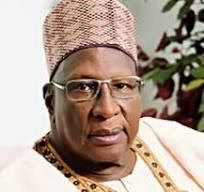
Frontline business magnet and former National Chairman of Peoples Democratic Party(PDP), Alhaji Bamanga Tukur is dead. He was aged 90.
The former Governor of the old Gongola state passed on Saturday, September 12, after a protracted illness.
Eldest son of the deceased, Awwal D.
Tukur confirmed the demise of his father to newsmen in Yola.He however, gave no details.
Tukur, a nonagenarian was an international businessman who founded the African Business Round Table, which platform he used to market bsuiness opportunities on the continent to international investors.
He had a successful career in the public service and rose through the ranks to become the General Manager and Chief Executive of Nigerian Ports Authority(NPA) during the regime of General Yakubu Gowon.
He was appointed Minister of Industries by former Head of State, the late General Sani Abacha and after leaving office, remained an active political actor and effectively combined with the operation of his vast business empire, which spanned shipping, manufacturing among others.
He was reputed for his philanthropic gestures both in his home state of Adamawa and across the country.




Talata Mafara Attack: ISN Demands Intelligence Overhaul, Special Courts to Crush Banditry
ShareBy David Torough, Abuja The Institute of Security, Nigeria (ISN) has called for a fundamental overhaul of Nigeria’s approach to...


Lagos Court Nullifies Onise of Ise Installation, Orders Withdrawal of Staff of Office
ShareBy David Torough, Abuja The Lagos State High Court sitting in Lagos has set aside and nullified the purported installation...

Former PDP National Chairman, Bamanga Tukur is dead
ShareFrontline business magnet and former National Chairman of Peoples Democratic Party(PDP), Alhaji Bamanga Tukur is dead. He was aged 90....

NAICOM, NCAA Partner to Strengthen Air Travellers’ Protection
ShareThe National Insurance Commission (NAICOM) and the Nigeria Civil Aviation Authority (NCAA) have signed a Memorandum of Understanding (MoU) to...

Customs Seizes N43.5bn Narcotics, Drones, Expired Goods at Apapa Port
ShareThe Nigeria Customs Service (NCS) has intercepted narcotics, controlled pharmaceuticals, drones and expired goods valued at N43.5 billion at the...


IPMAN Tasks Marketers on Local Refineries for Product Sourcing
ShareThe National President of the Independent Petroleum Marketers Association of Nigeria (IPMAN), Alhaji Abubakar Shettima, has urged independent petroleum marketers...


CBN Bags NES Distinguished Organisation Award for Economic Reforms
ShareBy Tony Obiechina, Abuja The Central Bank of Nigeria (CBN) has received the Nigerian Economic Society’s (NES) Distinguished Organisation Award...


2027: Information Minister Urges Niger APC Leaders to Back Tinubu’s Reforms
ShareBy David Torough, Abuja The Minister of Information and National Orientation, Mohammed Idris, has urged APC leaders in Niger State...


Police Arrest Two Suspected Car Snatchers in Delta
ShareThe Delta State Police Command has arrested two suspected car snatchers and recovered a Toyota Camry in the state. The...


Otti Highlights Seven Investment Priority Sectors in Abia
ShareAbia State Governor, Alex Otti has highlighted seven priority sectors and investment opportunities to drive industrialisation and economic development in...