
DEFENCE
Inter-agency Cooperation Vital to Success of Counter-terrorism Operations – GOC


The General Officer Commanding (GOC) 1 Division Nigerian Army, Maj.-Gen. Olufemi Akinjobi, says strengthening inter-agency cooperation and capacity is vital to the success of counter-terrorism operations.
Akinjobi made the remarks on Friday at a seminar organised for members of Junior Course 95 of the Armed Forces Command and Staff College (AFCSC), Jaji.
The theme of the seminar was ‘Imperatives of joint Counter Terrorism, Counter Insurgency (CTCOIN) training for operational efficiency at the tactical level’.
The seminar is an annual event for mid-level officers of the armed forces and other security agencies as well as relevant Ministries, Departments and Agencies.
The GOC stressed that in countering the threats of insurgency and terrorism which Nigeria has battled for over 15 years, there must be very strong inter-agency cooperation.
“Maximum successes would not have been realised through the effort of any single service, hence the joint training,” he added.
According to the GOC, joint training promotes unity of efforts, reduces wasteful duplications and helps to maximise core competencies of the various services.
“This ensures that one service leverages the strength of the other in the pursuit of a unified purpose.
“The current fight against terrorism and other forms of insurgency such as Operation Hadin Kai and Operation Hadarin Daji underscores this fact,” Akinjobi said.
He therefore urged the participants to take the lessons from the seminar seriously.
Akinjobi advised the college to harmonise the recommendations, observations and decisions reached into a working document and present it to appropriate authorities for approval and implementation.
Earlier, the Commandant of the College, AVM Emmanuel Wonah, said the seminar was a culmination of series of lectures packaged to broaden the knowledge of the students on the conduct of CTCOIN operations.
He said it was meant to engender deliberate and systematic approach in tackling insurgency and terrorism, as some of the participants would return to their theatres after the course.
Wonah said that the knowledge acquired would enable them to plan, execute and monitor progress of operations.
“In the course of this seminar, more perspectives will be provided by our resource persons to consolidate the lessons of earlier lectures.
“It is hoped that the seminar will bring out lessons that would assist the Armed Forces of Nigeria for seamless CTCOIN operations,” he added.(NAN)





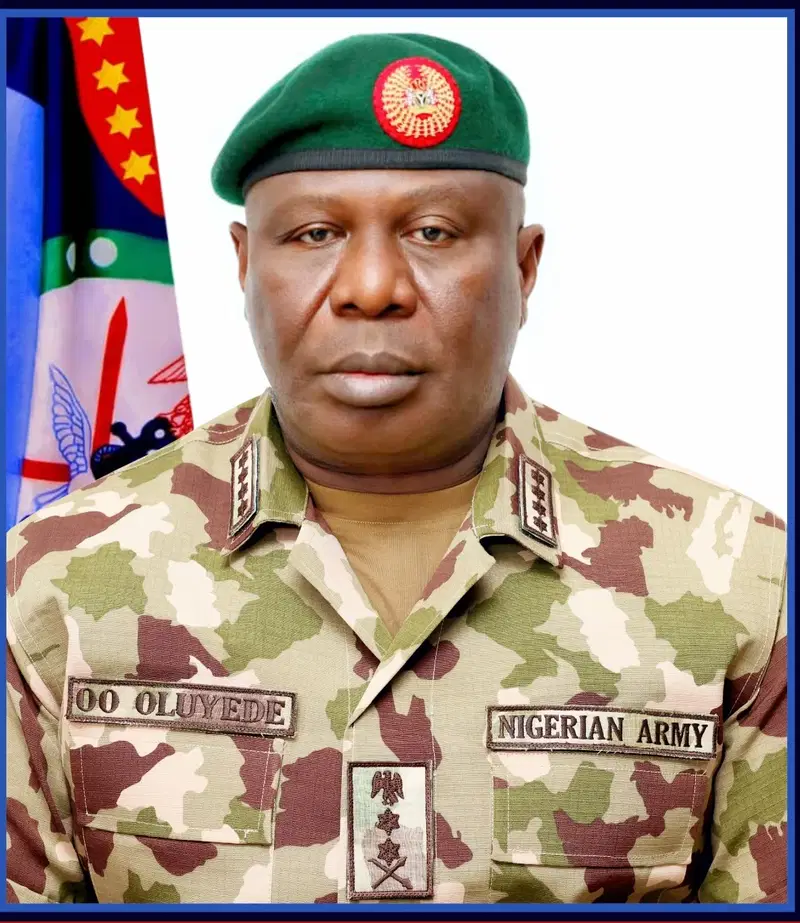
The United Kingdom has reaffirmed its commitment to deepening defence and security cooperation with Nigeria, with emphasis on military training, technology transfer and institutional capacity building.
The British High Commissioner to Nigeria, Pete Vowles, reiterated the commitment during a courtesy visit to the Chief of Defence Staff (CDS), Gen.
Olufemi Oluyede, at the Defence Headquarters, Abuja.This was contained in a statement by the Director of Defence Information, Maj.-Gen. Samaila Uba, on Tuesday in Abuja.
Vowles reaffirmed the UK’s commitment to sustaining existing security initiatives and exploring new areas of collaboration to address evolving regional and global security challenges.
He described defence and security cooperation as critical pillars of the longstanding bilateral relationship between both countries.
The high commissioner also stressed the need for a mutually beneficial partnership that would promote regional stability and strengthen Nigeria’s capacity to tackle contemporary security threats.
In his response, Oluyede highlighted the longstanding historical ties between Nigeria and the UK, noting that both countries had sustained productive defence relations over several decades.
He said the two countries had continued to collaborate in addressing shared security concerns.
The CDS emphasised the need to sustain and expand existing areas of cooperation, particularly in professional military education, technology transfer and institutional capacity building.
According to him, ongoing defence agreements and training programmes have contributed to improving the professional competence and operational capabilities of the Armed Forces of Nigeria.
Oluyede emphasised that continued collaboration with strategic international partners remained vital to strengthening the military’s capacity to respond effectively to emerging threats.
He added that such partnerships would also promote greater self-reliance, institutional resilience and operational efficiency within the Armed Forces.
Both parties expressed optimism about the future of the UK-Nigeria defence and security partnership, reaffirming their commitment to consolidating existing achievements and exploring further areas of cooperation for mutual benefit.
By Tambaya Julius, Abuja
Nigeria and Rwanda are exploring new areas of military cooperation, including personnel exchanges, specialised training and local defence equipment production, as both countries seek to strengthen regional security.
The proposals were presented by the Chief of Army Staff (COAS), Lieutenant General Waidi Shaibu, during an official working visit to Rwanda, where he held talks with the Army Chief of Staff of the Rwanda Defence Force, Major General Vincent Nyakarundi.
In a statement, the Acting Director of Army Public Relations, Colonel Appolonia Anele, said the discussions focused on expanding professional military cooperation and improving the operational capacity of both armies.
Shaibu proposed that two cadets of the Nigerian Defence Academy (NDA) undertake a four-year training programme at the Rwanda Military Academy, with similar opportunities to be made available to Rwandan cadets in Nigeria.
He also called for collaboration between the Defence Industries Corporation of Nigeria (DICON) and relevant Rwandan institutions to boost local defence production and encourage technology development.
Other areas identified for cooperation include logistics, Military Police training, pre-deployment preparation for peace support operations and the exchange of operational experience in counterterrorism and counterinsurgency.
The Army Chief said both countries could draw on their respective military experiences to tackle emerging security threats, improve operational readiness and promote stability across the region.
He further stressed the need for closer ties between DICON and Rwanda’s defence engineering and procurement institutions to support indigenous equipment manufacturing, technological advancement and greater self-reliance.
During the visit, Shaibu paid tribute to the courage and sacrifices of the Rwandan Patriotic Army, particularly the 600 personnel who defended Kigali during the 1994 Genocide against the Tutsi.
He described their resilience and patriotism as enduring lessons in national determination and military leadership.
In his response, Nyakarundi commended the Nigerian Army for providing specialised Military Police and Intelligence training to Rwandan personnel.
He called for expanded professional military education through institutions such as the Armed Forces Command and Staff College, Army War College Nigeria and the National Defence College.
The Rwandan Army chief also welcomed the proposed cadet exchange programme and defence industrial partnership, describing the visit as a reflection of growing mutual trust and professional solidarity between the two armies.
The proposed initiatives are expected to provide a framework for deeper military engagement between Nigeria and Rwanda, particularly in training, defence technology and regional security cooperation
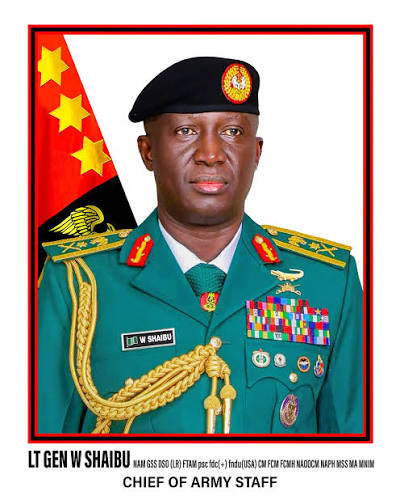
The Nigerian Army is strengthening its aviation quality management systems to improve flight safety, aircraft reliability and operational readiness.
The Chief of Army Staff (COAS), Lt.-Gen. Waidi Shaibu, stated this at the opening of the Nigerian Army Aviation Command Workshop on Aviation Quality Management Systems on Monday in Abuja.
Represented by the Chief of Standard and Evaluation, Maj.
-Gen. Thompson Ugiagbe, the COAS said the effectiveness of army aviation depended on robust quality management systems.“The effectiveness and sustainability of these capabilities depend not only on the availability of aircraft and trained personnel, but also on robust quality management systems that ensure safe, standardised and reliable aviation operations,” he said.
Shaibu said aviation operations required the highest standards of discipline, professionalism, standardisation and continuous improvement.
He said the systems would help identify risks, ensure compliance with approved standards and prevent recurring deficiencies.
“As Nigerian Army Aviation continues to expand its operational and technical capabilities, institutionalising such a system is essential to building a resilient aviation organisation and sustaining operational readiness,” he said.
The army chief noted that since the re-establishment of Nigerian Army Aviation in 2014, efforts had been made to develop the platforms, personnel, infrastructure and systems required to support land operations.
He said the workshop would provide an opportunity for participants to examine practical approaches to quality assurance, safety management, maintenance practices, documentation and standardisation.
Shaibu expressed confidence that the deliberations would produce actionable recommendations for institutionalising an effective quality management system across Nigerian Army Aviation.
He urged participants to develop sustainable measures to strengthen aviation safety culture, improve operational processes and enhance the reliability of aviation assets.
The Commander, Nigerian Army Aviation Command, Brig.-Gen. Al-Amin Ibrahim said quality management was fundamental to aviation safety, aircraft availability, mission effectiveness and combat readiness.
“For the Nigerian Army Aviation Command, quality is not merely an administrative requirement; it is fundamental to operational safety, aircraft availability, mission effectiveness, accountability and sustained combat readiness,” Ibrahim said.
He said the workshop was designed to establish a structured framework for standardisation, accountability, disciplined documentation, effective monitoring and continuous improvement across the Command.
The commander stressed that quality management should be embraced as a shared responsibility by all personnel involved in aviation operations.
“Quality must also be embraced as a culture. It is not the sole responsibility of an inspectorate or quality assurance office.
“Rather, it is the responsibility of every officer, soldier and civilian staff member involved in planning, flying, maintenance, logistics, administration, training and support,” he said.
Ibrahim said the Command must prioritise preventing deficiencies rather than waiting for them to occur before taking corrective action.
He urged participants to develop practical recommendations with measurable outcomes that could be implemented and monitored across the Command.
“Our emphasis must be on prevention through discipline, effective supervision, risk awareness, adherence to approved procedures, timely reporting and organisational learning,” he said.
Ibrahim added that the proceedings and recommendations would be compiled into a compendium to guide the implementation, monitoring and periodic review of quality management initiatives.
The five-day workshop, which began on Monday, ends on Friday, brought together stakeholders to strengthen quality management and promote a culture of operational excellence in Nigerian Army Aviation. (NAN)




2027: Benue People Are Not ‘Shenanigans’, Alia Owes You No Apology, Ex-Ambassador Tells Ortom
ShareFrom Attah Ede, Makurdi A former Nigerian Ambassador to Namibia, Terhemen Tarzoor, has criticized former Benue State Governor Samuel Ortom...


JPMorgan’s Entry into Nigeria: Turning Global Finance into a National Development Opportunity
ShareBy Uche Joe Uwaleke The proposed establishment of JPMorgan Merchant Bank Nigeria Limited presents Nigeria with an important opportunity to...


WAHO Steps Up Regional Health Surveillance After Ebola Case Confirmed in Abuja
ShareBy David Torough, Abuja The West African Health Organisation (WAHO) has intensified regional health surveillance following the confirmation of an...


2027: Don’t Call Benue People Shenanigans, Alia not answerable to you- Ex- Amb, Tarzoor Tells Ortom, Wike.
ShareFrom Attah Ede, Makurdi Ex -Nigeria’s Ambassador to Namibia, Terhemen Tarzoor, has warned the immediate past Governor of Benue State...

DBN Signs $61m Credit Deal With AfDB, Unveils Support Initiative Report
ShareBy Tony Obiechina, Abuja The Development Bank of Nigeria Plc (DBN) has launched DAWN: DBN Action for Women in Nigeria,...

NLC Threatens Nationwide Action as Talks With FG Collapse
ShareBy Tambaya Julius, Abuja The Nigeria Labour Congress (NLC) has threatened possible nationwide industrial action following the failure of talks...

Top10 Magazine Names Umaru Kwairanga as Man of the Year 2026
ShareAlh. (Dr) Umaru Kwairanga, Group Chairman, Nigerian Exchange Group (NGX Group), has been named as the Top10 Magazine’s Man of...

UK, Nigeria to Deepen Defence, Security Cooperation
ShareThe United Kingdom has reaffirmed its commitment to deepening defence and security cooperation with Nigeria, with emphasis on military training,...


2027: INEC Steps Up Preparations, Completes Nine Activities
ShareBy Tambaya Julius, Abuja The Independent National Electoral Commission (INEC) has completed nine of the 14 activities on its timetable...


2027: Tinubu Accords Benue Security Top Priority, Tompolo Tells Supporters
ShareLeader of the PBAT Door-to-Door Movement, Government Tompolo, has called on the people of Benue state to come out enmasse...