
BUSINESS
International Beer Day: Local Supply Chain Support, from Seed to Sip — Laseinde


From the soil of Northern Nigeria, from where grains are sourced, to the bubbling breweries in the South that bottle joy, and finally to your glass, beer is more than just a beverage. It is a cultural artifact, a celebration of local entrepreneurship and it is a sustainable force of development.
As the world observes International Beer Day, what better time to spotlight the engine room of this golden industry: Nigeria’s local beer supply chain.The Nigerian beer industry is one of the most dynamic in Africa, and caters to over 200 million consumers. Yet, beyond the stream of iconic labels and festival commercials, lives a vibrant ecosystem that adds value. Farmers, transportation engineers, marketers, bar owners, recyclers, and innovators are reliant on beer production and delivery for gainful employment.
Sourcing fresh grains from Nigerian farmers makes beer companies contributors to rural economic development, supporters of agronomic innovation and diversification, and a means of reducing import dependency. Local sourcing enhances food security and supports the foundational elements of industrial self-reliance. Opening a bottle of beer, in essence, is a silent salute to the thousands of farmers working across the rich, fertile lands of Nigeria
Beer binds cultures together, whether being toasted at a naming ceremony in Abeokuta or downed at the end of a long day in Jos, beer has become a nexus of community across tribes, religions, and classes. Beer unifies people, encourages conversations, and often plays a backseat role in defining moments in one’s life.
Beyond that, beer tells a story rooted in indigenous Nigerian culture. From the packaging that pays tribute to our heritage, to advertisements that mirror our humor, odds, and wins, beer serves as a lens into our identity. In many ways, when people engage with beer, they are not merely consuming it; they are experiencing it.
This layered value chain is also a training ground. Often, breweries will up-skill employees with technical skills training, workplace safety protocols, and environmental sustainability, which means they are producing a skilled national workforce. It is an ecosystem where blue-collar and white-collar roles intersect, providing a balanced socio-economic impact.
Beer production today is being managed with the environment in mind. Increasingly, Nigerian beer companies are looking to use renewable energy, treat wastewater, and implement circular packaging. Grains can be repurposed to animal feed, glass bottles recycled, and even introducing new technologies such as lighter-weight cans to mitigate carbon emissions. These actions are more than just corporate responsibility; they are commitments to Nigeria’s future.
As we raise our glasses high this International Beer Day, we must recognize the leg of the journey from seed to sip.
Beer is more than a drink; it is an industry that provides families with food and shelter, builds communities, shapes culture, and now, takes into account its footprint on the planet. The local supply chain is not only strong but also strategic!
In celebrating and supporting this industry, we do not just celebrate a product; we celebrate potential, resilience, and the Nigerian spirit of enterprise.
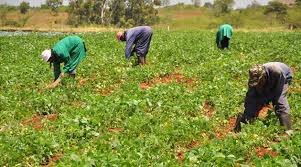
Wheat farmers in Gombe State have lamented the impact of climate change on wheat cultivation in the state, amid poor harvest.
Chairman, Gombe Chapter of the Wheat Farmers Association Bala Garba, said yesterday that many members of the association were expecting poor harvest in the state.
Garba said that the impact of climate change was increasingly becoming unbearable for most wheat farmers who often cultivated the commodity in the dry season between October and March.
According to him, many farmers are expecting a poor harvest as they begin harvesting due to the delayed harmattan season this year.
”The situation can threaten the cultivation of wheat as many farmers who recorded losses are already planning to abandon the commodity.
”This year, we didn’t see harmattan like we usually experienced in the past which helps us to cultivate wheat.
”You know the harmattan season is a good period for wheat cultivation, because of its cool, dry, and windy conditions which provide the necessary environment for wheat growing under irrigation.
”But this year is different as we didn’t witness any harmattan until slightly in February; making wheat farmers to suffer huge losses due to poor yield.
”Over 2,000 wheat farmers that planted the crop this year are lamenting because it is certain they won’t get value for their investments.”
Garba said there was a need for relevant stakeholders and the government to support wheat farmers with a view to encouraging its cultivation in the future.
He also appealed to both the state and the Federal Government to support farmers with climate resilient inputs to enable them tackle the impact of climate change on agriculture.
He further called on farmers to embrace climate smart agriculture practices and to seek extension services before carrying out farming activities to minimise losses associated with climate change.
Goldman Sachs lifted its fourth-quarter 2026 oil price forecasts, citing tighter Organisation for Economic Co-operation and Development (OECD)inventories, while the bank maintained its view of a sizable global surplus.
Brent crude has rallied to about $71 as Iran-related supply concerns boosted positioning and the risk premium while OECD inventories have failed to build as expected.
This reflects January supply disruptions and the fact that much of the global surplus is accumulating as sanctioned crude “stuck at sea,” strategists led by Daan Struyven said.Against that backdrop, Goldman raised its 2026 fourth-quarter Brent and West Texas Intermediate (WTI) forecasts by $6 to $60 and $56 per barrel, respectively.
The bank still expects Brent to fall to $60 by late 2026 — which it sees as the cycle low — as the risk premium fades and inventories eventually rise.The revision comes despite Goldman maintaining its global oil surplus forecast of 2.3 million barrels per day for 2026. Strategists said lower OECD inventories matter more for pricing and now assume only 19 per cent of global inventory builds will materialize in OECD commercial stocks, down from 27 per cent previously.
Instead, they expect about 25 per cent of the surplus to accumulate as Russia and Iran crude stored at sea, reflecting persistent demand shortfalls for sanctioned barrels. Excluding those floating barrels, the effective surplus would shrink to 1.7 million barrels per day.
On supply, Goldman still sees strong growth outpacing demand next year. It maintained its 2026 surplus view assuming no major supply disruption and no Russia-Ukraine peace, noting that January disruptions in Kazakhstan and Venezuela appear mostly temporary.
Looking further out, the Wall Street firm expects oil prices to strengthen from 2027 as markets rebalance. Strategists forecast Brent and WTI to average $65 and $61 in 2027 and to reach $70 and $66 by December 2027 on “solid demand growth and slowing non-OPEC supply growth.”
Geopolitics remain a key swing factor. The strategists said risks to their outlook are “two-sided but skewed to the upside,” with scenarios such as a 1 million barrel-per-day hit to Iranian supply potentially lifting Brent to around $68 in late 2026

Five years after its inauguration in Nigeria, Spotify says music listening in Nigeria has grown at an average rate of 163.5 per cent, underscoring the speed at which the country has emerged as a global streaming force.
In a statement on Monday in Lagos, Spotify reported triple-digit year-on-year surges in its early years and sustained momentum through 2025.
The platform, which entered the market in February 2021, described the journey as one marked by rapid cultural acceleration.
Spotify said at the heart of that growth was Afrobeats, which recorded a +5,022 per cent increase in streams locally between 2021 and 2025.
The platform said other genres also witnessed remarkable expansion.
According to Spotify, Amapiano surged by +10,330 per cent, Gospel and Praise grew by +5,499 per cent, Hip-hop and Rap rose by +3,020 per cent while R&B climbed +2,602 per cent.
The platform further said language had become another growth engine with indigenous language listening at +554 per cent in 2024 and +87 per cent in 2025 within Nigeria.
Globally, the platform said indigenous language streams rose +141 per cent in 2024 and +41 per cent in 2025, reflecting what it described as a growing appetite for local-language storytelling and sound.
The first track streamed in Nigeria at launch was “到此為止” by Shiga Lin, reinforcing Spotify’s view that Nigerian users are curious, eclectic and always open to discovery.
The platform noted that across five years, the most-streamed artists in Nigeria include Burna Boy, Davido, Asake, Wizkid and Seyi Vibez.
It said among the most replayed songs are ‘Remember’ and ‘Lonely At The Top’ by Asake, ‘Kese (Dance)’ by Wizkid, ‘Doha’ by Seyi Vibez, and ‘With You’ by Davido featuring Omah Lay.
The platform said the number of Nigerian artistes on the platform had grown by +158 per cent since its launch while users have created more than 25 million playlists over the period.
According to Spotify, in 2025 alone, Nigeria recorded over 1.4 million play hours on the platform.
It said podcast consumption was also expanding with more than 59 billion total podcast hours streamed since its launch.
The platform also noted that user behaviour revealed a young and adventurous market with the average listener aged 26.
Spotify said that in recent months, Nigerians streamed an average of 150 different artists, evidence of what the platform called a young, discovery-driven audience.
Industry observers say the figures confirm Nigeria’s cultural influence but warned that rapid consumption growth must translate into sustainable earnings for creators.
They noted that while streams were rising sharply, questions remained around royalty transparency, equitable revenue distribution and whether emerging and regional acts benefit sufficiently from algorithm-driven visibility.
Stakeholders recommend stronger monetisation systems; clearer royalty frameworks and improved access to data analytics to help artistes better understand and grow their audiences.
Analysts also view the surge in indigenous language streams as a major export opportunity, urging structured global playlist placements, improved metadata tagging and strategic branding support to sustain momentum.
On podcasts, they called for deeper investment in local advertising frameworks, training and creator tools to ensure that the 59 billion streaming hours convert into viable careers. (NAN)




Tiwa Savage Unveils Music Foundation to Empower Young African Creatives
ShareInternational Afrobeats star, Tiwa Savage, has unveiled the Tiwa Savage Music Foundation to support young African creatives across multiple areas...


I’ve been Paid N40m for Boxing Match with Carter Efe – Portable
ShareControversial Nigerian street pop artiste, Portable, has been paid the sum of N40 million for agreeing to engage in a...


Army Kills Scores of Terrorists, Rescue Hundreds in February Offensive
ShareBy David Torough, Abuja The Armed Forces of Nigeria (AFN) said it intensified nationwide military operations in February 2026, killing...


Troops Crush IPOB/ESN Stronghold in Mother Valley Assault
ShareBy David Torough, Abuja Troops of Joint Task Force South East Operation UDO KA launched a decisive assault on 26...


Burna Boy’s Associate, Rahman Jago Confirms Singer Convert to Islam
ShareRahman Jago, a socialite and associate of Grammy-winning singer Burna Boy, has confirmed that the singer has converted to Islam....


UCL: Osimhen Slams Galatasaray Display Despite Win over Juventus
ShareSuper Eagles striker Victor Osimhen has expressed disappointment with Galatasaray’s performance despite their UEFA Champions League playoff victory over Juventus,...
NPFL: Enyimba Must Adapt Quickly To Deutsch’s Style of Play – Odeh
ShareEnyimba star Paul Odeh has disclosed that the players must adapt quickly to new head coach Emmanuel Deutsch’s style of...

Ronaldo Becomes Co-owner of Spanish Side Almeria
ShareCristiano Ronaldo has become co-owner of Spanish second division side Almeria after acquiring a 25% share in the club. The...


Germany, Austria Remain Europe’s Cash Strongholds, Survey Finds
ShareBearingPoint commissioned a new survey showing Germany and Austria still lead Europe in cash usage, defying the broader continental shift...


Hillary Clinton Testifies before U.S. Congress in Epstein Affair
ShareFormer U.S. Secretary of State Hillary Clinton is due to testify before the U.S. Congress on Thursday relating to the...