
BUSINESS
IWD: Ecobank Unveils ‘Ellevate’ to Promote Women Entrepreneurs’ Growth

Ecobank Nigeria, has unveiled an enhanced version of its gender financing initiative, ”Ellevate” by Ecobank, as part of activities commemorating 2026 International Women’s Day (IWD).
A statement by the bank on Wednesday, said that the upgraded programme reinforced the bank’s long-term commitment to advancing women-led enterprises in Nigeria and across Ecobank’s pan-African footprint.
Originally inaugurated to improve access to finance for women-owned, women-led, and women-focused small and medium-sized enterprises (SMEs) within its commercial banking segment, the enhanced ”Ellevate” programme now adopts a broader, more inclusive structure.
The new framework extends across all business segments, positioning ”Ellevate” as a comprehensive ecosystem designed to address the structural financing and growth barriers faced by women entrepreneurs.
The Managing Director of Ecobank Nigeria, Bolaji Lawal, said the enhanced programme further strengthened the bank’s ambition to be the financial partner of choice for women entrepreneurs.
“Since its inauguration in Nigeria in July 2021, ‘Ellevate’ has delivered meaningful impact for SMEs and women-led businesses.
“This next phase deepens our value proposition and reinforces our resolve to remain the preferred financial partner for women entrepreneurs,” he said.
Lawal also said that the expanded structure offered improved access to credit on competitive terms, including more flexible collateral considerations aimed at easing traditional financing constraints.
He said beyond lending, the programme integrated digital payment, collections, and cash management solutions to enhance operational efficiency and support scalability.
He added that a core pillar of the enhancement was structured market access.
He explained that, through the bank’s ”MyTradeHub” online matchmaking platform and e-commerce enablement capabilities, women entrepreneurs would be better positioned for cross-border trade expansion and participation in Africa’s regional value chains.
According to him, the initiative also incorporates robust non-financial support mechanisms, including targeted training programmes, leadership development sessions, and knowledge-sharing platforms to strengthen managerial capacity and long-term sustainability.
”This is complemented by access to custom wealth management advisory services, integrated insurance solutions, and a loyalty framework offering commercial incentives through select retail and lifestyle partnerships.”
Lawal noted that the programme aligned with Ecobank’s broader ambition to drive inclusive growth by empowering women as critical contributors to economic development.
“African businesswomen deserve world-class banking solutions that drive turnover, profitability, and sustainable growth.
“Our approach goes beyond financial inclusion to building an enabling ecosystem that enhances competitiveness and long-term resilience,” he added.
The nation’s aggregate Company Income Tax (CIT) for Q4 2025 is reported to be 1.49 trillion, the National Bureau of Statistics (NBS) said.
The figure is contained in the NBS Company Income Tax (CIT) Q4 2025 Report released in Abuja on Wednesday.
According to the report, the figure shows a decrease of 49.
81 per cent on a quarter-on-quarter basis from N2. 96 trillion recorded in Q3 2025.The report said domestic CIT received was N819.83 billion, while foreign CIT payment was N668.21 billion in Q4 2025.
It said on a quarter-on-quarter basis, activities of extraterritorial organisations and bodies recorded the highest growth rate with 75.15 per cent,
The report said this was followed by Education and real estate activities at 54.
20 per cent and 27.25 per cent respectively.“On the other hand, accommodation and food services activities recorded the lowest growth rate at -67.11 per cent, followed by activities of households as employers, undifferentiated goods and services producing activities of households for own use at -63.49 per cent .
“It said mining quarrying was recorded at -49.63 per cent.”
In terms of sectoral contributions, the report showed that the top three activities with the highest contribution in Q4 2025 were financial and insurance activities at 18.17 per cent, manufacturing at 17.30 per cent and mining and quarrying at 15.04 per cent.
It said on the other hand, the activities of households as employers, undifferentiated goods and 0.002 per cent.
“This was followed by water supply, sewage, waste management and remediation activities with 0.04 per cent.
The report, however, said, on a year-on-year basis, CIT collections in Q4 2025 increased by 13.38 per cent from Q4 2024.
The Managing Director/Chief Executive Officer of the Nigerian Independent System Operator, Abdu Bello, has disclosed that Nigeria’s power sector was losing between N5bn and N8bn monthly to transmission inefficiencies, even as he revealed that targeted interventions by the operator have begun to cut losses and improve grid stability.
Bello made this known on Wednesday during the organisation’s first anniversary celebration held at its headquarters in Utako, Abuja, where he presented a detailed scorecard of reforms and operational milestones recorded since its establishment.
Recall that NISO was officially created on April 30, 2024, by the Nigerian Electricity Regulatory Commission following the unbundling of the Transmission Company of Nigeria under the Electricity Act, 2023.
Speaking on one of the most pressing challenges inherited by the operator, Bello said the transmission loss factor at inception was alarmingly high, with severe financial implications for the power sector.
“One of the greatest problems we encountered at the inception of NISO was that we recorded a very high transmission loss factor. At some point, it was close to 10 per cent, costing about N5bn to N8bn monthly,” he said.
He, however, noted that deliberate operational measures have started yielding results.
Adopting a broader tone, the NISO boss said the past year had been defined by institution-building, system stabilisation, and market reforms aimed at repositioning Nigeria’s electricity sector.
He explained that NISO was established to function as an independent system operator with responsibility for system operations, market administration, planning, and enforcement of grid codes and market rules.
On institutional development, he said the organisation had prioritised governance and coordination across the electricity value chain.
A major highlight of the address was NISO’s push to digitise grid operations through advanced monitoring systems.
Bello disclosed that the operator is accelerating the deployment of Supervisory Control and Data Acquisition/Energy Management Systems to enable real-time grid visibility.
He added that the organisation was also deploying telemetry systems and Internet-of-Things-based metering infrastructure across generation units, transmission lines, and substations.
According to him, the initiative would enable near-real-time electricity market settlements and significantly improve operational efficiency.
Bello also revealed that NISO has intensified efforts to tackle grid instability and recurring system collapses through technical reforms and stricter compliance enforcement.
He noted that compliance with this directive has already improved grid frequency stability.
He further disclosed plans to introduce grid “islanding”, a strategy that segments the national grid to prevent widespread outages.
On market operations, Bello said NISO has taken steps to improve transparency, enforce compliance with market rules, and strengthen coordination among industry players.
He added that NISO is playing a central role in coordinating emerging state electricity markets following recent sector reforms.
The NISO boss also linked recent fluctuations in power generation to gas supply challenges, stressing the need for stronger coordination between the power and gas sectors.
He assured that regulators and stakeholders are working to address the issue and prevent future disruptions.
In a significant development, Bello disclosed that Nigeria has achieved trial synchronisation of its national grid with the West African power system, opening new opportunities for cross-border electricity trade.
He explained that the integration would allow Nigeria to export excess power and earn foreign exchange.
These interventions are contributing to improving system discipline and reliability together. On electricity market development and strengthening, we have made deliberate efforts to strengthen market credibility and transparency.
NISO was carved out of the Transmission Company of Nigeria as part of sweeping reforms introduced by the Electricity Act, 2023, to liberalise and decentralise Nigeria’s power sector.
The reform seeks to separate system operations from transmission ownership, improve transparency, and create a more competitive electricity market.
Despite these reforms, Nigeria’s power sector continues to face structural challenges, including transmission constraints, gas supply shortages, liquidity issues, and weak infrastructure.
NISO’s first-year performance signals a shift towards data-driven grid management and coordinated planning, although sustained investment and policy consistency will be required to deliver long-term stability.
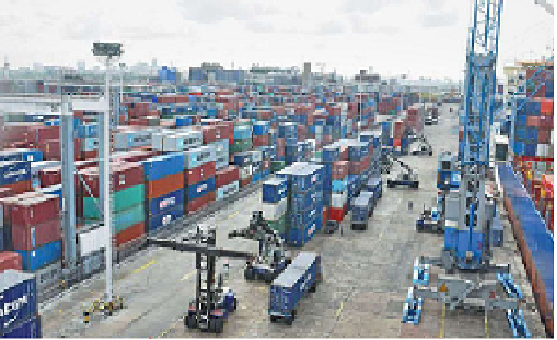
The Nigerian Ports Authority (NPA) said 41 ships carrying petroleum products, food items and other goods are expected at Lagos ports on Wednesday.
The NPA disclosed this in its Daily Shipping Position obtained on Wednesday in Lagos.
According to the bulletin, the vessels are expected between April 8 and April 14.
The authority said 24 of the ships would carry containers loaded with various goods.
“Seventeen ships will berth with bulk sugar, fresh fish, salt, general cargo, gypsum, aviation fuel, diesel, naphtha, gasoline, gas oil and wheat,” it added.
The NPA said 16 ships and tankers had already arrived and were awaiting berthing at the three ports.
According to the authority, the vessels carry general cargo, wheat, diesel, aviation fuel, petrol, gasoline, blend stock, containers, crude oil, fertiliser and fresh fish.
It added that 21 ships were discharging urea, containers, base oil, fresh fish, soya beans, gas and fertiliser at Lekki Deep Sea Port, Apapa and Tincan Island Port.



Justin Bieber Headlines Coachella with Nostalgia-fuelled Set
ShareJustin Bieber made a nostalgia-fuelled return to the major stage as Coachella’s much-anticipated headline act. The 32-year-old spent much of...


Sule Rewards First-Class Graduates, Honours Tanzania’s President at NSUK 8th Convocation
ShareBy Tambaya Julius, Abuja The Nasarawa State University, Keffi over the weekend celebrated its 25th silver jubilee anniversary and combined...


OPay Named Nigeria’s Most Trusted Digital Financial Company at 2026 ISO Awards
ShareOPay, a leading financial institution in Nigeria, has been awarded The Most Trusted Quality Mobile Money and Digital Financial Services...

Kogi Dismisses Claims of Ethnic Exclusion in Employment
ShareFrom Joseph Amedu, Lokoja The Kogi State Government has responded to a viral voice note allegedly recorded by a female civil servant,...
Prosperity Cup 2026: LGA Finals Get Dates
ShareFrom Mike Tayese, Yenagoa The Central Organizing Committee (COC) of Nigeria’s biggest grassroots football spectacle, the Bayelsa Governor’s Football Tournament,...


Trump Orders US Naval Blockade of Strait of Hormuz
SharePresident Donald Trump on Sunday ordered a US naval blockade of the Strait of Hormuz in response to Iran’s “unyielding” refusal to give up its nuclear ambitions during...
Psychiatrist Decries High Cost of Mental Illness Treatment, Seeks Interventions
ShareA Consultant Psychiatrist, Prof. Taiwo Obindo has decried the cost of care and drugs for individuals undergoing treatment for various mental health conditions, calling for interventions to reverse the...

ENSIEC Fixes 2026 Council Election Timetable Sept 26
Share From Sylvia Udegbunam, Enugu The Enugu State Independent Electoral Commission (ENSIEC) have released a revised timetable for the 2026 local...
Afreximbank Total Assets Grow to $48.5bn in 2025
ShareBy Tony Obiechina, Abuja The African Export-Import Bank (Afreximbank) said it has grown its total assets and contingencies to $48.5...

FG Tasks Dangote Sugar on 600,000MT Capacity Expansion
ShareBy Tony Obiechina, Abuja The Federal Government has urged the Dangote Group to expand the annual production capacity of its...