
POLITICS
Jigawa Senator Pledges More Democratic Dividends to Constituents

From Sule Tahir, Dutse
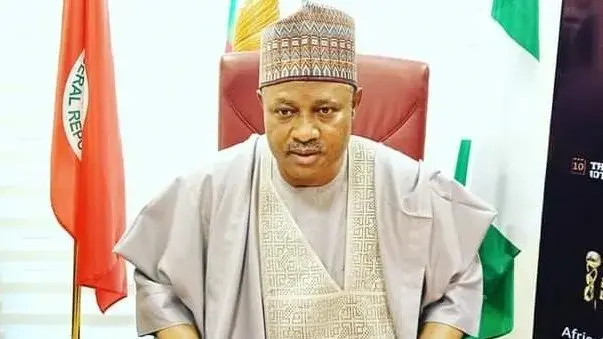
Senator Representing Jigawa North-East Senatorial District, Amb. Ahmed Abdulhamid Malam-Madori has affirmed that the duty of an elected political office holder was to provide the electorate’s of his Constituents Democratic Dividends.
Speaking while disbursement of 540 bags of 25kg rice (in two rounds) to needy families across ten wards, of his Constituency as palliatives in addition to Cash donations ranging from ₦10,000 to ₦200,000 to community leaders and grassroots stakeholders ₦50,000 relief support to storm victims in Ganji and Fandum, further said we were able to facilitates registration assistance to five of our students studying at Bayero University Kano (BUK), as well rendered support to our master’s and undergraduate students at Sule Lamido University (SLU), Kafin Hausa. These incentives cover both payment of registration and accommodation fees for ten (10) students at the College of Education and Islamic Legal Studies, Ringim.These Commitments among others were achieved by the Senator in less than two years in office, Distinguished Senator Amb. Ahmed Abdul Hamid Malam Madori has also demonstrated exceptional leadership and people-centered governance through a broad range of impactful projects that have transformed Kiri Kasamma Local Government Area, amongst other seven LGA’S of his Constituency.To further strengthen foundational education, Senator Malam-Madori also distributed 125 packets of chalk, 40 bundles of books, and 400 pencils to Nomadic Schools across ten wards of his Constituents, as well settlements of NABTEB registration fees for five (5) students, and distributed 120 JAMB PINs worth ₦1.2 million to prospective undergraduates.He sponsored students in key health and legal institutions, including BELBA College of Nursing, Hadejia; Kaltima Maikyari College of Health Technology, Nguru; Atiku Abubakar College of Legal and Islamic Studies, Nguru; and the School of Nursing, Federal Medical Center, Nguru. Also funded Children’s Day Celebrations (2024 and 2025) with ₦250,000, promoting youth engagement and education awareness.Similarly Malam-Madori’ healthcare initiatives have improved lives and community resilience., where he supported over 13 patients with direct medical care in Jiyan (Fandum) and Kirikasamma communities, and donated a brand-new ambulance to the General Hospital, Kirikasamma, boosting emergency response and patient transport across the area.In areas of Building Infrastructure and Community Assets, Senator Ahmed has executed tangible infrastructure projects to uplift communities.These include the installation of solar-powered streetlights in Jarmari, Bulunchai, Karigidi, Madugunari, Ilallah, Maguwa, and Kirikasamma town; construction of two new mosques in Baredi and Alhajeri; and the award construction of a modern stadium project in Kirikasamma, to serve as a hub for sports and youth development.The Senator also took the pains of resuscitating Two water Tanks at Kaban, provision of one transformer at Sawo and Two Hand Pumps at Rigar Isah respectively.In areas of Security, Senator Malam-Madori enhanced Security for Stability for the safety of public safety, where he supplied a brand-new Toyota Hilux vehicle valued at ₦55 million to the Kirikasamma Police Division, alongside a complete renovation of the facility. These efforts have strengthened law enforcement capacity and boosted morale among security personnel.Also support the Vulnerable Through Palliatives in touching the lives of the People with disability. Similarly In his trademark compassionate approach, Senator Ahmed launched multiple social intervention initiatives targeting vulnerable households, orphans, and people with disabilities.Among these are:Distribution of 540 bags of 25kg rice (in two rounds) to needy families across ten wards, provision of Cash palliatives ranging from ₦10,000 to ₦200,000 to community leaders and grassroots stakeholders. ₦50,000 relief support to storm victims in Ganji and Fandum.Launch of ‘Ambassador Riga-Riga’ and ‘Ambassador Gida-Gida’ schemes has benefitted about 45 households, and rendered₦2 million palliative package for 200 persons with disabilities, and offering of ₦1 million start-up support to 100 Fulani women entrepreneurs. ₦300,000 financial support to eight (8) accident victims in Busuku and Doleri.In areas of Agricultural Development the Senator Supply’s large consortium of fertilizer (NPK and Urea) to 800 farmers to boost agricultural output.Disbursement of ₦10 million in business start-up grants, ranging between ₦250,000 and ₦7 million, for local entrepreneurs. Introduction of an ongoing monthly allowance scheme for select beneficiaries.Empowerment and Employment Creation to promote economic self-reliance, Senator Ahmed Malam Madori trained and empowered 50 women in handcraft and petty trading, providing each with ₦20,000 in start-up funds. He also supported the Birniwa–Guri–Kirikasamma Ambassador Association with ₦500,000 and facilitated the recruitment of 19 new police officers from Kiri kasammma constituency.Beyond infrastructure, the Senator maintains close ties with the people through stakeholder engagements, condolence visits, and local event participation — ensuring leadership with empathy and accessibility.“Our duty as representatives is not merely to speak for our people in Abuja, but to bring the dividends of democracy to their doorsteps. Every project I execute is a promise fulfilled — a testament to my commitment to the progress, dignity, and unity of our people.”These gigantic strides qualify Senator, Amb. Ahmed Abdul Hamid Malam Madori to emerged as one of Jigawa State’s most responsive and result-driven legislators, describing his human gesture’s as “Inspiring and committed people’s oriented Senator who distinguishes himself as People’s oriented Senator of refutes on whose vision always stand for strengthen the socio-economic fabric of Kiri Kasamma amongst the 7 LGA’S of his Constituency.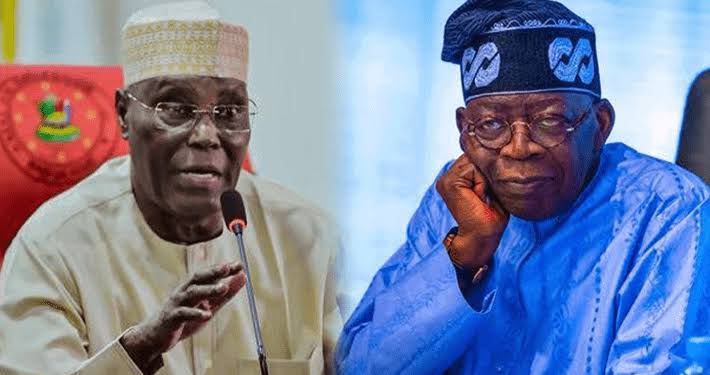
By David Torough, Abuja
The political contest ahead of Nigeria’s 2027 general elections has intensified, with former Vice President Atiku Abubakar and President Bola Tinubu trading accusations over economic policy, the cost of living and the use of foreign lobbying in the emerging opposition campaign.
The latest confrontation followed President Tinubu’s declaration that his administration’s economic reforms were beginning to yield measurable results, with the economy recording 4.
43 per cent growth in the second quarter of 2026.In a statement issued through his Senior Special Assistant on Public Communication, Phrank Shaibu, Atiku accused the President of offering what he described as “Political anaesthesia” to Nigerians while failing to adequately address rising living costs.
The former vice president challenged the administration over petrol prices, revenue management, subsidy savings and import-duty exemptions, arguing that economic growth figures would mean little unless they translated into lower costs and improved household welfare.
Atiku’s camp specifically questioned the government’s handling of nearly ₦30 trillion in Federation Account-related revenues and deductions, about ₦15.8 trillion which the government says was mobilised following the removal of the petrol subsidy between June 2023 and December 2025, and approximately ₦34 trillion in imports covered by Import Duty Exemption Certificate approvals in 2025.
The opposition figure also criticised petrol prices, citing lower pump prices in several oil-producing countries. His camp argued that a Nigerian earning the ₦70,000 minimum wage would need ₦56,000 to purchase 40 litres of petrol at ₦1,400 per litre.
Atiku said his proposed Atiku Economic Recovery Plan would seek to reduce energy and transportation costs through targeted support for domestically supplied crude under what his camp described as a capped, transparent and independently audited framework.
His spokesman also criticised the student-loan system, arguing that education should not saddle young Nigerians with long-term debt, and proposed reviewing existing loans and forgiving qualifying student debts.
But the Presidency has maintained that the reforms introduced by the Tinubu administration were necessary to stabilise the economy after years of structural distortions.
In a statement on his X account, Tinubu said Nigeria’s economy grew by 4.43 per cent in Q2 2026, compared with 4.23 per cent in the corresponding period of the previous year.
He said growth was recorded across agriculture, manufacturing, oil and gas and services, while nominal GDP rose to ₦119.27 trillion from ₦100.7 trillion in Q2 2025.
The President pointed to improved foreign reserves, stronger oil and gas production, trade surpluses, an improved credit rating and renewed investor interest as evidence that the government’s reforms were taking effect.
He also cited the absence of university strikes and the expansion of student loans through NELFUND as part of what he described as the administration’s broader reform agenda.
Tinubu nevertheless acknowledged that economic growth must eventually be reflected in household welfare. He promised measures aimed at providing cheaper transportation, increasing food production and delivering relief programmes to vulnerable Nigerians.
The President warned that his administration would not reverse the reforms, despite opposition calls for changes to some of the policies.
Washington lobbying controversy
The economic disagreement has been accompanied by a separate political dispute over the activities of a Washington-based lobbying firm reportedly engaged by Atiku.
A Presidency-linked account, citing U.S. Department of Justice filings under the Foreign Agents Registration Act, alleged that Atiku contracted Von Batten-Montague-York, L.C. on a reported $1.2 million, 12-month retainer.
The Presidency characterised the firm’s activities as partisan lobbying designed to influence perceptions of Nigerian political developments in Washington, particularly ahead of the 2027 elections.
It also rejected claims attributed to the lobbyist concerning alleged classified U.S. intelligence, insisting that the statements should not be interpreted as representing the position of the U.S. government or President Donald Trump.
The Presidency further argued that ongoing U.S. Freedom of Information Act proceedings concerning historical records should not be conflated with the President’s official activities or foreign travels.
It cited comments by Senior Advocate of Nigeria Wole Afolabi on Channels Television, who reportedly explained that the withholding of portions of historical records could be connected to U.S. legal protections for investigative methods and confidential sources.
The Presidency maintained that the existence of historical investigations or records did not, by itself, establish criminal liability, arguing that any allegation of wrongdoing must be determined through due process and competent judicial authorities rather than political statements or media releases.
The dispute has consequently widened beyond Nigeria’s economic policy into a contest over the credibility and purpose of foreign lobbying in domestic politics.
The Presidency has accused the opposition of seeking foreign validation and diverting attention from the administration’s economic programme, while Atiku’s camp has positioned its campaign around the argument that Nigerians are yet to experience sufficient relief from the reforms.
With 2027 approaching, the competing narratives point to the central question likely to dominate the political contest: whether the government’s improving macroeconomic indicators can translate into tangible relief for households before voters make their choice—or whether the opposition can convince Nigerians that an alternative economic strategy would deliver faster and broader benefits.
For now, Tinubu is betting on the continuation of his reforms and the gradual transmission of economic growth into household welfare. Atiku, meanwhile, is pressing the government for greater transparency and lower living costs while presenting his own economic proposals as an alternative.
The battle for 2027, increasingly, is therefore being fought not only over political personalities but over competing interpretations of Nigeria’s economic direction—and over who Nigerians believe should be trusted to deliver the next phase of national recovery.
Meanwhile, a Federal High Court sitting in Abuja, on Tuesday, postponed the suit filed against President Bola Tinubu’s participation in the 2027 Presidential election by the former Vice President, Atiku Abubakar.
This is just as the counsel to the former Vice President, Joseph Onu Silas, lamented that he has not been able to reach President Tinubu for personal delivery of Originating Summons on him in line with the provisions of the law.
Atiku had dragged Tinubu, who is the All Progressives Congress (APC) and the Independent National Electoral Commission (INEC) before the Court, praying for 1st defendant’s disqualification from the 2027 presidential election on various eligibility grounds.
Atiku, who is the Presidential candidate of the African Democratic Congress ADC), had deposed to an affidavit in support of his suit challenging the qualification of Tinubu to contest the 2027 presidential election.
The opposition politician in the Court process, is urging the Court to invoke Sections 137(1)(j), 139(1)(a)(i) and 285(14)(c) of the 1999 Constitution (as amended), as well as provisions of the Electoral Act, 2026 to determine whether Tinubu can participate in the election.
The three defendants in the suit are: Tinubu, the All Progressives Congress APC and the Independent National Electoral Commission INEC.
Atiku claimed that Section 137(1)(j) of the Constitution, provides that a person shall not be qualified for election to the office of President if he has presented a forged certificate to INEC, and asked the court to determine whether Tinubu and the APC should be disqualified from the 2027 presidential election over the NYSC certificate presented to INEC in connection with the 2023 and 2027 presidential elections.
In his affidavit, Atiku alleged that Tinubu submitted to INEC an NYSC discharge certificate bearing the name “Tinubu Bola Adekunle”, which, according to him, is different from the President’s name, Bola Ahmed Tinubu.
The affidavit further alleged that the same NYSC certificate was submitted in connection with the 2027 presidential election and alleged that the document is not a certificate obtained by Tinubu.
Atiku also placed INEC on notice to produce Tinubu’s Form CF001 submitted in connection with the 2023 and 2027 presidential elections.
Atiku and the ADC are also challenging provisions of the Electoral Act, 2026, which restrict who may challenge the qualification of a candidate at pre-election stage and the removal of qualification as a ground for questioning an election as envisaged by Section 139(a)(i) of the Constitution, which empowers the National Assembly to make laws allowing the questioning of whether a person elected into the office of President is qualified.
According to Atiku and ADC, the legislation cannot be used to shut the door against enforcement of an express constitutional provision on the ground that where an Act of the National Assembly conflicts with the Constitution, the Constitution must prevail.
The originating summons asks the Federal High Court to determine whether the statutory restrictions complained of can prevent the plaintiffs from invoking Section 137(1)(j), and ultimately whether Tinubu and the APC should be disqualified from participating in the 2027 presidential election if the plaintiffs’ case is established.
The substantive reliefs sought is an order disqualifying Tinubu and the APC from participating in the election on the grounds pleaded by the plaintiffs.
Counsel to ADC and Atiku are Edwin Inegedu, a Senior Advocate of Nigeria, and Joseph Onu Silas respectively.
When the proceedings came up on Tuesday, Silas told Justice Inyang Ekwo that he needed an order of the Court for a substituted service for the suit to formally proceed without obstacles.
Drama, however, erupted when Omosanya Popoola, a Senior Advocate of Nigeria, who stood for President Tinubu, announced his decision to accept the Court process on behalf of his client.
Popoola urged Justice Ekwo to order Atiku’s lawyer to make the Court process available to him in the open Court for delivery to Tinubu.
However, rather than complying, Atiku’s lawyer insisted that Popoola must make a written undertaking that he has the mandate of Tinubu to represent him before he would deliver the Court process to him.
At this point, the Judge in the bid to resolve the logjam resolved to adjourn the matter to enable Atiku put his house in order.
Attempts by Alex Izinyon, a Senior Advocate of Nigeria, to convince the Court to order the service of Court process on Tinubu through his lawyer for proceedings to continue did not yield fruitful results.
At the end of the proceedings, Justice Ekwo postponed the suit to September 28.
The Independent National Electoral Commission (INEC) has challenged the Nigeria Democratic Congress (NDC) to provide evidence that the commission replaced ANY of its nominated candidates for 2027 general elections.
Chief Press Secretary to the INEC Chairman, Adedayo Oketola, stated this in an interview with newsmen on Monday in Abuja.
Oketola said that the attention of INEC has been drawn to allegation by the NDC that the commission replaced some of the candidates purportedly nominated by the party with names alleged unknown to the party.
The allegation according to NDC is particularly in respect of some State House of Assembly constituencies in Anambra.
In his reaction, Oketola described the allegation that INEC went behind the NDC to obtain Form EC9 directly from individual aspirants and thereafter, uploaded their particulars as candidates without the authority of the party as serious.
He noted that such an allegation was capable of objective verification from the commission’s electronic and documentary records.
“Rather than make categorical assertions on matters that can readily be established from those records, the commission will examine the relevant records relating to the constituencies identified by the NDC.
“If the party has evidence implicating any official of the Commission in any unauthorised interference with its candidate nomination process, it should make such evidence and the particulars of the officials concerned available to the commission.
“Any credible allegation of misconduct by an official of the commission will be investigated in accordance with established procedures,” he said.
Oketola added that the allegations required some clarification regarding the role of INEC and the procedure for the nomination and submission of candidates by political parties.
“For the avoidance of doubt, INEC does not nominate candidates for political parties.
“The nomination of candidates is the responsibility of political parties, subject to compliance with the Constitution, the Electoral Act 2026 and other applicable laws, Regulations and Guidelines,” he said.
Oketola explained that the commission did not possess the legal authority to select a candidate for a political party or substitute its own preferred candidate for a person validly nominated by a political party in accordance with the law.
He further said that the candidate nomination portal provided by INEC was the platform through which political parties submit the particulars of their candidates using access credentials issued for that purpose.
He added that the activities carried out in relation to the submission of candidates through the portal were electronically recorded and were capable of verification from the commission’s records and audit trail.
Oketola said it was therefore possible to establish objectively the history and source of entries relating to any candidate whose name appears on the portal.
“Accordingly, the allegation that officials of the commission introduced or “smuggled” candidates into the NDC’s list is not a matter that should be determined by speculation.
“The electronic and documentary records relating to the affected constituencies are capable of establishing the relevant facts.
“It is equally necessary to clarify the distinction between INEC’s responsibility to monitor political party primaries and the responsibility of political parties to nominate and submit their candidates,” he said.
Oketola said that INEC’s monitoring of a political party primary did not amount to nomination of a candidate by INEC.
He also added that a report made by officials who monitor a primary did not confer upon the commission the power to choose a candidate for the political party.
He explained that the monitoring process served the statutory purposes prescribed by law and did not transfer the party’s responsibility for nomination to the commission.
“Where questions arise as to the person validly emerged from a political party primary, the effect of an appeal arising from that primary, or the validity of any subsequent attempt to alter the outcome of the nomination process.
“Those questions must be resolved strictly within the framework of the Electoral Act 2026 and other applicable laws.
“INEC cannot assume the role of a political party in choosing its candidates, nor can it disregard applicable statutory requirements governing the nomination and submission of candidates,” he said.
Oketola, however, emphasised that INEC had no institutional interest in the choice of candidate made by any political party.
He stressed that INEC’s responsibility is to administer the electoral process impartially and in accordance with the Constitution, the Electoral Act and applicable Regulations and Guidelines.
“Political parties also have a corresponding responsibility to ensure that their nomination processes, internal appeals, submission of candidates and use of the commission’s candidate nomination portal are undertaken strictly in accordance with the law and within the prescribed timelines,” he said.
Oketola reiterated that INEC would continue to discharge its responsibilities transparently, impartially and in accordance with the rule of law.
“Where legitimate concerns are raised concerning the candidate nomination process, the commission will address them on the basis of its records and the applicable law.
“The commission will neither nominate candidates for political parties nor lend itself to the imposition of candidates on any political party,” he said.(NAN)
Kaduna State Governor, Uba Sani is to face 17 other candidates in the 2027 governorship election, following the publication of particulars of candidates by the Independent National Electoral Commission (INEC).
The full list of the gubernatorial candidates and their running mates for Kaduna State was yet to be pasted at the INEC office in Kaduna as of Monday.
INEC had on Saturday begun the publication of the personal particulars and credentials of gubernatorial candidates nominated by political parties.
Available reports indicate that 18 political parties have fielded candidates for the Kaduna governorship election, with Sani seeking re-election on the platform of the All Progressives Congress (APC).
Some of the candidates whose names have so far been identified include Isa Ashiru of the African Democratic Congress (ADC), Bawa Usman of the Peoples Democratic Party (PDP), Muhammad Jamilu of Accord Party and Adamu Ahmed of the Action Alliance (AA).
Others are Tukur Rabiu of the All Progressives Grand Alliance (APGA), Idris Adamu of the Social Democratic Party (SDP), Aminu Abdulfatah of the Peoples Redemption Party (PRP), and Auwal Tafoki of the Labour Party (LP).
Sani is expected to run alongside Jerry Adams as his running mate.
Meanwhile, the complete identities of the remaining candidates and the deputy governorship candidates are still being awaited from the official INEC publication in Kaduna.
Public Relations Officer of INEC in Kaduna State, Ramatu Mohammad, said that the list had yet to be pasted at the commission’s office in Kaduna.
Mohammad appealed for patience, assuring that the publication would be carried out soon.
She said the public and journalists would have access to the details once the process was completed.
The development has heightened political activities in Kaduna, one of the key states expected to witness keen competition in the 2027 governorship election.
The publication of candidates’ particulars is part of the electoral process, allowing political parties, candidates and members of the public to scrutinise the information submitted to the electoral commission.
The full Kaduna list, particularly the identities of all deputy governorship candidates, is expected to provide a clearer picture of the emerging political alliances and calculations ahead of the elections.




10 Years. N1.2bn. 40+ Tertiary Institutions by 2026. OPay Is Here to Stay
ShareFor a Nigerian student, a scholarship can mean more than money. It can mean staying in school when a family...


NCS Sets Physical Screening for 2024/2025 Recruitment, Warns Candidates Against Absence
ShareBy Tambaya Julius, Abuja The Nigeria Customs Service (NCS) has fixed physical screening and documentation for successful candidates shortlisted in...
A leadership Lesson for Nigeria from Dolly Parton
ShareBy Dakuku Peterside Dolly Parton has never governed a state, controlled a public budget, or commanded the machinery of government....
NSIA’s Healthcare Journey: From Vision to Measurable Impact
ShareBy Tony Obiechina At the Nigeria Sovereign Investment Authority NSIA), the mandate to deploy patient capital is anchored in a...


Messi Legacy will Live Forever, Says Beckham
ShareDavid Beckham said Lionel Messi’s “legacy will live forever” after the Argentina legend announced his retirement from international football. Messi...


Katsina, UNICEF Inaugurate Campaign against Diphtheria, Malnutrition
ShareThe Katsina State Government, in collaboration with the United Nations Children’s Fund (UNICEF), has intensified sensitisation on diphtheria prevention and...

JAMB, WAEC Clarify N4,000 One-off O’Level Result Verification
ShareThe Joint Admissions and Matriculation Board (JAMB) and the West African Examinations Council (WAEC) have clarified that candidates seeking admission...

NYSC Commends Security Agencies for Rescue of 16 Abducted Corps Members
ShareThe National Youth Service Corps (NYSC) has commended security agencies and other groups for the successful rescue of 16 corps...

NAPTIP Urges CSOs to Expose Criminal Elements
ShareThe Director-General of the National Agency for the Prohibition of Trafficking in Persons (NAPTIP), Hajia Binta Adamu-Bello, has charged the...

NEMA, FRSC, Fire Service Step up Early-warning, Preventive Safety Measures
ShareThe National Emergency Management Agency (NEMA), Federal Road Safety Corps (FRSC) and Federal Fire Service (FFS) have intensified preventive measures...