
NEWS
Kaduna State Govt Captures 2.1m Poor, vulnerable in Social Register – Official

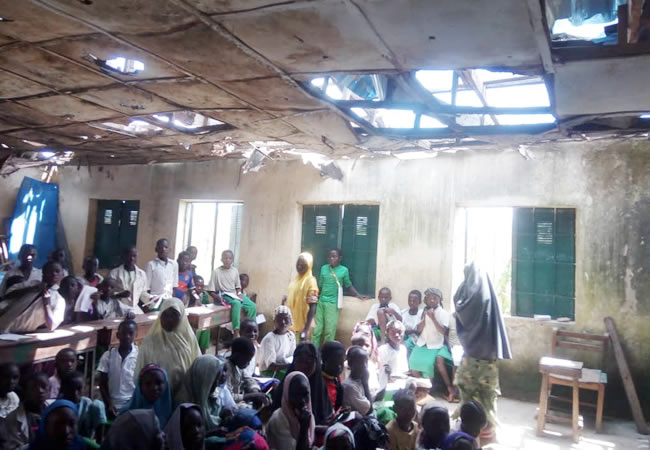
The Kaduna State Government has captured 2.1 million individuals from 524,424 Poor and Vulnerable Households (PVHHs) in its Social Register.
The Coordinator of the State Operations Coordinating Unit (SOCU), Planning and Budget Commission, Mrs Nina Dawong, made this known at a one-day Media Roundtable on the state of the State Social Register.
Dawong explained that SOCU was saddled with the responsibility of generating and maintaining the Social Register of the poor and vulnerable households in the state.
She explained that the data was mined by the Federal Government in the delivery of its Cash Transfer programme and other social protection programmes.
She added that the register would be made available for development partners, organisations, Non-Governmental Organisation to mine from for various social protection interventions.
She said that the 524,424 PVHHs consist of 2.1 million individuals in 166 wards, from 5,504 communities across the 23 local government areas of the state.
The coordinator said that populating the register commenced with 16,494 PVHHs and 71,305 individuals in 2017 and grew over the years to 524,424 PVHHs with 2,051,972 individuals as of February 2021.
She said that 93.6 per cent of the 524,424 PVHHs live in rural areas while 6.4 per cent were in urban centres.
She said that Kachia LGA has the highest number of PVHHs with 41,205 PVHHs captured in the register, followed by Sanga with 37,508 PVHHs and Kajuru LGA with 36,233 PVHHs.
Dawong identified the local government areas with the least number of PVHHs in the register as Zangon Kataf with 9,222 households, Soba 10,388 households and Jema’a with 11,027.
“Of the 2.1 million individuals, 1.1 million, representing 52.2 per cent are females, 981,845, representing 47.9 per cent are males and 46,836, representing 2.3 per cent are people living with disability.
“Also 25 per cent of the heads of the PVHH are unemployed, 45.2 per cent are farmers, 0.1 per cent are pensioners and 12,.8 per cent are housewives and house help.
“On education status, 63.6 per cent of the head of households had no formal education, 11.3 per cent had primary education, and 15.9 per cent had senior secondary school education.
“More so, 3.8 has junior secondary school education, 1.5 with National Diploma, while 0.5 has Higher National Diploma and bachelor’s degree respectively and 1.2 has certificate of education,” he said.
The coordinator added that in age distribution, 34 per cent of individuals in the register were between the ages of 16 to 35, and 28 per cent between the ages of six to 15.
She added that children from zero to five years made up 14 per cent, those between 36 to 65 years, 20 per cent, while those from 65 years and above made up four per cent.
Mr Biya Dogon, Head of Operations, SOCU, explained that the register was being generated through a comprehensive process known as Community Based Targeting (CBT).
Dogon explained that through the process, the community defines poverty and identifies those that should be captured in the register.
He said that the CBT process began in 2017 in nine pilot Local Government Areas (LGAs), three from each Senatorial Zone, Ikara, Kubau, Lere, Birnin Gwari, Chikun, Kajuru, Kachia, Kauru and Sanga.
“However, in May 2020, the process was scaled-up to the remaining fourteen LGAs, thus covering the entire state.
The Permanent Secretary, PBC, Mr Mahmoud Yamusa, pointed out that the SSR would promote inclusiveness in the delivery of social protection intervention in the state.
Yamusa said that Kaduna State was one of the first in the country to pursue efficient delivery of safety-nets interventions to target poor and vulnerable residents in an inclusive and transparent manner.
Earlier, the Executive Director, Jalad Media Concept, Mr Joshua James explained that the engagement was organised to promote interactions between SOCU and the media.
According to him, media engagement is key to ensuring that citizens are well informed about government activities and intervention to enlist their support. (NAN)








The University of Agriculture, Orerokpe Bill, sponsored by Senator Ede Dafinone, representing Delta Central Senatorial District, has passed through its third reading in the Senate.
Dafinone announced the development in a statement, describing the passage of the bill as a major step towards expanding access to education, promoting agricultural development and creating opportunities for young people in Delta State.
The senator said the proposed institution would help unlock the agricultural potential of the area while providing greater educational opportunities for future generations.
“This is more than the passage of a bill; it is a statement of purpose, a promise of progress, and an investment in generations yet unborn,” he said.
Dafinone urged constituents and other stakeholders to sustain their support for the proposed university, stressing the need to translate the legislative milestone into lasting benefits for the people.
He said the initiative was aimed at strengthening education, encouraging agricultural innovation and creating opportunities that would benefit generations to come.
“The future of our children is too important to leave to chance. Together, let us champion education, drive agricultural innovation, create opportunities, and build a legacy that generations will celebrate,” the senator said.
He described the passage of the bill as a significant milestone in the effort to advance development in Delta Central and expressed optimism about the vision behind the proposed institution.

A Kwara based Public Affairs Analyst, Comrade Ishowo Olanrewaju, weekend called on the Kwara State government to urgently convert the recently established Kwara State University of Education (KWASUED) to a specialised medical university to address the worsening and chronic shortage of doctors and other healthcare professionals in the state hospitals.
He therefore cited the Bayelsa Medical University in Bayelsa State, the state University of Medicine and Applied Sciences in Enugu State, and the University of Medical Sciences in Ondo State as existing examples.
Ishowo made the call in Ilorin while speaking with newsmen on the sidelines of the incessant strike embarked upon by medical doctors in the state hospitals.
Ishowo however expressed concern over the shortage of medical personnel in the state, noting that the available doctors were already overstretched and overwhelmed by the sheer volume of patients they were required to attend to daily.
He lamented that this situation made industrial action embarked upon by the doctors particularly troubling.
He argued that the state government should have prioritised a medical university over a university of education, insisting that Kwara’s more pressing challenge was the severe shortage of healthcare professionals rather than educators.
According to him, existing institutions, including the University of Ilorin, Kwara State University (KWASU) and Al-Hikmah University, already have faculties of education that produce graduates annually.
He added that several public and private colleges of education across the state also train teachers.
“The number of educators we produce far exceeds what we need or can employ. Our challenge is not a lack of teachers. It is a dangerous shortage of doctors, nurses and other medical professionals.
“That reality should have informed the government’s decision when it was considering establishing a new university,” he said.
Ishowo maintained that establishing a specialised medical university would help build a steady supply of doctors and other healthcare professionals to meet the state’s needs and serve other parts of the country.
“To address the persistent shortage of doctors and other medical personnel, I am calling for the conversion of KWASUED into a specialised medical institution,” he said.
He also proposed scholarships for Kwara indigenes admitted to the proposed institution, with beneficiaries required to sign a five-year service bond to work in the state after graduation before seeking opportunities elsewhere.
Ishowo said the arrangement would help retain locally trained medical professionals and strengthen the state’s healthcare system.
“Let the government provide scholarships for Kwara indigenes who want to study medicine and other related health courses, and bond them to serve the state for five years post-graduation.
“This is how we begin to systematically solve the shortage of medical personnel that has plagued us for years,” Ishowo noted.
He further stated that some state governments across Nigeria had already recognised the value of dedicated medical universities and taken steps to establish them.
According to Ishowo, “The Lagos State government is also pursuing plans to establish a standard one university of medicine and health sciences to tackle the doctor and healthcare worker deficit in the state.
“These states identified a need and responded to it strategically. Kwara can and should do the same. The conversion of KWASUED into a specialized medical university will be a response to a documented crisis that is costing Kwarans their health and their lives.”

By David Torough, Abuja
The West African Health Organization (WAHO) has called for stronger regional collaboration and practical policy interventions to address health workforce shortages, brain drain and poor working conditions across the Economic Community of West African States (ECOWAS) member countries.
The call was made at the opening ceremony of a three-day workshop in Abuja to finalize the work plan for motivating and retaining health workers across the ECOWAS region.
Speaking on behalf of the Minister of State for Health, Dr. Ishiaka Adekunle Salako, Dr.
John Ovuoranye said the Nigerian government was pleased to host the regional meeting, describing it as an opportunity to align national, regional and continental efforts towards strengthening Africa’s health workforce.He noted that the workshop coincided with other major health-related engagements in Nigeria, including activities marking the 50th anniversary of the West African College of Physicians and a high-level African Union forum on the continent’s community health workforce.
According to him, the convergence of the events reflects growing recognition among African countries that addressing health workforce challenges requires coordinated action rather than isolated interventions.
Ovuoranye emphasized that the work plan being developed by WAHO and its partners must complement broader continental initiatives, particularly the African Union’s target of expanding the community health workforce by two million workers by 2028.
He explained that while continental initiatives would establish broader frameworks for strengthening the health workforce, the ECOWAS work plan would focus on practical measures to motivate health professionals and encourage them to remain in the region.
He stressed that the different initiatives must be aligned to ensure that training, recruitment, motivation and retention efforts produce sustainable results.
The minister’s representative also highlighted Nigeria’s preparedness in responding to public health emergencies, citing the country’s response to a reported Ebola case.
He said the country had activated surveillance and contact-tracing measures, adding that the experience demonstrated the importance of having adequately trained personnel and effective health systems to respond to emerging threats.
Ovuoranye urged other countries in the region to strengthen their preparedness and invest in the health workforce, noting that the movement of people across national borders makes regional cooperation essential.
In a presentation on the meeting’s objectives and expected outcomes, the representative of the WAHO Director General, Professor Joseph Olorunda, described health workers as the backbone of health systems and warned that shortages and unequal distribution of personnel continued to threaten healthcare delivery across West Africa.
He said the workshop was expected to move beyond general discussions about workforce challenges to identify specific problems confronting member countries and develop practical strategies to address them.
According to Olorunda, participants would examine the relationship between motivation and retention, identify areas where policies and partnerships could support improvements, and agree on actions that governments and relevant institutions could implement.
He stressed that the effectiveness of a health system depended not only on infrastructure and technology but also on the availability of adequately trained and motivated professionals to deliver services.
Olorunda identified poor working conditions, delayed salary payments, inadequate remuneration, limited career progression, weak political commitment and the migration of skilled professionals to higher-income countries as major factors undermining workforce retention in the region.
He argued that investments in hospitals, equipment and other health infrastructure would not deliver the desired results without sufficient numbers of skilled personnel to operate them.
The WAHO representative also raised concerns about disparities in health professional education and training across countries, including differences in programme duration, admission requirements, diploma recognition and professional qualifications.
He called for sustained efforts to harmonize training standards and qualifications across the region to improve professional mobility and ensure that health workers receive appropriate preparation for their responsibilities.
Drawing attention to the scale of migration, Olorunda cited Nigeria and Ghana as examples of countries facing persistent challenges in retaining trained health professionals.
He noted that Ghana had recorded substantial outward migration of nurses, while Nigeria continued to face the loss of doctors and nurses to countries offering more attractive employment opportunities.
He also highlighted the particular difficulties confronting countries such as Liberia and Sierra Leone, where conflict and fragile health systems have compounded workforce shortages.
According to him, the challenges vary across countries, making it necessary for the regional work plan to recognize national circumstances while establishing common priorities for action.
Olorunda maintained that governments must treat health workforce retention as a fundamental health system priority rather than a secondary concern.
He called for competitive and timely remuneration, improved working environments, professional recognition, structured career advancement and measures to protect the safety and welfare of health workers.
He also cautioned against relying excessively on compulsory service arrangements and other restrictive measures to prevent migration, arguing that improving employment conditions would provide a more sustainable incentive for professionals to remain in their home countries.
He urged policymakers to ensure that health workers are adequately rewarded for their expertise and years of training, while providing opportunities for professional development and advancement.
The WAHO representative further emphasized that political commitment would be essential to implementing the work plan, noting that even well-designed policies would have little impact without adequate funding and effective institutional support.
He called on participants to use the workshop to develop a practical document that could guide decision-makers in addressing staffing gaps, improving workforce distribution and strengthening the retention of skilled personnel.
The three-day workshop is expected to produce a finalized regional work plan outlining strategies to improve the motivation and retention of health workers across ECOWAS member countries.
The initiative is intended to strengthen regional cooperation in addressing workforce shortages, improve the working conditions of health professionals and support the delivery of quality healthcare services to populations across West Africa.


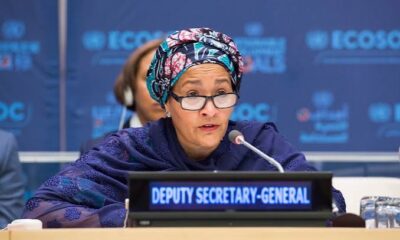

UN, EU Seek Trust, Technology to Strengthen Africa’s Counter-Terrorism Fight
ShareUN Deputy Secretary-General Amina Mohammed, has called for stronger intelligence sharing, public trust and responsible use of emerging technologies to...


University of Agriculture, Orerokpe Bill, Passes Third Reading in Senate
ShareThe University of Agriculture, Orerokpe Bill, sponsored by Senator Ede Dafinone, representing Delta Central Senatorial District, has passed through its...


Ishowo Urges Kwara to Convert KWASUED to Medical Varsity
ShareA Kwara based Public Affairs Analyst, Comrade Ishowo Olanrewaju, weekend called on the Kwara State government to urgently convert the...
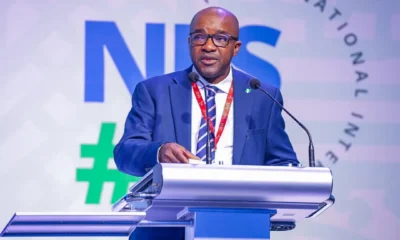

NESG Chairman Urges Shift from Economic Reforms
ShareChairman, Nigerian Economic Summit Group (NESG), Olaniyi Yusuf has urged the Federal Government to translate economic reforms into tangible results,...
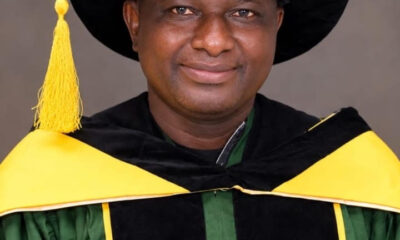

Yakubu Receives Fellowship Of Nigerian Institute Of Town Planners
ShareBy Raphael Atuu, Abuja TPL Chief Amb Hon. Stephen Shekwonce Yakubu, the District Head (Hakimi of Garki Shekwope), had his...


Much Ado About the PBAT Door-to-Door Movement
ShareBy Catherine Agbo In the unfolding drama of Nigerian political discourse, few things excite the commentary circuit quite like a...

WAHO, ECOWAS Countries Move to Tackle Health Worker Shortages, Brain Drain
ShareBy David Torough, Abuja The West African Health Organization (WAHO) has called for stronger regional collaboration and practical policy interventions...

Afreximbank’s Net Income Rises 24 Per Cent to $813.5 Million in Nine Months
ShareThe African Export-Import Bank (Afreximbank) and its subsidiaries have reported a 24 per cent increase in net income for the...
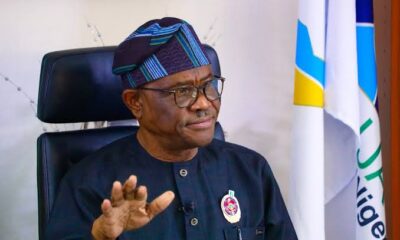

Wike-Led FCTA Committed to Quality Healthcare, Stronger Medical Institutions – Mahmoud
ShareBy Laide Akinboade, Abuja The Minister of State, Federal Capital Territory (FCT), Dr. Mariya Mahmoud, has reaffirmed the commitment of...


Enugu Police Arrest 28 Year Old Suspect for Robbing POS Operator
ShareFrom Sylvia Udegbunam, Enugu The Enugu State Police Command has arrested a 28-year-old male suspect, Michael Ayisa, for allegedly robbing...