
Uncategorized
Kebbi Govt. Accepts Resignation of Chief Imam of Oldest Mosque

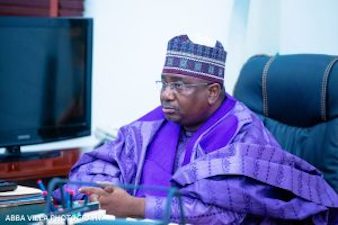
The Kebbi Government says it has ratified the resignation of the Chief Imam of the oldest Jumu’at Mosque in Birnin Kebbi called “Wala Mosque”, Sheikh Rufa’i Ibrahim.
The Commissioner, Ministry of Religious Affairs, Alhaji Muhammad Sani-Aliyu, made this known while briefing Newsmen in Birnin Kebbi on Sunday.
He requested the Gwandu Emirate Council to put machinery in motion for the appointment of a substantive Chief Imam for the Wala Jumu’at Mosque.
Sani-Aliyu also endorsed the appointment of the Na’ibul Imam (Deputy Imam), Mallam Mammam Nata’ala to takeover the leadership of the mosque in acting capacity as directed by Birnin Kebbi Local Government Ciuncil.
He said that the former chief imam resigned from the position on personal basis which was accepted by the Birnin Kebbi local government council and approved by the state government.
The commissioner debunked insinuations that Sheikh Ibrahim left his position on monetary issues of being short changed by his subordinates.
“Gov. Nasir Idris in his
compassionate disposition gave financial support to Imam (leaders) of Jumu’at Mosques in the state to assist them cushion the effect of present economic hardship in the country and help those around them.
“Government has never received any report of sharp practice in the sharing of the money; therefore, the allegation of short changing the former chief imam by his aides, is untrue,” he said.
In his contribution, the Commissioner for Information and Culture, Alhaji Yakubu Ahmad-Birnin-Kebbi, ruled out political undertones in the entire saga.
“We are in a democratic setting, Imam can profess political ideology different from the ruling administration without molestation or harassment. Our governor is all accommodating, every indigene of Kebbi is dear to him.
“Those peddling rumour of political differences as a reason for the resignation of the chief imam are wrong. Sheikh Ibrahim relinquished his position on personal volition”, the commissioner explained. (NAN)
By Laide Akinboade, Abuja
The Federal Capital Territory (FCT) Administration (FCTA), on Thursday, said it has concluded arrangements to clamp down on commercial transport operators loading along roadsides and in illegal motor parks, announcing an imminent enforcement drive to transition all intercity and intra-city transport operations into newly constructed ultra-modern bus terminals.
Mandate Secretary for the FCT Transportation Secretariat, Chinedum Elechi, disclosed this during a press conference in Abuja.
He said the administration is ready to enforce compliance to restore civil order, modernize public transportation, and curb rising security concerns particularly “one chance” armed robberies, drug trafficking, and arms smuggling linked to unprofiled operators.
“At the root of all social insecurity is transportation.
“The problem of ‘one chance’ and general insecurity will be half-solved if we have a proper transportation system where operators are profiled and operating out of designated hubs.
“Under the new operational framework, long-distance intercity routes such as trips to Kaduna, Aba, Lokoja, Owerri, and Sokoto will operate strictly out of designated terminals like Mabushi and Kugbo. Meanwhile, the Central Business District (CBD) terminal will manage intra-city routes, serving as a hub for local taxis, e-hailing services, and feeder buses,” Elechi said.
Elechi noted that for the first time in the 50-year history of the FCT, the administration has built state-of-the-art terminals equipped to handle over 2,000 passengers.
According to him, facilities include structured car parks, shops, food courts, escalators, and cinemas, managed under a Public-Private Partnership (PPP) model with Planet Projects.
“Discussions are also ongoing with the Office of the Head of the Civil Service of the Federation to allocate dedicated spaces within the CBD terminal for civil service staff buses,” he noted.
Addressing public concerns regarding the storm damage at the Kugbo terminal, Elechi explained that the facility absorbed high-speed winds from a localized severe weather event, preventing major structural damage to nearby residential areas across the road.
He confirmed that structural redesigns and roof repairs are near completion, and the facility will soon be fully integrated alongside Mabushi and the CBD terminals.
The Secretariat warned that previous leniency where over 100 impounded vehicles were released after operators signed undertakings will no longer be the norm.
FCT transport regulations prohibit operating commercial parks in open spaces or private premises without authorization.
“We are not taking food from anyone’s mouth; we are asking operators to move from unsafe, unhealthy roadside locations into modern facilities built with billions of Naira.
“If you rent private premises and turn them into an illegal motor park, we will enforce the law, seal off the premises, and impound the vehicles.
“FCT must look like every modern capital city,” Elechi emphasized.
The Transportation Secretariat also highlighted ongoing maintenance efforts to fix intermittent traffic light failures caused by solar battery depletion and sensor faults, while urging the public to support anti-vandalism efforts against the theft of signaling cables and power components across the city’s transport network.
The Nigeria Democratic Congress (NDC) said Epelle-Asemota Osayuki remains its duly nominated candidate for the Edo South Senatorial District.
The party attributed the discrepancies in the Independent National Electoral Commission’s (INEC) publication of candidates’ particulars to an error on the part of the commission.
The party, in a statement issued on Wednesday in Abuja by its Director of New Media and Strategic Communication, Agada Theophilus, said INEC correctly published Osayuki’s name and personal details.
It, however, added that INEC mistakenly attached the photograph of another aspirant and the credentials of a different individual.
The party maintained that it had duly submitted Osayuki’s name, passport photograph and credentials to INEC in accordance with the Constitution and the Electoral Act.
It added that the commission alone was responsible for publishing candidates’ particulars.
The party said the successful upload of her details to the INEC portal served as proof of her formal sponsorship and called on the electoral body to explain how the mix-up occurred.
The NDC also dismissed attempts to question Osayuki’s eligibility on ethnic grounds, describing such claims as an orchestrated campaign aimed at discrediting her candidacy.
The party maintained that Osayuki was a Nigerian of Benin ancestry who had lived and worked in Benin throughout her career, “and is married into the Asemota family of Benin.”
The party described her as a seasoned public servant who spent 35 years in the Edo public service and previously served in key leadership positions, including Chairman of the Principals’ Association of Edo.
“The first female National Chairperson of the Academic Staff Union of Secondary Schools (ASUSS), and Secretary of the Trade Union Congress in the state”.
It added that she was a prominent member of the Obidient Movement and emerged winner of the NDC primary for the Edo South Senatorial District.
The party said her emergence reflected its commitment to promoting women, youths and persons with special needs, insisting that she was duly nominated and would remain its candidate.
The NDC acknowledged that other aspirants were disappointed by the outcome of the primaries but urged them to refrain from actions capable of undermining the party.
It said a national reconciliation committee had already been inaugurated to address grievances arising from the primaries and appealed to party leaders to help resolve outstanding issues.
The party also rejected allegations that candidates were imposed by the national leadership, insisting that state leaders supervised the primary process while the national leadership only harmonised interests and managed disputes that could not be resolved at the state level.
It called on members to close ranks and work together in the interest of the party ahead of the forthcoming elections.
By David Torough, Abuja
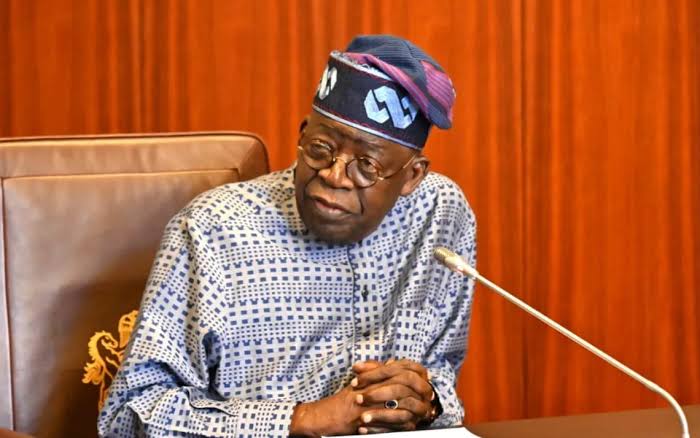
President Bola Tinubu has unveiled a major package aimed at strengthening Nigeria’s armed forces through improved welfare and enhanced defence capability, approving a substantial salary increase for military personnel while reaffirming support for indigenous defence production.
The President approved a pay rise of between 30 and 80 per cent for approximately 250,000 personnel of the Armed Forces of Nigeria, with the new salary structure taking effect from September 1, 2026.
According to a statement by the Special Adviser to the President on Information and Strategy, Bayo Onanuga, the salary adjustment is structured to favour junior personnel, with the highest percentage increases going to the lower ranks.
Under the new arrangement, officers above the rank of colonel—including brigadier-generals, major-generals, lieutenant-generals and generals—will receive a 30 per cent increase, while personnel from colonel to warrant officer will earn a 50 per cent raise. Soldiers from private to staff sergeant will benefit from an 80 per cent increase.
The new pay package will increase the military’s annual wage bill from N660 billion to N924 billion, representing an additional N264 billion in government spending.
President Tinubu said the salary review reflects his administration’s appreciation of the sacrifices made by troops in the fight against terrorism, banditry and kidnapping, stressing that personnel welfare and military modernisation remain central to his security agenda.
“The men and women who help to keep us safe in our homes must be supported and appreciated,” the President said, pledging continued investment in modern weapons, technology and other operational capabilities to enable the armed forces to effectively protect lives and property across the country.
Meanwhile, the Chief of Army Staff, Lieutenant General Waidi Shaibu, has called for deeper collaboration between the Nigerian Army and indigenous defence manufacturers to strengthen national security and reduce dependence on foreign military equipment.
Receiving the management of Proforce Group during a courtesy visit to the Army Headquarters in Abuja, Shaibu described the indigenous defence company as a source of national pride and urged greater local production to support the Army’s ongoing expansion from eight to 12 divisions.
He identified areas requiring stronger collaboration, including Counter-Improvised Explosive Device systems, ground-penetrating radar, foliage-penetrating surveillance technology, signal intelligence, facial recognition, unmanned systems and dark web exploitation to enhance intelligence-driven operations against criminal and terrorist groups.
The Proforce Group Managing Director, Ade Ogundeyin, reaffirmed the company’s commitment to advancing indigenous defence technology, noting that local manufacturing improves operational security, shortens logistics timelines and provides faster technical support for the Armed Forces of Nigeria.
The latest initiatives underscore the Federal Government’s twin strategy of improving troop welfare while building a stronger domestic defence industry to enhance the country’s security architecture.




NAMA Demands 56 Per Cent Share, Aviation Varsity 10 Per Cent of Aviation Statutory Charges
ShareBy Ubong Ukpong, Abuja The Nigerian Airspace Management Agency (NAMA) on Thursday, asked the National Assembly to increase its share...
FCT Closes Unregulated Motor Parks as New Bus Terminals Become Operational
ShareBy Laide Akinboade, Abuja The Federal Capital Territory (FCT) Administration (FCTA), on Thursday, said it has concluded arrangements to clamp...
Mahmoud Urges MAN to Embrace Smart Technology, Capital Restructuring For Growth
ShareBy Laide Akinboade, Abuja The Minister of State, Federal Capital Territory (FCT), Dr. Mariya Mahmoud, has called on manufacturers to...

Advertising, Creative Industries Key Drivers of Economic Growth – Idris
ShareBy David Torough, Abuja The Minister of Information and National Orientation, Mohammed Idris, has said the Tinubu Administration recognises Nigeria’s...
Tempoe Earns Spotify Billion Streams Plaque for Love Nwantiti
Share Nigerian record producer Michael Chigozie, popularly known as Tempoe, has earned Spotify’s billion streams plaque for his production of...


Rudeboy Breaks Silence on Okoye Family Feud, Demands for Privacy, Respect
ShareRudeboy’s management has released a statement on the ongoing rift between the Okoye brothers. The statement described the issue as...

Rema Releases Teaser for TEA
ShareAce Nigerian Afrobeat star, Divine Ikubor, popularly known as Rema, has released a teaser for his forthcoming single, “TEA,” scheduled...


FG Backs Miss Nigeria for 75th Miss World Pageant
ShareThe Federal Government has rallied support for Miss Nigeria, Miss Tamunosoye Karibi-George, as the country’s official representative to the 75th...
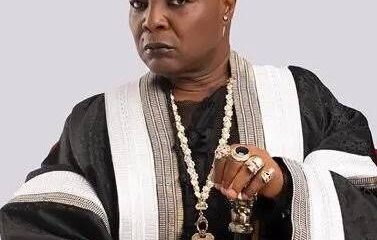

Charlie Boy Addresses Fans who Call Him Gay
ShareVeteran Nigerian musician Charles Oputa, popularly known as Charlie Boy, has addressed fans who have openly questioned his sexuality and...


Why I Quit Legal Practice for Music – Falz
SharePopular Nigerian rapper and actor, Folarin Falana, has explained why he stepped away from active legal practice, citing the growing...