
NEWS
Lagos Community Defies Downpour to Celebrate Unity in Diversity

Isoto Community of Lagos State on Saturday defied hours of downpour to celebrate the unity of the various peoples, cultures and religions represented in the community.The community with a population of over 70,000 disregarded heavy rainfall in Lagos, from dawn until around 2.
00 p.m., to celebrate the second edition of Isoto Day aimed at promoting peaceful coexistence. The event, which featured dances, drumming, singing and other cultural displays, took place at the palace of the community’s traditional ruler (Baale), High Chief Moshood Nosiru. Report says that Isoto is in Alimosho Local Government Area of Lagos State.Some friends and admirers of the community came from various parts of Lagos in spite of flooded roads to witness the occasion, which also featured masquerade displays. High Chief Moshood Nosiru (fourth from right) during celebration of Isoto Community Day in Lagos State The Traditional Ruler, Nosiru, said that he initiated Isoto Community Day celebration in June 2024 as a strategy to promote and sustain peace and harmonious relationships among the community members.“Nigerians from various tribes, including Igbo, Urhobo, Hausa, Bini, Fulani, Isoko, Igala, Idoma and Yoruba, are residing in this community and living peacefully.“Also, Christians, Muslims, traditional worshippers and others are living in harmony in this community.“Peace and unity remain important for the progress of any community or society,” Nosiru stressed.He added that the celebration would be annual to promote progress in Isoto.The Chairman of Ifesowapo Community Development Association (CDA) in Isoto, Mr Ibidapo Bankole, said that Nigeria needed peaceful coexistence of its peoples for facilitated advancement.He urged that other communities in Lagos and other states should emulate the gesture to deepen peace and unity among Nigerians.“I appeal to Lagos State Government to improve roads within and around this community to facilitate business activities,” Bankole said.The Chairman of Iderawole CDA of Isoto, Mr Okedara Israel, said that the community also needed public junior and secondary schools as well as a primary healthcare centre to improve the lives of its members.An elder in the community, who hails from Delta, Mr Augustine Onoro, said he had been living harmoniously and peacefully in the community with other Nigerians from various ethnic groups.He praised the traditional ruler for good leadership, describing him as a young man who brought youthful energy and zeal into leadership while listening to valuable advice from elders.Onoro said that the traditional ruler had shown that the youth could lead well if given the opportunity.He advised youths to develop and position themselves well for leadership positions at all times.A retired staff of the Local Government Service Commission, Lagos State, Mr Michael Ogunleye, said that Nigerians should accept and love one another, irrespective of tribe, religion and social status. (NAN)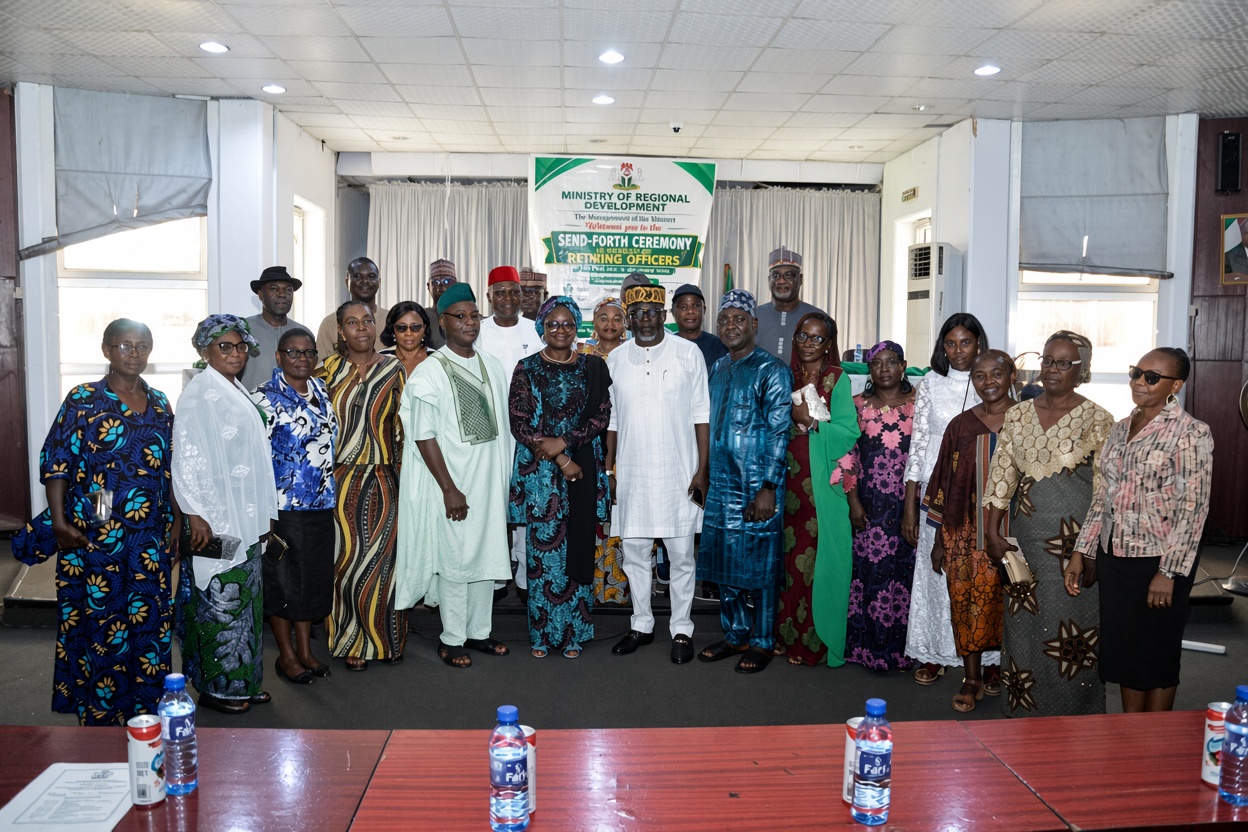
By David Torough, Abuja
The Ministry of Regional Development has celebrated 24 retirees, recognising their years of dedication to public service and urging them to remain active by sharing their knowledge and experience even after retirement.
The Permanent Secretary of the Ministry, Dr Mary Ada Ogbe, made the call on Wednesday, September 23, 2026, during a retirement celebration organised for the retirees.
Ogbe commended the retirees for their contributions to Nigeria’s development, particularly their dedication, commitment and achievements throughout their years in service.
She assured them of the government’s welfare packages and severance benefits, which she said were designed to provide financial support before the commencement of their pension payments.
“We are celebrating 24 retirees this morning. We celebrate you, and we are grateful for your commitment, dedication, and service to the nation,” she said.
The Permanent Secretary encouraged the retirees to continue contributing to the development of the country by sharing their experience, knowledge and perspectives in whatever capacity possible.
She also expressed appreciation to staff members who had worked directly with her, thanking them for their patience, understanding and support.
In her welcome address, the Director of Human Resources Management, Mrs Tabitha Dagyol, described the retirees as the reason for the gathering and praised their loyalty, integrity and commitment to national development.
She noted that some of the retirees had served for more than three decades, contributing to policy implementation, mentoring younger officers and sustaining the operations of the Ministry during challenging periods.
Dagyol said the retirees had served across different grade levels and cadres, including the Directorate, Administrative, Technical and Support cadres. She added that between May 2025 and September 2026, the Ministry had bid farewell to several officers as they reached retirement.
According to her, the retirees had contributed to the evolution of the institution from its formative stage as the Ministry of Niger Delta Affairs to its present expanded mandate as the Ministry of Regional Development.
She described retirement as a transition into a new chapter that could provide opportunities for rest, family life, community service and personal pursuits.
Dagyol also urged serving workers to draw lessons from the retirees’ careers by remaining punctual, diligent and committed to leaving the Ministry stronger than they found it.
Speaking on behalf of the retirees, former Director of Finance and Accounts, Akpan Etop Andy, thanked the Ministry’s management for organising the celebration.
Andy encouraged serving staff to show kindness and support to their colleagues, saying such conduct would help ensure that their contributions were remembered positively when they eventually retire.

By David Torough, Abuja
Nigeria’s scheduled airline capacity rose to 1.19 million seats in September 2026, representing a 37.4 per cent increase compared with the same period in 2025, according to the Federal Airports Authority of Nigeria (FAAN).
The Managing Director of FAAN and Vice President of Airports Council International (ACI) Africa, Olubunmi Kuku, disclosed this on Tuesday in Abuja at the opening of the ACI Africa Conference and Exhibition 2026.
Kuku said Nigeria’s aviation market is now the fourth-largest in Africa, recording more than 18.
8 million domestic and international passengers in 2025, an 11.9 per cent year-on-year increase.She said data from aviation intelligence provider OAG showed that Nigeria recorded the fastest growth in scheduled airline capacity among Africa’s top 10 aviation markets in September 2026.
According to her, the Murtala Muhammed International Airport in Lagos also recorded the fastest growth in scheduled seat capacity among Africa’s 10 largest airports, with a 24.1 per cent increase during the month.
Kuku attributed the growth in Nigeria’s aviation capacity to currency reforms, new aircraft leasing arrangements and increased confidence among international airlines seeking to expand operations to the country.
Speaking on the conference theme, “Next-Gen Airports: Driving Performance and Resilience,” Kuku described it as a strategic mandate for Africa’s aviation industry and a call for coordinated action to strengthen the continent’s airports and airlines.
She cited International Air Transport Association (IATA) data showing that African airlines recorded a 6.4 per cent year-on-year increase in international passenger demand in July 2026.
Kuku noted that Africa’s growth contrasted with a 0.1 per cent decline in global international passenger demand during the same period. She added that the continent’s overall passenger demand increased by 5.2 per cent, placing it second only to Latin America and the Caribbean and above the global average of 0.2 per cent.
According to her, the figures reflect increased movement of people for business, healthcare, family connections and other economic activities across the continent.
However, Kuku cautioned that passenger and capacity growth alone would not resolve the structural challenges confronting Africa’s aviation sector.
She noted that Africa accounts for only about 1 per cent of global air traffic despite being home to approximately 18 per cent of the world’s population. She also highlighted below-average load factors and the fragile financial position of many African airlines.
“In Nigeria alone, with a population exceeding 220 million, we record approximately 19.5 million passengers annually across 28 airports,” she said, adding that the figures demonstrate both the scale of the market and the significant room for further growth.
Kuku identified funding constraints, infrastructure deficits, high operating costs, fragmented connectivity and the need to balance affordable charges with the provision of world-class airport facilities as some of the key challenges facing the sector.
She said the issues were central to the discussions at the ACI Africa conference, which brought together aviation stakeholders from across Africa and beyond.
By David Torough, Abuja
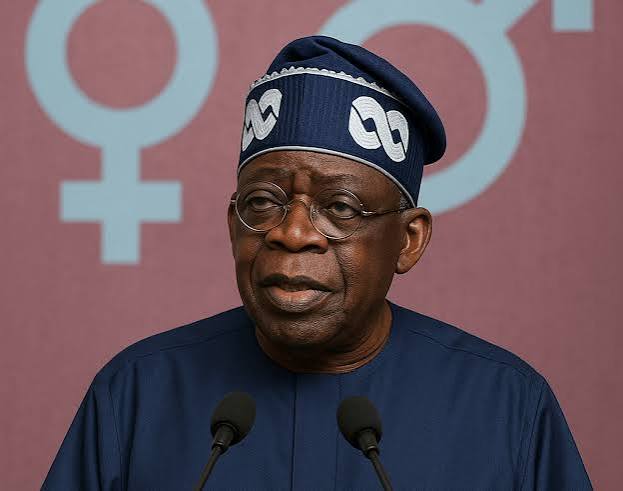
President Bola Tinubu has charged local government councils across Nigeria to turn financial autonomy into tangible development by prioritising food security, healthcare, education, infrastructure, job creation and support for local businesses.
Tinubu gave the directive in a speech delivered by the Secretary to the Government of the Federation, George Akume, at the National Conference for Chairmen of the 774 Local Government Councils and Chairmen of Traditional Rulers’ Councils in Nigeria, which opened in Abuja on Tuesday.
The three-day conference, with the theme, “Cascading President Bola Tinubu’s Renewed Hope Agenda to the Grassroots,” is focused on strengthening the role of local governments and traditional institutions in delivering government programmes to communities.
The President said the effectiveness of government policies should be judged by their impact on ordinary Nigerians rather than by announcements made in the Federal Capital Territory.
“The true test of policy is not what is announced in Abuja, but what changes in our worlds, villages, towns and communities,” Tinubu said.
He urged council chairmen to ensure that residents experience improvements in primary healthcare, basic education, rural roads, access to safe water, agricultural production, small businesses and opportunities for women and young people.
Tinubu said the financial autonomy granted local governments following a Supreme Court judgment had increased the responsibility of elected council officials to provide measurable results.
“Local government autonomy is not an end in itself; rather, it is an instrument for service and development,” he said.
According to the President, council officials have the advantage of understanding the specific challenges confronting their communities, including shortages of medicines in health centres, farmers’ need for support and the lack of opportunities for young people.
He therefore called for evidence-based planning, greater use of technology and reliable statistics in the design and implementation of local development projects.
Tinubu said local governments should evolve into “centres of planning, delivery, early warning and measurable results” instead of remaining passive recipients of Federal Government programmes.
He also urged councils to work actively with the Federal Government as development partners and strengthen their capacity for coordination and innovation.
FG Moves to Track Council Projects Electronically
The Permanent Secretary, Federal Ministry of Special Duties and Intergovernmental Affairs, Dr Onwosoro Maduka Ihemelandu, disclosed that the Federal Government was developing stronger mechanisms to monitor projects and interventions at the local government level.
Ihemelandu said the ministry had identified gaps in project information, geographical identification, implementation monitoring, verification, coordination and access to reliable data for decision-making.
He said the ministry planned to upgrade its existing electronic monitoring system by introducing an E-Tracking component that would allow projects to be monitored collaboratively with local government chairmen and other stakeholders.
The system, he explained, would capture project locations, sectors, implementing authorities and contractors, project costs, timelines, fiscal progress, field evidence, risks and challenges.
According to him, the proposed system would improve the visibility of government projects, strengthen monitoring and verification, and provide timely information for management decisions.
Ihemelandu also said the conference would support the administration’s food security drive, with participants expected to examine the use of modern technology in agriculture and food exports.
He said the programme was linked to an action plan to cultivate 1.5 million hectares of land in communities across the country.
Participants would also be exposed to investment opportunities in rural communities, including presentations on Canadian direct foreign investment.
Traditional Rulers to Support Grassroots Agenda
The Minister of Special Duties and Intergovernmental Affairs, Zaphaniah Bitrus Jisalo, said local governments and traditional rulers were critical to translating the Renewed Hope Agenda into tangible development at the grassroots.
Jisalo said the conference, approved by President Tinubu, was designed to strengthen collaboration among the Federal, state and local governments, with traditional rulers serving as key partners.
He described local government as the tier of government closest to the people and said its effectiveness was essential to translating national policies into practical development outcomes.
The minister said the conference would provide an opportunity to develop strategies for improving service delivery, strengthening intergovernmental relations, enhancing accountability and ensuring that government interventions reached their intended beneficiaries.
He also described traditional rulers as important stakeholders because of their influence and close relationship with communities.



Ministry of Regional Devt Fetes 24 Retirees, Urges Continued Service to Nation
ShareBy David Torough, Abuja The Ministry of Regional Development has celebrated 24 retirees, recognising their years of dedication to public...


Tompolo’s Grassroots Movement Unveils 44 Vehicles, Other Campaign Materials in Borno
ShareThe PBAT Door-to-Door Movement has commenced mobilisation in Borno State to rally support for the reelection of President Bola Ahmed...


Customs Recruitment: Nearly 3,000 Candidates Screened Without Casualty
ShareBy Tambaya Julius, Abuja The Nigeria Customs Service (NCS) has concluded the final phase of its 2025 recruitment exercise, with...


NUPRC, Indonesia Open Talks on Oil Investments as Pertamina Eyes 2026 Licensing Round
ShareThe Nigerian Upstream Petroleum Regulatory Commission (NUPRC) has opened discussions with Indonesia on petroleum investments, with Indonesian national oil company...


RMAFC Inaugurates Planning Committee for China Oil & Gas Investment Forum
ShareBy Tony Obiechina, Abuja The Revenue Mobilisation Allocation and Fiscal Commission (RMAFC) has inaugurated a Planning Committee to coordinate preparations...
Advancing Food Security through ONSA AgriShield Initiative
ShareBy Chido Onumah The Federal Government is strengthening the connection between national security and food security through the AgriShield Initiative,...


2027: NNPP Warns Public against Dealing with Impostors
ShareThe New Nigeria Peoples Party (NNPP) has warned the public against dealing with impostors parading themselves as candidates and leaders...


2027: INEC Harps on Proper Documentation, Archiving of Operational, Electoral Documents
ShareThe Independent National Electoral Commission (INEC) has stressed the need for proper archiving, cataloguing and documentation of operational and electoral...

Nigeria’s Airline Capacity Hits 1.19m Seats — FAAN
ShareBy David Torough, Abuja Nigeria’s scheduled airline capacity rose to 1.19 million seats in September 2026, representing a 37.4 per...


Tinubu to LGs: Make Local Government Autonomy Work
ShareBy David Torough, Abuja President Bola Tinubu has charged local government councils across Nigeria to turn financial autonomy into tangible...