
FEATURES
Lalong: Redefining Governance Through Patriotism, Governance, Vision and Peace at 59

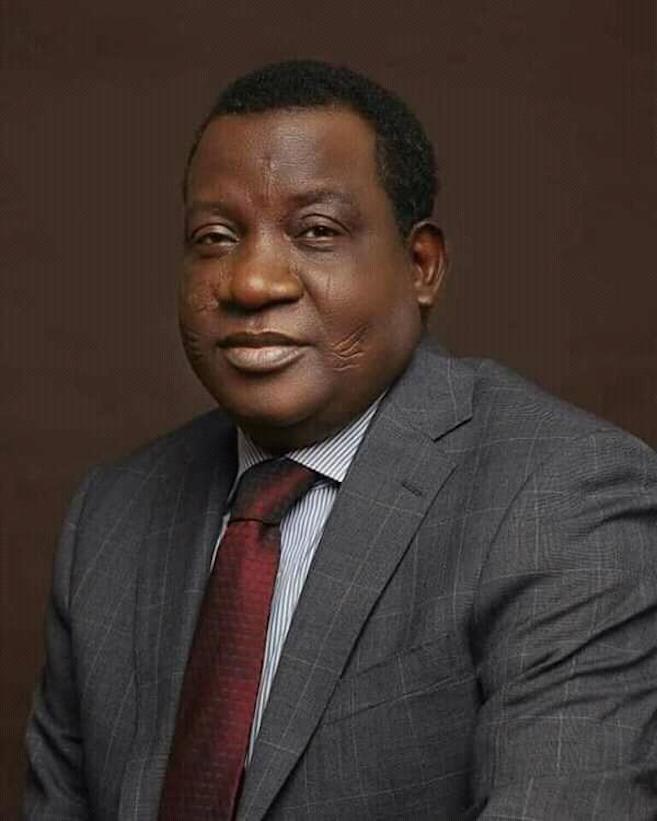
By Makut Simon Macham
The story behind the political journey of Rt. Hon. Simon Bako Lalong, Executive Governor of Plateau State and Chairman, Northern States Governors Forum cannot be fully comprehended without looking closely at his upbringing and early childhood which is a story of grass-to-grace fashioned in resilience, hardwork, humility, trustworthiness, team-spirit and forgiveness.
Those who know him from the glitter of the offices he has held including the current one as Governor may think of him as someone who has always been privileged or raised with a silver spoon.
For others who have known him in the last 59 years, Simon Bako Lalong is a product of God’s grace and the determination of a man to use his gifts and talents to overcome all limitations around him.Lalong has spoken severally of being raised in the then rural village of N’yak also known as Ajikamai in Shendam Local Government to poor parents who had little to offer him and his siblings for a bright future.
To make matters worse, losing his father early in life meant that the burden of leadership fell on him prematurely being the first born. Nevertheless, he took up the challenge and submitted himself to God and the discipline of his Uncle and benefactors who took him to Shendam where he continued his education and gradually blossomed amidst difficulties.
Through God’s help, he successfully passed through all levels of education to acquire a Law Degree from the prestigious Ahmadu Bello University Zaria before being called to the Nigerian Bar in 1991. This opened the doors of glory to him.
It is also important to point out the impact of education and the Church in the life of Simon Bako Lalong who tells everyone that the secret of his success and outlook in life is rooted in the Catholic Doctrines inculcated in him very early in life which have shaped his mind about people and service.
Many testify to his easy going nature and capacity for love, forgiveness, honesty, compassion, self-control, humility among others which are enumerated in the Holy Bible as the Fruit of the Spirit (Galatians 5:22).
This foundational attributes boosted by experience and exposures have continued to define him since he joined politics. Before seeking political office, Simon Bako Lalong demonstrated his passion for service through many youth, cultural and professional bodies.
These include Assistant Secretary, Nigeria Bar Association, Plateau State Chapter; National President of Goemai Youth Movement; Youth Activist and one of the leaders within the Plateau Youth Council many years ago. These responsibilities espoused his competence and thus made it easy for the people to trust him with leadership when in 1999, he contested and won election into the Plateau State House of Assembly to represent Shendam Constituency.
Within one year in the House, having served as Chairman, House Committee on Judiciary; Member, House Committee on Local Government & Chieftaincy Affairs, Public Accounts/Petition and Agriculture, he emerged Speaker and successfully served for 7 years – the longest so far in the political history of the State.
Although his tenure as Speaker was not without challenges, Lalong displayed the earlier enumerated attributes of resilience, truth and justice when he held on strong in the face of political tyranny and Federal Might that saw him being illegally removed and his seat declared vacant.
Because he stood on truth and justice, his Recall from the House of Assembly failed woefully while his purported impeachment was upturned by the courts later. In the face of these challenges, his tenure as Speaker is praised for passing the Laws establishing Plateau State University, Bokkos (an institution he brought back to life after it was shut down by the Jang administration); College of Agriculture Garkawa; College of Arts, Science and Remedial Studies, Kurgwi; Bills on Creation of additional/new Chiefdoms, Districts and State Electoral Wards, as well as Bill on establishment of structures in Local Government Councils.
As Speaker, he endeared himself to fellow Speakers across the 36 states in Nigeria and was elected twice as Chairman, Nigerian Conference of Speakers from 2001-2002. Today, he is the National Chairman, Conference of Former Speakers of State Houses of Assembly (COFSSHA).
Despite his travails and suffering as Speaker for refusing to carry out an illegal impeachment of the then Governor of Plateau State Chief Joshua Chibi Dariye, Governor Lalong maintained absolute calm and embraced his ordeal with equanimity, leaving vengeance to God rather than attempting to take his pound of flesh even when he eventually emerged Governor in 2015. Putting his foundational attributes of love, forgiveness, honesty, compassion, self-control, and humility to work, he faced Governance head-long rather than dissipating energy fighting perceived enemies.
Little wonder, from 2015 when he took over the as Governor of Plateau State, Lalong changed the trajectory of Governance by removing personal sentiments from public service.
He decided to end the culture of personalizing public projects and abandoning people’s resources because of personal ego or political differences. Despite taking over from a Government of a different political party, he vowed to complete all viable and useful projects that have direct impact on the people.
This he has done with tremendous success with the completion of projects not only abandoned by former Governor Jonah Jang, but some dating as far back as the Government of Chief S.D. Lar.
Today, the Mararaban Jama’a – Secretariat Junction road abandoned at about 30 percent with less than one lane done, is fully completed and in use as one of the major dual carriage gateways to the State.
The Secretariat Junction Flyover Bridge also inherited was equally completed and has been in use to the delight of motorists and citizens. Similarly, the Riyom General Hospital and Trauma Centre is completed and in use while the General Hospitals in Kwall, Kanke LGA and Mabudi, Langtang South LGA are also completed and will soon be put to use. The list goes on and on.
Having spent most part of his first tenure completing these inherited and abandoned projects, Governor Lalong continued the implementation of Rescue Mission anchored on Peace, Security and Good Governance; Infrastructural Development; and Sustainable Economic Rebirth.
Many road projects within the Jos and Bukuru metropolis have been carried out with most of them rehabilitated, reconstructed or newly constructed. The metropolis is also electrified with solar street lights stretching close to 100 kilometres which have enhanced security, aesthetics and night life in the metropolis.
The Plateau Judiciary is about taking possession of a brand new High Court Complex touted to the best in the country.
His sense of Justice, equity and fairness has pushed him to democratize infrastructural development by distributing projects across the 17 Local Government areas and always thinking of the grassroots.
He has thus ensured that all Local Governments have water, road and other projects including the Lalong Legacy Projects which constitute of world standard Schools and Hospitals.
These legacy projects when completed will redefine the face of education and health in Plateau State and ensure that the Legacy of the Rescue Administration lives on for many years to come. But for the legal impediments arising from the dispute between the Government and the former contractor, the Legacy Projects would have been commissioned already. However, the obstacle has already been crossed and the projects will be completed shortly.
Gradually, Governor Lalong is steadily but quietly fulfilling his campaign promises with the introduction of new projects which have dealt a huge blow to his critics who despite enjoying the many inherited and abandoned projects which he completed and others he initiated, prefer to wallow in self-deceit and political numbness just to discredit him.
Early this year, he invited Former Head of State Gen. Yakubu Gowon to flag-off the construction of the British-American Flyover and Dualisation to Lamingo Roundabout.
The quality and rapid progress of the work has been impressive and a tale of excitement among citizens. As for the famous Jos Main Market which was burnt down many years ago, the Governor’s determination to find funding has finally paid off with one of Nigeria’s financial Institution, Jaiz Bank agreeing to fund the project on a PPP arrangement. This project which will soon kick start promises to be on of Governor Lalong’s parting gift for the good people of Plateau State.
Without doubt, an area where Governor Lalong’s best has earned him accolades home and abroad is the area of peace and security which remains closest to his heart. His achievements in this area make him second to none in Nigeria as he has virtually erased the recent previous perception of Plateau as a crises-ridden State and a no-go-area.
By establishing the Plateau Peace Building Agency and the Inter-Religious Council, Governor Lalong has diffused the ethno-religious sentiments that were hitherto used as trigger for strife and violence.
Little wonder, the State has not experienced ethno-religious crises in a long time except for criminal attacks on innocent citizens by terrorists who have tried unsuccessfully to use religion and generate the bias to instigate the peace loving people to carry arms against one another.
This has led to the isolation of these criminals who strike on innocent citizens in the dark of the night killing, maiming, and destroying houses and properties such as in Bassa, Riyom and of recent Kanam, and Wase among others.
Yet, the Governor has remained resolute in strengthening the Operation Rainbow and supporting other security agencies such as the Police, Operation Safe Haven, DSS, Civil Defence and others in facing the criminals headlong. Last year alone, He purchased and distributed 50 patrol cars and 200 security motorcycles to security agencies.
In addition, he has introduced Community Policing in conjunction with Vigilante and Neighbourhood Watch Groups and Traditional Institutions that provide intelligence to security agencies. Many were therefore not surprised when after many years, Local Government Elections were conducted in the 17 Local Government Areas of the State in September 2021 without any problems. In the past, attempts to conduct such elections in places such as Jos North became a trigger for violence and bloodshed.
The increased security and safety in Plateau State have resulted in the inflow of more investments into the State by new businessmen and those who had left the State reluctantly during the dark days.
Today, the city is always full with people and hotels are almost always sold out. Government, Private Sector, Professional Bodies and Non-Governmental Agencies are falling over one another to host major national and international conferences and AGMs in Jos.
They find it very convenient as the Lalong Government successfully brought in Max Air to operate a flight to and from Abuja, the nation’s capital. The flight has been so successful that within a short time, the flights are almost always fully booked making it necessary for the airline to increase frequencies to almost daily. On the whole, the economy of the State has picked up and citizens are experiencing more prosperity through the establishment of SMEs.
Thanks to the creation of an enabling business environment, citizens and corporate organisations are more willing to pay their taxes while the Plateau State Inland Revenue Service has been restructured and with the help of a reputable tax firm now generates more money than before.
This has given the Government an opportunity to not only continue its regular payment of salaries and pensions, but also carry out other obligations to contractors and other partners. Indeed, the Lalong Rescue Administration has demonstrated fidelity and prudence in utilization of public resources through the establishment of Efficiency Unit (EU), Liquidity Management Committee (LMC), Due Process Office, Project Monitoring and Result Delivery Office (PMRDO), implementation of the State Fiscal, Transparency Accountability and Sustainability Program (SFTAS) as well as being a member of the Open Government Partnership (OGP). Little wonder, the records of financial and fiscal discipline won Plateau State the Transparency and Accountability in Extractives at the 2020 OGP Local Innovation Awards held in Seoul, South Korea (1st in Africa). This is after it had won the Award as the second least Corrupt State in Nigeria by the National Bureau for Statistics (NBS).
Turning 59 years weeks before his 7th year in office, Governor Simon Bako Lalong shows his credentials as a man whose rise to public office is certainly not for self-aggrandizement, vain glorification and lucre, but for service that is stewed in humility, fairness, justice and love for the less privileged who like him, depend on God for upliftment and a better life.
He remains a darling of Civil Servants who call him “Governor Alert” after seven years of consistent payment of their wages as and when due – a clear departure of what they experienced before his coming into office.
His democratic credentials and leadership position on the National Stage continue to blossom as he walks the talk when it comes to the rule of law and encouraging the growth of democracy.
He remains the first Governor in Nigeria to implement full Autonomy for the Legislature and Judiciary as well as Local Governments. This is in addition to his leadership of the Northern Governors Forum and huge sacrifices for the building of the ruling All Progressives Congress (APC). With this background, it becomes more convincing that Simon Bako Lalong has a destiny with fate in the coming years particularly after the 2023 elections when his tenure ends as Governor of Plateau State.
Already, groups are mounting uncommon pressure on him to go higher in the service of the nation with the Plateau Legacy Group purchasing the form for him to run for the Plateau South Senatorial District Seat.
As the Chairman of the group and Member representing Pankshin, Kanke, Kanam Federal Constituency, Rt. Hon. Yusuf Gagdi succinctly puts it, “leaders like you should not do what they have done to Plateau people and retire home. You have done so much for Plateau State and Nigeria at large and that is why we have put our heads together to take the decision to buy the form for you to contest. You have so much to offer”.
On this special occasion of his 59th birthday, the prayer is for God to give Governor Simon Bako Lalong good health, more wisdom and courage to continuously operate in the will of God and stay true to the early teachings and training he got from the Bible which have taken him thus far.
Happy birthday, Your Excellency!
Makut Simon Macham, Ph.D., Director of Press and Public Affairs to the Governor of Plateau State writes from Jos.



FEATURES
Three Years of Purposeful, Intentional and Transformative Leadership of Governor Hyacinth Alia
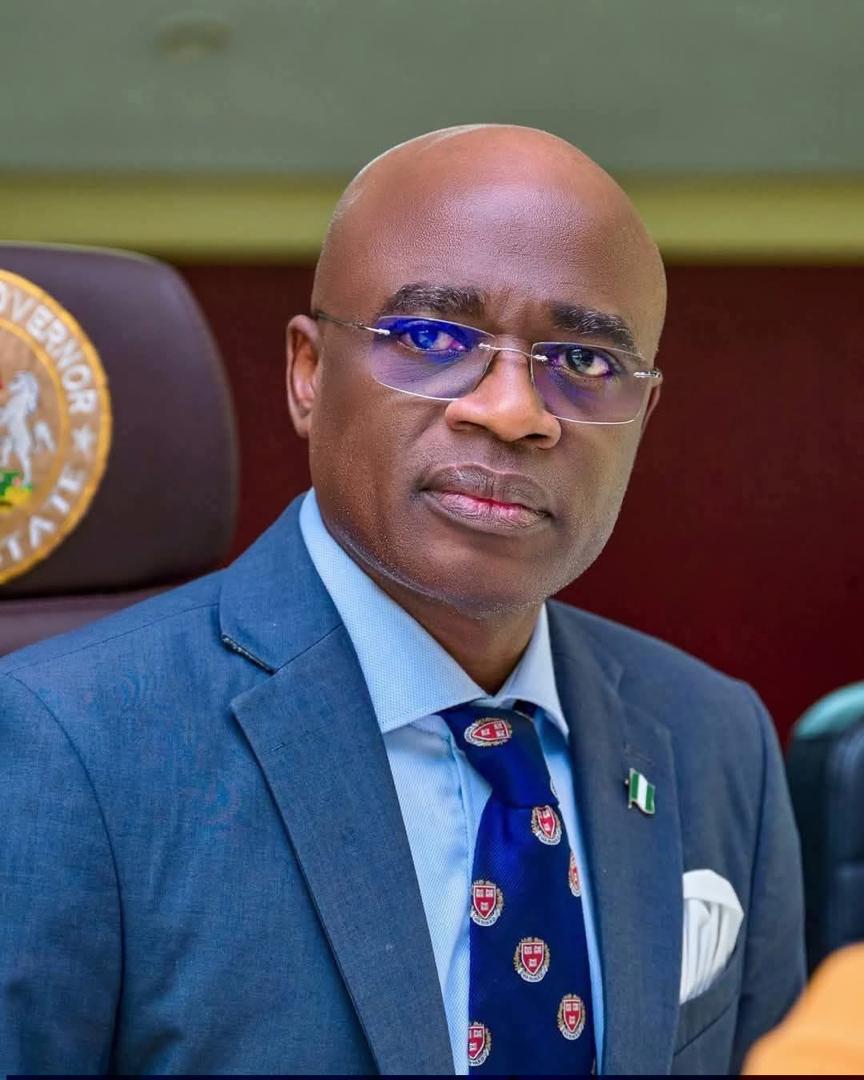
By Solomon Iorpev
When Rev. Fr. Dr. Hyacinth Iormem Alia took the oath of office on May 29, 2023, as the sixth democratically elected Governor of Benue State, he inherited more than the keys to Government House.
He inherited a state fatigued by insecurity, stalled by unpaid salaries, and yearning for a new kind of leadership. Three years later, the verdict across the Food Basket of the Nation is settling into three words: purposeful, intentional, and transformative.Purpose: The Clergyman Who Chose The Arena
Leadership begins with why. For Governor Alia, the purpose was never in doubt.
He campaigned on a simple premise: Benue needed healing. Not just spiritual healing from the pulpit, but economic, administrative, and social healing from the seat of government.Benue in May 2023 was a state where civil servants marked calendars by unpaid salary arrears. Pensioners died in queues. Rural communities were ghost towns, displaced by years of farmer-herder conflict. Schools and hospitals were shells of their former selves. The social contract had frayed.
Governor Alia’s purpose was to restore that contract. He framed his administration around seven priority pillars: Security, Agriculture and Rural Development, Commerce and Industry, Human Capital Development, Infrastructure, ICT/Digital Economy, and Governance Reform. But beyond policy documents, his purpose was personal. As a priest who had spent decades listening to the poor, he came to power with a bias for the vulnerable.
That purpose showed up first in payroll. Within his first 100 days, the Alia administration cleared months of salary and pension arrears that had lingered for years. For teachers, nurses, and local government workers, the alert tone on their phones became the first sermon of the new government: a government that pays. By year three, the state had moved from a backlog to a consistent salary schedule, with civil servants now receiving pay before the 25th of every month. Purpose, for Alia, meant dignity restored through wages earned.
Intention: Governing By Design, Not Default
If purpose is the why, intention is the how. And in three years, Governor Alia has demonstrated that he is not governing by accident or reaction. Every major policy has carried the fingerprint of design.
Security: From Reaction to Architecture
Benue sits in Nigeria’s Middle Belt, and for over a decade, it was the epicenter of violent conflict. Alia’s intention was not to merely deploy security forces after attacks, but to build a security architecture that prevents them.
The administration launched Operation Ayem A Kpatuma II and deepened collaboration with the military and local vigilantes. But more critically, it established the Benue State Bureau of Homeland Security, creating a framework for intelligence gathering and rapid response at the community level. The result has been measurable: dozens of displaced communities in Guma, Logo, and Kwande have begun returning home after years in IDP camps. The governor’s monthly security vote is now publicly tied to community policing equipment, communication gadgets, and logistics, not shrouded in secrecy. Intention meant turning security from a slogan into a system.
Agriculture: From Food Basket to Agribusiness Hub
Benue’s identity is agriculture, but for years it exported raw produce and imported poverty. Governor Alia’s intention was to move the state up the value chain.
In three years, his government has distributed over 500,000 improved seedlings, facilitated tractors for mechanized farming, and reopened the Benue Tractor Hiring Agency. The state partnered with the Federal Government and private investors to revive the Taraku Mills and establish new agro-processing zones for soybeans, rice, and yams. The Bureau of Agricultural Development and Mechanization was created to end the era of hoes and cutlasses.
The intention is clear: Benue must not just feed Nigeria, it must profit from feeding Nigeria. Data from the Ministry of Agriculture shows a 40% increase in dry-season farming participation since 2023, driven by the governor’s direct input support to real farmers, not political farmers.
Infrastructure: Connecting a State Back to Itself
For years, “rural-urban migration” in Benue was forced by bad roads. A farmer in Vandeikya couldn’t get yams to Makurdi without losing half to spoilage. Alia’s intention was to reconnect Benue to itself.
The urban renewal of Makurdi, Gboko, and Otukpo is visible. But the real story is rural. The administration has constructed and rehabilitated over 300km of rural roads in three years, including the Awajir-Oju road, the Lessel-Ihugh-Tse-Mker road, and the ongoing Zaki-Biam-Afia-Gbeji road. These are not political roads. They are economic roads, designed to move produce, not just politicians.
In Makurdi, the underpass at High Level and the rehabilitation of major arteries have reduced traffic time by 60%. Streetlights have returned. The intention is that a state capital should look like one.
Human Capital: Health and Education as Infrastructure
A transformative leader knows that bridges and roads mean little if the people are sick and uneducated.
In health, the Alia administration has renovated and equipped 276 primary healthcare centers across the 23 LGAs under the Basic Health Care Provision Fund. The Benue State University Teaching Hospital received a new MRI machine, dialysis center, and oxygen plant. More than 10,000 households have been enrolled in the Benue State Health Insurance Scheme, with premiums subsidized for the vulnerable.
In education, the story is similar. Over 9,000 teachers were recruited in 2024 to address the teacher-pupil ratio. The government cleared counterpart funding for UBEC, unlocking billions for classroom construction. The School of Nursing and Midwifery, Makurdi, and College of Health Technology, Agasha, have been upgraded. Intention here meant treating human capital as the most critical infrastructure.
Governance: The Death of “Business as Usual”
Perhaps the most intentional shift has been in governance itself. Governor Alia introduced the Benue Geographical Information System [BENGIS] to digitize land administration, blocking leakages and raising IGR. The Treasury Single Account was enforced, and the state’s IGR rose from N1.2 billion monthly in 2023 to over N3.8 billion monthly by mid-2026, without introducing new taxes.
The Civil Service was audited, ghost workers flushed out, and promotion arrears paid. E-governance platforms now allow citizens to track projects. Intention meant running a government like a system, not a bazaar.
Transformation: The Benue That Is Emerging
Purpose and intention mean nothing if they do not produce transformation. After three years, the transformation is not in speeches. It is in data, in streets, and in stories.
Economic Transformation:
Benue has moved from a salary-dependent economy to one seeing private capital return. The Makurdi Industrial Layout is being reactivated. The Alia administration has signed MoUs for a $2.5 billion investment in biofuel and ethanol from cassava. The Benue Investment and Property Company [BIPC] has been repositioned, and the state hosted its first Benue Economic Summit in 2025, attracting investors from across Nigeria and the diaspora. Unemployment figures from the NBS show a 7% drop in Benue’s youth unemployment between Q2 2023 and Q1 2026.
Social Transformation:
IDP return is the most human face of this transformation. As of May 2026, over 180,000 displaced persons have returned to their ancestral homes in Guma, Makurdi, Logo, and Kwande LGAs, supported by the state’s resettlement program. Schools have reopened in communities that were silent for five years. Markets are back. That is a transformation you can touch.
Political Transformation:
Governor Alia has redefined political engagement in Benue. He has kept a deliberate distance from political godfatherism, insisting that his only godfather is the Benue people. His monthly media chat, “Alia Speaks,” has created a direct line between the governor and citizens. For the first time in years, a governor’s approval rating is driven by project delivery, not ethnic sentiment.
Institutional Transformation:
The Benue State House of Assembly has passed 21 executive bills in three years, including the Benue State Bureau of Public Procurement Law, the Benue State Disability Rights Law, and the Benue State Electricity Law. These are not laws for headlines. They are laws for structure. They mean the transformation will outlive the transformer.
The Road Ahead: Year Four And Beyond
To be purposeful for three years is commendable. To remain purposeful for four, five, or eight is legacy. Governor Alia’s third anniversary comes at a midpoint. The foundations have been laid, but the real test of transformation is sustainability.
The challenges remain. Security, though improved, is not yet total. Federal allocations still dictate the pace of development. The wage bill remains heavy. And political opposition, both within and outside his party, is recalibrating.
But if the first three years have shown anything, it is this: Rev. Fr. Dr. Hyacinth Iormem Alia did not come to occupy an office. He came to discharge a purpose. He has not governed by impulse. He has governed by intention. And Benue, slowly but visibly, is being transformed.
Three years ago, he asked Benue to believe. Today, Benue is beginning to see.
The priest who entered the arena is still wearing the collar. But now, it is stained not just with anointing oil, but with the dust of roads built, the chalk of schools renovated, and the sweat of a state being rebuilt.
That is purposeful leadership. That is intentional governance. That is transformation in motion.
Chief Solomon Iorpev is the Technical Adviser to the Benue State Governor on Media, Publicity and Strategic Communication.
By Aisha Gambo
In Gabari village, Kufena, Zaria Local Government Area of Kaduna State, young Halira Nuhu (not real name) is hawking “Fura da Nono”, a meal made from cow milk and millet, during school hours.
Nuhu dreams of becoming a doctor, but her condition would not allow her to accomplish that dream.
In her village, boys’ education is prioritised, while girls are sent to hawk or married off early.
At 12, Nuhu was given out in marriage to her cousin.
This, indeed, reflects the reality of many girls in her community.
“I was married off at the age of 12, I’m now 15 and I have one son; in my tradition parents choose spouses for their children and girl child education is not prioritised, we go hawking.
“I attended only primary school and stopped because my father was not financially stable; so, my mother said I should hawk before a befitting spouse is chosen for me,” she said.
Similarly, Saude Maude (not real name), a resident of Hanwa, Zaria, got married at the age of 13.
As an orphan who lost her father while she was still a baby, Maude could not finish secondary school due to poverty.
“It was my mother who took care of me and she couldn’t pay for my school fees after JSS 3. So when I got a suitor, I was married off; I was devastated but there was nothing I could do,” she laments.
According to the United Nations Children’s Fund (UNICEF), about 7.6 million girls in Nigeria are out of school, including 3.9 million at the primary level and 3.7 million in junior secondary school.
UNICEF further reports that more than half of girls of basic education age are not enrolled.
Evidence from various studies also indicates significant dropout rates between primary and junior secondary levels.
Experts, however, attribute this trend to a combination of factors, including poverty, early marriage, unintended pregnancy, gender-based violence, limited awareness, and inadequate parental support.
Consequently, these challenges continue to restrict many girls’ access to education and contribute to higher dropout rates, especially as they transition from primary to secondary school.
A report by Save the Children says 78 per cent of girls in the northern region of Nigeria are married before the age of 18, while 44 per cent of girls are married before their 18th birthday across the country.
In Kaduna State, the School Census Report revealed that 25 per cent of adolescent girls dropped out of school due to factors such as early marriage, insecurity, poverty, among others.
In response to this development, the Kaduna State Government developed an Education Policy in 2019, which made provision for Second Chance Education (SCE).
The state also developed a 10-year Education Sector Plan (ESP), named Kaduna State 2019–2029 Education Sector Strategic Plan.
The plan is a comprehensive and strategic framework developed with the support of development partners to guide the planning, implementation, and evaluation of education policies and programmes.
The Director of Planning, Kaduna State Ministry of Education, Salisu Lawal, stated that SCE is being implemented with support from development partners like the Adolescent Girls Initiative for Learning and Empowerment (AGILE) for girls who dropped out due to marriage or pregnancy.
Recently, Kaduna State validated the Gender in Education Policy to tackle structural barriers such as safety, access, and retention that disproportionately affect girls.
The policy is aimed at addressing the specific needs of male and female learners across different age groups and communities.
Notably, the initiative goes beyond general assumptions about gender and instead focuses on how education can be delivered effectively to different categories of learners.
Second Chance Education is one component of the broader policy, which supports adolescent married girls and mothers with learning materials, uniforms, and conditional cash transfers to motivate the girls and their families.
Zainab Maina-Lukat, the Technical Assistant on Education Systems Strengthening, AGILE project, said the policy was designed to address inequalities and barriers within the education sector.
She said the policy proposes practical solutions to support young mothers and female teachers, including the establishment of early childhood care centres within schools to enable them continue their education or careers.
According to her, the policy recognises that learners face different challenges depending on their age, gender, and circumstances.
The policy also highlights disparities in academic progression, especially in science education.
While about half of girls in private schools transition into science streams, the figure is significantly lower in public schools.
Albeit these challenges, being married and giving birth did not stop Nuhu and Maude, who dropped out of school due to tradition and poverty, from pursuing their dreams.
Nuhu has now returned to school and is in JSS one through the SCE supported by AGILE.
Her husband and father gave their consent for her to continue her education after a mobilising officer enlightened them on the programme.
“My father is excited that I am going back to school and my husband supported me with uniform and learning materials,” she says.
However, the major challenge Nuhu faces is balancing married life and education.
As a nursing mother with the zeal to learn, she has to keep her 11-month-old baby at her in-laws’ place before going to school.
“Nobody will take care of my baby when I’m in class and I want to concentrate, so I have to keep him with them,” she said.
Transportation from her husband’s house to school is another challenge.
Nevertheless, Nuhu wakes up early and treks for 40 minutes to get to school.
Returning to school has given her a sense of responsibility.
She regrets marrying early, saying she still feels she is not ripe for marriage at 15.
She now hopes to become a girl child advocate, where she will sensitise and empower young girls to complete at least Senior Secondary School before marriage.
Likewise, Maude, now 17 with two children, has returned to school and is in SS1, dreaming of becoming a journalist.
She said she would work hard to ensure her children get better education before marriage.
Ummi Bukar, the Programme Director, Participatory Communication for Gender Development Initiative (PAGED Initiative), says extending Nigeria’s Universal Basic Education (UBE) policy to 12 years would improve access to secondary education, especially for girls.
“Extending the policy to senior secondary education would ensure that girls remain in school longer and emerge as more productive members of society.
“It is not enough to create programmes; they must reflect the realities of the target group. Many young mothers cannot return to school because there are no support systems such as childcare or flexible learning hours,” she says.
She, therefore, called for stronger enforcement of existing laws, increased investment in education, and inclusive policies that address the diverse realities across states.
In conclusion, as married adolescent girls like Nuhu and Maude return to the classroom, it is necessary that they receive the support systems required to thrive. (NAN)
By Abiemwense Moru
A young man survived a sudden health crisis only because his liver failure was detected early—proving that awareness and timely intervention save lives.
Health experts have raised serious concerns about low awareness of liver diseases, warning that these conditions remain silent killers and are increasingly becoming a major global health burden affecting millions worldwide.
In commemoration of World Liver Day on April 19, medical professionals noted that the 2026 event received far less attention than major global campaigns like HIV awareness.
Experts argue this lack of visibility reduces the effectiveness of awareness campaigns. Consequently, it limits public understanding of liver health, early warning signs, and preventive measures that could significantly lower disease rates and mortality.
Consultant gastroenterologist and hepatologist Dr Kolawole Akande warned that the limited attention given to liver health initiatives restricted their ability to influence behaviour and promote preventive healthcare practices among communities nationwide.
He noted that World Liver Day was created to highlight the importance of liver health and encourage early detection and treatment of liver-related diseases before they progressed into severe, life-threatening conditions.
However, he said insufficient awareness continued to slow progress in combating diseases such as hepatitis, fatty liver disease, cirrhosis, and liver cancer, which collectively contributed to high morbidity and mortality rates globally.
According to him, the liver is one of the body’s most vital organs, responsible for nearly five hundred essential functions daily, including detoxification, metabolism regulation, and storage of nutrients necessary for sustaining life and health.
He said that in spite of its importance, many individuals only became aware of liver disease when it had advanced significantly, making treatment more difficult and reducing survival chances due to delayed diagnosis and intervention.
Akande emphasised that liver diseases often developed silently without noticeable symptoms, underscoring the importance of routine medical check-ups in identifying early-stage damage before it becomes severe or irreversible over time.
He said that early-stage liver damage could be reversed if detected promptly, but late diagnosis significantly limited treatment options and increased the likelihood of complications and death among affected individuals.
Akande stressed that policymakers and healthcare providers must actively promote healthy behaviours, including regular exercise and balanced diets, to prevent lifestyle-related liver diseases and improve overall public health outcomes sustainably.
Akande called for expanded vaccination programmes, improved screening systems, and increased access to treatment services as essential measures to combat hepatitis and reduce its widespread impact on populations.
He warned that many individuals were living with hepatitis without knowing their status, increasing their personal health risks while also contributing to the continued spread of infection within communities and across generations.
Globally, liver diseases accounted for at least 2 million deaths each year, yet many of these deaths are preventable through early detection, vaccination, improved awareness, and adoption of healthier lifestyle practices.
Akande emphasised that prevention efforts should begin with children, particularly through the administration of the hepatitis B vaccine at birth, which played a crucial role in reducing infection rates early in life.
According to him, hepatitis B is the most common cause of liver disease in Nigeria, in spite of being preventable through vaccination, highlighting the urgent need to improve immunisation coverage across the country.
Akande said that after receiving the birth dose, children must complete the full immunisation schedule to ensure long-term protection against hepatitis B and related liver complications later in life.
He also advised adults to undergo screening and vaccination, especially those born before hepatitis B vaccination became part of routine immunisation schedules, as they remained at higher risk of undetected infection.
According to him, adults who test negative should receive vaccination, noting that vaccines are widely available and relatively affordable, making prevention accessible for many individuals across different socioeconomic groups.
Akande underscored the need for stronger government and institutional support to improve awareness campaigns and ensure that liver health education reaches diverse populations across urban and rural communities effectively.
He called for collaboration among public health authorities, healthcare providers, and community organisations to educate citizens about liver disease prevention, early detection, and the importance of maintaining healthy lifestyles consistently.
Akande reiterated that prevention remained more effective than treatment.
Similarly, a general practitioner, Dr Jonathan Esegine, urged individuals to take proactive steps toward protecting their liver health, stressing that increased awareness could significantly reduce the global burden of liver disease.
Esegine advised adopting a balanced, plant-based diet rich in fruits, vegetables, whole grains, and healthy fats, which supported liver function and reduced the risk of developing chronic health conditions over time.
He also recommended maintaining a healthy weight through regular physical activity, as exercise played a crucial role in preventing fatty liver disease and improving overall metabolic health and wellbeing.
Health experts say the theme for World Liver Day 2026, “Solid Habits, Strong Liver,” emphasises that liver health is shaped by daily lifestyle choices, reinforcing the importance of consistent healthy behaviours over time.
They say adopting healthy habits offers a powerful, collective defense against liver disease, improving long-term health and easing the global impact of chronic liver conditions.(NAN)


Security Guard Allegedly Abducts Employer’s Children in Minna
ShareFrom Dan Amasingha, Minna A businessman, Alhaji Danjuma, resident in the Brighter Area of Minna, Niger State, has appealed for prayers and...


Ndidi Leads Eagles for Poland Friendly
ShareSuper Eagles captain Wilfred Ndidi has joined the rest of the squad in Warsaw ahead of Wednesday’s international friendly against Poland. Ndidi and other stars such as Moses...


DR Congo Reopens Bunia Airport after 10-Day Closure amid Ebola Outbreak
ShareAuthorities in the Democratic Republic of Congo (DRC) have reopened the main airport in Ituri Province, the epicentre of the country’s ongoing Ebola outbreak, after a...

Customs, World Bank Group Strengthen Post Clearance Audit Capacity
ShareBy Tambaya Julius, Abuja The Nigeria Customs Service (NCS) has commenced a two-week Technical Assistance Mission on Post Clearance Audit (PCA) in collaboration with the World Bank Group under the...
Civilian Protection Now Central to Air Operations – CAS
ShareChief of the Air Staff (CAS), Air Marshal Sunday Aneke, said civilian protection has become a central consideration in the planning and execution of Nigerian Air Force (NAF) operations. Aneke stated...
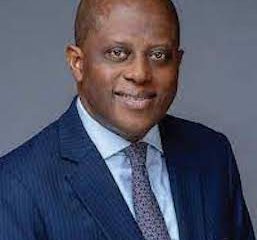

Cardoso Re-assigns Deputy Govs, Ikeazor Takes over Policy Directorate
Share Governor of the Central Bank of Nigeria (CBN), Olayemi Cardoso, has re-assigned all four deputy governors of the institution....

Oyo Abduction: Teachers Protest Nationwide, Demand Release of Colleagues
ShareBy Laide Akinboade, Abuja and Ene Asuquo, Calabar A wave of national concern over worsening insecurity swept across Nigeria on Tuesday...

INEC Launches Probe Into Alleged Voter – data Leak
ShareBy David Torough, Abuja The Independent National Electoral Commission has commenced an investigation into allegations of unauthorised access to its...


2027: Voting Dr. Abraham, A Smart Decision For Gitata/Karu Constituency
ShareBy Tambaya Julius, Abuja Every community benefits from individuals who are willing to shoulder responsibility, listen attentively, and work consistently...

Artificial Intelligence: A Threat to Humanity or a Catalyst for Human Growth?
ShareAn Exclusive Interview with Engr. Mazen Kalassina In recent years, Artificial Intelligence has evolved from a specialized technology into a...