
Foreign News
Lebanon Foils 3 Suicide Attacks Planned by IS Militants—-Minister


Lebanese security forces had foiled three suicide attacks planned by militants linked to the Islamic State (IS) group in Beirut’s southern suburbs, Interior Minister Bassam Mawlawi said Wednesday. Mawlawi said at a press conference that some militants had planned to carry out attacks in February by using rocket-propelled grenades, gunfire, as well as suicide vests rigged with explosives that could have killed many people.
Two suspects were arrested on the same day and are being held in custody, with explosives, weapons and munitions seized, he added.
The IS controlled some areas in northeastern Lebanon from 2014 to 2017 and claimed two suicide bombings in Beirut’s southern suburbs in 2015 that killed over 40 people.(Xinhua/NAN)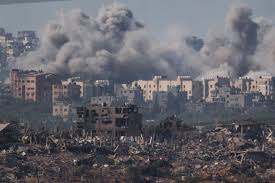





Poland plans to ban mobile phones in all primary schools from next academic year under draft legislation approved by the government on Tuesday.
The proposal, which will now be submitted to parliament, would take effect on September 1, 2026.
In Poland, primary school education runs through the eighth grade.
The planned law would prohibit the use of mobile phones and other devices capable of recording audio or video during lessons and breaks.
The ban would apply to both public and private schools, the Education Ministry said.
Exceptions would be permitted when the use of a phone is required for teaching purposes, educational support, or for health and safety reasons.
Education Minister Barbara Nowacka said the measure is a response to calls from teachers for stricter rules on smartphone use in schools.
She said that more than half of Poland’s schools have already introduced similar restrictions on a voluntary basis.
The government also approved a package of measures aimed at strengthening child protection online, which must likewise be approved by parliament.
The proposals include tighter restrictions on minors’ access to websites containing pornography and measures designed to speed up the removal of illegal online material.
Under the plans, operators of adult-content websites would be required to verify users’ ages anonymously, without collecting browser data or personal information.

Authorities in the Democratic Republic of Congo (DRC) have reopened the main airport in Ituri Province, the epicentre of the country’s ongoing Ebola outbreak, after a 10-day suspension of commercial flight operations.
The airport in Bunia, the capital of Ituri, resumed operations on Tuesday following the implementation of health and safety measures aimed at containing the spread of the disease.
The DRC is currently battling a major outbreak of Ebola, a highly contagious haemorrhagic fever that is suspected to have claimed at least 246 lives in the country and neighbouring Uganda, according to the Africa Centres for Disease Control and Prevention.
On May 23, authorities halted all commercial flights to and from Bunia Airport in eastern DRC, a region already affected by armed conflict. During the closure, only humanitarian and medical flights were permitted to operate.
Health Minister Samuel Roger Kamba said the temporary shutdown was necessary to allow authorities to introduce measures designed to safeguard travellers and limit the risk of transmission.
Announcing the reopening on Tuesday, the transport ministry said an assessment of the outbreak response and monitoring systems had been conducted.
“Conditions are now in place for a gradual and safe resumption of flights.”
The government said the reopening would be carried out progressively while health authorities continue efforts to contain the outbreak.
Health authorities in the Democratic Republic of Congo are celebrating after five patients, who had Ebola and now recovered, were allowed to leave the hospital.
The current outbreak is suspected to have killed almost 250 people.
But those infected can get better and officials stress that people should seek medical help if they believe they have contracted the virus.On Sunday, there was a ceremony for a group of four nurses who were discharged from a hospital in Bunia, the provincial capital of Ituri, the epicentre of the outbreak.
“We were really demoralised because we knew that at some point… we were going to die. That was it… I’m telling you, if you have never been isolated, you will not know that it’s not easy,” Nurse Etienne Ezo told the Reuters news agency as he reflected on his experience.
The first survivor, a laboratory worker, to have recovered left hospital last week.
Health workers are on the frontline in the battle against the spread of the virus and are often the most at risk.
“This encouraging milestone bears witness to the effectiveness of field interventions: early detection, medical care, contact tracing and community engagement,” DR Congo’s Institute of Public Health wrote on social media.
Its director, Dr. Mwamba Kazadi, described the recoveries as a victory worth celebrating, adding that early detection and strong care make a difference.
Tedros has called on communities to work with medical staff after some residents attacked health centres over strict burial rules. The bodies of those suspected of having died of Ebola are not allowed to be handled by grieving relatives, regulations which clash with local traditions.
In a joint statement with the Congolese government on Sunday, he said local communities are “at the heart of the solution” and that “success” in their response depends on their trust and engagement.
“Persistent challenges include early detection and isolation of cases, contact tracing, safe and dignified burials, robust infection prevention and control in health facilities, and strong community awareness.
“The Government and WHO call on all communities to continue adopting protective behaviours, including regular hand hygiene, early care seeking in health facilities, and sharing accurate information.”
There are now more than 1,000 suspected Ebola cases in the DR Congo, and at least 246 deaths. Neighbouring Uganda has reported nine confirmed cases and one death.
But in some affected areas, there is a sense of normality. In Bunia, schools and markets are open as people continue to go about their daily activities.
The current outbreak – the 17th in DR Cngo’s history – is caused by the Bundibugyo species of Ebola, which has no approved vaccines, though some are being worked on now.
While cases are concentrated in DR Congo’s Ituri, North and South Kivu provinces, and some in Uganda’s capital Kampala, people have also been tested outside of Africa.
Health officials in Brazil said on Saturday that they were investigating two suspected Ebola cases in São Paulo state.
Meanwhile, protests have erupted in the Kenyan town of Nanyuki over US plans to construct an Ebola quarantine facility for American citizens at an air base.
Residents marching through the streets say the facility may expose local people to infection and an outbreak of the virus. There have been no recorded cases of Ebola in the country.




Alia Appoints New Acting Head of Service in Benue
ShareFrom Attah Ede, Makurdi Benue State Governor, Rev Fr .Hyacinth Alia has approved the appointment of Dr. Ihu Eunice Ogbenyi as new Acting Head of Service (HoS)...
Oshonaike Hails Steady Progress of Nigerian Table Tennis Players
ShareSeven-time Olympian Olufunke Oshonaike said Nigerian table tennis players are making steady progress in spite of the challenges they face in competing...
Poland Bans Smartphones in Primary Schools
SharePoland plans to ban mobile phones in all primary schools from next academic year under draft legislation approved by the government on Tuesday. The...
Reps Minority Picks Ugochinyere as New Leader
ShareBy Ubong Ukpong, Abuja Following the defection of the former minority Leader of the House of Representatives, Kingsley Chinda, the minority caucus has nominated Hon. Ikenga...
Kano Revokes Private School Licences over Sexual Abuse
ShareFrom Aliyu Askira, Kano The Ungogo Local Government Area of Kano State has withdrawn the licences of all private schools within its jurisdiction following allegations that...


CBN Approves Regular Commercial Operations for Abbey Mortgage Bank
ShareBy Tony Obiechina, Abuja Abbey Mortgage Bank Plc, one of Nigeria’s longest‑standing primary mortgage banks, has secured regulatory approval from...


Owo Church Massacre: Court Sentences Four to Death for Terrorism
ShareBy David Torough, Abuja More than three years after the gruesome attack on St. Francis Xavier Catholic Church, Owo, Ondo...
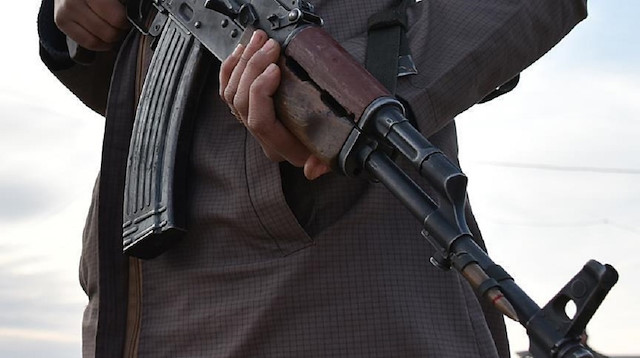
Terrorists Abduct Adelabu’s Sister, Twin Sons, kidnap Six Students in Zamfara
ShareBy Eze Okechukwu, Abuja and Ifeanyichukwu Nwannah, Gusau The nation’s worsening insecurity came into sharp focus on Wednesday, as separate incidents of...


Nigeria Customs, World Bank Launch Two-Week Post Clearance Audit to Boost Revenue, Trade Compliance
ShareBy Tambaya Julius, Abuja The Nigeria Customs Service (NCS), in partnership with the World Bank Group, has commenced a two-week...


Court Suit halted Planned Demolition in Abuja
ShareBy Laide Akinboade, Abuja Residents of Kampala Street, Wuse II, Abuja, have formally notified the Abuja Metropolitan Management Council (AMMC)...