
NEWS
Lekki Project: World Bank to Provide Technical Aids

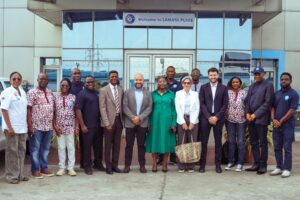
The World Bank has concluded plans to provide technical assistance to the Lagos Metropolitan Area Transport Authority (LAMATA) on the implementation of the Lekki Green Corridor Project.
The Lekki Green Corridor Project includes Rail and Bus Mass Transit infrastructure, Traffic Management and other components.
The Lagos State Commissioner for Transportation, Mr Seun Osiyemi, revealed this in a statement on Friday in Lagos.
Osiyemi noted that the provision of rail and bus mass transit in the Lekki region was a critical part of the state’s comprehensive Strategic Transport Master Plan (STMP).
He added that the plan would incorporate additional features such as a Bus Rapid Transit (BRT) corridor to serve as a feeder system to the rail line.
He said that this initiative aligned with the Nigeria National Urban Mobility Programme spearheaded by the World Bank.
Osiyemi highlighted the significance of the Lekki Green Corridor project, describing it as a top priority.
“The Lekki-Epe axis is an emerging Central Business District (CBD) corridor.
“The project will complement the expansion of the Bus Rapid Transit (BRT) system and support key infrastructure developments, including the free trade zone, port, refinery, and airport in the area,” he said.
The World Bank delegation, led by the Urban Transport Specialist and the Task Team Leader, Elkin Bello, expressed the Bank’s strong interest in contributing to the development of sustainable public transportation on the Lekki Green corridor axis.
Bello noted the importance of a holistic approach to urban mobility and inquired about Lagos State’s plans for integrating the informal transport sector into the city’s formal transportation framework.
“It is critical to ensure that all stakeholders, especially informal transport operators, are part of the transformation process,” he said
Responding, the Managing Director of LAMATA, Mrs Abimbola Akinajo, provided insights into the bus industry transition programme, designed to transition informal operators into the regulated system.
She recounted LAMATA’s efforts to involve transport union leadership in the development process and noted that they had been included in local and international exposure visits and training to learn best practices from more developed urban centers.
“Our vision is to create an inclusive transportation ecosystem that integrates operators while ensuring efficiency and sustainability,” she said.
Akinajo expressed optimism on the potential partnership with the World Bank, stating that with the support of the World Bank, the Lagos State Government would be taking a greater step toward achieving a world-class transportation system for Lagos State.
She added that this would manifest in providing a seamless and sustainable commuting experience for residents.
“This project is not just about infrastructure; it’s about enhancing mobility, improving quality of life, and driving economic growth in Lagos State,” she said. (NAN)
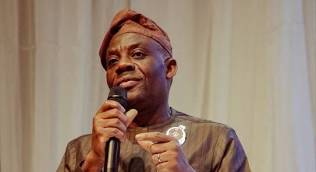
From Rabiu Sanusi Kano
The Minister of Education, Dr. Ma’aruf Tunji Alausa, has commended Kano State Governor, Alhaji Abba Kabir Yusuf, for his administration’s bold reforms in the education sector, particularly the recruitment of 8,588 teachers to improve the quality of teaching and learning across the state.
This was contained in a statement issued by the Governor’s Spokesman, Sunusi Bature Dawakin Tofa, on Tuesday.
Speaking during the presentation of appointment letters to the newly recruited teachers at the Sani Abacha Indoor Stadium, Kano, the Minister described the exercise as a significant milestone in the state’s drive to reposition education and address the shortage of qualified teachers in public schools.
Dr. Alausa said the recruitment of 4,900 newly employed teachers alongside the absorption of 3,688 Better Education Service Delivery for All (BESDA) teachers under the ABBA Gida-Gida programme demonstrates the Kano State Government’s strong commitment to expanding access to quality education and improving learning outcomes.
He noted that sustained investment in education remains critical to national development and commended the Kano State Government for prioritising the sector through strategic interventions that will have lasting impact on future generations.
In his remarks, Governor Abba Kabir Yusuf described the distribution of appointment letters as another major milestone in his administration’s declaration of a state of emergency in the education sector.
The Governor said the recruitment would help bridge the shortage of qualified teachers in public schools and further improve the standard of education across the state.
Governor Yusuf recalled that his administration allocated 31 percent of the 2026 budget to the education sector, noting that the investment has continued to yield positive results, with Kano emerging as the best-performing state in this year’s NECO examination.
He also expressed appreciation to President Bola Ahmed Tinubu for suspending the proposed increase in NECO examination fees, describing the decision as a welcome relief that will make education more affordable and accessible to Nigerian students.
Governor Yusuf urged the newly employed teachers to uphold the ethics of the teaching profession by demonstrating dedication, discipline and professionalism in the discharge of their responsibilities.
Earlier, the Commissioner for Education, Gwani Ali Haruna Makoda, said the recruitment forms part of the government’s comprehensive reforms aimed at revitalising education in Kano State and ensuring that every child has access to qualified teachers.
Also speaking, the Executive Chairman of the Kano State Universal Basic Education Board (SUBEB), Malam Kabir Yusuf Kabir, reaffirmed the Board’s commitment to supporting the government’s policies and programmes designed to improve the quality of basic education across the state.
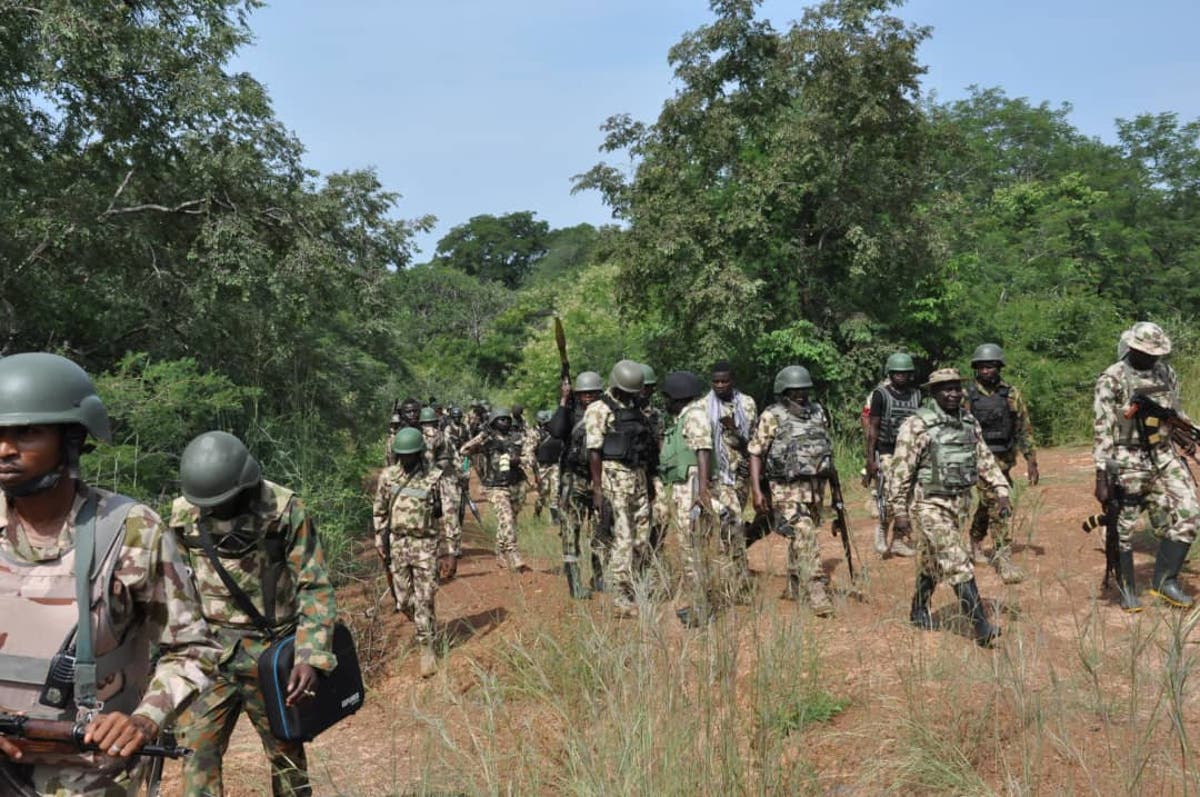
The Nigerian Army says its troops have rescued 16 kidnapped victims, apprehended suspected terrorist logistics suppliers and informants, and recovered arms, ammunition and other items in separate operations across the country.
This is contained in an operational update covering activities in the last 24 hours, made available yesterday in Abuja.
In the North East, the report said troops of Operation HADIN KAI arrested a suspected female ISWAP informant and logistics supplier at Pulka, Gwoza Local Government Area of Borno.
It said the suspect was intercepted while allegedly attempting to return to her husband in the Sava terrorist enclave within the Sambisa Forest.
According to the report, items recovered from her included a mobile phone and other personal effects.
In the North West, it said the troops of Operation FANSAN YAMMA repelled a terrorist ambush on personnel of the 2 Nigerian Mobile Force at Abrom village in Kachia Local Government Area of Kaduna.
“The troops fought through the ambush, forcing the attackers to flee and recovered one AK-47 rifle, a magazine and 50 rounds of 7.62mm ammunition.
“Also in Sokoto State, troops rescued 16 kidnapped victims during separate operations in Shagari and Gandi Local Government Areas.
“The first operation at Wanke and Kaura villages led to the rescue of six abductees after terrorists abandoned them while fleeing military troops.
“Troops also recovered two motorcycles belonging to the fleeing terrorists,” it said.
The report said troops had, in another operation at Badanma village, engaged terrorists, forcing them to abandon 10 kidnapped victims who were rescued unharmed.
It added that troops also intercepted a white bus transporting 10 motorcycles along the Biu-Kangiwa road in Kebbi.
According to the report, preliminary investigations revealed the motorcycles were destined for a notorious terrorist identified as Mallam Gehowa at Amogoro.
“Four suspected terrorist logistics suppliers were arrested and handed over to the Department of State Services for further investigation.
“In Taraba State, troops of Operation MESA arrested a suspected criminal at Dema Road in Donga Local Government Area.
“Recovered from the suspect were 29 rounds of 7.62mm ammunition, three mobile phones, a power bank and N160,000.
“The suspect allegedly confessed to purchasing the ammunition from another individual in the area,” it added.
The report further revealed that troops of Operation ENDURING PEACE recovered rustled cattle after engaging suspected terrorists in the Wase Local Government Area of Plateau.
It said the troops also raided a suspected drug den at Saya village in Bassa Local Government Area, arresting four suspected drug dealers.
According to the report, items recovered included eight cutlasses, six knives, cannabis and other illicit substances.
It said that toops further responded to an armed robbery incident along the Mararaba Jama’a highway where they recovered the corpse of a victim with gunshot wounds.
“They also intervened in the Pankshin Local Government Area following the killing of a farmer allegedly by suspected herders over a grazing dispute.
“The incident triggered reprisals, forcing the fleeing herders to abandon 15 cattle now in police custody.
“Meanwhile, troops of Operation WHIRL STROKE, working with Defence Intelligence Agency operatives, recovered one AK-47 rifle and a magazine during a follow-up raid on the residence of a suspected militia member in Wukari, Taraba” it added.
NEWS
Zenith Bank Recognised As Africa’s Best Bank & Nigeria’s Best Bank At The Euromoney Awards For Excellence 2026

By Gemini
Zenith Bank Plc has been named “Africa’s Best Bank” and “Nigeria’s Best Bank”, the latter for the second consecutive year, at the prestigious Euromoney Awards for Excellence 2026, clinching the biggest and most coveted national and continental awards in banking.
The awards were presented to the Bank on Thursday, 16 July 2026, at The Peninsula London Hotel, London.This dual recognition is a testament to the Bank’s sustained excellence in financial performance, customer service, digital innovation, and its contribution to economic development across Nigeria and the wider African continent.
The Euromoney Awards for Excellence are among the most respected in the global financial industry, evaluating banks on criteria including strategy, profitability, risk management, digital transformation and impact on stakeholders.
Victory at the awards is regarded as a mark of the highest distinction in global banking. This year’s edition attracted a record of over 770 entries from world-class financial institutions including HSBC, Morgan Stanley, Citibank, Barclays, Standard Bank and DBS Bank of Singapore.
Commenting on the awards, the Group Managing Director/CEO of Zenith Bank Plc, Dame Dr. Adaora Umeoji, OON, said, “We are deeply honoured by these recognitions from Euromoney.
Being recognised as Africa’s Best Bank and Nigeria’s Best Bank reflects the trust of our customers, the dedication of our unicorn workforce, and our unwavering commitment to building a truly African global financial institution. These awards inspire us to do even more to deliver superior value, drive financial inclusion, and support the growth of businesses across Africa.”
The GMD commended the regulators across the various jurisdictions where the Bank has footprints for the enabling regulatory environment which has supported the Bank in achieving this feat.
She dedicated the award to the Founder of Zenith Bank Plc, Jim Ovia, CFR, thanking him for his vision and excellence which have been instrumental to the Bank’s success.
Zenith Bank has continued to deliver strong financial results while accelerating investments in technology, artificial intelligence, and digital banking solutions. In the 2025 financial year, the Bank grew gross earnings by six per cent year on year to ₦4.19 trillion and delivered profit after tax of ₦1.04 trillion, while reducing its non-performing loan ratio from 4.7 per cent to 3.8 per cent. In keeping with its dividend policy, Zenith Bank rewarded its investors with a record-breaking total dividend of N10.00 per share (totaling N410.69 billion) for the 2025 financial year.
This represents a 100% increase over N5.00 per share paid in 2024. The Bank has also deepened its pan-African presence and expanded trade and transaction banking capabilities to connect businesses across key markets.
Euromoney is the leading authority for global banking and financial markets, and this latest recognition adds to Zenith Bank’s growing list of local and international accolades, and further cements its position as one of Africa’s leading financial institutions.
The Bank’s track record of excellent performance has continued to earn the brand numerous awards, including being recognised as the Number One Bank in Nigeria by Tier-1 Capital for the seventeenth consecutive year in the 2026 Top 1000 World Banks Ranking, published by The Banker and “Nigeria’s Best Bank” at the Euromoney Awards for Excellence 2025. The Bank was also awarded Bank of the Year (Nigeria) in The Banker’s Bank of the Year Awards for 2020, 2022, and 2024; Best Bank in Nigeria from 2020 to 2022, 2024 and 2025, in the Global Finance World’s Best Banks Awards; Best Bank for Digital Solutions in Nigeria in the Euromoney Awards 2023; and was listed in the World Finance Top 100 Global Companies in 2023.
Further recognitions include Best Commercial Bank, Nigeria for six consecutive years from 2021 to 2026 in the World Finance Banking Awards and Most Sustainable Bank, Nigeria in the International Banker 2023, 2024 and 2026 Banking Awards.
Additionally, Zenith Bank has been acknowledged as the Best Corporate Governance Bank, Nigeria, in the World Finance Corporate Governance Awards for five consecutive years from 2022 to 2026 and ‘Best in Corporate Governance’ Financial Services’ Africa for four consecutive years from 2020 to 2023 by the Ethical Boardroom.
The Bank’s commitment to excellence led to Zenith being also named the Most Valuable Banking Brand in Nigeria in The Banker’s Top 500 Banking Brands for 2020 and 2021, Bank of the Year 2023 to 2025 at the BusinessDay Banks and Other Financial Institutions (BAFI) Awards, and Retail Bank of the Year for three consecutive years from 2020 to 2022 and 2024 to 2025.
The Bank also received the accolades of Best Commercial Bank, Nigeria and Best Innovation in Retail Banking, Nigeria, in the International Banker 2022 Banking Awards, Bank of the Year 2024 by ThisDay Newspaper; Bank of the Year 2024 by New Telegraph Newspaper; and Best in MSME Trade Finance, 2023 by Nairametrics. The Bank’s Hybrid Offer was also adjudged ‘Rights Issue/Public Offer of the Year’ at the Nairametrics Capital Market Choice Awards 2025.
Zenith Bank has also earned several non-financial awards, including Most Responsible Organisation in Africa, Best Company in Transparency and Reporting and Best Company in Gender Equality and Women Empowerment at the SERAS CSR Awards Africa 2024.


Ghost Workers, IPPIS Fraud, and Lessons from the N941m Forfeiture
Share By Nafisat Bello “Ghosts are supposed to haunt abandoned buildings, not government payrolls. They do not possess bank accounts, collect...

Minister Commends Yusuf on Education Transformation, Others
ShareFrom Rabiu Sanusi Kano The Minister of Education, Dr. Ma’aruf Tunji Alausa, has commended Kano State Governor, Alhaji Abba Kabir...

NDIC Begins Payment to Depositors of 46 Failed MfBs
ShareThe Nigeria Deposit Insurance Corporation (NDIC) has begun paying insured deposits to customers of the 46 recently failed microfinance banks....
Troops Rescue 16 Kidnap Victims, Nab Terrorist Logistics Suppliers
ShareThe Nigerian Army says its troops have rescued 16 kidnapped victims, apprehended suspected terrorist logistics suppliers and informants, and recovered...
Army Commissions Ten Unit SNCOs Quarters in Gusau
ShareFrom Ifeanyichukwu Nwannah, Gusau. In a continuous effort to improve the welfare and living conditions of Nigerian Army personnel, the...


Zenith Bank Recognised As Africa’s Best Bank & Nigeria’s Best Bank At The Euromoney Awards For Excellence 2026
ShareBy Gemini Zenith Bank Plc has been named “Africa’s Best Bank” and “Nigeria’s Best Bank”, the latter for the second...


OPay Unveils Tech Engine, Eyes One Billion Users
ShareFinancial technology giant, OPay, has pulled back the curtain on the complex engineering infrastructure driving its payment ecosystem, revealing a...

NAICOM Lauds Senate on Passage of National Insurance Regulatory Commission Bill
ShareBy Tony Obiechina, Abuja The National Insurance Commission (NAICOM) has commended the Senate leadership for the successful passage of the...
AU Constitution Must Be Reviewed to Empower Sanctions Against Xenophobia And Other Forms Of Discrimination
ShareBy Isaac Asabor The AU derives its authority from the Constitutive Act of the African Union, which outlines the powers...

Dangote Refinery Resumes Petrol Loading in Naira
ShareBy David Torough, Abuja Dangote Petroleum Refinery has resumed gantry loading of Premium Motor Spirit (PMS), also known as petrol,...