
BUSINESS
Markets Reopens, Normalcy Returns in Bagana after Communal Clashes

From Joseph Amedu, Lokoja
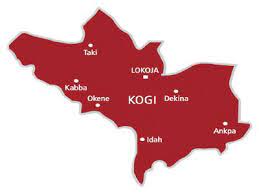
Relief has come the way of embattled people of Bagana Community in Omala Local Government Area of Kogi State as the colonel Babanawa-led peace committee has reopened the market which was closed down for over five months in the wake of the lingering bloodshed in the area.
The people of Bagana and its environs, were full of joy when the committee visited the deserted community recently to instill confidence and restore hope in the people who have been displayed from their homes for several months.
The people were estatic when the news of reopening of the market spread in the community.
Speaking with our correspondent, a member of the committee as well as that of Igala Cultural Development Association ICDA and Chairman, Kogi State Council of Nigeria Medical Association Dr. Omakoji Oyigu called on the warring factions to sheath their swords and embrace peace through the widow opened by the committee.
Oyigu noted with sadness the level of destruction and human casualty caused by the imbroglio, which has brought about huge humanitarian crisis not to only Bagana community but to the entire LGA,
He pointed out that Bagana being the trading and economic hub of the LGA should not be allowed to continue with the senseless and madness killings and destruction of property, hence, the constitution of the committee.
He added that, after careful and meticulous study of the situation, the committee decided to open the market as preliminary measure to reduce the economic hardship on the people.
He assured the people that security architecture have been mobilised to keep vigil on the town and its environs so as to give confidence to the people to return home.
Dr. Oyigu, said the Committee has in the interim, directed the the gagos of Hausa, Igala, Ihankpe and Otutubatu to fashion out all inclusive vigilante organisation that will take care of the security of the town, while the men of the Nigerian Navy will reinforce with the local vigilante on market day to provide security to lives and property.
He called on sons and daughters of the communities to avail the committee with useful memorandum that will assist in bring permanent peace to the area.
He solicited the cooperation of all those affected and infected by the 8th year old crisis to put the ugly event behind and appreciate peace to move the area forward.
It could be recalled that the Chairman of Omala Local Government Council Hon. Ibrahim Aboh, recently constituted Col. Suleiman Babanawa Committee to provide solutions to the Bagana crisis, who hit the ground running with the opening of the commodity market in Bagana.

The Federal Government, through the Rural Electrification Agency, is set to inject a cumulative 60.82 megawatts of renewable power into the national grid following the rollout of decentralised mini-grid projects across the country.
The milestone was reached on Wednesday with the groundbreaking of a 13.
92-megawatt-peak interconnected hybrid solar project in Yobe State. The latest project brings the total capacity of recent REA renewable energy projects launched across six states to 60.82MW.Before the Yobe project, the agency had commenced 46.9MW of power infrastructure across five states, including a 20MW mini-grid in Egume, Kogi State; an 11.
9MWp project in Ogu-Bolo, Rivers State; and a 10MW installation in Kofare, Adamawa State, a statement by the REA said.The earlier projects also include a 3.5MW mini-grid in Ambursa, Kebbi State, and a 1.5MW project in Pankshin, Plateau State.
The 13.92MWp Yobe project, supported by the World Bank, is equipped with 40 distribution transformers and is spread across major commercial and residential areas to improve electricity supply, stabilise power and stimulate local economic activities.
The capacity comprises a 3.20MWp installation in Nguru, another 3.20MWp plant at Yarimaram in Potiskum, a 2.98MWp system in Gashua, a 2.78MWp project at Rugan Fulani in Potiskum, and a 1.76MWp solar installation serving the Waziri Ibrahim Estate in Damaturu.
Speaking during the groundbreaking ceremony, Yobe State Governor, Mai Mala Buni, praised the REA’s commitment, noting that the project aligned with his administration’s vision for resilient infrastructure to boost local industrial capacity and agricultural productivity.
The REA Managing Director and Chief Executive Officer, Dr. Abba Abubakar Aliyu, explained that interconnected hybrid mini-grids were designed to integrate seamlessly with existing distribution networks.
“We are not merely connecting communities to electricity. We are connecting them to opportunity. We are creating an environment where businesses can grow, young people can innovate, farmers can process more of what they produce, healthcare facilities can provide better services, and local economies can flourish,” Dr. Aliyu said.
The REA boss disclosed that beyond the 60.82MW covered by the current nationwide groundbreakings, the agency had 14 additional pipeline projects underway in Yobe State alone.
He said the projects, which followed a strategic roundtable held in June 2025, would add another 15.3MWp of combined capacity when completed.
According to him, the planned projects are expected to provide electricity access to 23,870 new connections across communities, including Jawur Katamma, Federal Polytechnic Damaturu and Dibbwol.

By Tony Obiechina, Abuja
The Securities and Exchange Commission (SEC) has intensified efforts to reduce unclaimed funds and other dormant investment assets by launching a Probate/Unclaimed Monies Awareness and Investor Clinic aimed at helping beneficiaries recover inherited investments and strengthening investor protection in Nigeria’s capital market.
Speaking at the opening of the clinic in Abuja organised by the Commission in partnership with Meristem on Thursday, SEC Director-General, Dr.
Emomotimi Agama, said the initiative was designed to bridge the gap between investors’ legal entitlements and their ability to access inherited assets.He noted that many Nigerian families face prolonged delays in accessing shares, dividends and other investments after the death of loved ones because they are unfamiliar with probate procedures, documentation requirements and registrar processes.“For many Nigerian families, the death of a loved one who held shares, dividends, or other investments marks the beginning of a long and often confusing journey,” Agama said.
Describing unclaimed funds and dormant assets as a persistent challenge, he said they represent “real money that belongs to real families, sitting idle, disconnected from the people it was meant to serve.”According to him, the Commission is committed to closing the gap through policy initiatives and direct engagement with investors.He explained that the clinic brought together the Federal Ministry of Justice, the Probate Registry, the National Population Commission and capital market registrars to provide practical guidance on probate procedures, required documentation and the recovery of inherited investments.
“Today is not simply an awareness session. It is a working clinic, designed to equip you with practical knowledge: how probate works, how to obtain the right documentation, and how to recover what is rightfully yours,” he said.
Agama stressed that SEC’s mandate to protect investors extends beyond the lifetime of shareholders.”This Commission exists to protect your rights in the capital market, and that protection does not end when a shareholder passes on. It extends to ensuring their beneficiaries can access what is due to them without unnecessary hardship,” he added.
Also speaking, the Acting Chief Executive Officer of Meristem Registrars and Probate Services Limited, Ms. Nkechinyelu Okoye, identified lack of awareness and poor estate planning as key reasons billions of naira in financial assets remain unclaimed.
“There are three categories of beneficiaries that we encounter quite often. The first are those who think only land, houses and other physical assets can be transferred legally from deceased loved ones. They do not realise that financial assets such as shares, fixed income investments and even money in savings apps also form part of an estate,” she said.
Okoye said another group consists of beneficiaries who are unaware their deceased relatives owned financial assets, while a third group knows the investments exist but does not understand the claims process or required documentation.”I dare add a fourth category. These are investors who do not provide or update their KYC documents and, as a result, when they pass on, their loved ones have no idea they have investments to claim,” she said.According to her, these factors have contributed to the rising volume of unclaimed dividends, dormant accounts and other abandoned financial assets
.”All of these categories contribute to the several unclaimed assets lying all around. Ultimately, financial resources that could have been beneficial to these beneficiaries remain inaccessible,” she said.She described the investor clinic as more than an awareness programme, saying it would provide practical support to investors, beneficiaries, executors and administrators.
“Our goal is to empower investors, beneficiaries, executors, administrators and the general public with the knowledge they need to navigate probate and estate administration with greater confidence,” Okoye said.
She also urged investors to prepare valid wills, maintain accurate shareholder records and regularly update their Know Your Customer (KYC) information to make it easier for beneficiaries to access inherited investments.
“We want investors to appreciate the importance of preparing a valid Will, maintaining accurate shareholder records and ensuring that their affairs are properly organised. Taking these simple steps today can save families considerable stress and delay in the future,” she added.
The SEC said the clinic forms part of its broader investor protection strategy and provides participants with direct access to experts on tracing investments, verifying shareholder records, resolving probate-related issues and recovering unclaimed capital market assets.
By Tambaya Julius, Abuja
Nigerian businesses are divided over whether high borrowing costs or limited access to credit remains the biggest barrier to growth, as the country’s tight monetary policy continues to push lending rates to levels many entrepreneurs consider unsustainable.
While some business owners believe reducing interest rates should be the priority, others argue that the availability of credit is more important, even if it comes with a high cost.
The debate comes amid the Central Bank of Nigeria’s (CBN) continued tight monetary policy aimed at curbing inflation, with the Monetary Policy Rate (MPR) at 26.
5 per cent.The policy has increased funding costs across the banking sector, forcing lending rates for many small and medium-sized enterprises (SMEs) to exceed 28 per cent.
Although commercial banks have expanded their loan portfolios in recent years, many business owners say access to affordable credit remains a major challenge due to stringent collateral requirements, high interest rates and additional financing charges.
A Lagos-based entrepreneur, Blessing Isizuwa, said while obtaining loans may have become easier, the cost of borrowing has made financing difficult for many businesses.
“It is easier to access loans these days, but at what cost? If you ask someone to borrow at 35 per cent, they must do a business that will return at least 40 per cent to 45 per cent at the end of the financial year,” she said.
She noted that rising interest expenses, processing fees and other charges have significantly increased the cost of capital, making business expansion difficult for entrepreneurs.
Data from the CBN on lending rates show differences among commercial banks. Guaranty Trust Bank recorded the lowest prime lending rate at 21.0 per cent, with a maximum lending rate of 32.0 per cent.
Zenith Bank’s prime lending rate stands at 23.62 per cent, while its maximum lending rate is 32.0 per cent. Access Bank has a prime lending rate of 25.5 per cent and a maximum rate of 32.0 per cent.
First Bank of Nigeria’s prime lending rate is 26.0 per cent, with a maximum rate of 38.0 per cent, while Ecobank’s prime lending rate stands at 26.75 per cent and its maximum lending rate is 48.0 per cent. United Bank for Africa (UBA) maintains a prime lending rate of 28.5 per cent and a maximum rate of 32.0 per cent.
Chief Executive Officer of Rice Afrika, Ibrahim Maigari Ahmadu, said commercial lenders continue to favour established corporate organisations while imposing strict collateral requirements on SMEs, particularly those operating in agriculture and other sectors considered high risk.
“The collateral threshold and pricing structure effectively exclude many viable businesses from formal finance,” he said.
The 2025 World Bank Enterprise Survey highlighted the financing gap facing Nigerian MSMEs, showing that while 94.8 per cent of businesses have bank accounts, only 20.2 per cent have access to bank loans.
The report further showed that more than 42 per cent of businesses remain partially credit-constrained, while only 1.5 per cent of investments are financed through banks. Most firms rely on retained earnings, personal savings and informal funding sources to sustain operations.
Analysts said the financing challenge is rooted in structural weaknesses within Nigeria’s financial system. Although fintech lenders have expanded digital access to credit, their interest rates remain comparable to those of commercial banks, limiting their ability to provide affordable working capital.
Development finance institutions such as the Bank of Industry (BOI) continue to provide subsidised loans, but limited capital has restricted their ability to meet growing demand from businesses.
Entrepreneur Nikcy Onyeso said the financial system also suffers from a mismatch between available credit periods and the long-term financing needs of businesses.
“SMEs require long-term capital to invest in productive assets, but most bank facilities are short-term, making cash-flow management difficult,” he said.
However, an Abuja-based businessman, Dipo Oluwanjobi, said access to credit is more important than the cost of borrowing. “I will pay once the money is available. I will ensure the return exceeds the cost of loans,” he said.
The Chief Executive Officer of the Centre for the Promotion of Private Enterprise (CPPE), Muda Yusuf, said financing challenges vary depending on business size.
According to him, micro and small businesses struggle mainly with access to credit because they lack acceptable collateral, while medium-sized companies can obtain loans but are weighed down by high borrowing costs that reduce profitability and discourage investment.
Economists warned that unless lending rates moderate and access to affordable credit improves, financing constraints could continue to weaken private sector investment, slow MSME expansion and reduce the sector’s contribution to employment creation, productivity and non-oil economic growth.



RMAFC Set to Enforce Oil Host Community Accountability
ShareBy Tony Obiechina, Abuja The Revenue Mobilisation Allocation and Fiscal Commission (RMAFC) has given the Nigerian Upstream Petroleum Regulatory Commission...

UNICEF Renovates Classrooms, Donates Educational Materials to IDPs Children in Benue
ShareFrom Attah Ede, Makurdi The United Nations Children’s Fund (UNICEF) with support from Swedish International Development Agency (Sida) has renovated...


NAMA Demands 56 Per Cent Share, Aviation Varsity 10 Per Cent of Aviation Statutory Charges
ShareBy Ubong Ukpong, Abuja The Nigerian Airspace Management Agency (NAMA) on Thursday, asked the National Assembly to increase its share...
FCT Closes Unregulated Motor Parks as New Bus Terminals Become Operational
ShareBy Laide Akinboade, Abuja The Federal Capital Territory (FCT) Administration (FCTA), on Thursday, said it has concluded arrangements to clamp...
Mahmoud Urges MAN to Embrace Smart Technology, Capital Restructuring For Growth
ShareBy Laide Akinboade, Abuja The Minister of State, Federal Capital Territory (FCT), Dr. Mariya Mahmoud, has called on manufacturers to...

Advertising, Creative Industries Key Drivers of Economic Growth – Idris
ShareBy David Torough, Abuja The Minister of Information and National Orientation, Mohammed Idris, has said the Tinubu Administration recognises Nigeria’s...
Tempoe Earns Spotify Billion Streams Plaque for Love Nwantiti
Share Nigerian record producer Michael Chigozie, popularly known as Tempoe, has earned Spotify’s billion streams plaque for his production of...


Rudeboy Breaks Silence on Okoye Family Feud, Demands for Privacy, Respect
ShareRudeboy’s management has released a statement on the ongoing rift between the Okoye brothers. The statement described the issue as...


Rema Releases Teaser for TEA
ShareAce Nigerian Afrobeat star, Divine Ikubor, popularly known as Rema, has released a teaser for his forthcoming single, “TEA,” scheduled...


FG Backs Miss Nigeria for 75th Miss World Pageant
ShareThe Federal Government has rallied support for Miss Nigeria, Miss Tamunosoye Karibi-George, as the country’s official representative to the 75th...