
NEWS
Minister Tasks Stakeholders on National Development Plan

By Tony Obiechina, Abuja
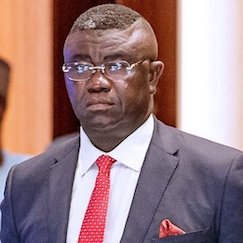
The Minister of State, Budget and National Planning, Prince Clem Agba has enjoined various stakeholders on Regional development to evolve strategies for the successful implementation of the approved National Development Plan (2021- 2025), soon to be launched by the Federal government.
Agba who stated this while addressing the coordinating meeting on Regional development held in Abuja on Tuesday, noted that the central task of the authorities responsible for regional development, “is to create conditions for cooperation among various regions and states that constitute the regions for the formation of a shared vision”.
The Minister further charged the meeting to harness ideas that will challenge the participants to take full ownership and proffer concrete recommendations regarding the NDP and the Nigeria Agenda 2050.
According to him, their recommendations should include:
*Align/realign the targets of your organisations to meet the National objectives/targets as encapsulated in the National Development Plan;
*track progress of regional organisations and align your strategic and operational plans with overall National Interests and priorities;
*establish the Guidelines for the development of periodic meetings to be held by regional bodies and engage regional stakeholders for enhanced dialogue, among others.
Earlier in a welcome speech, the permanent Secretary in the ministry, Mrs Olusola Idowu, said the objective of the meeting “is to rub minds together for the purpose of tracking progress made by your respective organisations, create synergy and strengthen effective coordination in the course of advancing regional growth and development in Nigeria “.
She disclosed that the approved Plan took cognisance of the relevance of regional development adding that, “it informs the need for this coordinating meeting”.
“It is my expectation that the outcome of this meeting will assist the stakeholders appropriately to come out with clear roadmap on how Nigeria can take full ownership of regional potentials as contained in the MTNDP 2021 -2025”, she added.


By Tony Bazim
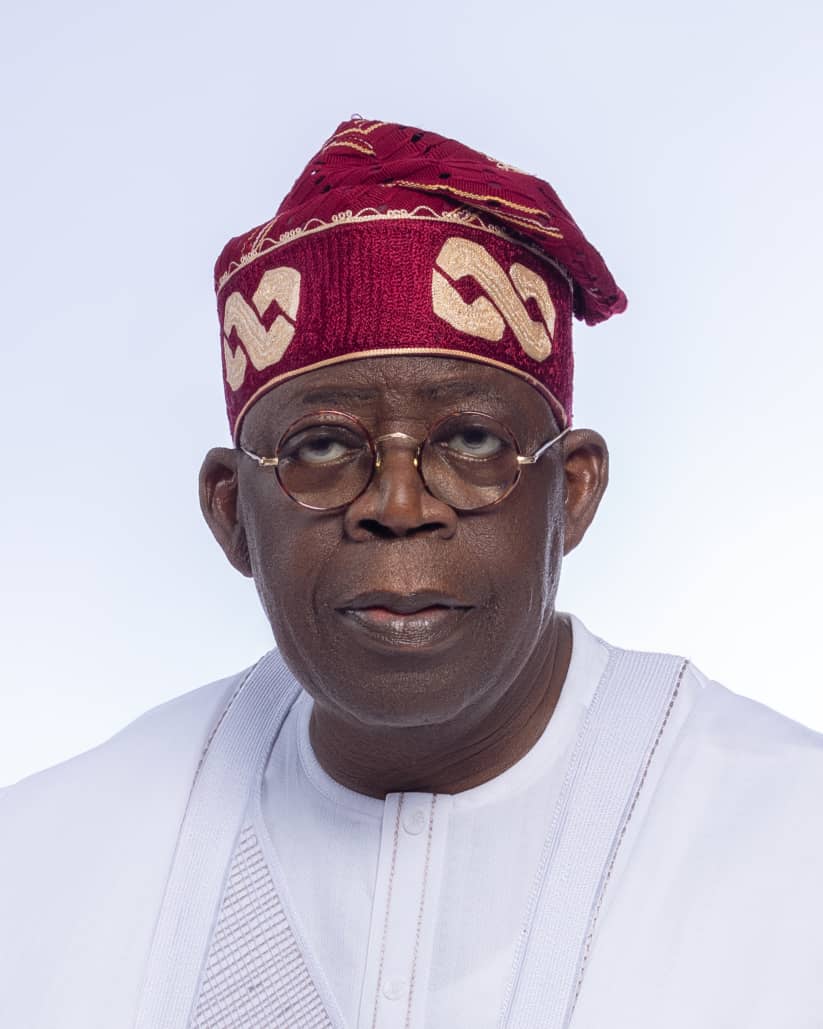
Many Nigerians blame President Tinubu for everything happening in the country, but have we taken time to ask the right questions?
Every month, Local Government Chairmen receive allocations.
What projects are they using these funds for? How is your local community benefiting?State Governors also receive federal allocations and generate billions through taxes and other sources of revenue.
How are these funds being spent? Are the roads, schools, hospitals, and other public services reflecting the amount of money received?Good governance starts with accountability at every level, not just at the top.
If we focus all our attention on the President while ignoring those closest to us, we may be overlooking a big part of the problem.As citizens, we should demand transparency from our Councillors, Local Government Chairmen, Governors, House of Assembly members, and every public office holder entrusted with our resources.
Nigeria will make greater progress when we stop asking only, “What is the President doing?” and start asking, “What is every elected official doing with the resources entrusted to them?”
Let’s ask the right questions.
AskTheRightQuestions #Accountability #GoodGovernance #Nigeria
For comments, contributions, or discussions:
beco.tony@gmail.com
From Joseph Amedu, Lokoja
Stakeholders in Kogi State’s built environment sector have called on the state Government to urgently enforce the Kogi State Urban and Regional Planning Law of 2010, warning that continued neglect of the legislation is fueling unregulated development, environmental degradation and urban disorder across the state.
The call was made during the Annual General Meeting (AGM) and Symposium of the Nigerian Institute of Town Planners (NITP), Kogi State Chapter, held in Lokoja over the weekend.
The event, themed “Urban and Regional Planning in Kogi: Trajectory, Legal Issues and Prospects,” brought together town planners, policymakers, academics, and other professionals in the built environment to discuss strategies for sustainable urban development.
Speaking at the event, the outgoing Chairman of the institute, Stephen Nden, lamented that although the Nigerian Urban and Regional Planning Law of 1992, as amended, was domesticated in Kogi State in 2010, it has remained largely inactive. He urged the government to immediately implement the law to enable professional town planners to effectively guide physical development and curb the growing trend of uncoordinated urban expansion.
According to him, “The implementation of the Urban and Regional Planning Law will empower town planners to effectively guide the physical growth of our urban centres and ensure orderly development. It is unfortunate that a law domesticated over a decade ago remains inactive despite the enormous benefits it offers.”
Nden stressed that achieving sustainable development requires collective efforts from all stakeholders in the built environment sector.
He further urged members of the institute to uphold professional ethics and strengthen collaboration with government agencies, local government councils, and academic institutions.
A resource person at the symposium, Ramatu Baba, expressed concern over the state’s failure to fully implement planning laws, noting that several environmental and developmental challenges, including illegal mining activities and indiscriminate construction, are linked to poor planning and weak enforcement mechanisms.
She said, “The absence of effective planning frameworks has contributed significantly to illegal mining activities and environmental degradation. Government must strengthen planning institutions and ensure strict compliance with development control regulations.”
Baba also decried the shortage of qualified town planners and other professionals in the sector, warning against construction on natural waterways and flood-prone areas.
Chairman of the Planning Committee, Dr. Baba Adams Ndalai, emphasized that without the full implementation of planning laws and the establishment of a functional Urban and Regional Planning Board, cities and towns across the state would continue to witness chaotic growth.
He stated that Kogi State possesses immense potential for sustainable urban development if the right policies and political will are deployed.
Dr. Ndalai advocated the adoption of smart city initiatives, climate-resilient infrastructure, and inclusive spatial planning systems, adding that Geographic Information Systems (GIS) could significantly improve land administration and increase internally generated revenue.
“The future of Kogi lies in embracing technology-driven planning solutions. Through GIS-based planning and land management systems, governments can improve development control, monitor land use changes, reduce disputes, and strengthen revenue generation,” he said.
Chairman of the occasion and former National President of the NITP, Chief Isah Ichaba, urged members to remain united and committed to advancing the planning profession.
He noted that stronger collaboration among professionals would enable the institute to play a more effective role in shaping government policies and promoting sustainable development.
At the end of the AGM, members elected a new executive council to pilot the affairs of the Kogi State Chapter. Sani Daniel emerged as Chairman, while Femi Ayanleye was elected Vice Chairman. Other officers include Aishat Mohammed Jamiu (Secretary), Enikanolaye Isaac Adebowale (Assistant Secretary), Zainab Salau (Treasurer), Abdullahi Shaaban Aminu (Financial Secretary), Atodo Kerim Smaila (Auditor), Oshamehin Deborah (Public Relations Secretary), Yakubu Umar Onimisi (PRS II), Samuel Afolagbode (Social Welfare Secretary), Stephen Jonathan Nden (Ex-Officio I) and Michael Alhassan (Ex-Officio II).
In his acceptance speech, the newly elected Chairman, Sani Daniel, pledged to provide inclusive and result-oriented leadership aimed at strengthening the institute and advancing physical planning across the state.
Daniel disclosed that the AGM adopted several recommendations, including the preparation of comprehensive master plans for Lokoja and other major urban centres, implementation of the Urban and Regional Planning Law of 2010, development of a state-wide regional development plan covering all 21 local government areas, recruitment of more planning professionals, establishment of stronger institutional coordination mechanisms, integration of climate adaptation and post-mining reclamation strategies into planning policies, and full deployment of GIS technology in development control activities.
He added that the institute would collaborate with other professional bodies to create a stronger built environment advocacy platform capable of supporting government efforts in achieving sustainable urban development and making Kogi State a more attractive destination for investment and tourism.

South Korea’s National Election Commission (NEC) chairperson, Roh Tae-ak, on Friday offered to resign following a widespread shortage of ballot papers that disrupted voting in Seoul during this week’s local elections.
Roh made the announcement during a press briefing at NEC headquarters in Gwacheon, south of Seoul, expressing deep responsibility for the incident and apologising for eroding public trust in election management.
“The situation undermined voters’ confidence and participation in local elections, and I feel devastated as chairman,” Roh said.
NEC Secretary-General Heo Cheol-hoon also offered to resign, Roh added.
The presidential office said it “takes seriously” the resignations and called for a comprehensive review of election management procedures to restore public trust.
Officials stressed the need for the NEC to provide a clear explanation and implement strict follow-up measures.
The NEC plans to establish an independent committee of outside experts to investigate the cause of the shortage and propose preventive steps.
Ballot paper shortages were reported at more than a dozen polling stations in Seoul, including Songpa and Gangnam districts, causing temporary suspension of voting.
Some voters reportedly left without casting their ballots after waiting.
Protesters later gathered at a polling station in Jamsil, Songpa Ward, alleging election fraud and obstructing officials from transporting ballot boxes.
Police dispersed the crowd and transferred approximately 2,000 ballots to a counting centre.



Nigeria’s Problems Beyond Tinubu, Ask Governors LG Chairmen
ShareBy Tony Bazim Many Nigerians blame President Tinubu for everything happening in the country, but have we taken time to...
Stakeholders Demand Enforcement of Kogi Urban Planning Law
ShareFrom Joseph Amedu, Lokoja Stakeholders in Kogi State’s built environment sector have called on the state Government to urgently enforce the Kogi State Urban and...
Wrestling: Team Nigeria Wins One Silver, Two Bronze in Mongolia
ShareTeam Nigeria wins one silver and two bronze, concluding its competition at the ongoing Ulaanbaatar 2026 United World Wrestling (UWW) 3rd Ranking Series on Saturday...


South Korea Election Chief Offers to Resign over Ballot Shortages
ShareSouth Korea’s National Election Commission (NEC) chairperson, Roh Tae-ak, on Friday offered to resign following a widespread shortage of ballot papers that disrupted voting in Seoul during this week’s...

JAMB Opens Portal for Printing of 2026 Mop-up UTME Slip
ShareThe Joint Admissions and Matriculation Board has announced that candidates scheduled for the 2026 Mop-Up Unified Tertiary Matriculation Examination can now print their examination notification slips ahead...
Dismisses Admission Exclusion Claims
ShareThe Nigerian Defence Academy (NDA) has dismissed reports claiming prospective candidates were excluded from admission into its 78 Regular Course due to portal closure. The Academy described the...


CBN Updates Forex Rules, Approves $50,000 Limit for Travellers
ShareBy Tony Obiechina, Abuja The Central Bank of Nigeria (CBN) has released revised foreign exchange (FX) guidelines, introducing new rules...
NUPRC, NNRA Partner on Compliance Costs, Safety Oversight
ShareBy Tony Obiechina, Abuja Nigeria’s drive to strengthen its petroleum industry received a boost as the Nigerian Upstream Petroleum Regulatory...


Army Rescues 360 Abducted Women, Children in Borno Operation
ShareBy David Torough, Abuja Nigeria’s security forces recorded a significant breakthrough in the fight against terrorism and kidnapping as troops...


Stakeholders Seek Better Healthcare Access for Benue Adolescent Girls
ShareBy Attah Ede, Makurdi Adolescent Girls and Young Women (AGYW) in Benue State have been urged to speak out against...