
NEWS
Ministerial Appointment Won’t affect Budget Presentation- Lawan


By Mathew Dadiya, Abuja
The Senate President, Ahmed Lawan, has said that delay by the President to appoint cabinet ministers would not affect the January budget circle which is one of the promises of the President Muhammadu Buhari-led administration.
Lawal said that there is nothing to worry about, adding that the budget itself is normally prepared by civil servants – the permanent secretaries superintend and the directors will work most of the time.
Speaking with State House correspondents after a closed door meeting with President Buhari, and Speaker of the House of Representatives, Lawal said he believes that the January-December budget circle is still on course.
“We are still on course and I believe both the executive and the legislature are on the same page on this.
“We desire and are prepared and determined to pass the budget by the first and second week of December by the grace of God, provided it is presented to us by the end of September,” he said.
Asked what transpired in the meeting with Mr President, Lawal said, “What we have discussed are those things that will ensure that the people of Nigeria are better protected, the economy of Nigeria performs better to the inclusion of everyone in the country, that governance generally is set to achieve the set targets of providing security and welfare for Nigerians.”
On what should Nigerians expect to see on security from the lawmakers; he said
“We are going to collaborate and cooperate with the executive arm of government, work together to ensure we find better approaches, improved paradigm to ensure we improve the current situation is addressed appropriately.”
The senate president assured that once they receive ministerial list from President Buhari, the senate would fast-track the confirmation of the nominees and other appointees.
According to him, the speedy confirmation of the Chief Justice of Nigeria (CJN) Mohammed Tanko is an indication that the senate would be prompt in all confirmations.
He said: “In fact tomorrow (Thursday) we are going to confirm some directors of the NCC. What we did today is to set the tone of what will be coming in the future.
“That is to say we will be confirming the nominees from Mr. President because that will really ensure that the country is properly governed.
“The CJN confirmation was a fantastic way to start confirmation process and we are very happy we are able to confirm him today having received letter of request from Mr President only last week.








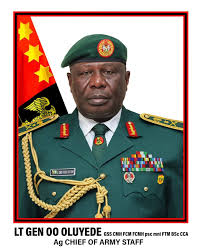
The Chief of Defence Staff (CDS), Gen. Olufemi Oluyede, has reaffirmed the commitment of the Defence Headquarters (DHQ) to improving veterans’ welfare through skills acquisition and sustainable empowerment initiatives.
This was contained in a statement on Wednesday in Abuja, by the Director, Defence Information, Maj.
-Gen. Samaila Una.Oluyede gave the assurance at the opening of the 2026 Skills Acquisition Training for Veterans in the South-West geopolitical zone, held at the Headquarters, 2 Division, Nigerian Army, Ibadan.
The programme, organised by the DHQ Veterans Affairs Division, was designed to equip veterans with practical skills for economic independence and improved livelihoods.
Represented by the Director, Veterans Affairs Directorate, DHQ, Maj.-Gen. Oluwafemi Williams, the CDS said veterans’ welfare remained a priority of the Armed Forces of Nigeria.
He urged participants to maximise the opportunity by translating the skills acquired into productive ventures that would support their families and contribute to national development.
According to him, the training covers poultry farming, fisheries, snail farming, animal husbandry, livestock management and modern agricultural techniques.
Oluyede also highlighted the DHQ’s partnership with Konga/Zinox to provide serving personnel and veterans with access to subsidised purchasing options to cushion prevailing economic challenges.
He assured the veterans that the military would continue to introduce initiatives aimed at improving their quality of life in recognition of their sacrifices and service to the nation.
The programme has as its themed £Enhancing Veterans’ Capacity Building through Sustained Skill Acquisition Training for Enhanced National Development”.(NAN)
By Blaise Udunze
The last Monetary Policy Committee (MPC) meeting of the Central Bank of Nigeria (CBN) was its 307th meeting, held on September 21 and 22, 2026. The decision taken was to reduce the Monetary Policy Rate (MPR) from 26.
5 percent to 23 percent. The decision of the Committee brings back a question about how well monetary policy works in an economy that needs cheap credit.The 350-basis-point reduction happens to be a significant adjustment to the policy-rate signal. Also, keeping the Cash Reserve Requirement (CRR) at 45 percent for deposit money raises a difficult question.
Can Nigeria lower the price of money while maintaining a regulatory constraint that limits the funds banks can deploy?In this case, the question is particularly important at a time when inflation has moderated, foreign reserves have strengthened and the banking industry has completed a major recapitalisation exercise. One fact that is critical here is that if these developments point towards an improving macroeconomic environment and a stronger financial system, why should banks continue operating under such a demanding reserve requirement?
Nigeria may have taken steps to reduce the cost of borrowing without doing enough to ensure that more businesses and individuals can access loans.
At the September meeting that has now ended the MPC made a decision. The MPC chose to keep the CRR at 45 percent for deposit money banks. The MPC also kept the CRR for merchant banks at 16 percent. For non‑Treasury Single Account (non‑TSA) public‑sector deposits the CRR was set at 75 percent. Meanwhile, the CBN made another change. The CBN adjusted the Standing Facilities Corridor to be +50/-300 basis points around the MPR.
During the changes, the apex bank described the adjustment as an operational realignment. The apex bank said it aimed to strengthen monetary-policy transmission and restore the MPR’s primacy as the signal of monetary policy. In reality, this distinction matters so much to say because the decision was not necessarily a declaration that the broader monetary stance had become expansionary.
Instead, the apex bank’s move reflected an attempt to strengthen the transmission mechanism through which monetary policy decisions influence market interest rates and broader economic activity.
Meanwhile, one of the key central concerns remains whether the adjustment translates into cheaper, more accessible credit for businesses and households. The warning signs are already evident.
In its report, MPR Cut: Why Cheaper Loans May Not Come Soon, Premium Times examined the factors that could delay the transmission of the rate reduction to borrowers. The report highlighted the continued 45 per cent CRR as a constraint on banks’ capacity to expand lending and noted that existing loan agreements and differences in repricing schedules could delay the impact of lower policy rates.
This introduces an important asymmetry into the monetary-policy debate. Banks’ deposit costs may decline faster than the interest rates charged on existing loans, potentially improving their net interest margins before borrowers receive meaningful relief. In other words, a lower MPR may boost bank profitability before it shows up in the real economy.
The fact is, this is not necessarily evidence of misconduct by banks. Loan contracts have different maturities and repricing conditions, while lenders must account for credit risk, funding costs and the possibility of default. Nevertheless, it raises a legitimate policy question, which is to inquire if the purpose of recalibrating the MPR is to improve monetary-policy transmission, how quickly should the resulting benefits reach borrowers, and what prevents that from happening?
The CRR is key and central to this debate because it influences the amount of qualifying deposit liabilities banks must maintain as reserves with the CBN rather than deploy directly into loans and other assets.
A 45 per cent requirement does not mean that lending automatically falls by 45 per cent. This is to say that banks have different funding structures and CRR interacts with capital requirements, liquidity regulations and other prudential rules. In this case, it is important to clarify that the requirement imposes a substantial constraint on the deployment of qualifying deposits and can influence the economics of financial intermediation.
The CBN is therefore sending two signals simultaneously whereby the lower MPR suggests an adjustment in the direction of its policy-rate framework, and also the unchanged CRR indicates that it remains concerned about liquidity management and financial stability.
Both objectives are legitimate. The question is whether their combined effect is consistent with the level of credit expansion Nigeria needs. The debate becomes more compelling when the country’s improving external position and moderating inflation are considered.
In a separate report, Leadership questioned the continued retention of the 45 per cent CRR despite stronger foreign reserves and easing inflation. The report cited economists who argued that the CBN should reconsider the degree of liquidity restriction as macroeconomic conditions improve.
It also cited Chapel Hill Denham’s estimate that the CRR could cost the banking industry as much as N2.5 trillion annually in potential earnings. Looking at this, the figure, however, represents estimated foregone earning opportunities, not a guaranteed volume of new lending that would materialise if the reserve requirement were reduced. Nevertheless, it underscores the opportunity cost of keeping substantial funds tied up in compulsory reserves, particularly at a time when businesses are demanding more affordable credit.
The policy question is whether the benefits of that restraint continue to outweigh its potential costs to lending and investment.
Nigeria’s stronger external reserves offer another reason to reassess the balance. This is to say that higher reserves can improve external confidence and provide a buffer against foreign-exchange shocks, although they do not automatically eliminate domestic inflationary pressures. Similarly, moderating inflation creates room to reconsider the intensity of monetary restraint, but it must be made known that it does not mean that inflation risks have disappeared.
The CBN must therefore explain what conditions would justify a review of the CRR, what risks it believes still require the current level, and how it intends to balance liquidity control with productive credit expansion, as this calls for urgency.
Also, it is important to state that the issue extends beyond monetary policy to the effectiveness of banking-sector recapitalization, as the exercise raised N4.65 trillion. DataPro Limited’s assessment put the average capital adequacy ratio at 25.5 per cent and highlighted the challenge of translating stronger bank capital into more productive lending. The report also cited N2.9 trillion in loan write-offs, illustrating the importance of credit losses and asset quality.
These figures raise a fundamental question about what recapitalisation should achieve.
A stronger capital base improves a bank’s capacity to absorb losses and potentially support larger exposures. It does not guarantee that the institution will extend more credit to manufacturers, agricultural businesses, exporters or small enterprises.
Also, it is more critical that banks must still assess the probability of default, collateral quality, the enforceability of loan agreements, operating costs and the commercial prospects of borrowers. Hence, whilst these risks are high, additional capital may strengthen the balance sheet without producing a proportionate expansion in lending.
In addressing the challenges, it is key to note that the post-recapitalisation test should therefore extend beyond the capital raised and the number of banks meeting regulatory thresholds. Yes, it should also examine whether banks are expanding sustainable lending to productive sectors without compromising underwriting standards.
This is where the interaction between CRR and recapitalisation becomes particularly important. If banks have stronger capital positions but remain subject to a high reserve requirement, the CBN must consider whether its regulatory framework is sufficiently aligned with its expectations for private-sector credit growth.
The answer cannot simply be to demand more lending. The fact is that policymakers must also examine the conditions under which lending becomes commercially viable.
For small and medium-sized enterprises, this challenge is especially acute. It is very well established that businesses without substantial collateral, audited financial records or established banking relationships often face higher borrowing costs or outright rejection, even when their underlying operations are viable. Large corporations with stronger balance sheets and established relationships may negotiate more favourable terms, though they are always on banks’ bad books as defaulters.
Consequently, a lower MPR may improve conditions for some borrowers without significantly changing the credit environment for the businesses that need financing most.
The real test of monetary-policy transmission is therefore not whether the headline rate has declined, but whether the effective cost and availability of credit have improved.
It should be understood that there is also a limit to what monetary policy can achieve on its own. Nigerian manufacturers may benefit from lower working-capital costs, but expensive energy, foreign-exchange constraints, imported inputs and logistics costs remain significant determinants of production expenses. A cheaper loan cannot fully compensate for unreliable power or persistently high operating costs.
The CBN must consequently approach credit expansion as part of a wider economic framework. Monetary policy can influence the price and availability of funds, but its effectiveness depends on business conditions, credit infrastructure, the quality of borrowers and banks’ willingness to accept commercially reasonable risks.
This does not diminish the importance of the CRR. Rather, it makes the case for a more evidence-driven review of its application.
Instead, it supports an evidence-based review of how the policy is applied.
Rather than removing the requirement all at once, the CBN might look at a gradual adjustment. This could be linked to inflation expectations, how much liquidity is in the banking system, stability in foreign exchange markets and whether credit growth’s strong and well-managed.
The CBN could also explore incentives for lending to sectors. These incentives must be carefully built, with clear eligibility rules and strong monitoring to make sure they work as intended.
Such an approach would need safeguards as this would help ensure that the extra money flowing into the banking system goes towards productive investments rather than speculation or activities that do little to grow the economy. Meanwhile, there is a need to clarify here that reducing CRR does not guarantee that banks will lend the released funds to businesses.
They could instead favour government securities, foreign-exchange-related transactions or other assets offering more attractive risk-adjusted returns as this has continued to be a repeated pattern in the system.
The objective must therefore be to improve productive credit allocation, not simply increase liquidity.
The CBN should establish transparent conditions for reviewing the 45 per cent CRR and publish evidence showing whether its policy decisions are improving credit access. Part of the measures must involve evidence that should include effective lending rates, loan applications and approvals, actual disbursements, private-sector credit growth, and financing to small businesses, manufacturing, agriculture and other productive sectors.
The functionality of how interbank rates and Treasury bill yields behave should also be watched because that tells us how the new MPR framework is affecting financial‑market conditions. Stakeholders must look at these indicators together with the real borrowing costs that businesses and households experience.
If the policy‑rate signal improves but the effective lending rates stay high and the credit approvals do not grow, the CBN must find out why the transmission is failing. Is the issue the cost of funds, the CRR, the credit risk, inadequate collateral, weak competition or a mix of these reasons?
The answers should determine the policy response rather than an assumption that any single instrument can resolve the problem.
This is also the appropriate way to judge recapitalisation. In reality, banks should not be compelled to extend unsustainable loans merely to meet a credit-growth target. In situations like this, a stronger banking system should be capable of demonstrating how it supports productive economic activity, which is key, particularly where viable businesses face financing constraints.
Nigeria needs a monetary policy that controls inflation while allowing banks to lend to businesses that can grow the economy. The CBN is right to be concerned about inflation, exchange-rate pressures and financial stability.
But monetary instruments must be continually assessed against changing economic conditions. Clearly, a rule that requires banks to keep an amount of money on hand that is reasonable, in one situation should not stop being checked when the big economic conditions change.
The 23 percent MPR and 45 percent CRR can exist together inside a monetary-policy plan. The real question is whether the combined result helps the CBNs goals, for stability, investment and term economic growth.
If the MPR falls while the cost and availability of credit remain largely unchanged, Nigeria will have adjusted the price signal of monetary policy without adequately addressing the constraints on financial intermediation.
Following the developments thus far, the next phase must therefore go beyond announcing lower rates. Yes, in truth, it must demonstrate that stronger bank capital, improving macroeconomic conditions and better monetary-policy transmission are translating into sustainable financing for productive businesses.
Ultimately, this must be made clearly known that the success of the 23 percent MPR will not be determined by the announcement itself. The real truth is that success will depend on whether the Nigerian entrepreneur, manufacturer, farmer and small‑business owner can obtain credit that’s affordable, easy to reach and lasting.
Until that happens, the question about the 45 percent CRR will not go away. Does monetary policy set up conditions that help growth or does the liquidity restriction still keep money from turning into credit that people can use or access?
Blaise, a journalist and PR professional, writes from Lagos and can be reached via: blaise.udunze@gmail.com
The tragic crash of a Nigerian Air Force (NAF) ATR-42 aircraft, registration number NAF 931, in the swampy terrain of Igbokoda, Ilaje Local Government Area of Ondo State, is more than an aviation tragedy. It is a painful national moment that demands accountability, transparency, and a thorough examination of the circumstances surrounding the loss of 25 lives.
When a military aircraft goes down with everyone on board, the nation is entitled to mourn.
But mourning must not become a substitute for investigation, and official expressions of sympathy must not be allowed to overshadow legitimate questions about the operation, maintenance, and management of the aircraft.The title is not a verdict on the cause of the crash or an accusation against any individual. It is a moral challenge to a system in which preventable tragedies must never be reduced to public grief, ceremonial condolences, and promises that eventually fade from national memory. Nigeria’s military is on top as the most disciplined institution.
However, The questions surrounding the Igbokoda crash are serious, and the public deserves answers supported by evidence.
The first disturbing aspect of the tragedy was the cocophone and confusion over the number of people aboard the aircraft.
Initial official reports put the number at 32, while the Nigerian Air Force subsequently confirmed that 25 people were on board: five crew members and 20 passengers. On October 8, the NAF reportedly explained that the discrepancy arose from differences in how civil air traffic controllers and military authorities interpreted the expression “souls on board.”
That explanation deserves to be examined on its merits. Nevertheless, the episode raises a fundamental question: Why should a tragedy of this magnitude be accompanied by conflicting figures at a time when families, friends, and the public are desperately seeking reliable information?
In a modern aviation system, the passenger manifest, crew list, flight plan, and operational records should provide a clear account of who boarded an aircraft and who was authorised to be on it.
The identities of the victims also make this tragedy deeply personal. Among those who perished were military personnel serving in different capacities, as well as civilian passengers. Reports that a victim had married only weeks before the crash further illustrate the devastating human consequences behind the official statistics.
Each name represents a family, a future interrupted and a circle of loved ones left to confront an unimaginable loss.
The authorities must therefore ensure that every victim is accounted for and that the final investigation report reconciles the manifest with the circumstances of the flight. Where communication fails, the failure should be acknowledged and corrected.
The second aspect requiring clarification is the presence of civilians aboard a military aircraft.
The NAF described the ill-fated aircraft’s journey as a routine mission from Benin City to Lagos. Reports identified military personnel and civilian passengers among those on board. Their presence raises questions that deserve clear, factual answers.
Who were the civilians? What was the purpose of their journey? Were they military dependents, authorised passengers travelling on official business, or persons carried under another approved arrangement? What operational rules governed their presence on the flight?
These questions are not an attempt to diminish the humanity or worth of any victim. Every life lost deserves equal dignity. Rather, they concern the standards by which public assets are used and the procedures designed to protect everyone who boards an aircraft.
The public is also entitled to understand the rules governing the alleged practice of picking up and dropping off civilians during military flights. Was the aircraft operating a formally approved transport arrangement, or were there any unscheduled passenger movements or stops? The available public information does not, by itself, establish that unauthorised pick-ups or drop-offs occurred.
That distinction is crucial. If the aircraft was used to transport civilians, investigators should establish whether the passenger arrangements were properly authorised, documented, and consistent with the mission’s operational requirements. If allegations of unauthorised boarding, disembarkation, or deviations from the approved flight plan emerge, they should be tested against flight logs, passenger manifests, crew statements, and other verifiable evidence.
A military aircraft is not a private taxi. Its use must be governed by operational necessity, clear authorisation, and strict safety procedures. Where civilian passengers are permitted, the rules should be explicit, consistently enforced, and open to appropriate oversight.
The objective should not be to manufacture scandal, but to establish whether procedures were followed and whether any breach contributed to the tragedy.
A third question that can not be ignored is the airworthiness of the aircraft. The ATR-42 involved in the crash was identified as NAF 931, aircraft was said to be configured primarily for maritime patrol, intelligence, surveillance, and reconnaissance operations. Published reports indicated the aircraft was delivered around 2010, following an acquisition arrangement involving the manufacturer Alenia Aeronautica.
Its age, therefore, naturally raises public interest in its maintenance history. But age alone does not prove that an aircraft was unsafe to fly. Airworthiness depends on its technical condition, maintenance standards, compliance with required inspections, the status of critical components, and the operational decisions made before and during a flight.
The relevant questions are whether the aircraft had valid technical clearance for the mission, whether all scheduled and mandatory maintenance had been completed, whether any
outstanding defects had been properly assessed, and whether the crew received accurate information about the aircraft’s condition.
Investigators should examine maintenance logs, engine and component records, inspection reports, defect reports, flight hours, previous technical incidents, and any applicable airworthiness directives. They should also assess the aircraft’s weight and balance, weather conditions, flight data where recoverable, communications and the crew’s actions.
If maintenance deficiencies or institutional failures are established, the findings should lead to corrective action and, where warranted, accountability. If the aircraft was technically sound, that conclusion should equally be supported by evidence.
The nation needs facts, not assumptions.
The Nigerian Air Force has announced an investigation into the crash. That is a necessary step, but public confidence will depend on the quality of the process, the evidence examined, and the clarity of the findings eventually released. Where the evidence points to procedural shortcomings, the relevant institutions must address them. This is very important against the background of the rashes involving no fewer than 15 NAF aircraft crashes in the last 10 years.
The authorities should provide periodic, factual updates without compromising the integrity of the investigation or the privacy of bereaved families. A final report should identify the causes and contributing factors, make practical safety recommendations, and explain how implementation will be monitored.
A probe that merely announces that an investigation has been opened, without eventually communicating meaningful findings and corrective measures, would do little to restore public confidence.
The Igbokoda crash is a sobering reminder that aviation safety cannot depend on institutional prestige, reassuring statements or the hope that tragedy will not strike again.
Aviation demands discipline. Passenger records must be accurate. Aircraft must be maintained to prescribed standards. Flight plans must be followed or deviations properly authorised. Operational decisions must be documented, and safety concerns must be addressed before they become disasters. The same principles apply whether an aircraft belongs to the military, a commercial airline or a government agency.
The families who lost their loved ones deserve more than condolences. The Nigerian public deserves to know whether established procedures were followed. And the men and women who serve in the Armed Forces deserve a system that places their safety and that of every authorised passenger above convenience or administrative expediency.
The tragedy at Igbokoda should not become another entry in Nigeria’s long catalogue of national disasters that provoke temporary outrage before public attention moves elsewhere




Economic Independence: CDS Empowers Veterans with Skills
ShareThe Chief of Defence Staff (CDS), Gen. Olufemi Oluyede, has reaffirmed the commitment of the Defence Headquarters (DHQ) to improving...

Beyond 23 Per Cent MPR, Should CBN Reconsider 45 Per Cent CRR to Unlock Credit?
ShareBy Blaise Udunze The last Monetary Policy Committee (MPC) meeting of the Central Bank of Nigeria (CBN) was its 307th...
Shame of a Nation: Cacophony Trails Igbokoba Naf Aircraft Crash
ShareThe tragic crash of a Nigerian Air Force (NAF) ATR-42 aircraft, registration number NAF 931, in the swampy terrain of...
CBN: Nigeria’s Foreign Reserves hit $58.81bn, Highest in 18 Years
ShareBy Tony Obiechina Abuja Nigeria’s foreign exchange reserves rose to $58.81 billion on October 12, 2026, their highest level since...


INEC Engages PWDs, Reaffirms Commitment to Inclusive Electoral Process
ShareThe Independent National Electoral Commission (INEC) has restated its commitment to an inclusive electoral process. The Resident Electoral Commissioner (REC)...


2027: Governance Won’t Take Back Seat to Campaigns –Tinubu
SharePresident Bola Tinubu has assured Nigerians that governance will not take a backseat to electioneering ahead of the 2027 presidential...


NYSC DG Task Corps Members on Safety, Networking
ShareFrom Mike Tayese, Yenagoa The Director-General of the National Youth Service Corps (NYSC), Brigadier General O. O. Nafiu, has urged...


Nigeria, EU, Euro Bank Sign €14m Grant Agreement on Fibre-Optic Infrastructure
ShareBy Tony Obiechina, Abuja The Federal Government of Nigeria, the European Union (EU) and the European Bank for Reconstruction and...


Tinubu: I Won’t Abandon Governance for 2027 Campaigns
ShareBy Tambaya Julius, Abuja President Bola Ahmed Tinubu has said he will not allow political campaigns ahead of the 2027...

El-Rufai, Associates Earmark $600,000 to Pay EFCC Officials, DSS Tells Court
ShareBy Tambaya Julius, Abuja A forensic investigator with the Department of State Service (DSS), Segun Kayode, on Tuesday told a...