
NEWS
Moghalu Advocates Re-alignment of Education Curriculum


A political economist, Prof. Kingsley Moghalu, says Nigeria must re-align its education curriculum in line with the rapidly-evolving global landscape.
Moghalu, a former Deputy Governor of the Central Bank of Nigeria, also said that increasing importance of technology, science, entrepreneurship and teacher training in driving economic growth and innovation had also made the realignment compelling.
He spoke at the Fifth Arthur Mbanefo Lecture in Lagos on Tuesday.
The lecture was organised by the Arthur Mbanefo Digital Research Centre (AMDRC), University of Lagos.
It had the theme: “Education and National Development: Meeting Nigeria’s Challenge in the 21st Century”.
The lecture was part of activities to celebrate the 94th birthday anniversary of Chief Arthur Mbanefo, the donor of the centre.
According to Moghalu, Nigeria is urgently in need of educational policy that can enhance human capital development and bolster its standing within the global community.
Moghalu, also the President of the Institute for Governance and Economic Transformation, said the realignment must prioritise access and quality education by emphasising literacy, skills and national values.
According to Moghalu, the strength or failure of any nation depends on the strength of its education system.
He added that education remained the only pathway to development.
“This is the foundational truth. We must prioritise our education by allocating 70 per cent of the curriculum to technology, science, entrepreneurship and teacher training.
“Nigeria can better equip its youth with the skills and knowledge needed to compete in the 21st Century economy, foster entrepreneurship and improve the quality of education across board.
“I also recommend that ethics becomes a compulsory subject in the education curriculum in Nigeria at both primary (in a simplified and elementary form) and secondary schools in a more comprehensive form.
“This will help to achieve the educational objective of creating good and responsible citizens,” he said.
Moghalu also said that there was the need to shift the pedagogical practices of the Nigerian classroom from one that emphasised rote memorisation to a more intellectual engagement, creative thinking and experiential learning.
He said that it was imperative to foster a connection between the academia and industry to improve the socio-economic impact of education.
According to him, tertiary students require exposure to real-world challenges which their education is designed to help them to address.
“A well-educated populace not only enhances personal fulfillment, but also addresses local challenges, elevates societal well-being and fosters social cohesion.
“However, the current Nigerian education landscape grapples with many challenges, undermining the nation’s human capital potential.
“As of 2020, Nigeria’s human capital index, as assessed by the World Bank, stood at 0.36, positioning it 168th out of 173 countries.
“This is a marginal improvement from 0.34 in 2018, where it ranked 152nd out of 157 nations surveyed,” he said.
The political economist said that the sluggish growth underscored the persistent obstacles hindering effective education of Nigeria’s populace.
“For Nigeria to play a significant role on the global stage in the years ahead, it must effectively develop and deploy its human capital to propel national advancement.
“Given its central role as the primary purveyor of human capital development, the education sector assumes heightened significance in Nigeria’s developmental agenda,” he said.
According to him, understanding the intricacies of Nigeria’s educational challenges is vital for devising effective solutions.
He listed the challenges to include hindrances to access to quality education, erosion of education quality and inadequate financing.
“Investing in education, training, research and development. and supportive policies can help develop a skilled workforce equipped to drive innovation and create value, while also providing adequate monitoring and evaluation.
“ The National Education Policy suffers from implementation challenges. Innovative policy reforms are sometimes crippled at the implementation stages due to factors such as lack of adequate human capacity, inadequate funding, and corruption,” he said.
Earlier, the Vice-Chancellor of the institution, Prof. Folasade Ogunshola, lauded Mbanefo, a former Pro-Chancellor of the university, for demonstrating love for advancement of education through support for the centre.
According to her, AMDRC which began full operations in 2018, is a digital research hub where students and relevant stakeholders can have access to digital resource learning to advance research and post-graduate studies.
She said that the centre had brought to fruition, Mbanefo’s dream.
The vice-chancellor said that the annual lecture series had since become the flagship event of the centre.
“The university of Lagos has been in the forefront of Artificial Intelligence and digital learning.
“We have over 23 research centres and four innovation and technology hubs,” she said.
In his remarks, Mbanefo, who turned 94 on Tuesday, expressed satisfaction at the operations of the centre.
He urged the Federal Government to seek appropriate ways to encourage members of the academia.
“There is the need to recognise the role that members of the academia play in nation building,” he said. (NAN)
From Dan Amasingha, Minna
A businessman, Alhaji Danjuma, resident in the Brighter Area of Minna, Niger State, has appealed for prayers and public support following the alleged abduction of his two children by a security guard employed in his household.
The incident reportedly occurred on Sunday while the businessman was away from home.
Speaking via telephone from the Kingdom of Saudi Arabia, where he is currently observing religious activities, Alhaji Danjuma told journalists that the security guard, described as a Fulani man, allegedly took the children away on a motorcycle that had been provided for his use.
According to the distraught father, the guard informed members of the household that he was taking the children out to celebrate the Eid festivities and would return shortly.
However, when several hours passed without any sign of the children or the guard, concern grew among family members.
“The children left with him in the afternoon, but when evening came and they had not returned, we became worried and began searching for them,” Alhaji Danjuma said.
Family members reportedly visited several hospitals within Minna, fearing that the children and their caretaker might have been involved in a road accident.
Their search, however, yielded no results even as people gathered to discuss the strange development.
The situation took a more alarming turn later that evening when Alhaji Danjuma allegedly received a phone call from unidentified individuals who claimed to be holding the children.
According to him, the callers stated that they were in the Erena forest area of Shiroro Local Government Area and demanded money in exchange for the release of the children.
The development has heightened fears that the children may have been kidnapped, although details surrounding the incident remain unclear.
Alhaji Danjuma has since appealed to the public to join him in prayers and support efforts aimed at securing the safe return of his children.
“I am appealing to everyone to pray for us and for God to intervene so that this situation will end peacefully,” he said.
As of the time of filing this report, there was no official statement from security agencies or the Niger State Government regarding the alleged abduction.
Efforts to obtain confirmation from relevant authorities were unsuccessful.
The incident adds to growing concerns over insecurity and kidnapping activities in parts of Niger State, particularly in communities bordering forested areas often linked to criminal operations.
Authorities are expected to provide further information as investigations continue.

Authorities in the Democratic Republic of Congo (DRC) have reopened the main airport in Ituri Province, the epicentre of the country’s ongoing Ebola outbreak, after a 10-day suspension of commercial flight operations.
The airport in Bunia, the capital of Ituri, resumed operations on Tuesday following the implementation of health and safety measures aimed at containing the spread of the disease.
The DRC is currently battling a major outbreak of Ebola, a highly contagious haemorrhagic fever that is suspected to have claimed at least 246 lives in the country and neighbouring Uganda, according to the Africa Centres for Disease Control and Prevention.
On May 23, authorities halted all commercial flights to and from Bunia Airport in eastern DRC, a region already affected by armed conflict. During the closure, only humanitarian and medical flights were permitted to operate.
Health Minister Samuel Roger Kamba said the temporary shutdown was necessary to allow authorities to introduce measures designed to safeguard travellers and limit the risk of transmission.
Announcing the reopening on Tuesday, the transport ministry said an assessment of the outbreak response and monitoring systems had been conducted.
“Conditions are now in place for a gradual and safe resumption of flights.”
The government said the reopening would be carried out progressively while health authorities continue efforts to contain the outbreak.
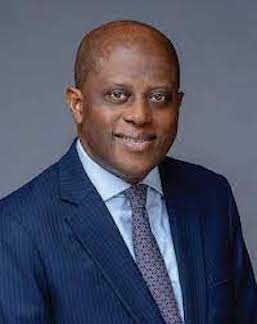
Governor of the Central Bank of Nigeria (CBN), Olayemi Cardoso, has re-assigned all four deputy governors of the institution.
The new responsibilities announced Monday night have seen Philip Ikeazor taking over the policy portfolio from Dr.
Muhammad Abdullahi.Dr.
Abdullahi moved from the Economic Policy Directorate to head Corporate Services.Emem Nnana Usoro leaves corporate services to supervise operations.
Lamido Yuguda was transferred from Operations to the Financial System Stability Directorate.
The CBN did not state reasons for the redeployment.
The bank said such changes were “to make use of the experience of senior officials in different areas of responsibility and to support evolving institutional priorities.” (NAN)


Security Guard Allegedly Abducts Employer’s Children in Minna
ShareFrom Dan Amasingha, Minna A businessman, Alhaji Danjuma, resident in the Brighter Area of Minna, Niger State, has appealed for prayers and...


Ndidi Leads Eagles for Poland Friendly
ShareSuper Eagles captain Wilfred Ndidi has joined the rest of the squad in Warsaw ahead of Wednesday’s international friendly against Poland. Ndidi and other stars such as Moses...

DR Congo Reopens Bunia Airport after 10-Day Closure amid Ebola Outbreak
ShareAuthorities in the Democratic Republic of Congo (DRC) have reopened the main airport in Ituri Province, the epicentre of the country’s ongoing Ebola outbreak, after a...

Customs, World Bank Group Strengthen Post Clearance Audit Capacity
ShareBy Tambaya Julius, Abuja The Nigeria Customs Service (NCS) has commenced a two-week Technical Assistance Mission on Post Clearance Audit (PCA) in collaboration with the World Bank Group under the...
Civilian Protection Now Central to Air Operations – CAS
ShareChief of the Air Staff (CAS), Air Marshal Sunday Aneke, said civilian protection has become a central consideration in the planning and execution of Nigerian Air Force (NAF) operations. Aneke stated...

Cardoso Re-assigns Deputy Govs, Ikeazor Takes over Policy Directorate
Share Governor of the Central Bank of Nigeria (CBN), Olayemi Cardoso, has re-assigned all four deputy governors of the institution....


Oyo Abduction: Teachers Protest Nationwide, Demand Release of Colleagues
ShareBy Laide Akinboade, Abuja and Ene Asuquo, Calabar A wave of national concern over worsening insecurity swept across Nigeria on Tuesday...

INEC Launches Probe Into Alleged Voter – data Leak
ShareBy David Torough, Abuja The Independent National Electoral Commission has commenced an investigation into allegations of unauthorised access to its...


2027: Voting Dr. Abraham, A Smart Decision For Gitata/Karu Constituency
ShareBy Tambaya Julius, Abuja Every community benefits from individuals who are willing to shoulder responsibility, listen attentively, and work consistently...


Artificial Intelligence: A Threat to Humanity or a Catalyst for Human Growth?
ShareAn Exclusive Interview with Engr. Mazen Kalassina In recent years, Artificial Intelligence has evolved from a specialized technology into a...