
NEWS
Much Ado About Age: Unraveling the Regina Daniels-Ned Nwoko Fracas


In the glittering yet treacherous world of Nollywood and Nigerian high society, few stories have captivated—and exhausted—the public quite like the implosion of Regina Daniels and Senator Ned Nwoko’s marriage.
What began as a fairy-tale union in 2019 between a rising child star and a seasoned politician-bilionaire has devolved into a bitter public brawl, with accusations flying like confetti at a chaotic wedding.
At the heart of this “fracas,” as the dust settles, lies the age-old question: How old was Regina when she walked down the aisle? But more damningly, why has her family peddled a web of contradictions that now unravels before our eyes?
As of November 2025, with Regina’s latest threats to expose “dark secrets” and Ned’s stoic denials, it’s clear this isn’t just about chronology—it’s a tale of greed, deception, and the harsh comedown from billionaire bliss.
The Age Lie: A House of Cards Built on Fabricated Youth
The controversy ignited in early November 2025 when Regina, in a tearful viral video, alleged Ned married her at 17, trapping her in a web of manipulation and introducing her to drugs like ecstasy to “satisfy” him sexually.
She painted a picture of grooming and underage vulnerability, rallying sympathizers and even drawing activist Omoyele Sowore into the fray with placards decrying Ned’s “impunity.”
Sowore, ever the opportunist, leveraged the saga for political mileage, but as facts emerged, that bus stop passed him by—his narrative crumbled under the weight of documents proving Regina was no minor.
Ned fired back swiftly, releasing her 2018 voter’s card listing a birthdate of October 10, 1998—making her a full 21 at their 2019 wedding.
A Delta State official corroborated this, noting her passport aligns closer to a 2000 birth year (age 19 at marriage), but emphatically not 17.
Regina’s own family fueled the initial hype: her mother, Rita Daniels, once boasted in interviews that Regina was 18 and “mature beyond her years,” lending Ned $50,000 for his campaigns as if he were the broke one in the equation.
Now? Rita’s flipping the script, claiming poverty and coercion.
The contradictions are glaring—voter’s card vs. passport vs. tearful claims—and they’ve dispersed the lynch mob that once gathered online.
X (formerly Twitter) threads that exploded with #JusticeForRegina have gone quiet, replaced by memes mocking the family’s flip-flops.
Evidences don’t lie; families do. Regina wasn’t some wide-eyed teen whisked away—she was dating peers before Ned, as old photos and insider accounts suggest, and entered the marriage legally, eyes wide open to the power imbalance.
Her child-actor past (debuting at 7 in 2007) doesn’t grant perpetual youth; at 25 (by passport math) or 27 (per some reports), it’s time to shed the “baby girl” facade.
Many Nigerian women marry post-secondary at 18+, building empires without the drama—Regina’s not special, just spotlighted.
Family Greed: From Broke to Billionaire Enablers
No one embodies the deceit like Rita Daniels. In the pre-marriage glow, she paraded Regina as a savvy lender to a “struggling” Ned, ignoring his established wealth from law, politics, and real estate.
Fast-forward to the split: Rita’s video cries foul, alleging Ned’s downfall without Regina’s “help.” It’s a classic broke-shame tactic—90% fabrication, as netizens note—designed to guilt-trip while pocketing the perks.
The entire clan—mother, father, brother—has contradicted themselves on timelines, finances, and consent, turning a private dissolution into a national circus.
Nigeria’s moved on; the X frenzy peaked mid-November, with users calling out the “high greed level” and urging arrests for the family’s arrests (literal and figurative).
Gratitude? Absent. Ned elevated Regina from child-star hustles to global influencer status, gifting Lamborghinis, jets, and a platform that minted her millions.
Yet, her camp sneers, “What has he done?” as if the glow-up was a handout from fate.
This wasn’t love—it was ambition cloaked in romance. Regina traded youth for opulence, and her family cashed the checks.
The Deeper Dirt: Drugs, Secrets, and Desperate Distractions
Beyond age, Regina’s outbursts veer into the personal: fears of a sex tape leak (one she’s in, notably sans Ned—why would he risk that?)
She threatens to spill Ned’s “crimes,” but he’s played the bigger man, holding “dirty secrets” that could bury her—affairs, indiscretions, the works.
Her alleged drug spiral? Ned claims he funded rehab she abandoned, tying it to their rift; she counters he introduced her to Molly for bedroom compliance.
At 27, this isn’t youthful rebellion—it’s a cry for intervention. Child stardom scarred her, but so did chasing fast lanes; now, she’s behaving “far younger,” editing ages like Instagram filters to cling to innocence lost.
If parting’s so sweet, why the attention-grab?
Regina’s all over X and IG, linking with Tiwa Savage for “advice” (ironic, given Tiwa’s own scandals) and begging Ned to “marry a new wife and leave me alone.”
He’s moved on—focusing on senate duties—while she’s exposed every card.
Sowore’s political ploy fizzled too; age lies neutered his pitch, leaving him placard-less.
The Bitter Aftermath: From Lamborghini to Reality Check
Regina exits not as the slay queen she styled herself, but an “overused” mom of two, market value dipped by rumors and rehab needs.
Taste-the-honey types lurk, ready to devour and dump—especially with alleged fixes funding the highs. Six months tops: That “saved” nest egg evaporates on the billionaire-wife facade. Lambos yield to keke tricycles; the mockery she heaped on “lesser” lives boomerangs.
Rehab first, then a job—anything to sustain the glow without Ned’s shadow. You’ve tumbled economic ladders; fake relief and empty threats won’t cushion the fall.
Nigeria’s verdict? A collective eye-roll. The mob that bayed for Ned’s head has scattered, truths trumping tears.
Regina, your family’s lies gifted you spotlight, but spotlight fades. Behave your age, heal the wounds, and disturb the peace no more. Ned’s moved on—follow suit, or risk becoming the punchline in your own telenovela. The much ado about age? It’s over. Time for real talk: Gratitude, growth, and goodbye.
Pamela O. writes from Lagos.
By Tambaya Julius, Abuja
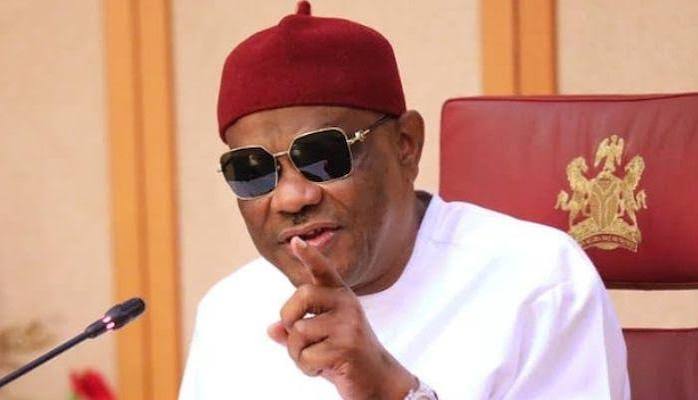
The Minister of the Federal Capital Territory (FCT), Nyesom Wike, has declared himself the field commander of President Bola Tinubu’s re-election campaign in the FCT, saying he will also coordinate efforts in Rivers State ahead of the 2027 general elections.
Wike made the declaration on Monday, at a meeting of the Rainbow Coalition at his Abuja residence, attended by political leaders and candidates from the All Progressives Congress (APC) and the Peoples Democratic Party (PDP).
The former Rivers State governor said the coalition was united behind Tinubu’s second-term ambition, urging members to put aside party differences and work towards a common goal.
He stressed that the presidential election was the coalition’s immediate priority, regardless of the parties its members belonged to.
“I want to let all of you know that we are going to work together. Nobody should say, ‘I am PDP’ or ‘I am APC.’ For the purpose of this election, we are together,” Wike said.
The meeting brought together APC and PDP chairmen, serving and former senators, National Assembly candidates and other political stakeholders from the FCT’s six area councils.
Wike defended the alliance, pointing to the 2024 Edo State governorship election as an example of how politicians from different parties could work together when they shared a common interest.
He argued that political affiliations should not prevent cooperation, particularly when the parties involved were pursuing the same objective.
He cited road construction, school renovations, police stations and other infrastructure projects as evidence of ongoing development.
Wike also listed the establishment of the FCT Civil Service Commission and the creation of the Women Affairs and Youth Development Secretariats among the administration’s achievements.
On the economic challenges facing Nigerians, the minister acknowledged the hardship but maintained that the benefits of Tinubu’s reforms would take time to emerge.
“Changing the economy of a country is not like a prayer,” he said.
Wike also threw his weight behind the proposed establishment of state police, describing it as a necessary step towards tackling insecurity across the country.

By Tambaya Julius, Abuja
The Federal High Court in Abuja on Monday struck out an eight-count forgery charge against Prince Adeniyi Adeyemi, who allegedly posed as the Director-General of the purported Presidential Foreign Investment Promotion Council (PFIPC).
Justice Mohammed Umar struck out the charge following an application by the Federal Government, represented by the Director of Public Prosecutions of the Federation (DPPF), Rotimi Oyedepo, SAN.
At the hearing, Oyedepo told the court that the Attorney-General of the Federation (AGF) had reviewed the case file and identified gaps that informed the decision to withdraw the charge.
He said the government planned to take the case to the High Court of the Federal Capital Territory (FCT) for a fresh arraignment.
Adeyemi, who has been in detention since July 14 following his arrest on a bench warrant issued by the court, was arraigned over allegations of forgery, fraud and impersonation.
The defendant later applied for bail, citing health concerns. He told the court that he was suffering from a contagious ailment that required urgent medical attention from his personal doctors.
The prosecution opposed the application, insisting that government medical facilities were available to cater for his health needs.
The bail hearing, however, could not proceed following the withdrawal of the charge.
Those listed as potential witnesses in the case included the Chief of Staff to the President, Femi Gbajabiamila; Paul Emmanuel; Jeremiah Imoukhede; and Ituah Sylvester.
Other proposed witnesses included Akimbo Shola and Adamu Balongu, civil servants with the Office of the Accountant-General of the Federation, as well as a Deputy Superintendent of Police.
By Tambaya Julius, Abuja
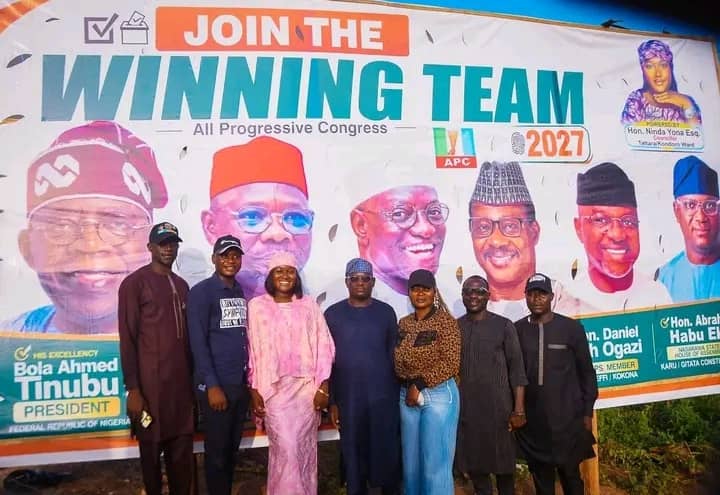
The Councillor representing Tattara/Kondoro Electoral Ward and Chief Whip of the Karu Legislative Council, Hon. Barr. Ninda Yona, has urged constituents to support All Progressives Congress (APC) candidates in the 2027 general elections, citing what she described as the party’s positive impact on the ward.
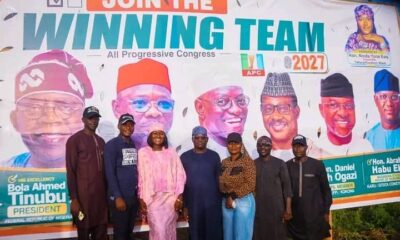
Yona made the appeal during the unveiling of an APC campaign banner featuring the party’s candidates, describing the event as a significant demonstration of her commitment to the party and its leadership.
She said the APC-led government had contributed to the development of the ward through infrastructure projects, women’s empowerment programmes and improvement in workers’ welfare.
According to her, the ongoing empowerment of women, alongside plans for another round of support, had strengthened her resolve to mobilise grassroots support for the party.
She explained that the banner was intended to showcase APC candidates across different levels of government, from the presidency to the State House of Assembly, while promoting party unity and increasing their visibility among residents.
Appealing to the electorate, Yona urged residents of Tattara/Kondoro to reciprocate what she described as the government’s contributions to their welfare by voting for APC candidates in the forthcoming elections.
“My plea to my electorate is that they should remember that one good turn deserves another. Having enjoyed the benefits of this government, we should also work to give back by supporting the APC at the polls,” she said.
She expressed optimism that Tattara/Kondoro would demonstrate its support for the party during the 2027 elections.
The council also expressed delight over the presence of party candidates and other stakeholders at the event, particularly Hon. Daniel Ogah Ogazi, Hon. Abraham Habu Ekpo, Hon. Bawa Rabo and Hon. Samson Muntari.
According to her, their presence was encouraging and reflected the solidarity among party members as preparations for the elections continue.
Yona expressed appreciation for the support shown by residents during the event and reaffirmed her commitment to grassroots mobilisation.
She urged constituents to remain engaged in the political process as the party prepares for the 2027 general elections.



Nigeria: Outsourcing the Presidency, One Infirmity at a Time
ShareBy Chidi Odinkalu Nearly 20 years ago, while stumping for his party, the Peoples’ Democratic Party, out-going president, Olusegun Obasanjo,...


Nigeria, Germany Deepen Economic Cooperation, Strengthen Partnership
ShareBy Tony Obiechina, Abuja The Federal Government has reaffirmed its commitment to strengthening Nigeria’s bilateral relations with Germany, with renewed...

Wike Unites APC, PDP Leaders Behind Tinubu 2027 Bid
ShareBy Tambaya Julius, Abuja The Minister of the Federal Capital Territory (FCT), Nyesom Wike, has declared himself the field commander...

PFIPC Saga: Court Strikes Out Eight-Count Forgery Charge Against ‘DG’
ShareBy Tambaya Julius, Abuja The Federal High Court in Abuja on Monday struck out an eight-count forgery charge against Prince...

2027: Yona Donates APC Campaign Banner, Seeks Constituents Support
ShareBy Tambaya Julius, Abuja The Councillor representing Tattara/Kondoro Electoral Ward and Chief Whip of the Karu Legislative Council, Hon. Barr....

Pope Leo to Have Surgery after Lump Found on Lung
SharePope Leo XIV has announced he will be operated “in the coming days” after a nodule was found on his...


Motorists Express Worry over Non-access to NNPC Petrol Discount
ShareMany motorists said in spite of the discount in pump price of petrol at the Nigerian National Petroleum Company Ltd...


Tuberculosis: Benue Assembly Passes Law, to Protect Patients from Discrimination
ShareBy Laide Akinboade, Abuja The Benue State House of Assembly has passed into law a landmark legislation aimed at eliminating...

President Tinubu’s 30-Day Fuel “Discount” Cannot Repair the Damage of Subsidy Removal
ShareBy Daniel Nduka Okonkwo The Federal Government has issued a stark warning: restoring petrol subsidies could push the exchange rate...


Troops Neutralize Explosive Devices planted in Zamfara Community
ShareFrom Ifeanyichukwu Nwannah, Gusau The troops of Operation Fansan Yamma (OPFY) have neutralised Explosive Devices Planted along Magami–Hannutara–Dansadau road, Maru,...