
FEATURES
Nasarawa’s War on Measles: Governor Sule Leads Statewide Drive to Save 1.3m Children

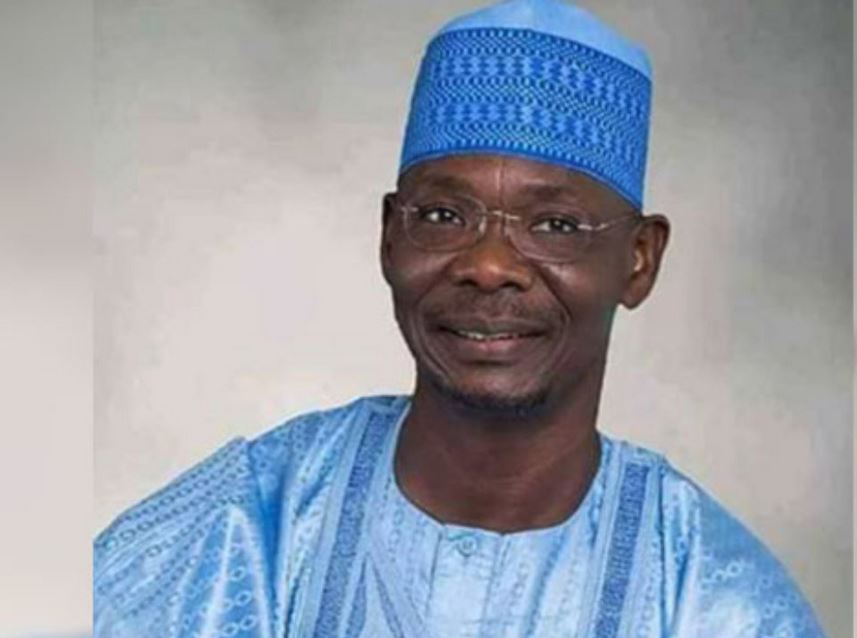
From Leo Zwanke
In a move to safeguard the health of children across Nasarawa State, Governor Abdullahi Sule has officially flagged off the Measles-Rubella (MR) vaccination campaign at Akwanga Local Government Area, marking the beginning of a comprehensive state-wide immunisation effort targeting over 1.
37 million children aged 9 months to 14 years.The launch, held amid heightened awareness of recent measles outbreaks in parts of the state, underscores Nasarawa’s commitment to reducing child mortality and combating vaccine-preventable diseases.
With the campaign, the government hopes to eliminate measles and rubella infections from its borders while integrating MR vaccines into the routine immunisation schedule.The event, attended by top government officials, traditional rulers, health experts, and development partners including UNICEF, AFENET, WHO, Gavi, and C-WINS, marked a new phase in the fight against measles-rubella — diseases known to cause blindness, deafness, brain damage, and even death in unvaccinated children.
Before the launch, Nasarawa State had been battling recurring measles outbreaks, particularly in rural and hard-to-reach communities. Earlier in 2025, an outbreak in Taliga village of Rukubi Ward in Doma Local Government Area left over 40 children infected, according to reports from the State Ministry of Health. Although no deaths were recorded, the incident revealed a worrying gap in immunisation coverage and the persistence of “zero-dose” children — those who have never received any vaccines.
Health officials observed that most of the affected children in Doma had not received a single dose of the measles vaccine, exposing the magnitude of the challenge. The outbreak forced emergency response teams to deploy rapid intervention measures, including mop-up vaccination, disease surveillance, and intensified community mobilisation.
Governor Sule, deeply concerned by the development, directed immediate containment efforts and tasked the State Primary Health Care Development Agency (NAPHDA) to strengthen vaccination campaigns. This urgency eventually culminated in the official launch of the Measles-Rubella campaign in Akwanga.
Flagging off the campaign, Governor Sule called on parents and caregivers to take advantage of the opportunity to protect their children against life-threatening diseases.
“I strongly endorse the Measles-Rubella vaccine being introduced by the Federal and State Governments in partnership with our development partners. Measles and rubella are highly contagious diseases that can cause deafness, blindness, heart defects, brain damage, and even death in children,” Governor Sule stated at the Akwanga flag-off ceremony.
The Governor reaffirmed that his administration is determined to strengthen the state’s healthcare system through increased funding, infrastructure development, and human resource capacity, especially at the grassroots level.
“We are working to ensure that this vaccine is available, accessible, and administered by qualified health workers in all our local government areas. I appeal to every parent and caregiver to ensure that all children between 9 months and 14 years are brought to vaccination centres during this campaign,” he urged.
He also lauded development partners like UNICEF, Gavi, WHO, and AFENET for their consistent support in health interventions, describing their collaboration as “a demonstration of shared commitment to child survival and a healthy Nasarawa.”
The campaign aims to reach 1,372,251 children across Nasarawa’s 13 Local Government Areas — one of the highest coverage targets in North Central Nigeria. It adopts a multi-pronged strategy combining fixed posts, temporary outreach stations, and house-to-house mobilisation, ensuring that even children in remote communities are not left out.
According to Dr. Usman Iskilu, Executive Secretary of the Nasarawa State Primary Health Care Development Agency, the campaign represents a critical step in the fight to eliminate measles and rubella from the state.
“The Measles-Rubella campaign is not just a stand-alone activity. It’s part of an integrated effort that includes routine immunisation strengthening, disease surveillance, and public education. Our target is to ensure that every eligible child receives this vaccine and that no community is left behind,” Dr. Iskilu explained.
He said the campaign is being implemented with technical and financial support from global partners, while the state government provides leadership and logistics support.
Health experts across Nasarawa have hailed the initiative as timely and necessary.
At a media dialogue organised by UNICEF and partners in Lafia ahead of the flag-off, Dr. Abraham Kayode, the AFENET consultant for Nasarawa, emphasised the importance of mass participation to achieve herd immunity.
“The target is 1.3 million children in Nasarawa alone. That’s nearly the entire child population between 9 months and 14 years. Parents should make sure that their children are vaccinated at designated posts during the exercise,” he said.
Dr. Kayode warned against vaccinating children who are seriously ill at the time of the campaign and encouraged caregivers to seek medical advice in such cases. He also stressed that the vaccine is safe, free, and effective, dismissing rumours and misinformation circulating in some communities.
Similarly, Dr. Gaza Gwamna, the State Commissioner for Health, said that the Sule administration is leaving nothing to chance in its pursuit of a disease-free state.
“We are dealing with a disease that spreads fast and can be deadly, especially among unvaccinated children. That is why our approach goes beyond vaccination — it includes communication, training, and community engagement,” he said.
“We are also sensitive to the religious and cultural contexts of our people. We have engaged religious and traditional leaders to mobilise their followers and dispel myths surrounding vaccination,” he added.
In rural communities, where access to healthcare is often limited, the success of such campaigns depends largely on local ownership and trust. Recognising this, the government and its partners have engaged traditional rulers, community heads, and faith-based organisations to drive awareness at the grassroots.
During the campaign flag-off, the Paramount Ruler of Akwanga, HRH The Chu-Mada, Samson Gamu Yare commended Governor Sule’s proactive leadership in prioritising child health. He assured that traditional institutions would continue to support government programmes aimed at improving the wellbeing of citizens.
“Our role as traditional leaders is to protect our people. We will continue to encourage our subjects to take their children for immunisation. Vaccination saves lives and prevents unnecessary suffering,” the royal father stated.
Community mobilisation efforts also involve health educators, women’s groups, and youth associations, who are carrying out door-to-door enlightenment campaigns in villages across the 13 LGAs.
Dr. Luqman Ahmad, from the UNICEF Kaduna Field Office, described Nasarawa as a model state for partner collaboration.
“We are impressed with the level of political commitment in Nasarawa. The governor himself has championed the cause of immunisation and accountability. Our joint focus is to reach every eligible child, especially those who have never received any vaccine before — the zero-dose children,” Dr. Ahmad explained.
He noted that UNICEF and its partners are providing vaccines, cold-chain equipment, logistics, and training for vaccinators to ensure smooth implementation.
The World Health Organisation (WHO) also reaffirmed its support for the state, emphasising disease surveillance and post-campaign evaluation to ensure no area is left unvaccinated.
While the campaign promises much, challenges persist. Data from the State Primary Health Care Development Agency indicate that thousands of children across Nasarawa remain unvaccinated due to factors such as distance to health facilities, insecurity in border areas, and cultural resistance.
In certain rural communities, especially among nomadic populations, vaccine hesitancy is influenced by religious beliefs, misinformation, and misconceptions about infertility. However, continuous community engagement and education are gradually changing perceptions.
According to Mrs. Asabe Ibrahim, a community health worker in Doma LGA, the biggest obstacle is not lack of vaccines but lack of awareness.
“Some mothers still believe vaccines will make their children sick or infertile. Others think the campaign is political. But when we sit with them, explain in their language, and show examples of children who were vaccinated and are healthy, they begin to understand,” she said.
Nasarawa has witnessed repeated outbreaks of measles in recent years, but health officials believe lessons learned from those experiences have strengthened preparedness. The response to the Doma outbreak earlier in 2025 revealed that quick action, rapid diagnosis, and strong surveillance can contain the disease effectively when combined with community cooperation.
Dr. Gwamna explained that the integration of Measles-Rubella vaccines into routine immunisation means future outbreaks can be drastically reduced.
“We no longer want to wait for emergencies before acting. The MR vaccine is now part of the regular immunisation schedule, which means every new child born in Nasarawa will be protected if the parents comply,” he said.
At the Akwanga Primary Health Centre, Mrs. Laraba Alaku, a mother of three, expressed gratitude for the campaign.
“We heard about this vaccine from the health workers and our church. I brought my children because I don’t want them to suffer from diseases I cannot afford to treat. I am happy the governor remembered us here in Akwanga,” she said.
Another resident, Mr. Musa Ahmed, from Wamba LGA, said the campaign has given parents confidence in the health system.
“Before now, some of us didn’t believe these vaccines were real or safe. But now we see the government and partners coming to our towns, explaining everything, and even vaccinating in front of us. That gives us assurance,” he noted.
To ensure transparency and accountability, the state government has set up monitoring teams comprising representatives from the Ministry of Health, State Primary Health Care Development Agency, WHO, UNICEF, and civil society organisations.
Dr. Usman Iskilu said post-campaign data will be analysed to determine coverage rates, identify missed communities, and plan follow-up interventions.
“We are determined to reach every child. After this campaign, we will continue routine immunisation to ensure sustained protection,” he added.
The Measles-Rubella-Polio campaign in Nasarawa is part of Nigeria’s national effort to eliminate vaccine-preventable diseases — measles, rubella, and polio — by 2030. According to the Federal Ministry of Health, over 100 million children are expected to be vaccinated nationwide during this campaign cycle.
Nasarawa’s proactive stance, visible leadership, and community-oriented approach are being recognised as best practices that other states could emulate.
Governor Abdullahi Sule’s flag-off of the Measles-Rubella vaccination campaign in Akwanga stands as a strong message of hope that no child in Nasarawa should die or suffer from a disease that can be prevented.
The campaign’s success will depend on the collective will of government, partners, health workers, traditional leaders, and, most importantly, parents. If all hands remain on deck, Nasarawa could soon join the ranks of states that have broken the chain of measles-rubella transmission.
As Governor Sule aptly put it: “Together, we can eliminate measles and rubella from Nasarawa State. Our children deserve a future free from preventable diseases. Let us do this for them, and for the generations to come.”

By Joan Odafe
In the quiet farmlands of Chibok in northeastern Nigeria, the steady rhythm of women cracking groundnuts and sorting harvests now carries a meaning deeper than livelihood.
For the mothers whose daughters were abducted during the 2014 school attack by terrorists, the work has become both survival and healing.
What began as a response to grief has gradually grown into a small but meaningful enterprise, one rooted in farming, peanut processing and the determination of mothers to rebuild their lives and secure a future for their children.
Their story is documented in the film, ‘Mothers of Chibok’, by Nigerian filmmaker, Joel Kachi Benson, which moves beyond the moment of the abduction to focus on the everyday lives of the women who continue to live with its consequences.
In the film, the camera lingers on the rhythm of daily labour: women tending farms, negotiating land prices, planting corn and groundnuts, and later selling the groundnuts that have become central to their community enterprise.
One scene captures a mother negotiating to rent farmland. The landowner initially demands N100,000 but after persistent bargaining the woman brings the price down to N35,000, a small victory that reflects her determination to keep farming in spite of financial hardship.
Groundnuts have become the backbone of their livelihood. After harvest, the women sort, roast and process the peanuts, adding value before they are sold.
The enterprise not only sustains their farming activities but also provides income to support their families and pay school fees for their children.
Scenes in the documentary show women sitting together in courtyards and fields, cracking shells and drying harvests under the sun.
The work is demanding but it carries a quiet sense of solidarity among the mothers.
For many of them, motherhood remains the strongest source of motivation.
In one scene, a mother sits with her children during a home lesson, gently encouraging them through their reading.
“Myself well done. Try it another day. Mango and banana for Mau,” she sings as a reward for a lesson completed.
In spite of the trauma that reshaped their lives, education remains central in the community.
The mothers continue to send their children to school, determined that fear will not define the future of the next generation.
The film also captures moments that reveal the emotional weight many of the women still carry.
In one poignant sequence, a mother receives a phone call informing her that her daughter has been rescued and will soon return home.
Earlier in the film, she had been shown carefully arranging her daughter’s clothes, preserving them as if preparing for the day she will come back.
Elsewhere, another mother breaks down after learning that her daughter was not among those rescued.
Through these moments, the documentary presents the mothers not as symbols of tragedy but as women navigating grief, hope and everyday survival.
Benson said the film took about three years to complete, allowing the production team to build trust within the community and document realities that rarely make headlines.
“When you spend time, you see things,” he said.
The producer explained that the intention of the film was to shift attention toward the strength and resilience of the women rather than presenting them solely through the lens of tragedy.
“The idea was to show them as strong, resilient women who are rebuilding their lives and supporting their families,” he said.
Beyond the film, the mothers’ groundnut enterprise is gradually reaching wider markets.
Their products are now available at a few outlets, including ‘The Gather House’, a concept store that showcases women-owned African brands and products with strong community stories.
By connecting the Chibok women’s produce to urban consumers, the initiative is helping transform their small-scale processing into a sustainable livelihood.
For the mothers, every bag of processed peanuts sold represents more than income. It reflects their determination to rebuild stability for their families and create economic security for their children.
Their story carries particular resonance during moments such as International Women’s Day and Mother’s Day, occasions that celebrate women’s strength and the enduring power of motherhood.
In Chibok, those ideals are lived daily in the fields and courtyards where the women work.
Through farming, enterprise and collective resilience, the Mothers of Chibok are gradually transforming a painful chapter of history into a story of dignity, survival and hope. (NAN)
By Ebuka Ukoh
If Nigeria is serious about reform, it must study not only who the late Right Reverend
Jesse Jackson was, but also how he operated. He did not merely protest injustice; he built lasting institutions to sustain his quest for justice.
Born in 1941, Jackson emerged from the civil rights movement under the leadership of Dr Martin Luther King, Jr.
He marched in Selma. He organised in Chicago. He founded Operation PUSH and later the Rainbow Coalition. In 1984 and 1988, he ran for President of the United States, becoming the first African American to mount a serious national campaign and win millions of votes across racial lines.He did not win the presidency.
But he definitely expanded the imagination of who could lead. And sometimes that is how structural change begins.Jackson understood something that Nigeria is still struggling to internalise. Protest without structure is noisemaking. Structure without moral vision is empty. A nation requires both structure and vision.
Architecture of Moral Language
Jackson brought moral language into the centre of political discourse. He spoke of dignity, economic justice, inclusion, and accountability. He challenged corporate
America and government policy with the vocabulary of conscience.
Nigeria is deeply religious. Churches and mosques overflow. Sermons are powerful. Yet our politics often lacks moral restraint. We speak the language of faith but operate the mechanics of patronage. We invoke God but rarely demand ethical clarity from those in office.
Jackson’s example forces a question. What would Nigerian politics look like if leaders were pressed not only on strategy and tribe but on justice and responsibility? What if we evaluated leadership not just by who benefits, but by who is protected?
Coalitions Across Difference
Jackson’s Rainbow Coalition was not a slogan. It was a deliberate attempt to unite
Black Americans, Latinos, labour unions, farmers, and low-income communities under a shared platform of economic and social justice. It required negotiation. It required compromise. It required maturity.
Nigeria is a federation of identities – ethnic, religious, and regional. Yet our coalitions are often temporary arrangements built for elections, not for transformation. They dissolve after victory. They fracture under pressure. We have ethnic champions. We have party loyalists and chieftains. We have influencers…but we lack bridge builders who can gather citizens around shared interests rather than shared enemies.
Jackson’s campaigns proved that diversity is not a weakness. It becomes a weakness only when leaders exploit it instead of organising it. Jackson understood something many movements forget: protest is emotional energy, but institutions are stored power.
Nigeria has seen this before. The resistance that followed the annulment of the June 12, 1993, election did not survive on outrage alone. It survived because labour unions, pro-democracy coalitions, student movements, journalists, religious leaders, and civil society groups worked in uneasy alignment. The pro-democracy movement of the 1990s was not a hashtag. It was infrastructure. It was a coalition. It was architecture.
Without that web of organised actors, military rule might have endured longer.
Even the fuel subsidy protests years later revealed the same pattern. When labour federations coordinated action, the nation listened. When the organisation fractured, momentum faded. History keeps teaching the same lesson. Energy without structure exhausts itself. That is the lesson Nigeria must not ignore.
From Protest to Policy
The civil rights movement did not end with marches. It produced legislation. The Civil
Rights Act of 1964. The Voting Rights Act of 1965. Structural outcomes followed sustained pressure.
Nigeria trends outrage quickly, hashtags rise, emotions flare. Then the moment fades.
What often does not follow is institutional design, policy literacy, electoral strategy, budget scrutiny, and local organising.
Jackson moved from the streets to the ballot. He did not see activism and governance as enemies. He saw them as stages of the same struggle. Nigeria does not need fewer passionate voices. It needs more disciplined movements. It needs citizens who understand that democracy is not event-based. It is process-based.
What made Jesse Jackson’s life particularly instructive was not merely his charisma. It was the ecosystem that produced him.
He emerged from a dense network of Black institutions in America that did not operate in isolation. The African Methodist Episcopal Church laid spiritual and organizational foundations. Prince Hall Freemasons built mutual aid networks and leadership pipelines. Historically Black Colleges and Universities trained generations of professionals. The Divine Nine fraternities and sororities cultivated bonds of service and activism. The NAACP reshaped legal strategy. The Urban League advanced economic mobility.
These were not parallel stories. They were interdependent systems. Leadership moved between them. Resources circulated among them. Victories in one strengthened the others. Remove one pillar, and the structure weakens. This is precisely the argument of our joint bookwork, Built By The Ancestors. Most historical accounts treat such institutions as separate chapters. They are not. They are ecosystems. The durability of a people rests not on one hero but on coordinated pillars of faith, education, economics, law, and civic action.
Jackson was not an accident. He was the architecture itself. Nigeria must ask itself an uncomfortable question: Where is our architecture?
Economic Justice as Stability
Jackson consistently linked race and poverty to economic exclusion. He argued that political rights without economic access produce fragile democracies.
Nigeria is learning that lesson the hard way. Youth unemployment, insecurity, inflation, and regional instability are not isolated crises. They are symptoms of exclusion. When large segments of the population feel economically locked out, frustration becomes combustible. Economic justice is not charity. It is national security.
Hope as Strategy
Perhaps Jackson’s most enduring contribution was not a policy but a posture. He believed in what he called the “architecture of hope.” Not optimism detached from reality. Not a denial of hardship. But structured belief that systems can be changed when people organise deliberately.
Nigeria often oscillates between two extremes: Cynicism and magical thinking. Either nothing will ever change, or change will come through a single election or saviour.
History suggests something different. Change requires sustained effort. It requires a coalition. It requires moral clarity paired with institutional work.
Movements, Not Moments
Jesse Jackson’s presidential campaigns did not end racism. But they shifted representation. They expanded political possibilities. They prepared the ground for future breakthroughs.
Nigeria must learn this lesson. Not every attempt at reform will succeed immediately.
Not every campaign will win. But disciplined participation builds capacity. Capacity builds influence, and Influence builds reform.
We cannot afford to be a country of moments only. Moments trend, but movements transform.
If Nigeria desires a different future, it must cultivate leaders who can speak with moral courage and organise with strategic patience. It must nurture citizens who understand that democracy demands more than applause or outrage. It demands structure.
Before we ask why the system does not work, we must ask whether we are building systems strong enough to hold our hopes.
Jackson’s life offers Nigeria a mirror. A nation does not change because it feels injustice. It changes because it organises against it. And that work begins long before the next election cycle. We have voices. We have anger. We have talent. What we have not consistently built is a system strong enough to outlive any one leader.
Jackson’s life reminds us that movements mature when they become institutions. And institutions endure when they are interdependent.
Before we ask whether Nigeria will produce another charismatic reformer, we must ask whether Nigeria is building the pillars that can sustain one. Nations do not rise on moments. They rise on structures. And without structure, even the loudest cry fades into silence.
Mr Ukoh, an alumnus of the American University of Nigeria, Yola, and PhD student at Columbia University, writes from New York.

By Jane Eze
Lucky Elohor was still conscious when they placed her in the ambulance.
The 29 year old founder of Digital Creator Chic had built her career connecting young Nigerians to digital opportunity. After a serious road accident in Ilorin, doctors suspected spinal cord and head injuries.
To know the full extent of the damage, they needed an MRI scan.They did not have reliable access to one.
Ilorin, a major state capital, could not provide immediate, functional and accessible MRI imaging in that critical moment. The decision was made to stabilise her and transfer her to another city. She died before reaching definitive imaging.
Her death highlights a national problem that extends far beyond one tragedy.
A National Deficit
Nigeria has about 58 MRI machines for roughly 218 million people. That equals 0.3 scanners per one million citizens.
By comparison: Ghana has about 0.48 per million, The United States has nearly 39 per million and Japan has more than 50 per million
Even more troubling is distribution. Nearly all MRI machines are located in urban centres. Rural Nigeria has virtually none.
Within cities, access is unequal. Many scanners are in private facilities where a single scan costs between fifty thousand and two hundred thousand naira. In a country where most healthcare expenses are paid out of pocket, this cost alone delays or prevents care.
In public hospitals, unstable electricity is a major obstacle. The Nigerian Association of Resident Doctors has repeatedly warned that erratic power supply leaves many public hospital MRI machines non-functional. MRI systems require constant power and cooling. Voltage fluctuations damage sensitive components.
A machine on record is not the same as a machine that works in an emergency.
Geography Determines Survival
Advanced imaging in Nigeria is concentrated in a few cities such as Lagos, Abuja and Port Harcourt, with smaller numbers in other major urban centres. Patients from smaller states often travel hundreds of kilometres for scans.
For conditions such as stroke, traumatic brain injury, spinal cord damage and cancer staging, delay in imaging can mean permanent disability or death.
Studies show that more than seventy percent of cancer cases in Nigeria present at late stages. Limited access to diagnostic tools contributes to that delay. Tens of thousands of cancer related deaths occur annually, many with poorer outcomes because of late detection.
For families, the economic burden is severe. When public facilities cannot provide imaging, patients are forced into private centres. A single scan can equal months of income. Some delay testing. Others never receive it.
Why the Gap Persists
MRI machines require more than purchase funds. They demand uninterrupted power supply, specialised rooms with shielding, stable cooling systems, liquid helium, trained technologists and biomedical engineers.
A new 1.5 Tesla MRI machine can cost between two and three million dollars before installation. Even refurbished machines remain expensive. Without maintenance and stable electricity, they deteriorate quickly.
Policy choices have also shaped the crisis. Investment in advanced diagnostics has not matched population growth. Public private partnership models have concentrated high end imaging in profit driven centres, reinforcing inequality. This means hose who can pay are scanned. Those who cannot travel, wait or gamble with time.
What Must Be Done
Solutions are practical and achievable: Conduct a national audit to determine which of the 58 MRI machines are functional and which can be restored.
Stabilise power supply at designated MRI centres before purchasing additional machines.
Ensure every federal teaching hospital has at least one reliably functional MRI unit.
Mandate insurance coverage for medically indicated MRI scans to improve affordability.
Invest in local training for biomedical engineers and MRI technologists to reduce downtime.
Deploy mobile MRI units to underserved state capitals while permanent infrastructure is developed.
A Question of Priorities
Lucky Elohor’s story is not only about a road accident. It is about diagnostic distance. It is about a country where access to lifesaving imaging still depends on geography and income.
The MRI crisis is not a technical mystery. The machines can be bought. The expertise can be trained. The infrastructure can be built.
What remains uncertain is whether access to advanced diagnosis will be treated as a national priority or continue as a privilege.
Jane N Eze is a Research and Data Analyst.


Nigerian Military Reports Major Gains in Nationwide Anti-Terror Operations
ShareBy David Torough, Abuja The Armed Forces of Nigeria has announced significant operational successes in its ongoing counter-terrorism and anti-crime...

Group trains 50 girls on Menstrual hygiene, skill acquisition etc
ShareBy Laide Akinboade, Abuja An expert in education, has urged adolescents girls in Abuja, to ensure they acquire vocational Skills...

SDP Leader, Adebayo Urges Nigeria to Reconnect With Independence-era Ideals at Stakeholders’ Summit
ShareBy Mike Odiakose, Abuja The national leadership and former presidential candidate of the Social Democratic Party (SDP), Prince Adewole Adebayo,...


Ododo Flags Off 728 Government-owned Renovated Public Schools in Kogi
ShareFrom Joseph Amedu, Lokoja Kogi state Governor, Usman Ododo has launched the renovation of 728 Government-owned Public Schools under the Adolescent Girls Initiative for Learning...


Super Eagles Set for Poland, Portugal Friendlies Ahead of World Cup
ShareThe Super Eagles will face Poland and Portugal in international friendlies in June as part of preparations for upcoming global competitions, the Nigeria Football...


Iran Threatens U.S, Israel with Harsher Attacks
ShareIran has warned the United States (U.S.) and Israel that it would launch further and more severe attacks, escalating tensions amid ongoing hostilities. A spokesman for...


EFCC Seeks Final Forfeiture of 57 Properties Linked to Malami
ShareThe Economic and Financial Crimes Commission, on Thursday, urged the Federal High Court in Abuja to order the permanent forfeiture...


Easter: NSCDC Deploys 57,000 Personnel Nationwide
ShareThe Nigeria Security and Civil Defence Corps (NSCDC) has deployed 57,000 operatives nationwide to ensure security of lives and property...


NSIA Grows Net Asset Value to $3.40bn in 2025
ShareBy Tony Obiechina, Abuja Nigeria Sovereign Investment Authority(NSIA) has announced its 2025 Group Financial Performance posting a net Asset value...


ADC, APC Clash over INEC Role as Leadership Crisis Deepens
ShareBy David Torough, Abuja A fresh political storm erupted on Thursday as the African Democratic Congress (ADC) and the All...