
NEWS
NASS and the Imperative of Reforming the Funding of NRS, NCS and NUPRC


By Prof Uche Uwaleke
Nigeria’s current fiscal realities demand not only an aggressive drive to increase government revenues but also a deliberate effort to reduce the cost of generating those revenues. In recent months, public discourse has focused largely on expanding the tax base, improving tax compliance, and diversifying government revenue sources.
These are undoubtedly important objectives. However, far less attention has been paid to a fundamental question of public financial management: how much should the government spend to collect its own revenue?This question has become increasingly significant because Nigeria currently operates one of the most generous cost-of-collection regimes among developing and emerging economies.
Three major revenue-generating agencies namely the Nigerian Revenue Service (NRS), formerly the Federal Inland Revenue Service (FIRS); the Nigerian Customs Service (NCS); and the Nigerian Upstream Petroleum Regulatory Commission (NUPRC) are statutorily permitted to retain fixed percentages of the revenues they collect to finance their operations. The NRS retains 4% of non-oil revenues, the NUPRC retains 4% of royalties, rents and other revenues from the oil and gas sector, while the Nigerian Customs Service retains as much as 7% of customs duties and levies.Although this arrangement was originally intended to provide stable funding for critical revenue institutions, it has evolved into a funding model that raises serious concerns regarding efficiency, accountability, and value for money. Unlike most Ministries, Departments and Agencies that receive annual appropriations based on demonstrated operational needs and are subjected to rigorous budget scrutiny by the National Assembly, these agencies enjoy an automatic funding mechanism tied directly to the volume of revenue collected. As collections increase, their operating budgets also increase, regardless of whether their actual expenditure requirements have grown proportionately.
The implications of this funding structure are becoming increasingly difficult to ignore. According to data published by Agora Policy, the three agencies retained a combined N78.30 billion as cost of collection in January 2024 alone. Of this amount, the then Federal Inland Revenue Service accounted for N43.35 billion.
More strikingly, the combined cost of collection for these agencies exceeded the gross Federation Account Allocation Committee (FAAC) allocations received during the same month by four of Nigeria’s six geopolitical zones. The North-East received N56.60 billion, the North-Central N55.58 billion, the North-West N76.09 billion, and the South-East N47.75 billion. When the administrative cost of collecting revenue exceeds the monthly allocations received by entire geopolitical zones, it is evident that the issue deserves serious legislative and public attention.
The concern becomes even more compelling when Nigeria’s experience is compared with international practice. Revenue authorities across the world are expected to collect public revenue efficiently and at the lowest reasonable administrative cost. The United Kingdom’s HM Revenue and Customs operates at a cost-of-collection ratio of 0.51 percent. Across the thirty-eight member countries of the Organisation for Economic Co-operation and Development (OECD), the average cost is about 0.64 percent. Revenue authorities within the Inter-American Center of Tax Administrations (CIAT), which covers much of Latin America, average approximately one percent. Even Kenya, whose economy shares several structural characteristics with Nigeria, generally operates within a statutory range of one to two percent. Across developing and emerging economies, the average cost of collection is estimated at roughly one percent. Nigeria’s current range of four to seven percent therefore stands out as exceptionally high by global standards.
To be clear, the objective should not be to weaken the operational capacity of revenue-generating agencies. On the contrary, Nigeria requires strong, technologically advanced, and professionally managed institutions capable of maximizing revenue collection, combating tax evasion, curbing smuggling, and improving compliance. The issue is whether these objectives require a funding mechanism that automatically allocates between four and seven percent of all revenues collected, irrespective of demonstrated operational needs or measurable efficiency gains.
There is an important distinction between rewarding performance and institutionalizing inefficiency. A funding model based solely on a percentage of collections creates weak incentives for cost control because higher revenue collections automatically translate into larger operating budgets. It does not necessarily encourage expenditure discipline, prudent resource management, or continuous productivity improvements. Rather, it risks normalizing administrative expansion without corresponding gains in efficiency.
This concern is particularly relevant at a time when Nigeria has invested heavily in technology-driven reforms designed precisely to reduce the cost of tax administration and customs operations. Digital tax filing systems, electronic payment platforms, integrated customs management systems, automated risk assessment tools, data analytics, and improved taxpayer databases are intended to make revenue administration more efficient while lowering operational costs over time. If technological modernization is achieving its intended purpose, then the cost of collection should gradually decline rather than remain permanently fixed at comparatively high levels.
Equally important is the opportunity cost of the existing arrangement. Every naira retained by revenue-generating agencies as collection costs is a naira unavailable for distribution through the Federation Account. It represents resources that could otherwise support investments in education, healthcare, security, infrastructure, agriculture, social protection, and other development priorities. At a time when governments at all levels continue to grapple with fiscal constraints and rising debt obligations, improving the efficiency of revenue collection offers one of the few reforms capable of increasing available public resources without imposing additional taxes on citizens or businesses.
The current arrangement also raises broader questions of equity within public financial management. Virtually every government institution is expected to justify its expenditure through the annual budget process. Their funding is determined by assessed needs, available resources, and legislative appropriation. Revenue-collection agencies should not be exempt from the same principles of fiscal discipline merely because they collect rather than spend public resources. Indeed, institutions entrusted with collecting public revenue should exemplify the highest standards of efficiency, transparency, and accountability.
This is where the National Assembly has a particularly important constitutional and institutional responsibility. As the custodian of the country’s power of appropriation and oversight, the legislature is uniquely positioned to review whether the current statutory retention ratios continue to serve the national interest. Legislative oversight is not intended to undermine executive agencies but to ensure that public resources are managed in accordance with the principles of economy, efficiency, effectiveness, and accountability.
The National Assembly should therefore commence a comprehensive review of the statutory funding framework governing the Nigerian Revenue Service, the Nigerian Customs Service, and the Nigerian Upstream Petroleum Regulatory Commission. Such a review should include detailed examination of the actual operational costs of these agencies, their expenditure patterns, personnel costs, capital investments, technological infrastructure, and comparative international benchmarks. Public hearings would provide an opportunity for stakeholders, fiscal policy experts, civil society organizations, and the agencies themselves to present evidence on the appropriate cost of revenue administration in Nigeria.
The outcome of such a review should be legislative reforms that gradually reduce the current retention ratios by about fifty percent. A reduction from 4% to 2% for both the Nigerian Revenue Service and the Nigerian Upstream Petroleum Regulatory Commission, and from 7% to 3.5% for the Nigerian Customs Service, would still leave Nigeria above international averages while releasing substantial additional revenues to the Federation Account. Such reforms would strike a more appropriate balance between ensuring adequate operational funding and protecting public finances.
However, reducing the statutory percentages should not be viewed as an end in itself. It should form part of a broader reform agenda that promotes needs-based budgeting, periodic independent efficiency audits, greater transparency in the utilization of retained revenues, performance-based funding, and regular legislative reviews to ensure that operational costs continue to reflect changing technologies and international best practices. Funding should increasingly reward measurable improvements in efficiency, taxpayer services, customs clearance, compliance, and revenue administration rather than simply the volume of collections.
By and large, the debate is not about denying resources to critical government institutions. It is about ensuring that every naira spent on revenue administration delivers maximum value to the Nigerian people. Fiscal sustainability requires more than collecting higher revenues; it requires collecting those revenues as efficiently as possible. Countries that have successfully strengthened their public finances have done so not merely by raising more taxes but by improving the productivity and efficiency of their revenue institutions.
It goes without saying that Nigeria stands at a critical moment in its fiscal history. The demand for public investment has never been greater, yet available resources remain constrained. Rationalizing the cost of revenue collection represents a practical and achievable reform that can immediately increase funds available for national development without introducing new taxes or placing additional burdens on households and businesses. It is a reform that aligns with international best practices, promotes accountability, strengthens public financial management, and enhances confidence in government institutions.
The National Assembly now has an opportunity to lead this important conversation. By reviewing the statutory cost-of-collection framework and aligning it with the principles of efficiency, transparency, and fiscal responsibility, the legislature would not merely be reducing administrative costs; It would be reaffirming its constitutional duty to safeguard the public purse and ensuring that a greater proportion of Nigeria’s revenues is devoted to improving the lives and livelihoods of the people rather than the machinery of collection itself.
Uwaleke, a financial Economist, is former Commissioner for Finance in Imo State, and currently the Director of the Nasarawa State University Institute of Capital Market Studies.
By David Torough, Abuja
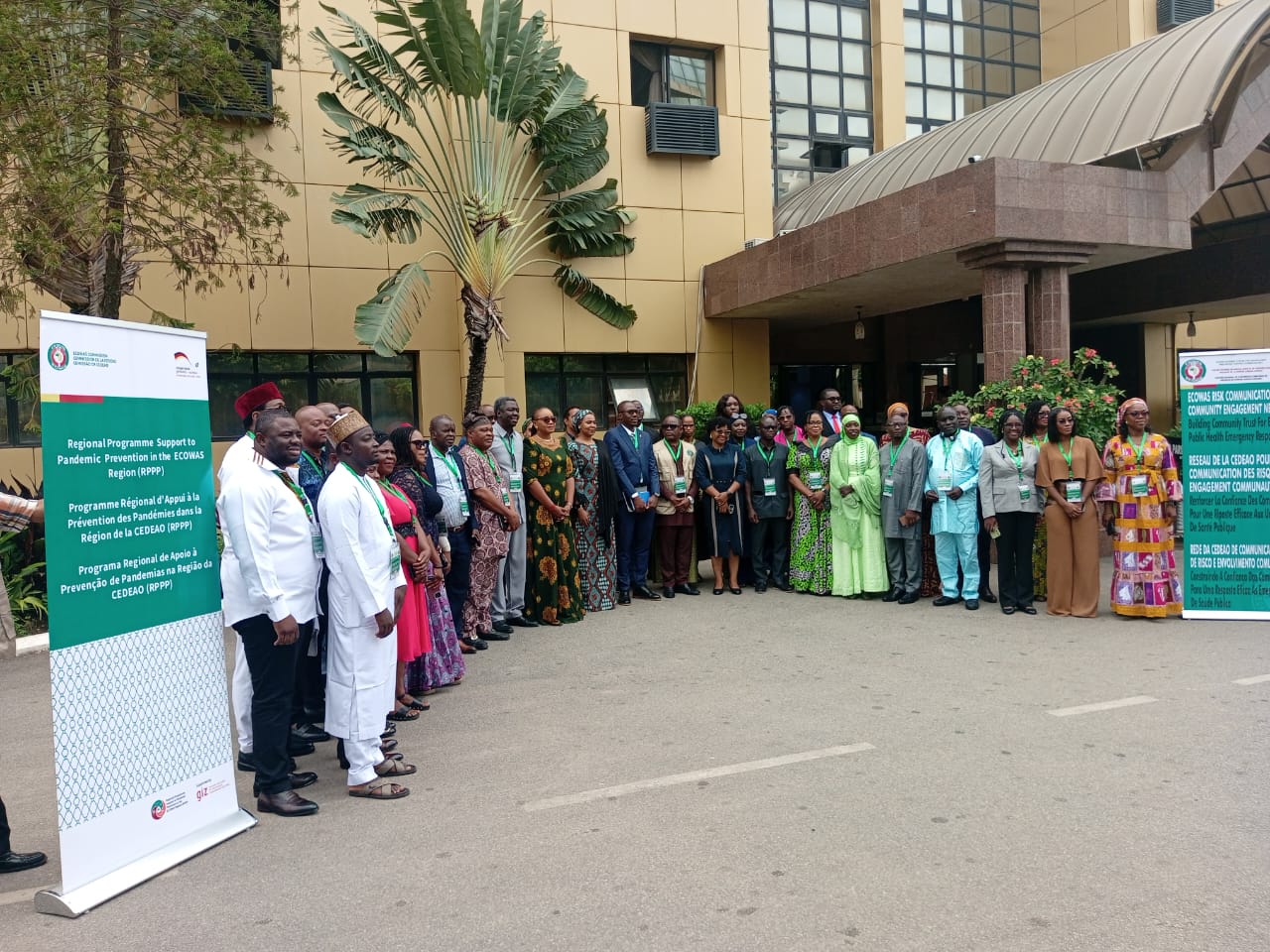
The Federal Government and the ECOWAS Regional Centre for Surveillance and Disease Control (RCSDC) have renewed their commitment to strengthening regional health security through improved risk communication and community engagement, as West Africa intensifies preparations against Ebola and other emerging public health threats.
The commitment was reaffirmed on Wednesday at the opening of a three-day Regional Capacity Building Workshop on Risk Communication and Community Engagement (RCCE) in Abuja, bringing together delegates from ECOWAS Member States, development partners and public health institutions to enhance emergency preparedness and response across the region.
Head of the Department of Disease Prevention and Health Promotion at the Nigeria Centre for Disease Control and Prevention (NCDC), Dr. Tochi Okwor, who spoke on behalf of the Coordinating Minister of Health and Social Welfare, Prof. Muhammad Pate, said infectious diseases do not respect national borders, making regional collaboration indispensable.
He stressed that disease surveillance and laboratory systems could only be effective when supported by transparent communication, public trust and active community participation.
“Our core philosophy at the NCDC is that technical surveillance and laboratory diagnostics are only as effective as our ability to communicate transparently, build public trust and actively engage the communities we serve,” he said.
Pate described the workshop as timely, citing ongoing Ebola outbreaks in Central Africa as a reminder that community engagement remains the first line of defence against infectious diseases.
He commended the ECOWAS RCSDC, operating under the West African Health Organization (WAHO), for harmonising surveillance systems, strengthening cross-border disease control and coordinating regional emergency responses.
Pate also acknowledged the support of ECOWAS RCSDC, the German Agency for International Cooperation (GIZ) and other development partners in strengthening Nigeria’s preparedness through sustained collaboration, including the recently inaugurated national Ebola preparedness webinar series.
According to him, the initiative has helped train frontline health workers, bridge knowledge gaps and promote continuous collaboration among public health professionals, while supporting harmonised One Health communication strategies, coordinated risk messaging and community-led rumour management.
Highlighting the importance of grassroots participation, Okwor said community engagement reflected Africa’s long-standing tradition of collective leadership.
“If this meeting had taken place 100 years ago, it would have been under a tree in the village square with clan and village heads. Community engagement is in our DNA as Africans, and we should draw from that heritage as we strengthen public health response,” he said.
He urged participants to use the workshop to identify operational gaps, strengthen preparedness against Ebola and develop a sustainable regional RCCE roadmap for 2026–2027.
The Executive Director of the ECOWAS RCSDC, Dr. Mamadou Diarrassouba, represented by Dr. Abubacar Fall, said trust remained the foundation of every successful public health emergency response.
He warned that misinformation and rumours often spread faster than disease outbreaks, undermining public confidence and weakening response efforts.
“Risk Communication and Community Engagement are not supportive activities; they are at the heart of emergency response. They determine the acceptability of public health measures, community collaboration and the quality of decision-making,” he said.
Fall noted that the workshop aligns with the ECOWAS 2026 Action Plan and the regional One Health Strategy, describing it as a results-oriented platform for strengthening preparedness across the sub-region.
He said participants would assess Ebola preparedness and RCCE capacities in Member States, identify operational challenges, strengthen social listening and rumour management systems, promote inclusion of vulnerable populations and update the regional roadmap for 2026–2027.
The workshop will also review implementation of the ECOWAS RCCE Strategic Plan, revise the network’s terms of reference, elect a new executive committee and harmonise regional communication tools to strengthen institutional capacity and cross-border cooperation.
Reaffirming the organisation’s commitment, Fall said the ECOWAS RCSDC would continue supporting Member States to strengthen capacities, harmonise tools, promote training and foster collaboration based on transparency, ethics and respect for communities.
He urged participants to make the meeting a platform for practical decisions that would leave no ECOWAS country isolated in the face of future public health threats.
The three-day workshop, which runs from July 29 to 31 in Abuja, is expected to produce a renewed regional strategy aimed at improving risk communication, community engagement and coordinated emergency response across West Africa.
From Attah Ede, Makurdi
Residents and other stakeholders have demanded for urgent reform of the global financial system, stating that Africa’s sovereign debt burden is systematically depriving citizens of good health, education and other basic services.
They made the demand during the Freedom from Debt Campaign(FDC) championed by AIDS Healthcare Foundation (AHF Nigeria) held at Sarkin Noma community in Lokoja, the Kogi State, Tuesday.
Both community leaders and representatives at the event, enjoined international creditors to automatically suspend debt repayments for developing countries affected by pandemics and natural disasters.
They further urged global lenders to reduce interest rates on loans to enable developing nations to invest more in healthcare, education, water supply and other critical infrastructure.
A community leader, Mr Nasiru Illiyasu, appealed to government to implement the Borrowers’ Forum proposed at the Seville Financing for Development summit and G20 South Africa to strengthen collective bargaining.
Also speaking, youth leader, Idris Yahaya, called for mandatory pauses on debt service during health and climate emergencies.
On her part, a women representative, Asimau Abdulmalik proposed a 1% AI Solidarity Levy on AI-related capital and profits to fund debt relief and social protection.
While speaking, the Hakimi of Sarkin Noma, Mallam Bala Musa, commended AHF for the campaign initiative and for selecting their community to host the event.
The royal father expressed optimism that the campaign for debt freedom would go a long way toward improving the lives and well-being of rural communities in Africa as a whole.
Ambassador Idris Muraina described the initiative as a timely global call and a welcome development.
Muraina stressed the need for the World Bank and IMF to ease the burden of loan repayment for developing countries so that funds can be redirected to education, health, welfare, and other development priorities.
Also speaking, Mr. Ibrahim Obansa, Vice Chairman of the Nigeria Union of Journalists, Kogi State chapter, commended AHF’s efforts and pledged the support of the media to ensure the campaign’s objectives are achieved through mass media outreach.
However, some of the leaders emphasized that African leaders at all levels must be responsible, transparent, and accountable in utilizing available resources, especially after debt relief has been granted.
Earlier, the AHF Nigeria’s Senior Advocacy and Marketing Manager, Mr Steve Aborisade, presented a Policy Brief titled “The Crushing Reality of Sovereign Debt.”
Aborisade said the system was “failing by design,” noting that low- and middle-income countries pay 2 to 4 times more interest than the US and up to 12 times more than Germany.
He added that 3.4 billion people live in countries that spend more on debt payments than on health or education.
Aborisade said AHF and other stakeholders are advocating for equitable terms in debt repayment and a fairer financial system so governments in developing nations are able to invest in the wellbeing of their people.
Aborisade stressed that no country should have to choose
between protecting its people and paying an unfair system, and urged leaders to treat the crisis with urgency.
ReplyReply allForward
Add reaction

From Rabiu Sanusi, Kano
The Nigeria Police Academy, Wudil, Kano State, on Monday witnessed an emotional and colourful farewell ceremony as its 24th Commandant, Assistant Inspector-General of Police (AIG) Patrick A. Atayero, officially retired from the Nigeria Police Force after attaining the mandatory retirement age of 60.
The occasion, marked by a grand Pulling-Out Parade, celebrated a distinguished career of dedicated service, leadership, and commitment to the advancement of police education in Nigeria.
The ceremony, which coincided with AIG Atayero’s 60th birthday, attracted an array of dignitaries, senior military and police officers, government officials, traditional rulers academics and well-wishers who gathered to honour a leader widely credited with transforming the Nigeria Police Academy through infrastructure development, enhanced academic standards and strengthened discipline among cadets.
The parade featured impressive drills and displays by cadets, earning admiration from guests who applauded the academy’s high level of professionalism.
Kano State Governor, Abba Kabir Yusuf, was represented at the event by his Special Adviser on Community Policing, Hajiya Ambassador (Dr.) Maimuna Umar Sheriff, underscoring the cordial relationship between the Kano State Government and the Nigeria Police Academy.
The governor’s representative commended the retiring Commandant for his invaluable contributions to policing and security development, describing his tenure as one that significantly strengthened the institution’s reputation as Nigeria’s foremost police training academy.
Delivering an emotional valedictory address Atayero expressed profound gratitude to Almighty God for granting him a successful career spanning decades of dedicated service to the nation.
He described his journey in the Nigeria Police Force as deeply rewarding and thanked President Bola Ahmed Tinubu for his leadership and reforms under the Renewed Hope Agenda which he said had positively impacted the Nigeria Police Force.
He also paid glowing tribute to the Inspector-General of Police Olatunji Rilwan Disu for his confidence, mentorship and unwavering support throughout his tenure as Commandant.
The retiring police chief also acknowledged the support of the Minister of Police Affairs, Senator Ibrahim Gaidam the Chairman of the Police Service Commission, Hashimu Argungu (Rtd) members of the National Assembly the Force Management Team and Kano State Governor Abba Kabir Yusuf for fostering a peaceful environment for the academy.
He further appreciated the Executive Chairmen of Wudil, Warawa and Dawakin Kudu Local Government Areas, traditional rulers, religious leaders the Police Community Relations Committee (PCRC), the Ijesha Progressive Union, his course mates, academy staff, colleagues, friends and his family for their unwavering support throughout his career.
The ceremony concluded with the traditional Pulling-Out Parade, one of the Nigeria Police Force most symbolic retirement rites as senior officers ceremonially pulled the newly retired AIG through the academy gates in an official vehicle amid loud cheers, applause and heartfelt tributes.
The emotional farewell marked the end of an illustrious chapter in AIG Patrick Atayero’s policing career leaving behind a legacy of professionalism, institutional development and exemplary leadership at the Nigeria Police Academy, Wudil.




NASS and the Imperative of Reforming the Funding of NRS, NCS and NUPRC
ShareBy Prof Uche Uwaleke Nigeria’s current fiscal realities demand not only an aggressive drive to increase government revenues but also...

Nigeria, ECOWAS Intensify Regional Preparedness for Emerging Health Threats
ShareBy David Torough, Abuja The Federal Government and the ECOWAS Regional Centre for Surveillance and Disease Control (RCSDC) have renewed...
Global Debt Crisis Slowing Down Developments In Our community- Residents Cry Out
ShareFrom Attah Ede, Makurdi Residents and other stakeholders have demanded for urgent reform of the global financial system, stating that Africa’s sovereign debt burden...


AIG Patrick Atayero Bows Out at 60
ShareFrom Rabiu Sanusi, Kano The Nigeria Police Academy, Wudil, Kano State, on Monday witnessed an emotional and colourful farewell ceremony...


Court Sentences Man to Death over Murder of Woman
ShareFrom Aliyu Askira, Kano A Kano State High Court, presided over by Justice Farida Dan Baffa, has sentenced one Sha’aibu...
Xenophobia, Tinubu and Ramaphosa
ShareBy Reuben Abati In the midst of the brazen, extra-judicial killings of Nigerians in South Africa, along with other Africans,...

AMAC Trains Cleaning Personnel to Improve Environmental Sanitation in FCT
ShareBy Raphael Atuu, Abuja The Abuja Municipal Area Council (AMAC) has commenced the training of its in-house and outsourced cleaning...

Uba Sani Picks Jerry Adams as 2027 Running Mate
ShareKaduna State Governor, Uba Sani has nominated the Executive Chairman of the Kaduna State Internal Revenue Service, Jerry Adams, as...


How President Tinubu is redrawing S’East Political Map
ShareBy Tunde Rahman WHEN the 2023 presidential election results were announced, many analysts and commentators gave a largely unanimous verdict...


APC Chieftain Faults Obi’s Call for Tinubu’s Resignation
ShareAyoola Lawal, a former Secretary of the APC Committee of Diaspora Chairmen, has filtered calls by NDC Presidential Candidate, Peter...