
Oil & Gas
NCDMB States Position on Three Per cent Human Capital Development Fund

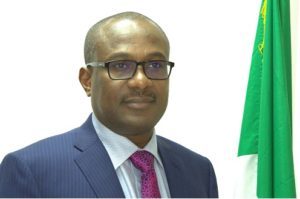
The Executive Secretary of the Nigerian Content Development and Monitoring Board (NCDMB), Simbi Wabote, has clarified the rationale behind mandating a three percent Human Capital Development (HCD) fund for oil and gas companies undertaking projects exceeding $1 million.
During the ongoing 12th Practical Nigerian Content Forum, Wabote said that the board does not collect the Fund from the companies.
The clarification followed claims from the Independent Petroleum Producers Group (IPPG) Chairman, Abdulrazaq Isa, alleging that remittance of the fund amounted to multiple levies.
“To this extent, I would like to encourage the NDCMB to review certain aspects of our regulations that may potentially work against the competitiveness of Nigeria’s oil and gas sector in the global marketplace.
A case in point is the human capital development training requirements where industry participants are required to set aside 3 percent of project costs, for projects above $1 million, to conduct local content training,” Isa said.However, Wabote countered, “NCDMB doesn’t demand that money from you. It is money that you keep, and you are supposed to use it to build human capacity in the country. If you go around and look at the human capacity index of Nigeria, it is among the poorest in the world. Hence, we need to build capacity.”
He noted that the few experts in the industry are overused and would eventually fade away without anyone to replace them. “The idea behind this fund is for you, the oil companies, to think, as in, this is the money that the law said to keep aside. You should then devise a strategy with which to deploy that money to build human capacity. That’s why NCDMB collaborated with PTDF to develop a skill center of excellence in Port Harcourt. We started building the facility along the airport road, then we went to the IPPG and said, ‘Look, come on board, use whatever HCD money that you have to help develop this center so that we can build capacity in the industry for the future. Because all the professionals will fade away. Where are the young ones? When we want to employ them, we say they don’t have the experience. How do they gain that experience?”
Other Issues Clarified:
In his opening remarks, Wabote also dispelled some assertions or narratives about the Board and its activities.
“Ladies and Gentlemen, is it TRUE or FALSE that NCDMB is very buoyant and awash with money? The answer is FALSE.
The fact is that the 1% NCDF remittance on contracts awarded is dwindling due to the lull in the industry. Through prudent and judicious use of the fund, we have grown it to a sizeable amount that could be leveraged for intervention and our operational needs.
The Fund has 68% of it placed with BOI and NEXIM Bank as intervention funds, and 32% utilized for our partnerships. These placements have enabled us to attract some yields and capital appreciation while still fulfilling our mandate.
“Is it true or false that our 17-storey headquarters building is wasteful and under-utilized? The answer is FALSE. We only have 3 floors out of the 17-storey building available for let. We are in discussions with one of the telecom companies, a bank, and a well-known operator with a huge footprint in Bayelsa for office space to let within the Nigerian Content Tower.
This narrative about under-utilization reminds me of the story about the Federal Secretariat in Abuja which is now congested even though it was considered too big at the time of construction.
“Is it true or false that NCDMB plans to relocate its headquarters to Abuja? The answer is definitely FALSE. We are still here seven (7) years after some people took us to court on the unsubstantiated rumor. We are also building a 200-room Conference Hotel next door to the headquarters that is ‘penciled’ for relocation.
I receive hundreds of letters all the time asking, and even demanding for employment as there is the perception that NCDMB could employ staff as it likes. This is incorrect. Please know that as an agency of the Federal Government, we cannot carry out employment as we like. There are several layers of approvals required to employ individuals into the Public Service.
“Another one is that NCDMB is partaking in areas outside its mandate. This is FALSE.
Section 70 of the NOGICD Act (2010) is very unambiguous on the functions of NCDMB. Sixteen functions of the Board are listed under the provision, and I had to dedicate my keynote address at the last NOG Nigerian Content Seminar to list out our functions, including the evaluation of NC Plans, monitoring of NC Performance, carrying out research and investigations, organizing conferences and workshops, developing capacities and capabilities of local contractors, implementing Ministerial Regulations, delegating any of its functions to any agent or operative, and doing anything legally necessary to enable the Board to carry out its function.
It is, therefore, not true that we carry out activities outside our mandate as contained in the NOGICD Act.” Wabote added.

The Petroleum Technology Development Fund (PTDF) has commenced the second phase of interviews for the 2026/2027 PhD award under its Overseas Scholarship Scheme (OSS), targeting 2,102 PhD applicants across Nigeria.
Speaking during the screening on Monday in Abuja, Dr.
Bello Mustapha, Deputy General Manager, Education and Training, PTDF said the ongoing exercise followed the completion of MSc interviews conducted in four centres nationwide.According to him, Abuja accounts for 912 candidates, scheduled for interviews over a five-day period, out of the 2,102 shortlisted nationwide.
Mustapha said the selection process followed the Federal Character principle, ensuring that candidates compete within their respective states, with top-performing applicants emerging based on merit.
He said the number of successful candidates to be awarded scholarships would depend strictly on budgetary provisions, with final decisions to be made by PTDF management after the interview process.
The PTDF official also disclosed that while the UK remains a destination for MSc scholars, the Fund has domesticated its PhD programme through a split-site arrangement involving partner universities, with candidates spending part of their study period abroad.
“Other countries participating in the scheme include Malaysia, Germany and France.
“The fund received over 30,000 applications for both MSc and PhD programmes, from which about 5,800 candidates were shortlisted for interviews,’’ he said.
The delegation from the Federal Character Commission (FCC) was on ground to monitor the ongoing PTDF 2026/2027 Scholarship selection for fairness
During the monitoring visit, the State Coordinator of the commission, John Uchara, accompanied by the Commissioner representing Benue State, Prof. Eugene Aleba, lauded PTDF for demonstrating compliance with federal character principles in the ongoing exercise.
Uchara said the commission’s presence was to ensure transparency, equity, and balance in the process, noting that the oversight was necessary to address concerns about marginalisation and imbalance in national opportunities.
“The exercise is open to candidates from all states of the federation, reinforcing inclusiveness in the selection process.
“Our duty is to ensure that what is being done here reflects the federal character principles, to avoid complaints from any part of Nigeria.
“From what we have seen, there is serious compliance with the principles. However, the final assessment will be based on the overall intake and how well it reflects national balance,” he said.
The FCC official, while reaffirming its commitment for continuous monitoring to ensure fairness and transparency, urged PTDF to consider expanding the scope of the programme to accommodate more qualified applicants.
A panelist at the ongoing interviews, Prof. Bashir Aliyu, from Modibbo Adama University, Yola, described the quality of candidates as highly impressive, noting that the process was progressing smoothly and transparently.
“We have started the interviews very well, and the exercise is progressing smoothly with candidates demonstrating strong academic and research potential.
“The panel focuses primarily on assessing the overall quality of candidates, including their academic background, research capacity, and the relevance of their proposed PhD work to national development.
“We look at their first degree, their master’s performance, their ability, and the quality of the work they present, especially in terms of innovation, potential for patenting, and usefulness to the country,” he explained.
He said while preliminary screening such as verification of academic records and credentials had already been conducted by PTDF, the panel’s role was to evaluate the strength and originality of candidates’ PhD proposals, as well as their professional conduct and research experience.
On the integrity of the process, Aliyu disclosed that PTDF has put in place robust verification mechanisms, including document authentication and checks on publications, to ensure only credible candidates are selected.
Tanko Fwadwabea, a Chemical Engineer, said his proposed PhD research focused on process simulation for blue hydrogen production, with the goal of adding value to Nigeria’s vast natural gas resources while reducing carbon emissions.
He expressed optimism that the scholarship opportunity would enable him to realise his research ambitions and contribute meaningfully to Nigeria’s energy future.
A returning candidate, Cornelia Collins-Onoha, a geosciences-based researcher while expressing optimism said her proposed PhD study focused on the spread and persistence of antimicrobial-resistant genes in aquatic environments, particularly in communities affected by oil pollution.
“I was here in 2025 but didn’t make the final list. However, I remain hopeful that this time around it will work out. This year, the process is prompter and more structured,” she said.
Collins-Onoha expressed confidence that her research and determination would contribute meaningfully to both environmental sustainability and public health in Nigeria.
Analysts have warned of significant crude oil price hikes which would further erode global economic prospects.
Top grade Brent crude could surge to $200 a barrel if the Iran conflict drags on through the end of June and the Strait of Hormuz remains largely closed to shipping traffic, Macquarie strategists warned in a note.
These fears were echoed by Egyptian President Abdel Fattah al-Sisi, who warned at an energy conference in Cairo that supply disruptions and rising prices could push oil above $200 per barrel, calling such projections realistic rather than exaggerated.
Egypt, which maintains close ties with the U.
S. and Gulf states, has condemned Iran’s attacks on Gulf Arab nations and is actively supporting diplomatic efforts to prevent a broader regional conflict.Macquarie laid out two scenarios for the oil market. In the more likely case, assigned a 60 per cent probability, the war winds down soon, prices fall relatively quickly from current levels near $108 a barrel, and the economic damage remains contained.
But in the second scenario, which Macquarie puts at a 40 per cent chance, the disruption proves far more durable, with consequences the strategists describe as historically unprecedented.
“With the global economy much less oil-intensive than 50 years ago, we would not be surprised if that would require historically high real prices ($200) for a time,” strategists led by Peter Taylor said in the note.
The scale of the supply disruption is already striking. With the Strait of Hormuz mostly closed, Macquarie estimates around 13% of global oil production will be shut in by end of March, a hit already larger than the peak seen in either of the 1970s oil shocks or the first two Gulf Wars. In 2025, the world consumed almost 105 million barrels per day of oil and products.
Emergency stockpiles held by IEA members over 1.2 billion barrels would provide some buffer, but the strategists note these can only be released slowly. Some countries in Asia are already facing physical shortages of diesel and jet fuel.
“If the Strait were to stay closed for an extended period, prices would need to move high enough to destroy an historically large amount of global oil demand,” the strategists wrote.
Should prices reach $200, the team projects that talk would quickly turn to global recession, with growth slowing by around one percentage point relative to 2025. Central banks would face a stagflationary environment with weak growth alongside elevated inflation with echoes of the 1970s.
In the U.S., the Fed would be confronted with near-zero or negative employment growth alongside rising prices, according to Macquarie.
That said, the strategists suspect a full global recession could be narrowly avoided, partly because governments would likely step in to subsidize energy costs, as several already have. Japan and Italy have already moved in that direction.
Overall, Macquarie’s base case remains a relatively swift resolution. With around 15% of global oil supply at risk of being held back indefinitely, the economic incentive to reach a deal is enormous.
“It is that reality that underpins our view that a deal must eventually be made,” the strategists said.

Sri Lanka has issued guidelines to government institutions on the prudent use of fuel and energy amid possible disruptions to fuel imports caused by escalating tensions in the Middle East.
The Office of the Commissioner General of Essential Services issued the guidelines to ministry secretaries, provincial and district secretaries, and heads of government and statutory institutions and called for measures to reduce fuel and electricity consumption across the public sector.
Officials have been advised to avoid using individual vehicles to commute to work and instead use public transport or group transport whenever possible, according to the office.
Government institutions have also been instructed to prepare daily transport plans to reduce the number of vehicles used for field duties.
The guidelines set out steps to conserve electricity and energy, including maximising natural lighting, reducing the use of air conditioning by relying more on electric fans, and limiting elevator use by encouraging people to take the stairs.
Local government authorities have been directed to switch off street lights during unnecessary hours and temporarily turn off street lighting in non-high-security areas as a precautionary measure, the office said.
The guidelines further encourage heads of institutions to allow staff to work remotely where technological facilities are available instead of requiring physical attendance.
The office urged all public officials to act responsibly, set an example for the public, and extend maximum support to national energy conservation and security efforts.



Wike Waives C-of-O Fees for Nigerian Law School
ShareBy Laide Akinboade, Abuja The Minister of the Federal Capital Territory (FCT), Nyesom Wike on Thursday gave an immediate waiver of fees for the Certificate of...
Study Links Alcohol to Higher Cancer Burden in Australia
ShareAustralian researchers on Thursday revealed that alcohol consumption causes a higher proportion of cancers in Australia than previous estimates. According to a statement of...


C’River Debunks False COVID-19 Report, Confirms Only One Case
ShareFrom Ene Asuquo, Calabar The Cross River State Government has refuted a publication by online platforms alleging the discovery of 10 new...


NCC Orders Airtime Credits for Poor Network Service
ShareThe Nigerian Communications Commission (NCC) said telecom operators will compensate subscribers for poor network quality through airtime credits under a strengthened regulatory enforcement framework...


CBN Orders Banks on Monthly Report of Mobile, ATM Transactions
Share The Central Bank of Nigeria has directed banks and other financial institutions to submit monthly reports on failed electronic...


Tinubu Seeks Senate Nod for $516m Sokoto–Badagry Superhighway Loan
ShareBy Eze Okechukwu, Abuja President Bola Tinubu has formally requested the National Assembly’s approval for a $516.3 million external loan...

2027: APC Begins Sale of Forms, Adopts Consensus, Direct Primaries
ShareBy David Torough, Abuja The All Progressives Congress (APC) has rolled out a comprehensive and revised timetable for its 2027...


Grant Pardon to Henry Okah, Niger Delta Activists Tells Tinubu
ShareBy Raphael Atuu, Abuja Popular Niger Delta activist Nengi James OON, alongside other youths under the aegis of Advocates for...

NCoS Places Facility on Red Alert over Alleged Attack Threats in Niger
ShareFrom Dan Amasingha, Minna The Nigerian Correctional Service (NCoS) in Niger State has placed all custodial centres across the state on red...


FIBA WWC: D’Tigress Land in Tough Group B with France, Hungary, Korea
ShareNigeria’s D’Tigress will face France, Hungary, and Korea in Group B at the 2026 FIBA Women’s World Cup. The draw set up the D’Tigress for...