
Education
Niger Gov Tasks LG Principal Staff to Tackle Salary, Pension Irregularities

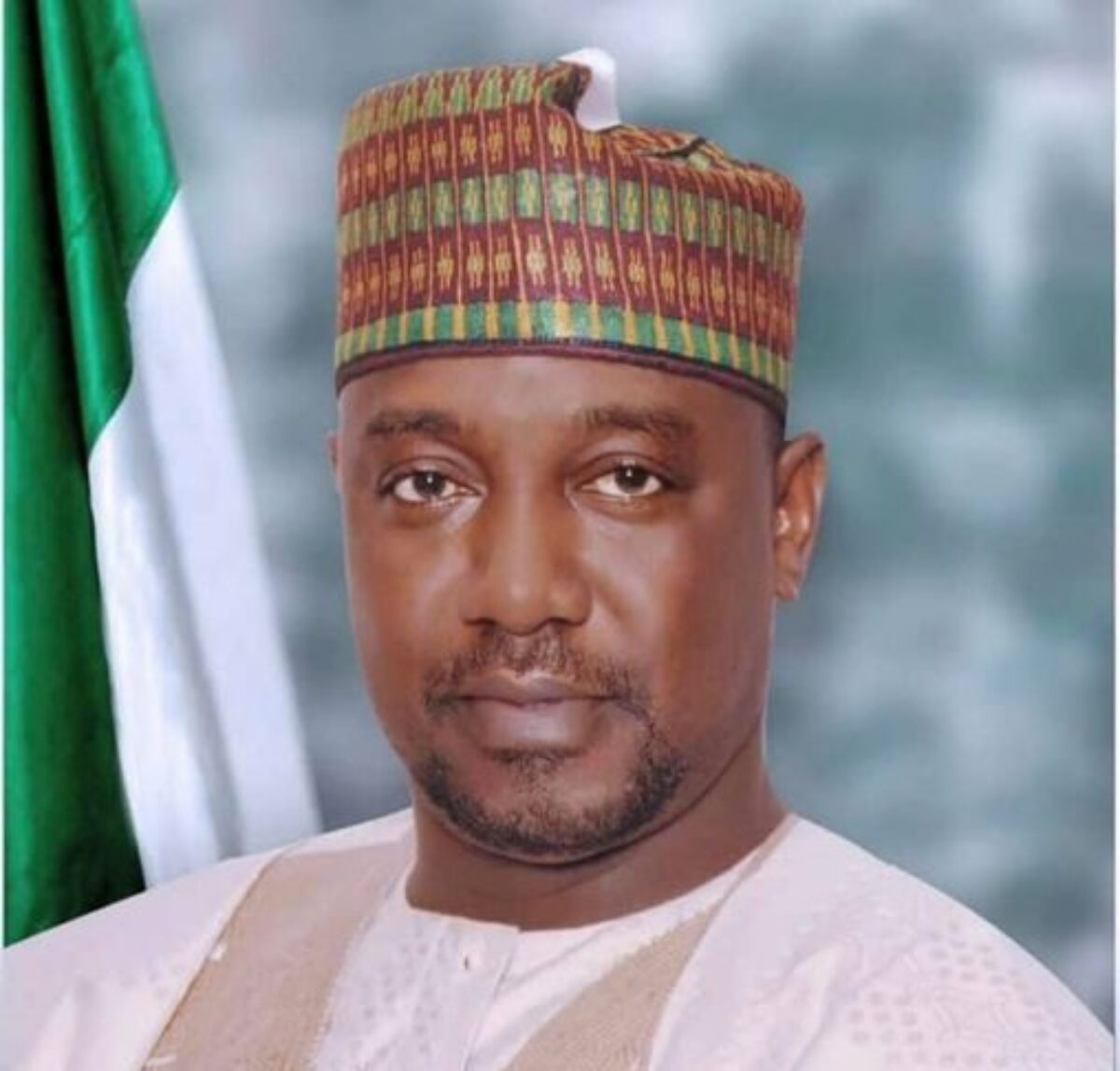
Niger State Governor, Alhaji Abubakar Sani Bello, has called on all principal staff across the 25 local government areas of the state to work together towards finding a lasting solution to the irregularities in salary and pension of council workers.
Bello, who made this known at a roundtable stakeholders’ meeting in Minna, said they have been accused of being part of the problem of salary and pension of workers.
The governor who spoke through his Deputy, Alhaji Ahmed Mohammed Ketso, explained that salary payment was the first line charge of every government, be it federal, state or local government.
He lamented that many of the councils in the state could not pay salaries of their workers due to over bloating of their wage bill, as a result of which some local governments cannot execute projects of N3m to N10m without assistance from the state government.
Bello further described as unfortunate how a worker will retire from service or die in active service and his/her benefit is delayed for five to six years, majorly caused by the desk officers of LGs.
Worried by the development, the governor reiterated the commitment of the state government to settle all irregularities in emoluments, pension and promotion of local government civil servants.
“A platform will be designed and everyone involved in the issue of pension and salary at the LG level must work with it. You either agree with the new system or continue to do what you are used to and face the law when you are caught.
“They already have some names of those who do not want the system to work because of their selfish interest. The problems were created by all stakeholders and the solution must come from all stakeholders,” he stated.
Also, Secretary to the State Government, Alhaji Ahmed Ibrahim Matane, explained that during the last verification exercise of pensioners carried out by the State, it was discovered that,” some pensioners were dead but their pension was still running, some have retired from service, but still receiving both salary and pension. Even as some retired from service for years without being paid a pension”.
He lamented that some LG workers have stayed longer than necessary without promotion, adding that promoting them will motivate them to put in their best.








From Joseph Amedu, Lokoja
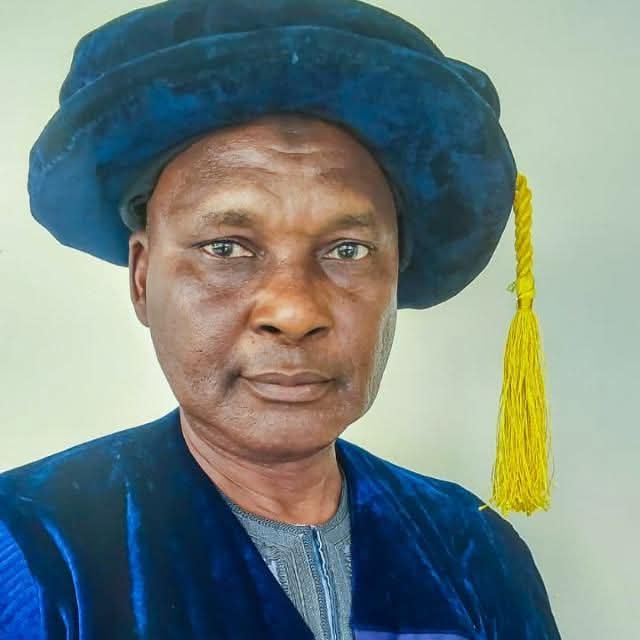
A Professor of History at the Federal University, Lokoja, Suberu Ochi Abdulrahaman, has raised the alarm over the prevailing political illegality bedeviling Nigeria insisting that leaders in the system should endeavor to obey the laws of the land and do the right thing that would move the nation forward.
Professor Abdulrahaman made the observation while delivering the 45th Inaugural Lecture Series of the University at its Felele Campus, in Lokoja, on Wednesday.
Professor Abdulrahaman in his Lecture titled, Persisting Illegalities in Nigeria’s Political Space: Who is to Blame? A Historical Discourse on Power, Institution and Democratic Governance, noted that political illegality which ranges from electoral fraud, arbitrary use of executive power for manipulation and intimidation to sponsorship of thuggery and violence in the system, amongst others, can only be overcome if leaders in governance work in accordance with the nation’s constitution.
According to the Inaugural lecturer “The resistance of political illegalities is neither accidental nor the responsibility of a single institution or generation.
“It is the cumulative product of colonial administrative legacies, prolonged military
authoritarianism, weak institutional development, political opportunism, inadequate civic engagement, and failures of ethical
Leadership.
“History teaches us that no nation develops sustainably when public institutions are weakened by impunity, when constitutional rules are subordinated to personal interests, or when political power is exercised without accountability.
“Equally, history reminds us that societies are capable of renewal when they choose to strengthen institutions rather than personalities, uphold the rule of law rather than arbitrary power, and promote justice above expediency.
“Accordingly, the challenge before Nigeria is not simply to conduct periodic elections or enact additional legislation.
The greater challenge is to cultivate a democratic culture in which constitutionalism becomes habitual, public office is regarded as a sacred trust, institutions command public confidence, and citizens
actively defend democratic values.
“Political leaders must recognise that authority derives its legitimacy not merely from electoral victory but from faithful obedience to the Constitution and unwavering commitment to the public good.
“Institutions must be empowered to function independently, impartially, and professionally.
” Citizens must reject every form of political illegality, whether manifested through vote buying, political
violence, corruption, or indifference to injustice”
The Vice Chancellor of the University, Professor Gbenga Solomon Ibileye in his welcome address, disclosed that his administration will continue to give Inaugural Lecture Series topmost priority as it offers opportunity for where the public is highly equipped with relevant knowledge on contemporary issues affecting the society.
He described Professor Suberu Abdulrahaman as an accomplished historian who has made his mark in his academic field.
Academic Staff Union of Universities (ASUU) has authorised 20 federal and state universities across Nigeria to commence varying degrees of industrial action.
The decision was reached during a critical National Executive Council (NEC) meeting held in Abuja between August 8 and 9, 2026.
ASUU National President, Prof.
Christopher Piwuna, disclosed this at the weekend, expressing the union’s deep frustration over the “haphazard implementation” of the landmark December 2025 FGN-ASUU Agreement.The union warned that a full-scale resurgence of campus unrest is now inevitable.
Regarding the 20 approved universities facing looming strikes, the NEC resolved to grant permission for industrial action once individual institutions successfully satisfy internal union requirements.
The affected institutions include: Adekunle Ajasin University, Akungba (AAUA); Nasarawa State University, Keffi (NSUK); Ibrahim Badamasi Babangida University, Lapai (IBBUL); University of Medical Sciences, Ondo (UNIMEDO); Gombe State University (GSU), Gombe; Plateau State University (PLASU), Bokkos; Emmanuel Alayande University of Education (EAUED), Oyo; Ambrose Alli University, Ekpoma (AAUE); Olusegun Agagu University of Science and Technology (OAUSTECH), Okitipupa; Abia State University (ABSU), Uturu; University of Education and Entrepreneurship (UEE), Akamkpa; Kaduna State University (KASU), Kaduna.
Others are Aliko Dangote University of Science and Technology (ADUSTECH), Wudil; Northwest University, Kano (NWUK); Enugu State University of Science and Technology (ESUT), Enugu; Imo State University (IMSU), Owerri; Niger Delta University (NDU), Wilberforce Island; University of Africa, Toru-Orua (UAT); Bayelsa Medical University (BMU), Yenagoa; and Taraba State University (TSU), Jalingo.
ASUU also disclosed that the implementation status of universities within the Lagos Zone is currently under review, with separate declarations expected in due course.
Speaking on the core grievances driving the crisis, ASUU noted that while Vice-Chancellors at the federal level face severe challenges due to underfunded monthly salary bills, the situation at the state level is considerably worse.
According to the union, only about 10% or fewer of state governors have openly endorsed the new salary package established in December 2025.
The rest were accused of “playing the ostrich” and passing financial burdens onto Governing Councils that lack the funding to back them.
The union also explicitly blamed officials within the Federal Ministry of Finance and the Office of the Accountant-General of the Federation. These bodies are accused of deliberately stalling promotion arrears, dragging their feet on monthly salary releases, and illegally withholding the remittance of academics’ deductions to their respective Pension Fund Administrations (PFAs).
Furthermore, ASUU raised concerns over the unpaid, withheld three-and-a-half months’ salaries dating back to the 2022 nationwide strike. While ASUU initially praised President Bola Tinubu for releasing four months of those salaries, the refusal to remit the balance has left a “strong bitter taste.”
The union also condemned the prolonged delays in paying the 25/35% wage award and outstanding promotion arrears to its members.
Meanwhile, ASUU issued a stern warning regarding the recent harassment of its branch leaders and members by Vice-Chancellors at ESUT, IMSU, and ABSU.
The NEC declared that it will strictly refuse to call off any industrial action in these specific institutions until all forms of victimization stop completely.
Beyond the immediate academic crisis, the NEC reviewed the worsening socio-political and economic landscape of Nigeria.
The union strongly condemned the ongoing atmosphere of pre-election violence, political killings, and economic instability as the country approaches upcoming election cycles, noting that these existential threats directly undermine the living and working conditions of everyday Nigerians and university lecturers alike.
Despite praising the mediation efforts of Senator Lanre Tejuoso, the Chairman of the Implementation Monitoring Committee (IMC), ASUU maintains that it will stop at nothing to enforce the full scope of the agreement.
The union has announced that it will convene an emergency NEC meeting in the next few weeks to appraise the situation. If the government fails to act swiftly to clear outstanding financial entitlements and halt the harassment of lecturers, a wider, coordinated national academic shutdown may follow.
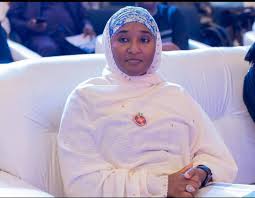
The Minister of State for Education, Prof. Suwaiba Ahmad has expressed satisfaction with the conduct of the National Examinations Council (NECO) Computer-Based Test (CBT) Senior School Certificate Examination,
Ahmad, while monitoring the ongoing examination at Redeemers Teap School and Anglican Girls’ Grammar School on Wednesday in Abuja, described the exercise as a major step towards eliminating examination malpractice.
She said feedback from candidates at both centres indicated that most of them preferred the CBT format to the traditional paper-based examination.
According to her, the candidates also confirmed that they experienced no technical glitches and that the examinations commenced on schedule.
”I spoke with a lot of the students and most of them said they prefer the CBT examination.
”They also confirmed that they had not seen the examination questions before the test and that each candidate answered a different set of questions randomly.
”The CBT makes communication between candidates impossible and is one of the best ways of tackling examination malpractice,” she said.
The minister said the successful deployment of CBT represented significant progress in the education sector, adding that the government would only proceed with full transition after ensuring adequate infrastructure nationwide.
”We will not begin the full transition until we have everything in place because we do not want to put any student at a disadvantage.
”We are working with the National Assembly, state governors, private partners and other stakeholders to provide the facilities required for a seamless nationwide transition,” she said.
Ahmad added that the adoption of CBT would ultimately improve the quality of education by promoting merit and integrity in examinations.
Also speaking, the Registrar of NECO, Prof. Ibrahim Wushishi, said the council recorded no technical hitch since the commencement of the examination.
”They assured me that since the commencement of this year’s examination, they have not experienced any technical glitch. The exams were ready, they started on time, no hiccups, no network problems, nothing like that.”
He disclosed that 1,378,048 candidates registered for this year’s Senior School Certificate Examination, with female candidates slightly outnumbering their male counterparts.
According to him, the increasing participation of girls reflects the impact of government policies promoting girl-child education.
Wushishi also said NECO had about 10 CBT centres in the Federal Capital Territory (FCT), adding that the council is expected to release the examination results by the first week of September to support the 2026 admission process.
He reaffirmed that the CBT system, through question randomisation, had greatly reduced opportunities for examination malpractice while enhancing the credibility of the examination process.
One of the candidates, Ambassador Alabi, from Redeemer’s teap described the CBT experience as seamless and more convenient than the traditional paper-based examination.
Another Candidate from the Anglican girls school Isaac Abioro said CBT examination has been efficient and easy to answer questions and there have not been any technical glitch in the process so far
On her part the Principal of Anglican Girls’ Grammar School, Mrs Nkiruka Nwafor, said the transition to CBT was preparing students for a technology-driven future.
According to her, the school adopted the system early to familiarise students with computer-based examinations before external assessments.
”The CBT experience is what we’ve all been waiting for. The future our girls are going into is dynamic and heavily ICT-driven.
”We are excited that our proprietor got on board. We have also introduced CBT for some of our internal examinations so that from JS1 and JS2, the students gradually get used to the system. So it’s about time, and it’s good that it’s happening,” she said.
The monitoring exercise at Redeemer’s Teap Secondary School and Anglican Girls’ Grammar School showed candidates writing the examination in an orderly environment without reported technical challenges.




Grammy-winning Singer, Angelique Kidjo Immortalised on Hollywood Walk of Fame
ShareFive-time Grammy winner, Angelique Kidjo, has become the first African musician to be honoured with a star on the Hollywood...


Singers Wande Coal, Davido Clash over Unreleased Collaboration, ‘Come My Way’
ShareNigerian singers Wande Coal and Davido have clashed on social media over an unreleased collaboration,“Come My Way”. The disagreement was...


Tonto Dikeh to Renovate Churches in Birthday Tribute to Pastor Jerry Eze
ShareActress and humanitarian Tonto Dikeh has announced a church support initiative through The New Wine Prophetic Tabernacle to mark the...


BBNaija S11: Kamsy Reveals Plans after Reality Show Exit
ShareEvicted Big Brother Naija Season 11 housemate, Kamsy Uzoma, has revealed her plans for life after leaving the reality show,...


Bobrisky Slams Nigerians for Dragging Kaycee Luxury over NDLEA Arrest
ShareCrossdresser, Bobrisky, has blasted Nigerians dragging luxury shopper, Kaycee Luxury, online following his arrest by the National Drug Law Enforcement...


2Baba Teases New Album ‘Oldest Young Man’
ShareMusic icon Innocent Idibia, popularly known as 2Baba, has announced plans to release a new album titled ‘Oldest Young Man’....
2027 Elections: IGP Cautions Youths against Political Violence, Misinformation
ShareThe Inspector-General of Police, Olatunji Disu, has cautioned Nigerian youths against being used for political violence, misinformation and digital intimidation...
Council Chairmen Urge Yoruba Heritage Preservation
ShareSome council chairmen in Lagos have urged residents to preserve Yoruba cultural heritage while celebrating the 2026 Isẹ̀ṣe Day. They...
Osun Governorship Election: BON Hails INEC, Calls for Prosecution of Offenders
ShareThe Broadcasting Organisation of Nigeria (BON) has called for immediate prosecution of all those found to have committed electoral crimes...

2027: We Must Unite to Reclaim Oyo, APC National Chairman Tells Aggrieved Aspirants
ShareThe National Chairman of the All Progressives Congress (APC), Prof. Nentawe Yilwatda, has said that the party is handling the...