
security
Nigerian Army adopting emerging technology for operational efficiency – COAS

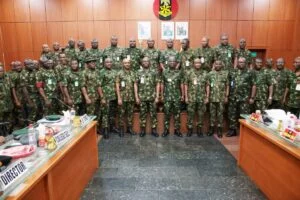
The Chief of Army Staff (COAS), Lt.-Gen. Taoreed Lagbaja, says the Nigerian Army will sustain the utilisation of emerging technologies to enhance efficiency in its operations.
This is contained in a statement by the Director Army Public Relations, Brig.
-Gen. Onyema Nwachukwu in Abuja.Lagbaja said this on Tuesday when he received a position paper on the subject from participants of National Defence College (NDC) Course 31.
The paper is titled: “Emerging Technologies and Operational Efficiency: Implications for the Nigerian Army by 2035”.
He commended the participants for a well researched paper on emerging technologies and its implications for operational efficiency.
The COAS said that the Nigerian army as a sub system of the larger society, was already keying into emerging technologies in its institutions and establishments, adding that it would sustain the development.
He said that employing emerging technologies had provided the Nigerian army with improved surveillance capability, communication, efficient data management, situational awareness and strategic decision-making.
He added that the army could not divorce itself completely from the dynamics of both internal and external environments.
Earlier, the Commandant of NDC, Rear Adm. Olumuyiwa Olotu, said the presentation had unveiled the potential of emerging technologies in significantly impacting on present and future operational engagements of the army.
Olotu said the Nigerian army must continue to adopt and integrate evolving innovations to maintain a competitive edge in the theatres of operations as technologies continue to advance.
He added that the army should also aspire to be a driver of technological changes, while constantly providing new technologies to enhance decision-making and operational efficiency. (NAN)












By Tambaya Julius, Abuja
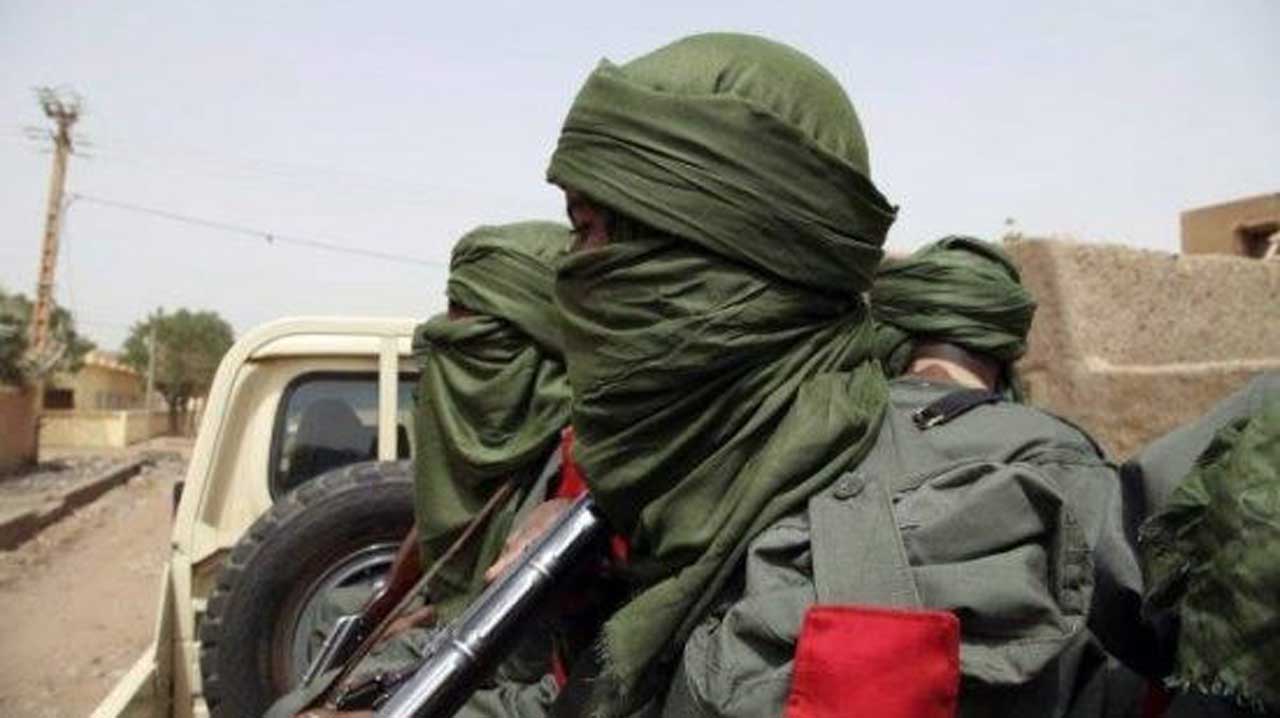
Bandits have contacted the families of farmers abducted in Mariga Local Government Area of Niger State, demanding ₦94 million for their release.
The Chairman of Mariga LGA, Alhaji Aliyu Bagga Muhamadu, disclosed this, said the kidnappers had reached out to relatives of some of the victims and were demanding ₦2 million for each person.
The victims, mostly women, were abducted on September 26 while harvesting groundnuts on farms around Tungan Rimi in Ma’undu-Beri Ward of the council.
They were reportedly working for a farmer under a “harvest and get your share” arrangement when the bandits attacked and took them away.
Muhamadu said information available to the council indicated that one of the abducted women had given birth while in captivity.
He added that security personnel, supported by local vigilantes, had been mobilised to rescue the victims and track down the kidnappers.
However, the Niger State Police Command gave a lower preliminary figure, saying 20 people were abducted at Mukura village in the Kasuwan-Garba district on September 26.
The command said joint security teams were working to rescue the victims and apprehend those behind the abduction.
The differing figures have raised questions about the actual number of people in captivity, as the council chairman’s disclosure of a ₦94 million ransom demand at ₦2 million per victim suggests 47 victims.
Efforts to reach relatives of the victims for their reaction were unsuccessful as of the time of filing this report.
Meanwhile, one week after the incident, the Niger State Government has yet to issue an official statement on the abduction.
By David Torough, Abuja
Suspected bandits have killed a resident and abducted eight people who remain in captivity during an attack on Babban Saura (PW) community in Chikun Local Government Area of Kaduna State.
The attack, which occurred at about 1:00am on Thursday, saw the assailants invade three houses in the community, throwing residents into panic.
A community source said the attackers first raided the residence of an elderly man and abducted two of his children before moving to the residence of a man identified as Sikiru.
The assailants reportedly broke through Sikiru’s fence and gained entry into his compound.
Sikiru allegedly attempted to resist them when they entered his parlour and engaged some of the attackers in a struggle.He was subsequently shot and killed, while his wife and two children were abducted.
The attackers also invaded a neighbouring house and abducted a woman, identified as Maman Mubarak, and her four children.
However, Mubarak was later rescued by soldiers and local vigilantes, while her four children remained in captivity.
The commander of the local vigilantes, Usman Adamu, confirmed that nine people were initially abducted during the attack.
According to him, the vigilantes received a distress call and alerted soldiers, who joined them in pursuing the attackers towards the Eastern Bypass area.
“We received a distress call that bandits had entered Babban Saura PW, and so we informed soldiers who joined us,” Adamu said.
He added that the security personnel succeeded in rescuing Mubarak but were unable to catch the attackers, who escaped with the remaining victims.
Another resident, who identified himself as Anas, said Sikiru had called him after the attackers stormed the community.
When visited, sympathisers had gathered at Sikiru’s residence, while residents expressed concern over the deteriorating security situation in the area.
The Kaduna attack came only days after suspected bandits invaded the nearby Kadaure community, where a man was reportedly killed and cattle rustled.
Efforts to obtain the reaction of the Kaduna State Police Command were unsuccessful, as its Public Relations Officer, DSP Mansur Hassan, could not be reached by phone or had responded to a text message as of press time.
Meanwhile, several travellers were reportedly abducted when armed men suspected to be bandits intercepted two commercial buses along the Owerri-Onitsha Expressway in Mbaitoli Local Government Area of Imo State.
The incident reportedly occurred around the Umunoha axis of the expressway on Thursday morning.
A source, who pleaded anonymity, said the attackers took advantage of slow-moving traffic caused by cattle crossing the highway before stopping the buses and taking passengers away.
The exact number of people abducted in the Imo incident was not immediately established.
The source alleged that similar attacks had occurred along the route in recent weeks, with some victims reportedly released after ransom payments. The claim that a man and his daughter were abducted on the road about three weeks ago and later released after a N29 million ransom could not be independently verified.
The Imo State Police Public Relations Officer, Henry Okoye, had yet to respond to enquiries about the latest incident as of the time of filing this report.
From Attah Ede, Makurdi, and Dan Amasingha, Minna
Fresh fears over the worsening insecurity across the country emerged on Tuesday as more than 65 people were reported abducted in separate incidents in Benue and Niger states, triggering a road blockade by angry residents in Makurdi and renewed calls for intensified security operations.
In Benue State, thousands of women and youths from the Tyo-Mu community in Makurdi Local Government Area barricaded the Makurdi-Gboko Road, protesting the abduction of 18 women who were reportedly kidnapped while travelling to attend a burial ceremony in Kogi State.
The protesters, who gathered in the early hours of Tuesday, blocked vehicular movement around the Tyo-Mu axis, leaving hundreds of motorists stranded for several hours.
Community sources said the women were travelling along the route when they were waylaid by suspected kidnappers around the boundary between Adoka in Benue State and Ankpa in Kogi State.
The abductors were said to have initially demanded ₦30 million for the release of the victims. The community reportedly raised and paid ₦3 million, but the women were not released.
The development sparked outrage, with protesters demanding that the victims be rescued alive and unhurt. Security personnel, including military operatives, were deployed to the area as tension mounted between the protesters and security forces attempting to reopen the highway.
Motorists travelling between Makurdi, Gboko, Katsina-Ala and other parts of the state were forced to park along the road during the protest.
The Special Adviser to the Benue State Governor on Internal Security, Joseph Har, confirmed that an abduction had occurred, although he said he was yet to establish the exact number of victims.
Har said security agencies had been alerted and were working to locate and rescue the victims, adding that the Divisional Police Officer in Adoka and security personnel in surrounding areas were involved in the operation.
He cautioned against night travel along the route, describing it as a security concern.
According to him, rescue operations must be conducted carefully because the location from which kidnappers make telephone calls may differ from where their victims are being held.
The Benue State Commissioner for Information and Orientation, Solomon Iorpev, also confirmed the incident. He said the affected women had hired Ejifa Travel Services to transport them to the burial in Kogi State.
Iorpev said the incident was brought to the attention of the authorities after the affected community commenced the protest. He added that the Commissioner of Police was liaising with the Transport Company and families of the victims to trace the abductees.
He urged the families to remain calm while security agencies worked to secure the victims’ release.
47 Abducted in Niger
In Niger State, no fewer than 47 people, including several women, were reportedly abducted while harvesting groundnuts around Tungan Rimi and Mukura communities in Mariga Local Government Area.
The victims were reportedly taken on Sunday, September 27, and moved through adjoining communities towards forested areas.
Chairman of Mariga Local Government Area, Alhaji Aliyu Bagga Muhamadu, confirmed the abduction and said one of the women reportedly gave birth while in captivity.
He said the abductors had contacted some relatives and demanded ₦2 million for each victim.
Bagga added that military personnel and local vigilantes had been mobilised for a rescue operation. A vigilante was reportedly injured after security personnel and local forces confronted suspected bandits around Alibani village.
The abductors were subsequently said to have moved through the Mangoro-Wamba axis towards the Bariki Forest, also known as Ma’undu, where the victims were believed to be held.
The Niger State Police Command separately confirmed that more than 20 people were abducted at Mukura village in Kasuwan-Garba District of Mariga LGA on September 27.
Police Public Relations Officer, SP Wasiu Abiodun, said joint security rescue efforts were ongoing.
The different figures provided by the Mariga council chairman and the police indicate that authorities were still working to establish the precise number of people abducted and their whereabouts.
Senate Demands Rescue
The fresh abductions came as Senate President Godswill Akpabio called on security agencies to intensify efforts to rescue citizens held captive by armed groups across the country.
Resuming plenary after the Senate’s annual recess, Akpabio said the upper chamber would use its legislative, appropriation and oversight powers to support security institutions and protect vulnerable communities.
He said the Senate could not consider itself free while Nigerians remained in captivity, urging security agencies to pursue the rescue of abducted citizens with renewed vigour.
Akpabio also called for stronger responses to flooding, the rising cost of living and other challenges confronting Nigerians.
With political activities building ahead of the 2027 general elections, he urged political actors to reject violence, intimidation, religious profiling and divisive rhetoric.
The latest incidents in Benue and Niger have once again placed the safety of rural communities, farmers and travellers under intense scrutiny, as families of the abducted continue to await the safe return of their loved ones.



Nigeria’s Oil Reforms will Unlock $50bn Deep Offshore Investments – Tinubu
SharePresident Bola Tinubu said recent reforms in Nigeria’s oil and gas sector are designed to unlock up to 50 billion...
Ododo Condoles Families of NAF Personnel, Armed Forces Over Ondo Crash
ShareFrom Joseph Amedu, Lokoja Kogi State Governor, Ahmed Ododo has commiserated with the families of the Nigerian Air Force personnel...
WUEDA Tasks Journalists on Verification, Development Reporting
ShareFrom Francis Sadhere, Delta The Warri, Uvwie and Environs Special Area Development Agency (WUEDA) has urged journalists to strengthen investigative...
Dauda Joins FG’s Delegation for Nigeria- Ethiopia Leadership Exchange, Learning Visit
ShareFrom Ifeanyichukwu Nwannah, Gusau President Bola Tinubu has approved a high-level Nigerian delegation to Addis Ababa for a leadership exchange...
Civic Education Vital for Future Leaders – Ekiti Commissioner
ShareThe Ekiti State Government said on Tuesday that exposing students to civic education played a vital role in preparing them...
DSIRS Threatens Prosecution of Fake Tax Collectors, Warns Taxpayers
ShareFrom Francis Sadhere, Delta The Delta State Internal Revenue Service (DSIRS) has warned individuals and groups issuing fake tax demand...
Alabere Urges Corps Members to Preserve Yoruba Culture, Uphold Good Character
ShareFrom Ayinde Akintade, Osogbo A revered traditional ruler in Osun State, the Alabere of Abereland, Oba Obafemi Adelakin Mutalib Abiade...
Nigeria Since 1999: When will the Years Begin to Count?
ShareBy Dakuku Peterside Think of a Nigerian born in 1999, the year civilian rule came back. That person is twenty-seven...


Tinubu’s Return: An Update
ShareBy Reuben Abati Exactly a week ago, President Bola Ahmed Tinubu, now jokingly renamed a citizen of Kano with a...


NDLEA Seizes over 10 Tonnes of Illicit Drugs, Recover Firearms in Kogi
ShareBy Elijah Oguche, Abuja The National Drug Law Enforcement Agency (NDLEA) in Kogi said it has seized more than 10...