
Oil & Gas
Nigeria’s Oil, Condensate Reserves Drop to 36.966 bbl in January

The Nigerian Upstream Petroleum Regulatory Commission (NUPRC) says the country’s oil and condensate reserves as at Jan. 1, stands at 36.966 billion barrels.
This represents 31.060 billion barrels for oil and 5.906 billion barrels for condensate.
The Commission’s Chief Executive, Mr Gbenga Komolafe said this at the sixth edition of the Nigeria International Energy Summit (NIES 2023) with the theme, “Global Perspective for a Sustainable Energy Future.
”Komolafe spoke on Thursday at the Upstream Forum tagged “Pivoting Upstream Petroleum Regulations and Investments,” which dwelt on strategies on energy sustainability roadmap.
He said the Associated Gas reserves was at 102.
32 Trillion Cubic Feet (TCF) while Non-Associated Gas reserves was 106.51 TCF, making the total of 208.83 TCF of Natural Gas reserves.He said the oil and condensate reserves declined to about 0.22 per cent compared to Jan. 01, 2022, adding that figures were attributable to low exploration activities and reserves revision arising from subsurface studies in 2022.
On the other hand, the slight increase of 0.10 per cent in gas reserves over Jan. 1, 2022 reserves position was primarily attributed to the revisions arising from additional information from new wells, and field development studies.
“The Commission, empowered by the PIA, has continued to drive the upstream industry’s performance to grow reserves through deliberate oil and gas exploration, deep drilling, prospects maturation, appraisal, field studies and improved oil recovery.
“Our efforts are beginning to manifest in our gas reserves position, and we expect similar manifestation in oil reserves in the very short term,” he said.
According to Komolafe, as a country, Nigeria boasts of 37.064 billion barrels of oil with a daily production of over 1.5 million barrels of oil.
He said in terms of reserves, Nigeria ranked second in Africa, eighth in Organisation of the Petroleum Exporting Countries (OPEC) and 11th in the World.
He said on the other hand, the country ranked first in Africa, sixth in OPEC and fifteenth in the World in terms of crude oil production.
“It is interesting to note that the Gross Domestic Product (GDP) per capita for Nigeria stands at 1,998 dollars, which ranks her at 12th position amongst the OPEC member states and 22nd in Africa.
“Although crude oil contributes over 85 per cent to Nigeria’s foreign exchange earnings, its contribution to GDP is about 6.33 per cent, while Algeria’s is 10.2 per cent, Angola is 30 per cent and Libya at over 50 per cent.
“Nigeria is a nation where needs meet opportunity,” Komolafe said.
Aside the catalogued hydrocarbon potential, he said Nigeria was blessed with potential for blue energy, solar, wind, biomass as well as other sources of renewable energy to leverage the right energy mix in the energy transition regime. (NAN)



By Matthew Dadiya, Abuja
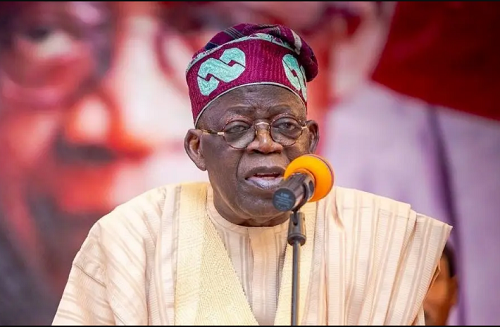
President Bola Tinubu has reassured investors in the energy sector of his administration’s resolve to further enhance the business environment and ensure investment convenience.
The President spoke Wednesday at the inauguration of three milestone projects, including the expanded AHL Gas Processing Plant; the ANOH Gas Processing Plant, and the 23.
3km ANOH – Obiafu-Obrikom-Oben (OB3) Custody Transfer Metering Station Gas Pipeline.In a speech during the virtual inauguration of the projects at the State House, Tinubu also assured citizens that his administration is stepping up its coordination of other landmark projects and initiatives that will ensure the earliest realization of gas-fueled prosperity in the country.
The President, according to a statement by Special Adviser on Media and Publicity, Ajuri Ngelale, noted that the projects were fully in line with the Decade of Gas Initiative and his administration’s vision to grow value from the nation’s abundant gas assets, while concurrently eliminating gas flaring and accelerating industrialization.
“This event is highly significant to our country as it demonstrates the administration’s concerted efforts to accelerate the development of critical gas infrastructure geared at significantly enhancing the supply of energy to boost industrial growth and create employment opportunities.
“It is pleasing that when these projects become fully operational, approximately 500MMscf of gas in aggregate will be supplied to the domestic market from these two gas processing plants, which represents over 25% incremental growth in gas supply.
“In practical terms, this is more gas to the power sector, gas-based industries, and other critical segments of the economy. I, therefore, commend the strategic vision of the NNPC Limited and its partners, Sterling Oil Exploration & Energy Production Company Limited (SEEPCO) and Seplat Energy Plc, for this laudable and value-adding projects,” President Tinubu said.
The President said his government remains determined in its bid to leverage the nation’s vast gas capacity to drive economic growth.
“Aside from the presidential CNG initiative which is aimed at moving the good people of Nigeria away from petrol and diesel as vehicular combustion fuel, significant progress has also been recorded in incentivizing gas development through Presidential Directives.
“The theme of this inauguration – ‘From Gas to Prosperity; Renewed Hope’, must be adopted by all gas-sector participants and would-be investors as a clarion call to ramp up efforts to accelerate investment and developments of projects in the gas sector on a win-win basis.
“I would once again commend the efforts of NNPC Ltd, alongside SEEPCO and Seplat Energy, on this business partnership initiative, and congratulate you all on the successful implementation of the three projects,” the President said.
President Tinubu also reiterated his government’s resolve to continue to provide support in deepening domestic gas utilization, increase national power generation capacity, revitalize industries, and create multiple job opportunities for economic growth.
“Today, I have the singular honour to inaugurate the expansion of the AHL Gas Processing Plant, the ANOH Gas Processing Plant, and the 23.3Km ANOH to Obiafu-Obrikom-Oben (OB3) Custody Transfer Metering Station Gas Pipeline Projects in line with my administration’s resolve to provide energy for Nigerians, and to use our vast natural gas resources to transform Nigeria,” the President stated.
May 15, 2024

The Federal Government says improved security in the Niger-Delta is responsible for the increased crude oil production to 1.65 million barrels per day as against the 1.25 million bpd previously recorded.
Mr Wale Edun, the Minister of Finance and Coordinating Minister of the Economy, stated this in Abuja at a Podcast hosted by Bruit Costaud in collaboration with Ballard Partners of U.
S.A.Reports says the immediate past Minister of Information and Culture, Alhaji Lai Mohammed is the Managing Partner of Bruit Costard, a lobbyist and public relations firm and an affiliate of Ballard Partners.
According to Edun, the quickest way to get revenue for critical infrastructure is to shore up oil revenue.
“This is quickest way of giving the government the needed revenue to address our urgent needs.
“The government doesn’t have enough revenue for critical infrastructure and social services which are crucial to Nigerians now.
“The prices are still elevated and as you know in June 2023, the oil production and sales were roughly 1.25 million barrels per day.
“Now, it is up to 1.65 million barrels per day, that is one source of bringing in dollars and revenue into the government coffers that is non-inflationary,’’ Edun said.
Edun added that non-oil revenue as well as revenues from taxation were also critical to government.
“If you know about Mr President’s antecedent, the first thing he did in Lagos as governor was to get hold of the revenue.
“What he did was to deploy digitisation. He used the latest technology to block the leakages and to improve the efficiency of monitoring and collection.
This is exactly the same thing we are doing at the federal level now.
“The revenue of the Federal government has been totally revamped.
“There has been application of technology to ensure what is due to the federal government, particularly from its various revenue-earning arms, agencies, companies, and enterprises is not taken,’’ he said.
The minister said that plans were ongoing to give incentives to small, medium and larger businesses. (NAN)

Dangote Petroleum Refinery has commenced production of diesel and aviation fuel.
Mr Anthony Chiejina, Group Head, Corporate Communications, Dangote Group, confirmed this in a statement to newsmen in Lagos.
Chiejina quoted the President of Dangote Group, Alhaji Aliko Dangote, to have elatedly thanked President Bola Ahmed Tinubu for his support, encouragement and thoughtful advice towards the actualisation of this project.
Dangote also thanked the Nigerian National Petroleum Company Ltd.
, the Nigerian Upstream Petroleum Regulatory Commission (NUPRC), Nigerian Midstream and Downstream Petroleum Regulatory Authority (NMDPRA) and Nigerians for their support and belief in the historic project.According to him, “We thank President Tinubu for his support and for making our dream come true.
“This production, as witnessed today, would not have been possible without his visionary leadership and prompt attention to details.
“His intervention at various stages cleared all impediments, thereby accelerating the actualisation of the project.
“We also thank the NNPCL, NUPRC and NMDPRA for their support.
“These organisations have been our dependable partners in this historic journey.
“We also thank Nigerians for their belief and support in this project,” he said.
Dangote said: “We have started the production of diesel and aviation fuel, and the products will be in the market before the end of the month.
“This is a big day for Nigeria. We are delighted to have reached this significant milestone.
“This is an important achievement for our country as it demonstrates our ability to develop and deliver large capital projects.
“This is a game changer for our country, and I am very fulfilled with the actualisation of this project.
“The refinery has so far received six million barrels of crude oil at its two SPMs located 25 kilometres from the shore.
“The first crude delivery was done on Dec. 12, 2023, and the 6th cargo was delivered on Jan. 8, 2024,” he added.
He said that the refinery can load 2,900 trucks a day at its truck-loading gantries.
He added that the products from the refinery will conform to Euro V specifications.
Dangote boss said that the refinery design complies with the World Bank, US EPA, European emission norms, and Department of Petroleum Resources (DPR) emission/effluent norms. State-of-the-art technology.
“I must extend our sincere appreciation to our Bankers and financiers, both local and offshore, who demonstrated a great deal of patience, in seeing us through many difficult times.
“In the same vein, we thank the Government of Lagos State, under the leadership of Babajide Sanwo-Olu, who has been incredibly proactive in ensuring that the many challenges we encountered in the course of executing this project were quickly resolved.
“I thank him immensely.
“I also sincerely thank our host communities and their traditional leaders for their sustained patience, forbearance, and admirable willingness to work with us to find amicable and win-win resolutions to the many issues we have had to deal with as the construction of this huge facility progressed.
“Our staff have also contributed so immensely to the success of this project. I thank them profusely,” Dangote added.(NAN)
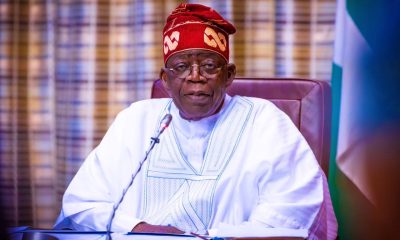

Tinubu Establishes c’ttee on Green Economic Initiatives, Appoints Ajuri as Special Envoy
Share President Bola Tinubu has approved the establishment of a committee to oversee the Green Economic Initiative, known as the Presidential...


ASUU Kicks as FG Unveils Tertiary Institutions’ Governing Council
ShareA few days after the Academic Staff Union of Universities gave the Federal Government an ultimatum over the failure to...


Sacrifice and Selflessness as Hallmark of Leadership
ShareBy Lawrence Onoja It gives me great pleasure and | am truly honoured to be asked to serve as Guest...


Para Badminton: Bolaji, Chigozie qualify for Paris 2024 Paralympics
ShareThe duo of Mariam Eniola Bolaji and Jeremiah Chigozie have qualified for the Paris 2024 Paralympic Games coming up from...


FCTA Moves to Curb Medical Tourism
ShareBy Laide Akinboade, AbujaFederal capital Territory Administration (FCTA) has pledged to provide the necessary support for the successful completion and...
Ortom, Ode, Asemakaha Felicitates With Alia on 58th Birthday
ShareFrom Attah Ede, Makurdi Former Governor of Benue State, Chief Samuel Ortom, the incumbent Deputy Governor, Barr Sam Ode and...


NAICOM, RMAFC Collaborate on Economic Diversification
ShareBy Tony Obiechina, AbujaThe Commissioner for Insurance/CEO, Mr. Olusegun Ayo Omosehin, and his management team have met with the members...
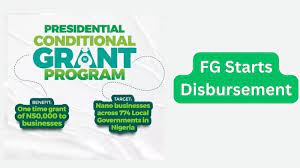

22,000 Beneficiaries to Get N50,000 Nano Businesses Grant in Kogi
ShareFrom Joseph Amedu, LokojaNo fewer than 22,000 beneficiaries in Kogi will get N50,000 each, under the Presidential Conditional Grant Scheme...

CBN Unveils Strategy to Boost Remittances
ShareBy Tony Obiechina, AbujaThe Central Bank of Nigeria (CBN) has activated plans to double foreign-currency remittance flows through formal channels...


Accountant General Declares N318.5b Revenue Inflow in First Quarter
ShareBy Ubong Ukpong, AbujaThe Accountant General of the Federation, Mrs Oluwatoyin Madein on Wednesday said total revenue inflows to the...