
BUSINESS
NIMASA Boosts Maritime Security with Special mission Vessels’ Crew Graduates


From Anthony Nwachukwu and Dooyum Naadzenga,, Lagos
A crew of 30 specially trained personnel to operate the special
mission vessels of the recently launched Integrated National Security
and Waterways Protection Infrastructure, called the Deep Blue Project,
has been certified for deployment.
Disclosing this during their graduation ceremony, the
Director-General of the Nigerian Maritime Administration and Safety
Agency (NIMASA), Dr. Bashir Jamoh, reiterated that the facility, which
is the main maritime component of the project, is being manned by
proficient officers from the Nigerian security services.
According to Jamoh, who was represented by the agency’s Executive
Director, Operations, Mr. Shehu Ahmed, the graduation of the 30
officers trained in various parts of the globe marked a significant
addition to the team of competent personnel manning assets under the
maritime security scheme.
“This event is remarkable,” Jamoh noted. “It guarantees us
competent manpower required for the special mission vessels. It is a
further indication of our commitment to bequeathing a crime-free
maritime domain to Nigerians and the global maritime community.”
He added, “Early in the year, and in line with a presidential
directive, we deployed the special mission vessels and the fast
interceptor boats to the Lagos Port Secure Anchorage Area. But the
event of today takes us further to the full deployment of the two
special mission vessels with fully trained and certified crew.”
The crew is said to have concluded localised training and terrain
familiarisation courses after their initial technical-based training
abroad, a statement from the NIMASA Assistant Director, Public
Relations, Osagie Edward, further disclosed.
Coordinator of the Deep Blue Project, who is also NIMASA’s
Director of Planning, Research and Data Management Services Department
(PRDMSD), Mr. Anthony Ogadi, disclosed that the crew had nine foreign
and 10 local trainings on various platforms of the Deep Blue Project
under the supervision of the project contractor, HLSI.
According to him, some local trainings for the operation of other
assets under the maritime security scheme, including the special
mission aircraft, unmanned aerial vehicles, and armoured personnel
carriers were simultaneously on-going at Ikeja and Ojo in Lagos, and
Elele in Rivers State.
Meanwhile, on behalf of the crew, Captain of DB Lagos, Capt. Uche
Aneke, and that of DB Abuja, Capt. Mohammed, thanked NIMASA for
facilitating the training and assured that they would carry out their
duties with a high sense of proficiency and professionalism.






By David Torough, Abuja
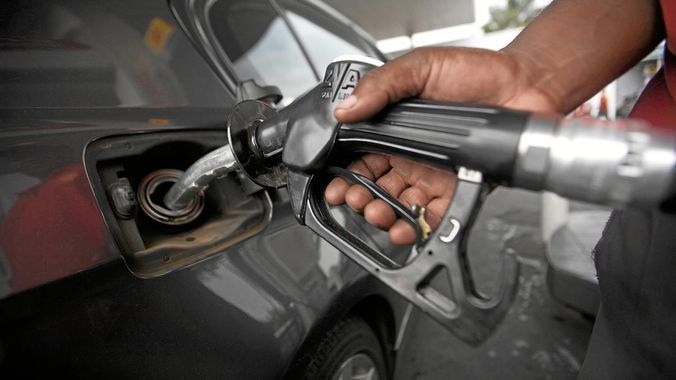
The Dangote Petroleum Refinery has increased the gantry price of Premium Motor Spirit (PMS), popularly known as petrol, to ₦1,175 per litre, marking the third upward adjustment in fuel prices within one week and raising fresh concerns over a possible sharp escalation in pump prices nationwide.
The latest revision, communicated to marketers and depot operators on Monday, represents an increase of ₦180 from the ₦995 per litre ex-depot price announced on Friday, translating to an 18.
1 per cent rise in just three days.Industry sources said the refinery also reviewed the gantry price of Automotive Gas Oil (AGO), commonly known as diesel, upward to ₦1,620 per litre.
The development follows earlier price adjustments that saw the refinery raise petrol prices from ₦774 to ₦995 per litre last week, amid growing volatility in the global oil market.
Crude oil prices have also climbed sharply, hitting $104.4 per barrel from $92.69 recorded a day earlier, largely driven by escalating geopolitical tensions in the Middle East.
Reacting to the development, the Petroleum Products Retail Outlets Owners Association of Nigeria (PETROAN) warned that the price of petrol could rise to nearly ₦2,000 per litre, while diesel may approach ₦3,000 per litre if the ongoing conflict in the Middle East persists.
The National President of PETROAN, Billy Gillis-Harry, gave the warning on Monday in Port Harcourt while delivering a keynote address titled “Deconstructing Energy Trilemma” at an event organised by the Department of Petroleum Economics and Policy Studies, Ignatius Ajuru University of Education.
He cautioned that sustained increases in petroleum product prices could worsen inflation, trigger job losses, and deepen economic hardship for Nigerians, while significantly increasing transportation costs and the prices of goods and services across the country.
According to him, petrol sold at about ₦774 per litre before the current Middle East crisis but now sells for above ₦1,000 per litre, representing an increase of about 30 per cent.
Similarly, diesel, which previously sold at around ₦950 per litre, has risen to about ₦1,400 per litre and above, reflecting an increase of nearly 49 per cent.
Gillis-Harry attributed the surge in global oil prices to the ongoing conflict involving Israel, the United States, and Iran, noting that sustained drone and missile attacks are threatening key oil routes and infrastructure, thereby creating uncertainty in global energy supply chains.
“With no clear end to the conflict, petroleum product prices in both international and domestic markets are expected to rise sharply in the coming days,” he warned.
He urged the Nigerian National Petroleum Company Limited (NNPC Ltd.) to urgently strengthen the country’s domestic refining capacity to shield Nigeria from global market shocks.
Specifically, he appealed to the Group Chief Executive Officer of NNPC Ltd., Bayo Ojulari, to facilitate the immediate resumption of operations at Nigeria’s government-owned refineries, particularly the Port Harcourt Refinery’s Area 5 plant and the Warri Refinery, which had earlier operated briefly before shutting down again for profitability assessments.
According to him, rehabilitating Nigeria’s refineries for domestic production would reduce the country’s exposure to international market volatility and enhance national energy security.
Despite the challenges, Gillis-Harry expressed optimism that ongoing economic reforms by the administration of President Bola Tinubu would eventually bring relief to Nigerians and stimulate long-term economic growth.
By David Torough, Abuja
Fuel prices across Nigeria have surged close to the N1,000 per litre mark, triggering concern among motorists and businesses, as regulators attribute the development to market forces while energy experts warn that global tensions could push prices even higher.
The Nigerian Midstream and Downstream Petroleum Regulatory Authority (NMDPRA) said fluctuations in the pump price of Premium Motor Spirit (PMS), popularly known as petrol, were the result of supply and demand dynamics under the country’s fully deregulated downstream petroleum sector.
Speaking in Abuja, the authority’s spokesperson, George Ene-Ita, said variations in fuel prices across retail outlets were not due to regulatory interference but reflected prevailing market conditions.
According to him, Nigeria has been operating a fully deregulated petroleum products market since the inception of the current administration, allowing market forces to determine pricing.
“Pump price vagaries are purely as a result of market dynamics,” Ene-Ita said, adding that deregulation was designed to encourage competition, efficiency and increased investment in the downstream oil and gas sector.
Across several cities, petrol prices have risen sharply in recent days. While the product previously sold between about N875 and N880 per litre in some locations, independent marketers now sell it for between N960 and N1,000 per litre or more. Stations operated by the Nigerian National Petroleum Company Limited (NNPC Ltd.) have also adjusted prices to around N960 per litre in many outlets.
In Lagos, checks showed prices ranging between about N1,005 and N1,040 per litre at different filling stations, with motorists scrambling to secure supplies amid fears of further increases.
Energy experts say the rising prices are largely driven by developments in the global oil market, particularly the recent surge in crude oil prices linked to geopolitical tensions in the Middle East.
The Chief Executive Officer of the Centre for the Promotion of Private Enterprise, Dr Muda Yusuf, said the cost of crude oil remains the most critical factor influencing petrol prices.
He explained that global crude prices had jumped from about 65 dollars per barrel to nearly 92 dollars within a short period, raising the cost of refined petroleum products worldwide.
Yusuf noted that even domestic refineries were affected because crude oil used for refining was typically priced at international market benchmarks.
He added that although the Dangote Refinery is located in Nigeria, a significant portion of the crude it processes is sourced externally, making it vulnerable to global price volatility.
“About 70 per cent or more of the crude used by the refinery is sourced externally,” he said.
Despite the rising prices, Yusuf said the refinery had improved Nigeria’s energy security by stabilising supply and reducing the likelihood of the fuel shortages and long queues that once plagued the country.
“If we did not have the Dangote Refinery, the situation would likely have been much worse. Petrol could be selling for about N1,500 per litre or more,” he said.
Similarly, energy policy expert Prof. Ken Ife said Africa’s heavy dependence on imported petroleum products continued to expose the continent to global price shocks.
He said Nigeria currently had about 445,000 barrels of crude allocated for domestic refining but stressed that local refineries still required more consistent crude supply to operate at optimal capacity.
The National President of the Petroleum Products Retail Outlets Owners Association of Nigeria (PETROAN), Dr Billy Gillis-Harry, also warned that escalating tensions around the strategic Strait of Hormuz were pushing global petroleum prices upward.
He explained that the maritime corridor accounts for nearly 30 per cent of global crude shipments and that persistent attacks and hostilities in the region pose significant risks to global energy supply chains.
According to him, before the crisis escalated petrol sold at about N774 per litre, but prices have since climbed to between N950 and N970 per litre, while diesel has risen sharply from about N950 to nearly N1,400 per litre.
He warned that if geopolitical tensions persist, petrol prices could approach N1,500 per litre while diesel may exceed N2,000 per litre, with severe implications for transportation, manufacturing and inflation.
Economic analyst Dr Chijioke Ekechukwu urged the Federal Government to mitigate the impact by supplying crude oil to local refineries at subsidised rates.
He said such a policy would allow refineries to produce and sell petroleum products locally at relatively stable prices while the country continues exporting crude oil at international market rates.
Ekechukwu also called for stricter enforcement of domestic crude supply obligations and tighter border controls to curb the smuggling of refined petroleum products to neighbouring countries.
According to him, strengthening local refining and safeguarding domestic supply will help shield Nigerian consumers from sudden price shocks in the global energy market.
Experts agree that until global oil prices stabilise and geopolitical tensions ease, Nigerians may have to contend with continued volatility in fuel prices.

PalmPay, a financial technology company, says it will bridge the gender gap in tech through a three-day digital finance and technology training programme for young Women.
This was part of activities to commemorate the International Women’s Day (IWD) 2026.
The company, in a statement on Tuesday in Lagos, said the initiative, tagged “Purple Woman 3.
0”, was designed to equip women with practical and job-ready skills needed to thrive in the digital economy.PalmPay noted that the training, scheduled to hold from March 5 to March 7, would bring together 100 selected women aged between 18 and 30 through a competitive application process.
It explained that participants would undergo intensive, hands-on training in digital finance and technology, facilitated by industry experts, to enhance their employability and career prospects.
According to the company, the programme aligns with the theme of International Women’s Day 2026, which focuses on the need to empower women through access to skills and opportunities.
PalmPay, since its launch in 2024 and through the Purple Woman initiative, had trained 150 women in key areas such as Data Analysis, Software Engineering and Product Management.
It noted that outstanding participants in the 2026 edition would also have the opportunity to secure internship placements with the company for practical industry experience.
The firm reiterated its commitment to supporting women’s inclusion in technology through continuous capacity-building programmes.

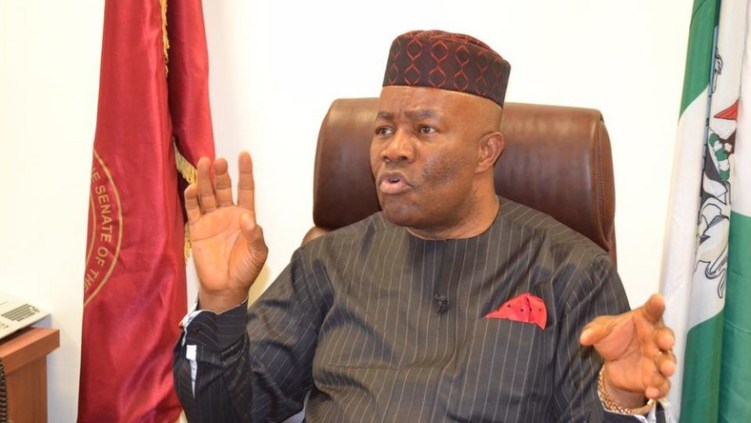
Akpabio Donates N100m for Scholarship Empowerment in Enugu
ShareSenate President, Godswill Akpabio, on Friday, reiterated the importance of education, even as he announced a personal donation of N100...
Mkar Varsity Launches Student Innovation Hub
ShareThe University of Mkar, Benue State, has established a Students Innovation Hub aimed at empowering students to develop practical solutions...

FG Partners Firm on Nationwide Drive to Fix Literacy Gaps in Colleges
ShareThe Federal Government has renewed a collaboration with a private firm to tackle persistent literacy gaps in Nigerian schools by...
NAOSS Commends Abiodun’s Infrastructural, Educational Devt Drive
ShareThe National Association of Ogun State Students (NAOSS) has commended Governor Dapo Abiodun for his relentless efforts in developing infrastructure,...


Foundation Certificate in Applied Health to Strengthen Healthcare Workforce – Bugaje
ShareThe Executive Secretary, National Board for Technical Education (NBTE), Prof. Idris Bugaje, said the proposed foundation certificate in Applied Health...


Alia Declares War against Insecurity in Benue
ShareGov. Hyacinth Alia has vowed to deal with insecurity and restore lasting peace in Benue State. This is contained in a statement on Monday in Makurdi signed by Solomon Iorpev,...


Galatasaray Coach Sets Target for Osimhen, Others Ahead of Liverpool Clash
ShareGalatasaray Coach, Okan Buruk has set a target for his players ahead of tonight’s clash with Liverpool in the Champions League Round of 16 first legs in Istanbul, with the...


Iran Names Mojtaba Khamenei New Supreme Leader after Father’s Death
ShareIran has named Mojtaba Khamenei as the country’s new Supreme Leader following the killing of his father, Ali Khamenei, according to state media...
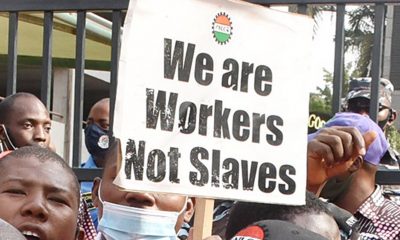

Workers Protest 11 Months Unpaid Salaries in C’River
ShareLocal Government Workers drawn from the 18 council areas of Cross River on Monday staged a peaceful protest over 11 month’s unpaid salaries. The workers who said they were newly employed staff members under...


JAMB Pays CBT Centres N1.57bn for 2026 UTME Registration
ShareThe Joint Admissions and Matriculation Board has remitted a total of N1,570,671,200 to Computer-Based Test centres that participated in the 2026 Unified Tertiary Matriculation Examination registration exercise....