
Metro
NiMet Predicts 3-Day Thunderstorms, Sunshine from Monday

The Nigerian Meteorological Agency (NiMet) predicted on Sunday that there would be three days of thunderstorms and sunshine across the country from Monday to Wednesday.
NiMet`s weather outlook released in Abuja predicted sunny skies to prevail over the northern parts of the country on Monday with chances of isolated thunderstorms over parts of Taraba in the morning hours.
It stated that isolated thunderstorms would also be recorded in the southern parts of Adamawa and Kaduna states later on Monday.
“Cloudy skies with spells of sunshine should prevail over the North-central states during the morning hours.
“There are prospects of isolated thunderstorms over parts of Kogi, Benue, Kwara, Nasarawa, Plateau and the FCT during the afternoon and evening hours.
“Cloudy skies should prevail over the inland and the coastal cities of the South with prospects of isolated thunderstorms over coastal parts of Ondo, Akwa Ibom, Delta, and Cross River states during the morning hours,’’ it stated.
NiMet added that there should be isolated thunderstorms over parts of Ogun, Osun, Imo, Abia, Enugu, Ebonyi, Rivers, Bayelsa and Lagos states during the afternoon and evening hours.
Sunny skies are anticipated over the northern parts on Tuesday within the forecast period with chances of isolated thunderstorms over parts of southern Taraba during the afternoon and evening hours.
There should be cloudy skies with intervals of sunshine over the North-central states during the morning hours, it stated.
“As the day progresses, there are prospects of isolated thunderstorms over parts of Niger, Kogi, Kwara, Nasarawa and the FCT.
“Cloudy skies should prevail over inland and coastal cities of southern parts of the country with prospects of isolated thunderstorms in parts of Abia, Imo, Enugu, Anambra, Ebonyi, Delta, Bayelsa, Rivers, Akwa Ibom, Cross River and Lagos states in the morning hours.
“Later in the day, isolated thunderstorms are anticipated over parts of Abia, Enugu, Imo, Ebonyi, Edo, Ogun, Ondo, Ekiti, Osun, Lagos, Rivers, Akwa Ibom, Bayelsa, Cross River and Delta states,’’ it stated.
The weather agency forecasted sunny skies over the northern parts throughout Wednesday.
It further forecasted cloudy skies with intervals of sunshine to prevail over the North-central states within the forecast period.
“The inland and the coastal cities of the southern parts should be predominantly cloudy with chances of isolated thunderstorms over parts of Cross River, Akwa Ibom and Delta states during the morning hours.
“Later in the day, isolated thunderstorms are anticipated over parts of Abia, Anambra, Enugu, Imo, Ebonyi, Edo, Oyo, Ogun, Ondo, Ekiti, Osun, Lagos, Rivers, Akwa Ibom, Bayelsa, Cross River and Delta states, “ it stated. (NAN)


By Ebuka Ukoh
This columnist explores African public health, institutions, and governance, connecting global lessons to local challenges to promote systemic reform and investment in Nigeria’s human capital.
Japan has just crossed an extraordinary threshold.
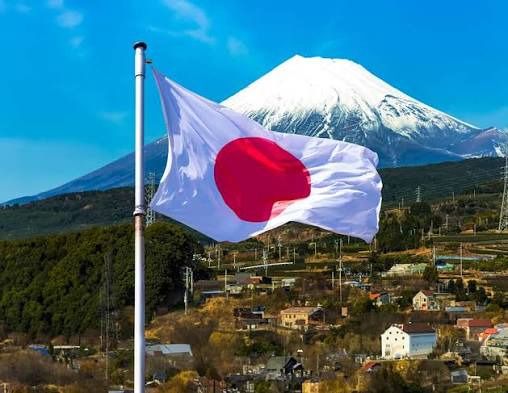
As of September 1, the country had 107,677 people aged 100 or older, the first time its centenarian population has exceeded 100,000.
In 1963, Japan counted only 153 centenarians. The number has now risen for 56 consecutive years. Women account for nearly 88 per cent of the total today.One hundred and seven thousand, six hundred and seventy-seven people have lived for at least a century. I read that number and marvelled. Then, as a Nigerian, another thought entered my mind. Who will build the health systems that will enable our own people to grow old?
Not merely hospitals. Systems. Because perhaps one of the greatest differences between nations is not whether their citizens dream of longevity. We all do. It is whether their institutions make long life more possible.
Longevity Isn’t an accident
We should be careful not to romanticise Japan.
Its extraordinary longevity isn’t due to hospitals alone. Diet, genetics, sanitation, education, income, social conditions, public health, lifestyle and community all matter. An ag(e)ing population also presents Japan with enormous challenges, including rising healthcare needs, pension pressures, and a shrinking workforce.
But 107,677 centenarians do not emerge from nowhere. Somewhere along the journey from birth to 100, a society has to work. Children must survive infancy.
Mothers must survive childbirth. Vaccines must reach people. Clean water must flow. Diseases must be detected. Doctors must be trained. Nurses must be retained. Medicines must be available. Emergency services must function. And when people grow old, a system must still be able to care for them.
Longevity is therefore not simply a biological achievement. It is partly an institutional achievement. That is what Nigeria should think about.
We have the young people
Nigeria has something many ageing societies increasingly wish they had: youth. Most of our population is young. That is routinely described as our demographic advantage. And it can be. But a young population is not automatically a demographic dividend. It is only potentially so.
The dividend arrives when young people are educated, healthy, productive, skilled, and able to build institutions stronger than those they inherited. Otherwise, an unplanned demographic dividend can be disappointing. The question, therefore, is not simply how many young Nigerians we have.
It is: What are we preparing them to build? Who among today’s children will become the epidemiologists who stop the next outbreak? Who will become the nurses who transform maternal care? Who will design our emergency-response systems? Who will build diagnostic laboratories in communities where people currently travel hours for basic tests? Who will develop Nigerian medical technologies? Who will modernise primary healthcare? Who will research diseases that disproportionately affect Africans? Who will build the hospitals in which Nigerians will one day turn 100?
They are probably already here.
Some are sitting in overcrowded classrooms. Some are studying by generators. Some are brilliant children whose parents cannot afford university fees. Some are medical students wondering whether the future they want exists in Nigeria. And some of the doctors and nurses we have already trained are preparing to leave our shores for greener pastures.
We cannot keep training other people’s health systems
Nigeria’s health workforce problem should trouble us.
The WHO’s 2025 health-system profile says Nigeria’s supply of doctors, nurses, and midwives remains below recommended levels, with shortages compounded by uneven distribution, poor working conditions and the movement of health professionals abroad.
This is painfully ironic. Nigeria can educate a child from primary school. Subsidise parts of that child’s education. Train that child to become a doctor or nurse. Then create working conditions so frustrating that another country receives the mature product of that investment.
The Nigerian professional is not wrong for seeking a better life. People have families. They have ambitions. They want functioning equipment, professional development, reasonable compensation, and environments where doing their jobs doesn’t require daily heroism.
So perhaps the better question is not: Why are they leaving?
It is: What have we built that should persuade them to stay? Patriotism cannot substitute indefinitely for functioning institutions. A surgeon cannot operate with patriotism. A laboratory cannot run on patriotism. An ambulance cannot be fuelled with patriotism. And a nurse cannot feed a family with applause.
A hospital is built long before brick and mortar arrive
When politicians speak about healthcare infrastructure, we often see buildings. A new hospital is commissioned. There are cameras. There is a ribbon. There are speeches. But a health system is neither concrete nor brick and mortar. A beautiful building without nurses is architecture. An intensive-care unit without working equipment is just a room. An ambulance without an emergency network is a mere vehicle. A medical school without research investment is an incomplete promise. A hospital’s most important infrastructure is ultimately human. That human infrastructure takes decades to build. The consultant physician of 2050 may be sitting in a secondary school today. The biomedical engineer who will design equipment suited to Nigerian hospitals may currently be a child taking apart broken electronics somewhere in Aba.
The public-health specialist who will prevent an epidemic may be sitting in a classroom in Kano. The nurse who will hold a 99-year-old’s hand may not yet have been born. Nation-building requires the imagination to invest in people whose contributions may mature long after the politicians making today’s decisions have left office.
Real meaning of centenarian
Japan’s milestone should therefore not make us ask whether Nigerians can live to 100. Some already do. Nor should we turn longevity into a competition between countries. The better question is whether an ordinary Nigerian child born today can reasonably expect to live, supported by institutions that value survival.
Will pregnancy be safer? Will childbirth be safer? Will infancy be safer? Will cancer be detected earlier? Will emergency care arrive faster? Will people treat the elderly as human beings rather than burdens? Will quality healthcare depend less on whether your surname opens doors or your bank account can purchase treatment abroad? That is the journey from birth to 100.
And we must understand something else. The health system we refuse to build today is the one we will desperately need tomorrow, and won’t have.
Politicians grow old too. Civil servants grow old. Business leaders grow old. Presidents grow old. Governors grow old. The body eventually makes everyone equal.
Our young are the infrastructure
Nigeria’s youth are frequently described as a problem to be managed. Too many are unemployed. Many more are leaving. So are the frustrated. Countless have lost faith in their nation. Perhaps we should see them differently. They are the people who must build what does not yet exist.
Our responsibility is to give them the education, healthcare, laboratories, mentorship, research funding, employment opportunities, and functioning institutions that let their abilities become national assets.
Japan’s 107,677 centenarians tell one story about a country growing older. Nigeria’s millions of young people tell another story about a country still extraordinarily young. Neither youth nor longevity guarantees prosperity. Both require planning.
One country must ask how it will care for an ageing population. Nigeria must ask whether it will prepare its young population to build a country where growing old is worthwhile. That is our assignment. Because somewhere in Nigeria today is a child who could transform African medicine.
Somewhere is tomorrow’s surgeon. Tomorrow’s nurse. Tomorrow’s scientist. Tomorrow’s hospital administrator. Tomorrow’s biomedical engineer. Tomorrow’s public-health leader. The question is whether we will find them, educate them, equip them, and give them a country where they can do their best work.
Japan has more than 107,000 people who have reached 100. I celebrate them.
But in Nigeria, I think about the future. Who will build the health systems that will carry our children safely into old age? The answer is already among us. We have to stop wasting them.
Ukoh, a PhD student and coauthor of Built By The Ancestors, writes from his base in New York, the United States.
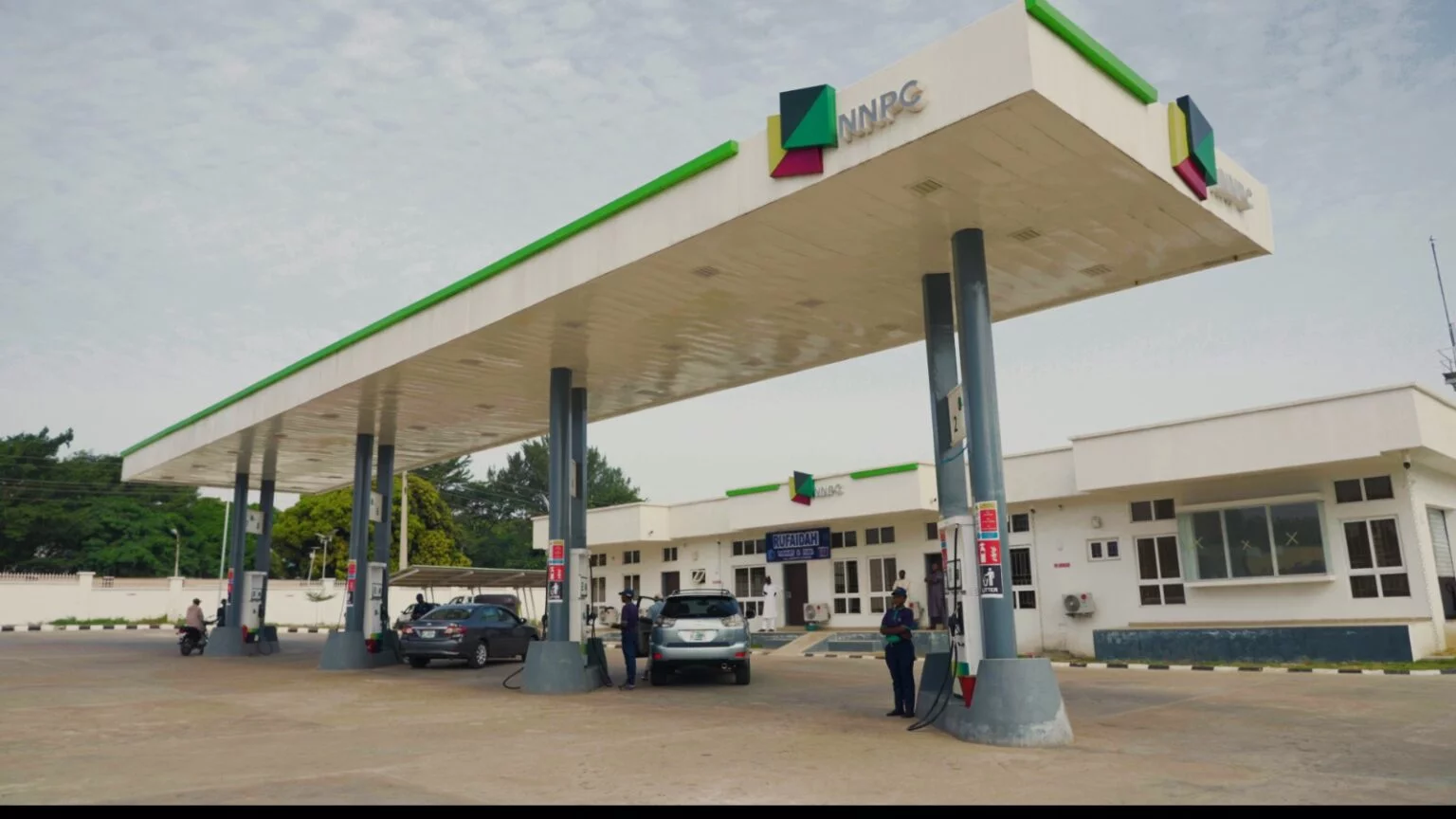
Many motorists said in spite of the discount in pump price of petrol at the Nigerian National Petroleum Company Ltd (NNPCL) filling stations, they are yet to access the product.
The motorists attributed the reason to not having the NNPCL mobile application.
They said the company told them that the discounted fuel could only be accessed through the app.
The Minister of Finance and Coordinating Minister of the Economy, Taiwo Oyedele, had announced the discount on petrol prices and subsidy-related products.
According to Oyedele, the pump price of petrol will sell for #1,350, the landing cost at all NNPCL filling stations across the country.
The discount, according to the minister which will be for a month, is aimed at giving Nigerians some measure of relief.
Checks in Abuja, observed that petrol was being sold at N1,405 per litre to customers paying directly at the pumps, while those using the company’s mobile application paid N1,339 per litre.
A motorist in Abuja, Babatunde Atoye, told NAN said the discount was not automatically available to customers at filling stations.
Atoye said motorists had to access the discount through the company’s mobile application.
A petrol attendant, who pleaded anonymity said motorists and consumers could only make payment via the application.
She said it was not yet directed at motorists and consumers at the NNPC Ltd. through pump stations.
Another motorist, Abdulrahim Malik, said customers could only benefit from the N66-per-litre discount by downloading the application.
George Ochendu, a stakeholder, commended the Federal Government for reducing the cost of petrol but expressed concern that many Nigerians may not benefit from the discount due to network challenges.
Toyin Daniel, a consumer, said motorists that purchased petrol directly at the pumps without using the application do not automatically enjoy the discount.
Jide Ojo, a public analyst, said the reduction would have limited impact because of the relatively small number of the company’s outlets compared with other retail stations.
According to him, there is no economic justification for motorists to travel long distances and spend valuable time searching for NNPCL filling stations to benefit from the discount.
He said the petrol price ceiling of N1,339 per litre would still be unaffordable for many Nigerians, who required a more significant reduction in energy costs.
Ojo also called for clarity on the Federal Government’s plans to ensure that the benefits of cheaper petrol reached Nigerians across the country.
The analyst expressed concern over reports that the Dangote Refinery was not receiving sufficient crude oil locally to meet its requirements, forcing it to rely partly on imported crude.
Ojo said that Nigeria’s reported 20 per cent equity interest in the Dangote Refinery could provide an avenue for greater transparency and accountability in monitoring the volume of crude supplied.
He said restricting access to cheaper petrol to selected filling stations could lead to queues, wasted working hours and additional transportation costs.
Dr Aliyu Illias, an economist, said Nigeria had yet to fully harness the potential of its petroleum sector since independence.
Illias said the country had made only average progress in developing its oil and gas industry in spite of having explored the resource for about six decades.
He said that Nigeria had failed to establish sufficient refineries, both in the public and private sectors to maximise the value of its crude oil resources.
According to him, the country has also not adequately developed other products and by-products from petroleum beyond petrol, diesel and related fuels.
The expert said that the country refineries were not operational, leaving the Dangote Refinery as a major development in domestic refining.
He said its impact on the livelihoods of citizens had not been as significant as expected.
Illias also expressed concern that Nigeria was only beginning to embrace Compressed Natural Gas (CNG) as an alternative fuel at a time when some countries were increasingly shifting towards Electric Vehicles.
According to him, Nigeria has yet to take full advantage of its abundant gas resources, in spite of years of gas flaring.
He said that the country should have developed more refineries across its states to meet domestic demands and generate revenue through the export of refined petroleum products.
The expert said that the global shift away from fossil fuels posed a long-term challenge for Nigeria.
He stressed the need to diversify the economy and maximise the benefits of its oil and gas resources while demands remained significant.
Illias said that Nigeria had yet to achieve the level of development and economic transformation expected from a country with such extensive petroleum resources. (NAN)

By Elijah Oguche, Abuja
The National Drug Law Enforcement Agency (NDLEA) in Kogi said it has seized more than 10 tonnes of illicit drugs and recovered 40 firearms and 874 cartridges from suspected drug dealers since late 2025.
State Commander, NDLEA in Kogi, Umar Yahuza, disclosed this in Lokoja while speaking with newsmen after the handover of the arms and ammunition to the National Centre for the Control of Small Arms and Light Weapons.
Yahuza said the recovered weapons comprised five pistols and 35 other firearms, adding that several suspects had also been arrested in connection with drug trafficking and related offences.
He said many of the suspects were currently facing trial at the Federal High Court in Lokoja, with more than 80 per cent of those standing trial being males.
According to him, cannabis sativa constituted the largest quantity of illicit drugs seized by the command, followed by tramadol, cocaine and methamphetamine.
Yahuza said some of the firearms were recovered from suspected drug dealers involved in cannabis cultivation, who acquired the weapons to confront security personnel during enforcement operations.
He added that the command also recovered counterfeit Naira, Dollar and Pound notes, as well as counterfeit drugs, which were handed over to relevant agencies for further investigation and action.
The commander said that the recovery of the arms and ammunition demonstrated the strong collaboration among security agencies in the state.
He assured that the command would continue to pursue drug dealers and other criminal elements, urging members of the public to provide useful information to security agencies.
Yahuza also advised residents against assisting criminals, stressing that illicit drug trafficking and abuse contributed to insecurity, kidnapping and other forms of criminality.
Also speaking, retired Commander Jerry Omodara, Security Adviser to Gov. Ahmed Ododo, commended the NDLEA for its efforts in combating illicit drugs and other forms of crime in the state.
Omodara said the recovery of the weapons and drugs was significant to the security of residents, noting that the NDLEA had contributed to the broader fight against crime beyond its core mandate of drug control.
He said the state government remained committed to a zero-tolerance policy toward insecurity and criminality, while security agencies continued to collaborate through intelligence sharing and joint operations.
The security adviser attributed the relative peace in the state to sustained security operations, regular patrols and effective collaboration among security agencies.
He said efforts were also ongoing to recover arms from criminal elements operating in forests and other locations, adding that some bandits had started surrendering their weapons.
Omodara called for increased Federal Government support for security operations in the North-Central region, describing Kogi as strategically important because of its road and water links between northern and southern Nigeria.
He welcomed the strengthening of military formations in the state, saying the deployment of additional battalions and Forward Operating Bases would further enhance security operations.
Omodara assured residents of adequate security during the Oct. 17 local government elections in the state, saying security agencies were already coordinating deployment plans to ensure a peaceful exercise.
He warned bandits, kidnappers, highway robbers and cultists to desist from criminal activities or face arrest and prosecution.
The security adviser said the removal of illicit drugs, firearms and ammunition from circulation would contribute to reducing crime and promoting peace and security in the state.
He commended Ododo for his support for security agencies, stressing that continued collaboration among the agencies remained crucial to sustaining the prevailing peace in Kogi.


Dozens of Gold Prospectors Kill in Strikes on Egypt-Sudan Border
ShareAt least 72 civilians who had been prospecting for gold in a border region of Sudan have been killed in...

German Jets Arrives Italy for Multinational NATO Exercise
ShareSeveral German fighter jets will take part in the Northern Atlantic Treaty Organisation (NATO) annual nuclear defence exercise this week...


Russell Brand Arrives at Court for Start of Rape Trial
ShareThe 51-year-old comedian and actor is facing several charges of rape and sexual assault against six women, which are alleged...

UN Chief Urges Member States, Others to Scale Up Investment on Girl Child
ShareUN Secretary General Antonio Guterres has called on governments, the private sector, civil society, and community leaders to scale up...


Trump Faces Growing Backlash over Plans to Import Diesel from Russia
ShareUS President Donald Trump is facing a growing backlash over plans to import diesel from Russia as the Iran war...

What Japan’s milestone centenarians teach Nigeria about future-building
ShareBy Ebuka Ukoh This columnist explores African public health, institutions, and governance, connecting global lessons to local challenges to promote...
Iran Urges Saudi Arabia to Pursue Diplomacy as Attacks Escalate
ShareIran has urged rival Saudi Arabia to pursue a diplomatic solution to its escalating conflict with the Houthi militia in...
Beijing’s 12345 Hotline Sets Pace in Citizen-centred Urban Governance
ShareChina’s Beijing 12345 Hotline Citizen Service Centre is emerging as a model of technology-driven urban governance, placing residents’ needs at...
Saudi Minister Vows Serious Response to Houthi Attacks on Airports
ShareSaudi Arabia’s energy minister has vowed a “serious” response to the deadly attacks on the kingdom’s airports and oil and...


Imo Woman Gets N500k Court Bail after Assaulting Minor
ShareFrom Wins Charity, Owerri A woman, Peace Jonah has been granted N500, 000 bail by a chief Magistrate in Imo...