
Metro
NLC Rejects Planned Petrol Price Increase


The Nigeria Labour Congress (NLC) has called on the Federal Government to consider options to help the country embrace developmental governance and accountable leadership, while rejecting the planned petroleum price increase.
NLC President, Comrade Ayuba Wabba, made the call in a statement he issued to newsmen in Abuja, entitled: ”Nigerian workers refused to take the bait’’.
According to him, the Group Managing Director, Nigerian National Petroleum Corporation (NNPC), Malam Mele Kyari, announced that petrol could cost as much as N340 from February 2022.
Wabba described as “comical“ the bait by the government to pay 40 million Nigerians N5,000 as palliative, to cushion the effect of astronomical increase in the price of petrol.
He said that the total amount involved what he called “queer initiative“ was far more than the money government claimed to spend currently on fuel subsidy.
“The NNPC GMD said that the price increase would be consequent on the plans by the Federal Government to remove subsidy on Premium Motor Spirit, also commonly referred to as petrol or fuel.
“The grand optimism of the NNPC GMD was predicated on the claims that the removal of fuel subsidy is now backed by an act of parliament probably the Petroleum Industry Act which was recently signed into law,’’ he said.
Wabba noted that the Minister of Finance, Budget and National Planning, Mrs Zainab Ahmed, re-echoed same on Tuesday at the launch of the World Bank’s Nigeria Development Update (NDU).
He added that the minister announced government’s plans to disburse N5000 to 40 million poorest Nigerians each as transport grant to cushion the effect of the planned removal of the fuel subsidy.
Wabba said the disclosures by NNPC GMD and the Minister were in symphony with the positions of the World Bank and the International Monetary Fund (IMF) which urged the Federal Government to do away with fuel subsidy.
“The response of the NLC is that what we are hearing is the conversation of the Federal government with neo-liberal international monetary institutions.
“The conversation between the government and the people of Nigeria, especially workers under the auspices of the trade union movement on the matter of fuel subsidy was adjourned sine die so many months ago.
“Given the nationwide panic that has trailed the disclosure of the monologue within the corridors of government and foreign interests, the NLC wishes to maintain its rejection of deregulation based on import- driven model.
“We wish to reiterate our persuasion that the only benefit of deregulation based on import driven model is that Nigerian consumers will infinitely continue to pay high prices for refined petroleum products.
“This situation will definitely be compounded by the astronomical devaluation of the naira which currently goes for N560 to one US dollar in the parallel market, ’’he said.
The NLC president said that any attempt to compare the price of petrol in Nigeria to other countries would be set on a faulty premise as it would be akin to comparing apples and mangoes.
Wabba said the contemplation by the government to increase the price of petrol by more than 200 per cent was a perfect recipe for an aggravated pile of hyper-inflation and astronomical increase in the price of goods and services.
According to him, this will open a wide door to social consequences such as degeneration of the current insecurity crises. (NAN)





Metro
Stakeholders Urge FG, Benue Govt to Partner NGOs to End Violence, Discrimination Against Girls
By Julius, Tambaya Abuja
Stakeholders have called on the Federal and the Benue State Governments to strengthen collaboration with non-governmental and civil society organisations to tackle marginalisation, harmful practices, and discrimination against Adolescent Girls and Young Women,AGYW, in communities.
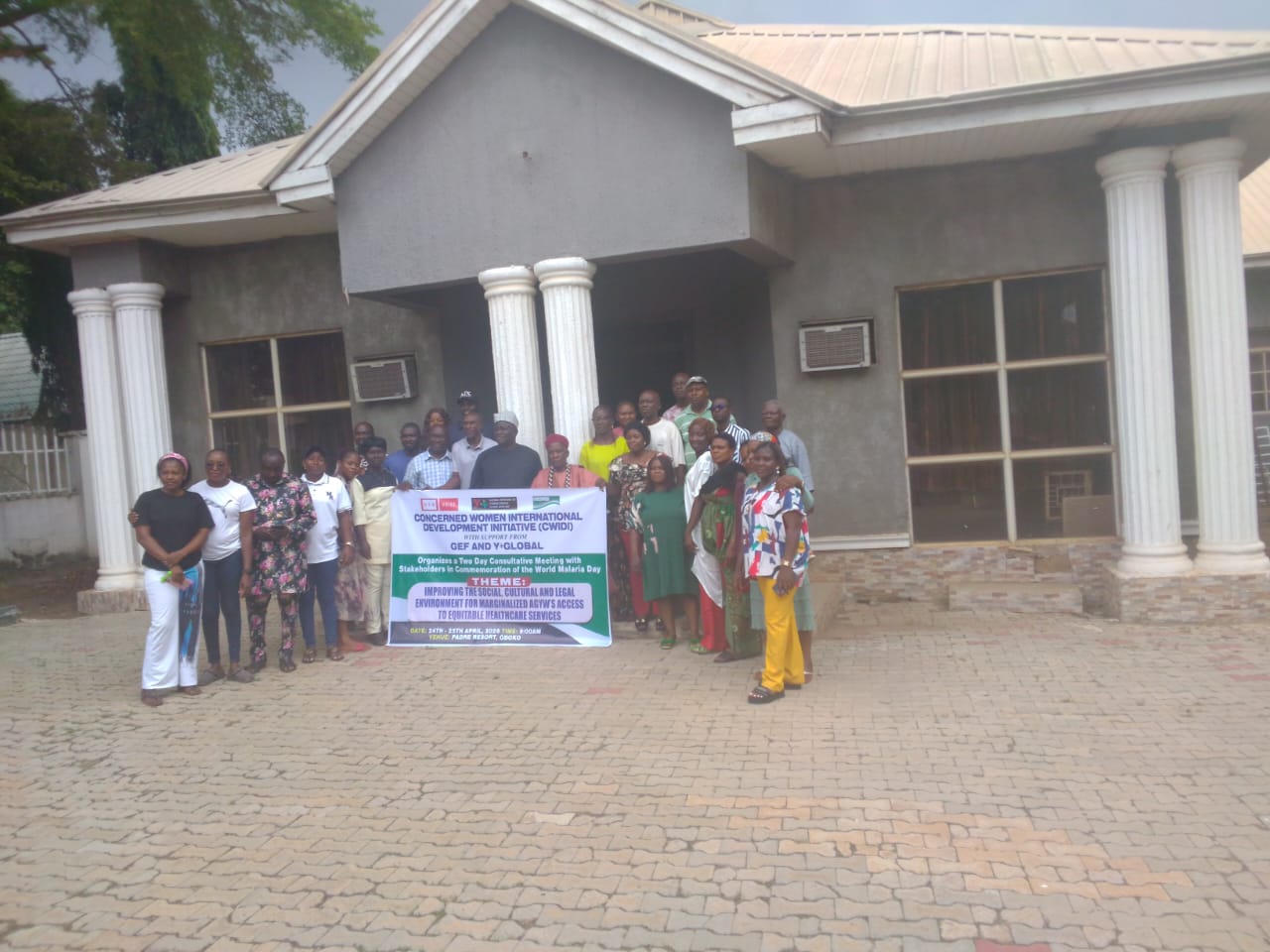
The appeal was made by the District Head of Gboko South, HRH Akpam Abeke, who spoke on behalf of stakeholders at a two-day consultative meeting organised by the Concerned Women International Development Initiative, CWIDI, with support from GEF and Y+ Global.
The meeting, held at Padre’s Resort in Gboko to commemorate World Malaria Day, was themed: “Improving the Social, Cultural and Legal Environment for Marginalised Adolescent Girls and Young Women’s Access to Equitable Healthcare Services.
”Participants included community and religious leaders, law enforcement agents, legal and health professionals, policymakers, and educators.
The meeting aimed at deepening stakeholders’ awareness of the multiple health challenges confronting marginalised Adolescent Girls and Young Women,AGYW, particularly their heightened vulnerability to HIV, tuberculosis, malaria, and sexual and reproductive health issues,also focused on identifying harmful cultural and social practices that exacerbate their exposure to health risks, stigma, and discrimination.
Participants further examined ways to strengthen community understanding of the rights of AGYW, especially their right to access safe, non-discriminatory, and equitable healthcare services, while building collective commitment to sustained actions that promote a safe, supportive, and enabling environment for their health and wellbeing.
They observed that inadequate awareness of gender-based violence, limited access to justice, and poor healthcare services continue to hinder the effective implementation of laws designed to protect AGYW.
The stakeholders expressed optimism that the programme would deepen understanding of the challenges faced by AGYW and strengthen support systems to help survivors overcome trauma.
They called for stricter enforcement of child protection laws, increased community awareness of gender-based violence, improved access to equitable healthcare, and prompt reporting of abuse cases, urging government to provide economic support to families to enable them to educate their children and secure sustainable livelihoods.
Commending the organisers, the monarch noted that the meeting had shed light on previously under-recognised challenges affecting AGYW and assured that insights gained would inform policy and community actions.
He added that stakeholders would cascade the knowledge through town hall meetings, community associations, and church platforms, while urging CWIDI to expand the initiative to reach more rural communities.
In a presentation titled “Legal Rights and Protection for AGYW: Educating Stakeholders on the Rights of AGYW Including Protection from Violence, Discrimination and Barriers to Healthcare,” Barrister Blessing Ityohuun highlighted that AGYW aged 10–24 face multiple challenges driven by gender inequality, poverty, harmful social norms, early marriage, and limited access to sexual and reproductive healthcare.
She outlined key legal frameworks protecting AGYW, including Sections 33 and 42 of the 1999 Constitution, the Child Rights Act (2003), the Violence Against Persons (Prohibition) Act (2015), the Trafficking in Persons Act (2015), the Convention on the Elimination of All Forms of Discrimination Against Women,CEDAW, and the African Charter on Human and Peoples’ Rights.
Ityohuun, who is also the Chairperson of FIDA, Benue State Chapter, urged stakeholders to promote awareness and utilisation of these laws, further calling on governments at all levels to strengthen legal frameworks, align national laws with international standards, criminalise all forms of gender-based violence, and improve access to justice.
She stressed that effective implementation of laws remains critical to safeguarding the rights and wellbeing of AGYW.
Also speaking, Dr. Laadi Swende, in a presentation titled “Addressing HIV, Tuberculosis, Malaria and Sexual and Reproductive Health Rights in Low Resource Settings,” described the diseases as leading causes of illness and death among AGYW.
She advocated for integrated, youth-centred health approaches that address structural inequalities while ensuring access to quality services, noting that success depends on sustained political commitment, adequate funding, and meaningful engagement of young women.
Swende emphasised that malaria, tuberculosis, HIV, and sexual and reproductive health issues are interconnected and should be addressed through coordinated policy and advocacy efforts, urging government to strengthen health systems to provide confidential, non-judgmental, and accessible services tailored to adolescents.
In her remarks, the Executive Director of CWIDI, Becky Gbihi, said the initiative aimed to raise awareness on child abuse and other challenges affecting marginalised AGYW, advising stakeholders to sensitise communities and promote the rights of young women.
She explained that the programme also equipped participants with knowledge to support AGYW in reducing health risks associated with malaria, tuberculosis, and HIV/AIDS, while addressing stigma and discrimination in healthcare and justice systems.
Gbihi added that stakeholders were trained to guide victims on where and how to report cases of gender-based violence.

A REVIEW OF IYORWUESE HARRY HAGHER’S A PORTRAIT OF PARADISE
James Tar Tsaaior
A Portrait of Paradise is a pulsating, telling tale in the tradition of political allegory. It narrates a modern nation-state inextricably entangled in a sticky web of manifold contradictions which gnaws viscerally at its very soul and existence.
The novel is largely set in the fictional West African nation of Sofalia, a metaphor for, and epitome, of unrelieved suffering. In it Iyorwuese Harry Hagher skillfully demonstrates how Sofalia’s political elite manipulate the levers of naked power, and anything and everything in-between, to privilege and sustain their affluent, hedonistic, permissive and self-aggrandising lifestyles to the detriment and mutual exclusivity of the Atsan. This is the mass of the oppressed, impoverished and dispossessed population who exist in the peripheries and lowest rungs of the social pyramid and are at the mercy of life’s vicissitudes.Sofalia is a confirmed, pitiable case of a modern nation-state on the precincts of a yawning precipice. Led by a brood of viperous, treacherous, egocentric, and selfish politicians who have parceled the national patrimony among themselves as fiefdoms or personal estates it is a name which is synonymous with mass poverty, suffering and death. It has, therefore, been plunged into the ever-deepening, abysmal political quagmire as a failed state. Its infrastructure is decrepit, its economy in the doldrums, its social life severely stratified without a middle class and life is ruinously divided like an ever-widening chasm along the extremities of the opulent and the dispossessed.
At the head of its delinquent political elite is President Kila who is on the threshold of ending his second and final term. There is also Senator Kini Mulaake (literally swollen testes) who, through deft political gerrymandering, is expected to succeed Kila. These predatory politicians prey on their citizens particularly young, ambitious women, and truncate their dreams of becoming productive and prosperous citizens. Senator Kini is most notorious in this regard as he wrecks the lives of such women. One victim is the brilliant first class graduate, Aishatu, also known as Queen Aisha, who ends up as a psychiatric case due to crack cocaine abuse. Then there is Queen Akember, the intemperate wife of the brutal terror gang leader Gungun. Gungun himself, a victim of serial political betrayals by Kini, ends up paralysed neck down in a German health facility after surviving a deadly bombing by Sofalia security forces in his isolated Binda Hills cave where he mines precious minerals for Senator Kini and his political cohorts and co-travellers.
In a narrative which eminently qualifies as a political parable, Hagher portrays Senator Kini as a villainous hero whose vaunted ambition to become president of Sofalia miscarries as the combined conspiracy of the West and the two queens, Aisha and Akember, proves fatal and consequential. The senator loses balance in the political quicksand he has plunged himself into and ends up as a guest of the Criminal Court at The Hague for war crimes. The epiphanic moment for him arrives when he confesses in a dramatic monologue his apotheosis as a political pervert who acknowledges the transience of power and the futility of its appurtenances and announces his conversion and redemption.
In this novel, Hagher, a former Nigerian senator, minister, envoy, academic, scholar, and storyteller, masterfully etches on the narrative canvas the motifs of political brigandage, economic sabotage, social savagery, and moral debauchery which animate and mediate politics in an African modern nation-state which bears striking resemblances with his native Nigeria. Hagher, therefore, enjoys the charmed kinship of other African novelists like Chinua Achebe, Ngugi wa Thiong’o, Naguib Mahfouz, Nadine Gordimer, Tayib Saleh, etc. who have ploughed the undulating furrows of social ennui and political corruption ravaging Africa in their creative oeuvre.
The novel’s preoccupation gravitates to the appropriation of the national commonwealth by a parasitic and unproductive political oligarchy, the Ogas (potentates in Nigerian Pidgin English) which institutes social hierarchies that keep the masses perpetually submerged on the margins. The political class illegally mines the rich mineral resources of Sofalia, enriches and ensconces itself in the cocoons of power, funnels the wealth into offshore bank vaults in Western capitals and clandestinely promotes terrorism and banditry to perpetuate the crime and their reign. What should be a true paradise with prodigious endowments is paradoxically and regrettably the very abyss of hell for the citizens. When Sofalia is expecting the high profile state visit of President Barack Obama of the United States of America, the government orders the cleansing or purging of the capital city, Calanana of the pathology of the Atsan class considered the contagion of society. This empty, cosmetic ritual exemplifies the murderous rage against the Atsan, the hoi polloi who are ironically the real creators of wealth but who have been alienated and reduced to crass, crushing poverty. In the end, the state visit is aborted by the contingencies of endemic corruption and egregious human rights abuses by the political elite of Sofalia.
Also on the novel’s narrative agenda is the defining gender calculus which limits and undermines female agency and subjectivity. Patriarchy enacts its visceral energies to dominate, oppress and repress women who also contest phallic power through matriarchal resistance armatures. This gender contestation piths the male political juggernauts led by Senator Kini who represents the patriarchal power integer and the subversive female vanguard under Queens Aisha and Akember. These women are modeled after the archetypal Dahomean Amazons (female warriors who protected the integrity of the empire) and other powerful African/Black women in history. In their attempt to undermine male power and its totalizing assumptions, these two queens combine efforts to counteract patriarchal domination and sexploitation of women in Sofalia through the creative mobilization, conscientization and application of resources of their respective groups, the Atsan and the Gungun Terror Organisation to battle Senator Kini to a virtual standstill. From all indications, it is obvious that the new Sofalia will reckon with the power of women as veritable complementary vectors of positive transformation and indispensable partners in the political and social engineering processes. By privileging female power and ideology, Hagher cultivates the gender inclusivist literary company of female writers like Ama Ata Aidoo, Nawal El Saadawi, Assia Djebar, Chimamanda Adichie, NoViolet Bulawayo, etc.
Like his late compatriot, writer and environmentalist, Ken Saro-Wiwa, Hagher sets his sights on the important issue of nature and the environment and creatively weaves that concern into the novel’s narrative motions. The power of nature over humanity and the imperative for healing and restoration of the delicate balance humanity and threatened ecosystem is foregrounded through the ocean surge which drowns Kepe village on the coast of the Atlantic Ocean. The devastating storm exerts a profound impact on the environment in a time climate change has become a significant issue on the global agenda. It is the storm that throws up Aishatu who is adopted by the mega-billionaire pastor of Paradise Church, Godswill and his delectable wife, Beatrice. The power of religious bigotry and hypocrisy preoccupied with obscene riches and drunk with iniquitous power is underscored through Godswill and Little Jehovah, two of the most consequential religious personages in the novel. Tragedy paradoxically functions as a destructive but also benevolent, redemptive force in the life of Aishatu as she emerges from the storm as a prodigy destined for greatness. This is how Senator Kini meets with Aishatu and this encounter sets up a concatenation of events in the novel’s narrative kinesis which builds up in the climax of frustrating Kini’s presidential bid.
Hagher’s style is a delightful blend of prose and poetry, what can be adjudged as proetry. The language supremely incantatory and evocative, the imagery vivid, the atmosphere tense and the narrative flows gracefully but also powerfully like a river in flood, or an avalanche carrying everything that stands in its path. His lyrical, lightsome style helps to animate or vivify the plot proceedings and deepen the immanent tensions, conflicts, and latent resolutions the novel orchestrates. Even when the language sometimes borders on the academic, it fascinates and propels the narrative motions in a direction that complicates the plot and heightens emotions and expectations leading to the denouement. Hagher’s characters in the novel are authentic, compelling, down-to-earth and true to life. In the context of prebendal politics in a failed postcolonial nation-state like Sofalia, President Kila, Senator Kini, Gungun, Queens Aisha and Akember, among others represent the power bases or centers in conflicted interactions to unearth the corpus of contradictions that bedevil and plague Sofalia and which must be addressed for a more egalitarian and equitable society to emerge where there will be freedom and social justice for all citizens.
In the end, Hagher’s authorial intentionality transcends the empire writes back tradition and insightfully and frontally engages the disquieting pathologies of the modern nation-state in Africa. He accomplishes this narrative project with a transgresssive, progressive vision and subversive temperament casting critical barbs at the corps of egocentric and self-serving political perverts with a grand sense of messianism and triumphalism that has only caused perpetual inertia and arrested development and squelched national dreams. This is a superlatively readable and riveting narrative that playfully teases human emotions but also boldly offers a powerful commentary on the vexed paradoxes of the human existential condition in a modern nation-state.
From Sylvia Udegbunam, Enugu
The National Emergency Management Agency (NEMA) has concluded arrangements for a massive sensitisation in some council areas in Anambra, Ebonyi and Enugu States on the 2026 Flood Predictions.
The Information Officer of NEMA Enugu Operations Office, Ezeani Nnanyelugo, disclosed this to Journalists in Enugu, emphasizing that the Agency, its partners and stakeholders would carry out robust sensitisation in the states.
The flood preparedness sets of actions followed the 2026 Nigerian Meteorological Agency (NiMet) Seasonal Climate Prediction (SCP) and the Nigeria Hydrological Services Agency (NIHSA) Annual Flood Outlook (AFO) released on Feb.
10 and April 15, respectively.Nnanyelugo said that the two agencies in their predictions noted that there would be high rainfall and high risk of flood in the three states under the NEMA Enugu Operations Office namely: Anambra, Ebonyi and Enugu States.
According to him, we have fliers on flood risk reduction activities and actions in both English and indigenous language (Igbo) to distribute to flood prone communities identified in the prediction.
He said, “We have started and would sustain public enlightenment on the prediction through television, radio and online news platforms.
“Recently, the NEMA South-East Zonal Director and Information Officer shared information with the NTA on the NEMA preparedness plan.
“NEMA is also partnering with NiMet and NIHSA officials to ensure that their predictions are discussed among stakeholders in various meetings, training and workshops for the purpose of reducing flood risk in the states.”
The information officer also said that the Agency would be conducting flood sensitization programs including drills/simulation exercises with other stakeholders in major flood prone council areas within the state.
He said that NEMA had started the process of downscaling of flood early warnings to identified hotspot council areas and would soon commence direct writing to the authorities of councils and communities involved.
Nnanyelugo said, “We have started sharing weekly alerts forecast from NiMet/NIHSA to all relevant stakeholders via WhatsApp forum/meetings notwithstanding numerous stakeholders meetings. The public is advised to stay informed.
“The Director-General of NEMA, Zubaida Umar, has reaffirmed the Agency’s commitment to strengthening partnerships with international humanitarian organisations (KSRElief, UNOCHA, WFP, IOM) to enhance service delivery and support vulnerable populations across Nigeria.
“We will partner with SEMAs and Community leaders soon to identify higher grounds and update on existing Internally Displaced People (IDP) camps conditions as well as updating the equipment holdings of stakeholders.”
The information officer noted that part of the soon coming engagement would centre on review of the historical flood occurrence in the states in order to mitigate huge losses associated with flood disaster generally.


Plateau PDP Cautions Members Against Obtaining Nomination Forms From Pro-Wike Faction
ShareBy Mike Odiakose, Abuja As Nigerians await the verdict of the Supreme Court on the leadership crisis rocking the Peoples...

Soludo’s 16.4km Road Project Ends Years of Suffering, Opens Up Anambra Communities
ShareBy Laide Akinboade Abuja Vice President of Boardwalk Group and Abuja-based real estate developer Chief Obiageli Okwubanego, on Wednesday, commended...


Ekiti Church Attack: CAN Demands Action Over Killing, Abduction of Worshippers
ShareBy Laide Akinboade, Abuja The Christian Association of Nigeria (CAN) on Wednesday, condemnedthe attack on a church gathering in Eda...

Journalist Petitions DSS Over Alleged Criminal Activities Of Company, River-Bend Agent
ShareBy Julius Tambaya, Abuja Following alleged criminal conducts of River-Bend Nigerian Limited and one Mr. Thomas Terzulum Nongo, a renowned...
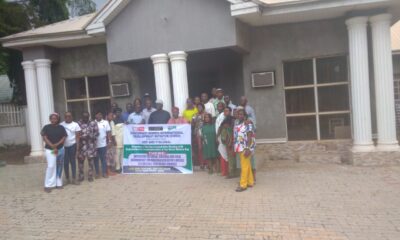

Stakeholders Urge FG, Benue Govt to Partner NGOs to End Violence, Discrimination Against Girls
ShareBy Julius, Tambaya Abuja Stakeholders have called on the Federal and the Benue State Governments to strengthen collaboration with non-governmental...

Bago Orders Immediate Repairs of Wind-Damaged Buildings at NYSC Camp
Share From Dan Amasingha, Minna Niger State Governor, Mohammed Umaru Bago, has directed the immediate rehabilitation of buildings damaged by a windstorm at the National Youth Service Corps...
2028 Olympic Games Qualifier: Super Falcons to Discover Opponents Today
ShareNigeria’s Super Falcons will find out their opponents for the 2028 Los Angeles Olympic Games women’s football qualifiers this week. The Confederation of African Football (CAF) announced on Tuesday that the draw for the African qualifying...

Ghana Military Convoy Attack Kills Three Civilians, Seven Assailants
ShareFor Somalia’s malnourished children, already suffering the twin catastrophes of looming famine and radical cuts in foreign aid, the U.S.-Israeli...

Imo Deputy Governor Resigns
ShareFrom Marcel Duru Owerri The Commissioner for Information and Strategy Chief Declan Emelumba has said that Imo State Deputy Governor, Ekemaru has resigned. Speaking...


NAF Airstrikes Destroy Terrorists’ Structures in Mandara Mountains
ShareThe Nigerian Air Force (NAF) has sustained its counter-terrorism offensive with precision airstrikes that destroyed terrorists’ structures and logistic hubs in the Mandara Mountains area of Borno....