
NEWS
NOA Initiates Five-month Voter Education Exercise in Bauchi


The National Orientation Agency (NOA) in Bauchi State, says it will conduct a five-month voter education exercise to mobilise participation in the 2027 general elections.
The Director of the agency, Adamu Sarkinyara, said this in an interview on Wednesday in Bauchi.
Sarkinyara said that the exercise targeted about one million youths, to ensure conduct of free, fair and violence free elections in the state.
He said that the agency has mobilised about 500 civil society organisations, to facilitate smooth conduct of the exercise across the 20 local government areas of the state.
The director said that parts of the mandate of the agency was to sensitise Nigerians on good governance, democracy and civic participation.
“NOA is a key stakeholder on election matters, we have three mandates: pre- election campaigns, voter education, and peace building toward free and fair elections,” he said.
Sarkinyara said that the agency would monitor the conduct of the election, and report its findings to the public, government, and the Independent National Electoral Commission (INEC).
He said that the agency would also address political parties with grievances, to encourage compliance to the Electoral Act and relevant laws.
“As part of the post-election role, we train people on good governance, we will organise a workshop in collaboration with the Development Exchange Center (DEC), and other agencies towards building the capacity of the local structures on governance, transparency and accountability,” he said.
Sarkinyara said that the exercise was designed to build the capacity of the newly elected local council chairmen on open government partnership, transparent and inclusive governance.
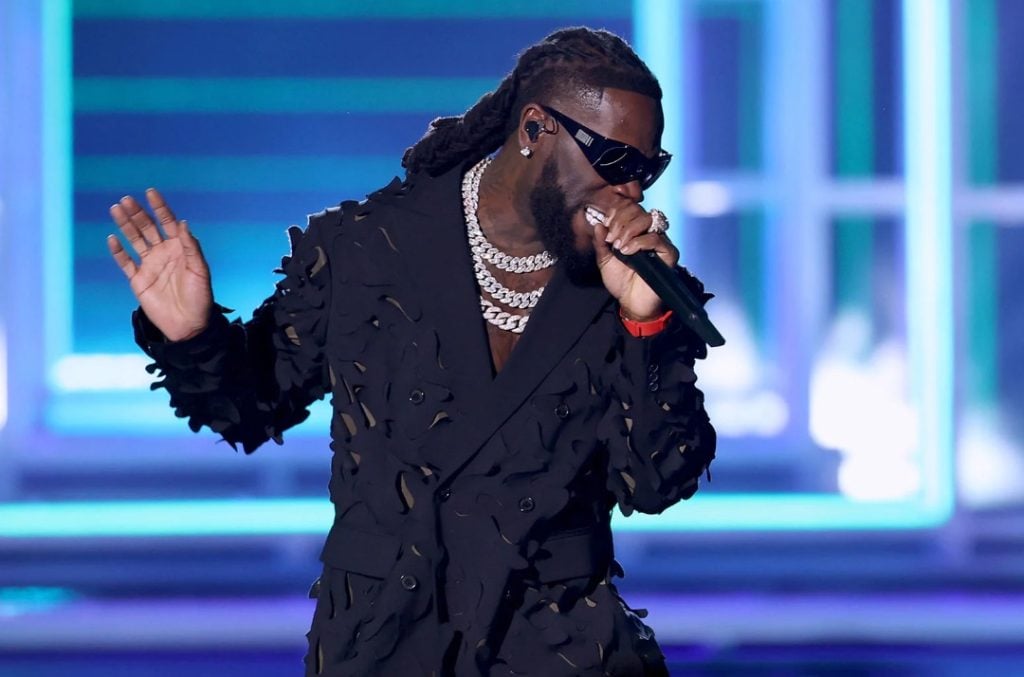
Nigerian Grammy winning artiste, Damini Ogulu, popularly known as Burna Boy, has become the first Nigerian artiste to surpass four billion views on YouTube.
The milestone was achieved through the combined views of music videos and other content on the artiste’s official YouTube channel.
The development underscores the global appeal of Burna Boy’s music and the growing international reach of Afrobeats.
The singer’s catalogue includes popular songs such as “Ye,” “On the Low,” “Last Last” and “For My Hand”, which have collectively attracted hundreds of millions of views on the video-sharing platform.
Burna Boy had earlier made history in 2021 by becoming the first Nigerian artiste to surpass one billion total views on YouTube.
The achievement comes amid a series of international milestones recorded by the artiste, whose music has continued to attract audiences across Africa, Europe, North America and other parts of the world.
Industry observers say the achievement reflects the increasing role of digital platforms in taking Nigerian music to a global audience.
Also, the milestone places Burna Boy among the leading African artistes on YouTube and sets a new benchmark for Nigerian music. (NAN)
The Federal Government has said a sustained increase in domestic revenue will be critical to Nigeria’s efforts to secure an investment-grade sovereign credit rating.
The government said it would focus on raising revenue, improving the efficiency of public spending and strengthening debt affordability while consolidating gains in the country’s external position.
The statement followed Moody’s Ratings’ decision to revise Nigeria’s sovereign outlook from stable to positive while retaining its B3 rating.
Minister of Finance and Coordinating Minister of the Economy, Taiwo Oyedele, said the government’s medium-term objective was to move Nigeria firmly towards investment-grade status.
“Our medium-term ambition is to place Nigeria firmly on the path to investment grade,” Oyedele said in a statement issued by the Federal Ministry of Finance on Saturday.
He said the government would need to sustain improvements in the external sector while accelerating domestic revenue mobilisation and improving public expenditure management.
Oyedele said the reforms were not being pursued simply to improve Nigeria’s credit rating but to address structural weaknesses that have kept the country’s cost of capital high.
“We are committed to doing the work required to get there, not for the rating itself, but because the underlying reforms are what will lower Nigeria’s cost of capital, crowd in private investment, and deliver shared prosperity for Nigerians,” he said.
He said Moody’s positive outlook reflected progress under the government’s macroeconomic and fiscal reform programme, including the removal of the fuel subsidy, foreign exchange reforms and changes to the tax system.
According to him, the measures were strengthening the economy through improvements in external reserves, a more resilient external position, moderating inflation and stronger monetary policy transmission.
The Finance Ministry said its revenue strategy would remain a key component of the reform agenda, alongside fiscal discipline, debt management and a market-driven foreign exchange regime.
It said the government would also continue implementing structural reforms to support non-oil economic growth and strengthen the economy’s capacity to generate revenue.
Moody’s has indicated that further improvement in Nigeria’s external position or a durable increase in government revenue arising from ongoing reforms could support a future rating upgrade.
The government said these areas would therefore remain central to its efforts to improve Nigeria’s creditworthiness, lower borrowing costs and attract more private investment as it works towards investment-grade status.
The World Bank Group has said it will support reforms to Nigeria’s electricity tariff and subsidy frameworks as part of efforts to restore financial sustainability in the power sector.
The World Bank disclosed this in its Country Partnership Framework for the Federal Republic of Nigeria for the period FY26-FY32.
According to the document, the World Bank’s intervention will focus on improving electricity access and reliability for households and businesses through both on-grid and off-grid solutions, in line with Nigeria’s Mission 300 Compact targets.
“The WBG will also support reforms to restore financial sustainability, focusing on tariff and subsidy frameworks, competitive investment planning, and sound sector regulation,” the document stated.
The World Bank said Nigeria currently had the world’s largest electricity access deficit, with more than 86 million people without access to electricity.
It noted that frequent power outages have forced households and businesses to rely on expensive generators, which had negatively affected the productivity of firms.
The development finance institution further stated that the financial position of the electricity sector remained unsustainable, with tariff shortfalls estimated at $2.45bn by the end of 2025.
It said its support would enable the mobilisation of private capital for renewable energy expansion and grid densification, with the aim of improving the resilience of the power sector while advancing affordability and access.
The World Bank also added that it would continue to support the Nigeria Distributed Access through Renewable Energy Scale-up platform, which it said would catalyse private capital for investments in mini-grids and standalone solar systems on a large scale.
It added that it would assist the Federal Government in developing well-structured public-private partnerships and private investment frameworks across the generation, transmission and distribution segments.
The support, according to the bank, would include project preparation, transaction structuring and transparent competitive processes to attract private investors.
“Together, these off- and on-grid efforts under the CPF will provide electricity access to over 32 million Nigerians,” it stated.
The World Bank’s six-year framework comes amid ongoing efforts by the Federal Government and electricity sector regulators to address the financial challenges confronting the power industry and improve electricity supply.
The bank said the tariff and subsidy reforms would form part of broader measures aimed at creating a financially sustainable electricity market, while its planned investments and technical assistance would support increased private participation in the sector.
For years, the Federal Government froze tariffs, allowing consumers to pay less than their electricity consumption.
The failure of the government to pay the shortfalls as promised has been the major cause of the liquidity crisis in the power sector.
However, the power minister, Joseph Tegbe, said the challenges of liquidity would be addressed next year. (NAN)




NOA Initiates Five-month Voter Education Exercise in Bauchi
ShareThe National Orientation Agency (NOA) in Bauchi State, says it will conduct a five-month voter education exercise to mobilise participation...


Sanwo-Olu Urges Media to Combat Misinformation Ahead 2027 Elections
ShareLagos State Governor, Babajide Sanwo-Olu has urged the media to uphold professionalism, verify information and combat misinformation ahead of the...


I Think I’d Have Won BBNaija Season 11 – Neche Speaks on Exit
ShareFormer Big Brother Naija housemate Neche said she believes she could have won the show if she had stayed, citing...

Prophet Rolex Apologises to Alleged TMT Visa Scam Victims
ShareContent creator and comedian, Prophet Rolex, has broken his silence after being called out for previously promoting the visa services...


Why I Once Evicted My Son from Home – Patience Ozokwor
ShareVeteran Nollywood actress, Patience Ozokwor, aka Mama G, has said it is wrong for parents to completely shield their children...


Joeboy Shocks Fans: My Wedding, Marriage will be Kept Secret
ShareNigerian music star, Joseph Akinwale Akinfenwa-Donus, popularly known as Joeboy, has opened up on his plans for his future wedding,...


Burna Boy Makes History as First Nigerian Surpassing 4bn YouTube Views
ShareNigerian Grammy winning artiste, Damini Ogulu, popularly known as Burna Boy, has become the first Nigerian artiste to surpass four...

NAICOM Unveils ISSP to Advance Insurance Penetration
ShareThe National Insurance Commission (NAICOM) has unveiled the Insurance Sector Strengthening Programme (ISSP), to advance insurance penetration, financial inclusion and...
Revenue Growth Crucial to Nigeria’s Investment Upgrade – FG
ShareThe Federal Government has said a sustained increase in domestic revenue will be critical to Nigeria’s efforts to secure an...

World Bank Backs Tariff, Subsidy Reforms in Nigeria’s Power Sector
ShareThe World Bank Group has said it will support reforms to Nigeria’s electricity tariff and subsidy frameworks as part of...