
Foreign News
North Korea Fires Second Suspected Missile in Six Days


North Korea has fired a suspected ballistic missile, less than a week after it launched what it claimed was a hypersonic missile.
South Korea said it detected the launch at 07:27 local time yesterday (22:27 GMT on Monday).
Japan’s coast guard also reported the launch, saying North Korea had fired a “ballistic missile-like object”.
It comes shortly after six countries issued a statement urging the North to cease its “destabilising actions”.
“Our military detected a suspected ballistic missile fired by North Korea from land towards the East Sea,” South Korea’s Joint Chief of Staff (JCS) said, adding that intelligence authorities from South Korea and the US were in the process of conducting a detailed analysis.
The latest launch underscores North Korean leader Kim Jong-un’s pledge to bolster the country’s defences as part of its policy priorities for 2022, which were outlined during a key meeting in December.
On Monday, the US mission to the United Nations, joined by France, the Irish Republic, Japan, the United Kingdom, and Albania, issued a joint statement condemning last week’s apparent test.
“These actions increase the risk of miscalculation and escalation and pose a significant threat to regional stability,” said US ambassador to the UN Linda Thomas-Greenfield.
The group called for North Korea “to refrain from further destabilising actions… and engage in meaningful dialogue towards our shared goal of complete denuclearisation.”
North Korea has welcomed in the new year with two missile tests in quick succession.
Yesterday’s test could be timed to coincide with a UN Security Council meeting in New York – where the US and its allies condemned last week’s launch.
But it could also serve several other functions.
One could be to divert public attention from an increasingly severe economic situation in the country, which has been worsened by the coronavirus pandemic.
Another could be to get the attention of Washington, which has shown little interest in resuming negotiations with Pyongyang after the failed summit between former President Donald Trump and Kim Jong-un in 2019.
There a third reason, which is less often reported. North and South Korea are engaged in what observers say is an increasingly intense arms race, with both sides working to perfect smaller, more accurate and more deadly missile systems with which they can threaten each other’s leaderships.
The latest tests come as Pyongyang struggles with food shortages due to a coronavirus blockade that has severely affected its economy.
At the end-of-year meeting of the ruling party, Mr Kim said the country was facing a “great life-and-death struggle”, adding that increasing development and improving people’s living standards were among this year’s goals.



By Eze Okechukwu, Abuja
The Senate yesterday ordered mandatory health screening for every international passenger arriving Nigeria airports, seaports, land borders as Ebola resurfaces in the Democratic Republic of Congo with a scare case reported in the FCT.
The resolution followed an urgent motion by Senator Francis Fadahunsi, who warned that with Lassa fever already ravaging states, Nigeria cannot afford another outbreak.
“Protecting our entry points is far cheaper than managing Ebola,” Fadahunsi told the chamber.
Lawmakers insisted screening must be total and indiscriminate — no exemptions based on nationality or departure country because infected travellers can transit through safe-listed nations.
Senator Diket Plang raised the stakes further, demanding immediate funding for NCDC and Port Health Services, including release of withheld funds and emergency budget.
Senate President Godswill Akpabio said the Federal Government has started releasing Ebola response funds but ordered relevant committees to track every kobo.
“Ascertain whether the funds were released and judiciously utilised. Any outstanding debt must be released by the Finance Ministry without delay,” Akpabio directed.
At least 72 civilians who had been prospecting for gold in a border region of Sudan have been killed in air strikes, a regional rights group said.
Emergency Lawyers, based in the Sudanese capital, Khartoum, said jets targeted the so-called artisanal miners at a popular gold mining site on Saturday.
Neither the Egyptian government nor the de facto Sudanese authorities have so far commented.
Cairo has previously faced accusations of deadly strikes on gold prospectors as part of a crackdown on illicit activity along its southern border.
Emergency Lawyers noted the previous alleged attacks and said they represented not only a violation of Sudan’s sovereign territory but demonstrated the government’s lack of control over the region.
“The deliberate targeting of unarmed civilians violates international humanitarian law and the right to life,” it said in a statement on Sunday. “These acts may constitute war crimes.”
It noted that its death toll was provisional and could rise.
The Paris-based Sudan Tribune reported that the death toll could far exceed the number reported by Emergency Lawyers, citing a survivor of Saturday’s attack who said many more people had been injured.
Eyewitnesses said the attack began around 06:00 local time (04:00 GMT), with the aircraft firing more than five missiles directly at the miners’ camps, destroying them and excavation pits with people still inside, the newspaper wrote.
The Sudan Tribune reported claims in June that Egyptian forces had used drones and artillery to target artisanal mining sites in the same region, killing several, after sporadic incidents of Egyptian border guards of burning equipment, torching temporary shelters, and firing live ammunition to disperse mine workers.
Days later, Egypt’s border agency announced that it and the military had begun a sweeping security campaign along the border to foil illegal migration, drug smuggling and illegal mining.
At the same time, Sudan’s de facto leader announced an investigation into the alleged strikes, which were said to have killed dozens.
Gold lies at the core of the border tensions.
Sudan’s ongoing civil war has led to a surge in artisanal mining – and often risky practice conducted by civilians with rudimentary tools and without official permission – particularly in remote areas near its borders.
Gold-rich areas lie along porous borders in terrain historically associated with cross-border smuggling routes, with artisanally mined gold potentially feeding into those channels.
Egypt’s border force said in June that it had seized 86 tonnes of gold ore along with amateur prospecting equipment.
Artisanal mining has also reportedly continued in Sudan’s conflict zones and smuggled gold may be a source of income for armed insurgent groups.
This has raised concerns of illicit Sudanese gold undermining the legitimate Egyptian gold market.
Several German fighter jets will take part in the Northern Atlantic Treaty Organisation (NATO) annual nuclear defence exercise this week as troops from 17 countries take part in the Steadfast Noon drill.
The German Air Force said three Tornado jets will take part in the exercise hosted by Italy, which starts Tuesday and runs for about a week and a half.
The jets are normally stationed in Büchel in the German state of Rhineland-Palatinate.
NATO has not revealed the exercise scenario but said its scale would be comparable to last year’s drill, which involved around 2,000 personnel and more than 70 aircraft.
Last week, NATO’s head of nuclear policy, Nassima Barrows, said the exercise was designed to demonstrate the alliance’s readiness and ability to defend its territory.
No real nuclear weapons will be used, she added.
NATO said the exercise was not linked to current events or directed at any specific country.
Military experts say the drills, held regularly in October, include practising the safe transport of weapons from underground storage facilities to aircraft and mounting them on fighter jets.
Only practice bombs without real nuclear warheads are used during the drills.


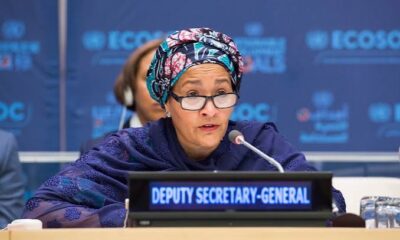

UN, EU Seek Trust, Technology to Strengthen Africa’s Counter-Terrorism Fight
ShareUN Deputy Secretary-General Amina Mohammed, has called for stronger intelligence sharing, public trust and responsible use of emerging technologies to...


University of Agriculture, Orerokpe Bill, Passes Third Reading in Senate
ShareThe University of Agriculture, Orerokpe Bill, sponsored by Senator Ede Dafinone, representing Delta Central Senatorial District, has passed through its...


Ishowo Urges Kwara to Convert KWASUED to Medical Varsity
ShareA Kwara based Public Affairs Analyst, Comrade Ishowo Olanrewaju, weekend called on the Kwara State government to urgently convert the...
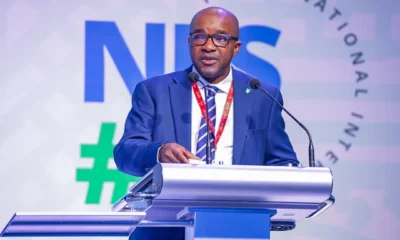

NESG Chairman Urges Shift from Economic Reforms
ShareChairman, Nigerian Economic Summit Group (NESG), Olaniyi Yusuf has urged the Federal Government to translate economic reforms into tangible results,...


Yakubu Receives Fellowship Of Nigerian Institute Of Town Planners
ShareBy Raphael Atuu, Abuja TPL Chief Amb Hon. Stephen Shekwonce Yakubu, the District Head (Hakimi of Garki Shekwope), had his...


Much Ado About the PBAT Door-to-Door Movement
ShareBy Catherine Agbo In the unfolding drama of Nigerian political discourse, few things excite the commentary circuit quite like a...


WAHO, ECOWAS Countries Move to Tackle Health Worker Shortages, Brain Drain
ShareBy David Torough, Abuja The West African Health Organization (WAHO) has called for stronger regional collaboration and practical policy interventions...

Afreximbank’s Net Income Rises 24 Per Cent to $813.5 Million in Nine Months
ShareThe African Export-Import Bank (Afreximbank) and its subsidiaries have reported a 24 per cent increase in net income for the...


Wike-Led FCTA Committed to Quality Healthcare, Stronger Medical Institutions – Mahmoud
ShareBy Laide Akinboade, Abuja The Minister of State, Federal Capital Territory (FCT), Dr. Mariya Mahmoud, has reaffirmed the commitment of...


Enugu Police Arrest 28 Year Old Suspect for Robbing POS Operator
ShareFrom Sylvia Udegbunam, Enugu The Enugu State Police Command has arrested a 28-year-old male suspect, Michael Ayisa, for allegedly robbing...