
Foreign News
North Korea: U.S. ‘Biggest Enemy,’ to continue Nuclear Dev’t


North Korean leader Kim Jong-un has called the United States (U.S) the “biggest enemy” of his country, threatening to continue advancing its nuclear capabilities, state media said Saturday.
Kim also said Washington’s policy against Pyongyang would not change regardless of who was in the White House, adding that an end to its hostile stance would likely be the key to future relations between the two countries, according to the Korean Central News Agency (KCNA).
Kim made the remarks reporting to the eighth congress of the ruling Workers’ Party currently under way in Pyongyang, the North’s first reference to transition of power in Washington since Joe Biden’s election as U.
S. president in November.They also came days before Biden’s inauguration slated for Jan. 20., which experts see as aimed at pressuring the incoming administration in Washington.
“The report said that the key to the establishment of new North Korea-U.S. relations is the withdrawal of the U.S.’ hostile North Korea policy,” KCNA said, declaring an “eye for an eye” principle against Washington.
“Our external political activities going forward should be focused on suppressing and subduing the U.S., the basic obstacle, biggest enemy against our revolutionary development,” KCNA said.
Kim has held three meetings with U.S. President Donald Trump, but denuclearization talks have made little progress since their no-deal summit in Hanoi in 2019.
Biden earlier said that he would not meet the North Korean leader without preconditions, vowing to pursue “principled” diplomacy on Pyongyang. He has called Kim a “thug” and “dictator,” denouncing Trump for giving legitimacy to Kim through summits.
Referring to the summits with Trump, Kim said the U.S. hostile policy has worsened despite the North’s “efforts” and “maximum patience” to reduce tensions in the region.
Kim rolled out a series of goals to boost the North’s military power, calling for improvement in missiles’ strike capabilities targeting objects in the range of 15,000 kilometers, apparently intended to be capable of reaching the mainland U.S., and minimisation of nuclear weapons.
The North also boasted of a new nuclear-powered submarine, saying that it has completed the research design and it is in the stage of final examination.
Other military projects ordered by Kim include the development of tactical nuclear weapons, ground or submarine-launched solid-fuel intercontinental ballistic missiles (ICBMs), the introduction of hypersonic aircraft and a military surveillance satellite.
“The reality shows that we need to strengthen the national defense capabilities without a moment of hesitation to deter the United States’ nuclear threats and to bring peace and prosperity on the Korean Peninsula,” KCNA said.
“The geopolitical features of our state called for pushing ahead with the already-started building of the nuclear force without interruption for the welfare of the people, destiny of the revolution, existence and independent development of the state,” it said.
Still, the North Korean leader reaffirmed that Pyongyang would not use its nuclear arsenal unless “hostile forces” attempt to attack with nuclear weapons.
Washington has yet to respond to the North’s announcement.
With regard to relations with South Korea, Kim appeared to have left room for improvement in the currently chilled ties, saying things could return to three years ago when a peace mood was created, “at any time” but emphasized that it all depends on South Korea’s attitude.
“The report made a stern warning that we will have no choice but to treat the South differently if it continues to push us to the corner citing ‘provocations,’” it said.
Inter-Korean relations have remained stalled since the Hanoi summit as sanctions stand in the way of cross-border exchanges and cooperation.
The ties chilled further last year, as North Korea blew up an inter-Korean joint liaison office in anger over anti-Pyongyang leafleting in June and killed a South Korean fisheries official drifting near its western sea border in September.
North Korea has not responded to Seoul’s offers for talks and cooperative projects, while focusing on warding off an outbreak of the coronavirus on its soil by sealing its border and toughening quarantine measures.
Kim said such projects on “antivirus, humanitarian cooperation (and) individual trips” are all “nonessential” issues, calling for a halt to the combined exercises between South Korea and the United States.
During the congress, Kim also unveiled a new economic development plan for the next five years, which centers around self-reliance and self-sufficiency.
North Korea will focus its investment in the metal and chemical industries, among others, while strengthening the technological base for the agricultural sector, it said.
“The core theme of the new five-year national economic development plan is still self-reliance and self-sufficiency,” the report said.
This week’s congress, the first in nearly five years, came as North Korea has been faced with a triple whammy of the fallout of back-to-back typhoons in the summer, a protracted border closure due to the coronavirus pandemic and global sanctions on its economy.
Opening the event on Tuesday, Kim admitted the failure to meet the country’s previous five-year development goals, describing the past few years as a period of “unprecedented, worst-ever trials.”
KCNA said that a fifth-day session was to be held Saturday.
It is still unclear for how many days the congress will continue as the North has not made public the exact schedule.
The previous congress in 2016 was held for four days. (Yonhap/NAN)





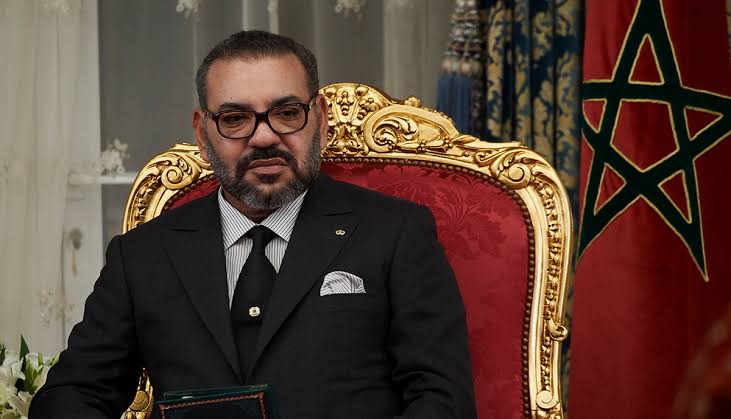
A letter from Morocco’s King Mohammed VI has confirmed that the country has named a major highway after US President Donald Trump.
Last week, in a social media post, Trump thanked the king for the honour, but there was not a parallel announcement from the Moroccan authorities.
But Morocco’s state press agency has published a letter the king wrote to the president telling him that the name-change was taking place as “a personal expression of my high regard”.
Formerly the Tiznit-Dakhla highway, the road enters Western Sahara, most of which Morocco occupies and claims sovereignty over.
But part is controlled by the Polisario Front, an armed group seeking independence for the local Sahrawi people.In 2020, during the first Trump administration, the US recognised Morocco’s claim over the disputed region as part of a deal whereby Morocco agreed to normalise relations with Israel.
In his letter, dated 2 July but published over the weekend, King Mohammed highlighted what he called the US president’s “historic recognition… of Morocco’s sovereignty over its Sahara” saying that it would “forever be etched in the memory of Moroccans, from generation to generation”.
“Although our relations have always been rooted in close friendship and constant loyalty, they have never been as vigorous and fruitful as during your two presidential terms,” the king added.
The monarch called the 1,055km (655 mile) highway a “strategic axis” linking “north and south of Morocco”. Morocco calls Western Sahara its “southern provinces”.
A former Spanish colony, Western Sahara – which is considered a “non-self-governing territory” by the UN – has been fought over for five decades in one of Africa’s longest conflicts.
The UN has consistently pushed for a solution to the dispute, including a referendum, but the indigenous people of the area have never been able to vote for their own future.
The African Union recognises Western Sahara’s independence.
European governments have until recently avoided taking sides. But some, including the UK and Spain have backed Morocco’s plan to grant Western Sahara autonomy but deny it independence.
Trump’s Truth Social post on the renaming last week also included a video about the road saying that it cost nearly $1bn (£740m) to build.
“I look forward to traveling the entire length of this great highway someday, hopefully soon!” the president wrote.
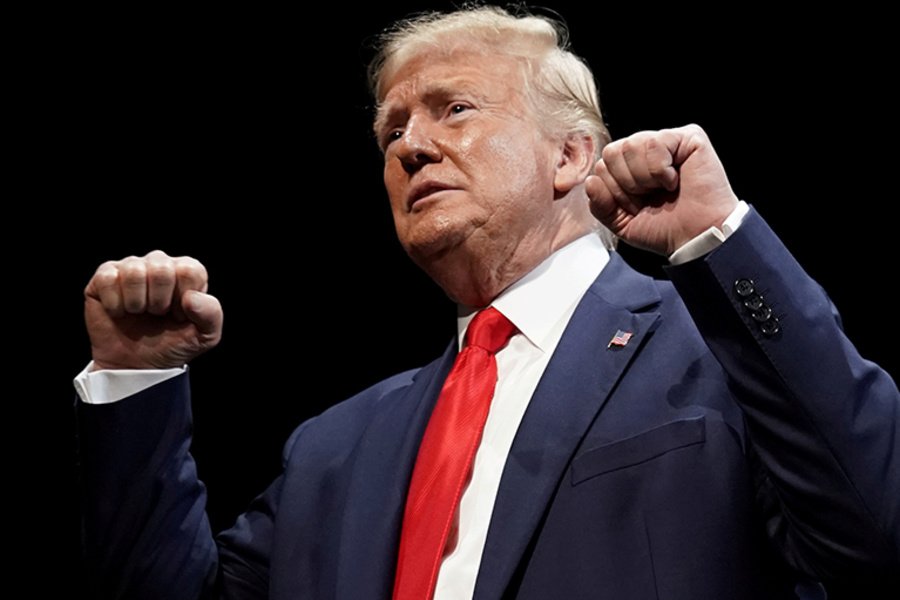
Acting US Attorney General Todd Blanche has formally withdrawn President Donald Trump’s plan for a fund that could have been used to compensate people prosecuted over the US Capitol riot by Trump’s supporters in 2021.
The move clears the way for Blanche to be confirmed by US senators to his job on a permanent basis.
Trump’s Republican Party previously lacked the votes for this to happen because a pair of senators were not sufficiently satisfied by verbal assurances from Blanche that the planned fund was dead.
In a post on X late on Sunday, Blanche said he had “met with committee members and Senators over the past several weeks and addressed any concerns or outstanding questions”.
Attached to Blanche’s post was a copy of the written order signed by Blanche. The text says: “This Order establishes, beyond any doubt, that there is no Fund.”
The proposed $1.8bn “anti-weaponisation” fund was announced earlier this year to settle a lawsuit by Trump against the Internal Revenue Service (IRS) over the leak of his tax returns.
It would have allowed Trump allies to claim compensation for what they say were politically motivated prosecutions by previous administrations.
A second concern held by the two holdout senators was that the deal also shielded the president, his family and their businesses from IRS audits of their past tax returns. They wanted the scope of that to be narrowed.
Attached to Blanche’s post on X was an unsigned memo in which he said the IRS immunity would be limited to the “named parties in the lawsuit”. The plaintiffs in the lawsuit were Trump, his two sons Donald Jr and Eric, and the Trump Organization.
The fund plan and the tax audit provision prompted alarm among Democrats – and some Republicans – who argued it could result in payment to people who were prosecuted over the US Capitol riot on 6 January 2021, including those convicted of assaulting police officers.
Following the backlash, Blanche abandoned the plan. A federal judge also blocked the fund and expressed concerns that it breached ethical guidelines.
Prior to Blanche’s two posts on Sunday, Trump himself gave conflicting statements on the future of both the fund and his nomination of Blanche to be America’s top law enforcement official.
On Friday, he said the fund was “dead”, but he subsequently threatened over the weekend to put the plan back on the table if members of his party did not move to approve Blanche.
In recent days, he also said he was considering withdrawing Blanche’s nomination to be attorney general because the process was stalled.
The US Senate judiciary committee has a meeting scheduled for Tuesday, which could include a vote on Blanche’s nomination.
But Blanche’s public statements to senators that the proposal had been scrapped were not enough to satisfy the Republican holdouts.
The two senators who went on to stall Blanche’s confirmation were John Cornyn and Thom Tillis, whose terms both expire in January.
A Cornyn spokesperson said that the senator had “reached an agreement with the Department of Justice” about the fund.
Tillis has not yet commented. But in his most recent comments on the issue, which responded to Trump’s threat to revive the plan, Tillis expressed concern that the president was still harbouring a plan to set up a “payout pot for punks”.
He said the political impasse was “unfortunate” because he did consider Blanche, who is Trump’s former personal lawyer, to be qualified for the attorney general job.
By Isaac Asabor
Every time xenophobic violence erupts in South Africa, the script is almost always the same. Horrific images of foreign-owned shops being looted flood social media. Nigerians living and doing business in the country scramble for safety.
Families in Nigeria panic as they struggle to reach loved ones. The Nigerian government issues a statement condemning the attacks, calls for calm, demands justice and urges the South African authorities to act. Diplomatic consultations follow, promises are made, and after a while, silence returns, until the next cycle of violence begins. This repetitive pattern has become both predictable and unacceptable.It raises an uncomfortable but necessary question: How many more times must Nigerians be subjected to xenophobic attacks before Nigeria changes its diplomatic strategy? It is perhaps time for Abuja to abandon excessive diplomatic niceties and embrace what many Nigerians would describe as “Roforofo diplomacy”, a more robust, assertive and reciprocal engagement that makes it unmistakably clear that attacks on Nigerians abroad will carry diplomatic consequences.
The phrase “roforofo,” borrowed from the popular Nigerian expression for mud wrestling, symbolizes a no-holds-barred confrontation rather than physical aggression. In diplomatic terms, it means abandoning excessive restraint in favour of firm, unapologetic and interest-driven engagement. It means matching rhetoric with action.
For decades, Nigeria has approached South Africa as an elder brother. During the anti-apartheid struggle, Nigeria invested enormous political, financial and diplomatic capital in the liberation of South Africa. Successive Nigerian governments contributed hundreds of millions of dollars to liberation movements. Nigerian workers voluntarily paid into the Southern African Relief Fund. Scholarships were awarded to South African students. Nigerian passports carried restrictions against visiting apartheid South Africa in solidarity with the oppressed majority.
Many Nigerians still remember these sacrifices with pride. Ironically, many younger South Africans appear either unaware of this history or indifferent to it. Instead, Nigerians have increasingly become convenient scapegoats for South Africa’s deep-seated socio-economic challenges.
There is no denying the fact that high unemployment, widening inequality, inadequate public services and rising crime have created fertile ground for populist narratives in South Africa, thereby creating an atmosphere of blaming foreigners for domestic hardships. Given the foregoing atmosphere, Nigerians, because of their visibility in commerce and entrepreneurship, often become easy targets. The reality, however, is that xenophobia has little to do with nationality and everything to do with governance failures. Foreigners did not create South Africa’s unemployment crisis. Foreigners did not institutionalize inequality. Foreigners did not weaken public infrastructure. Foreigners did not design policies that have left millions frustrated. Yet, instead of confronting these structural problems, mobs repeatedly vent their anger on vulnerable immigrants. Sadly, Nigerian-owned businesses have become recurring casualties.
Nigeria’s response has generally reflected the principles of diplomacy: protest notes, ambassadorial consultations, presidential phone calls, bilateral commissions and expressions of concern. These measures have achieved little. The attacks continue. This is precisely why Nigeria should reconsider its diplomatic toolkit.
A country with Nigeria’s demographic weight, economic influence and regional leadership credentials cannot continue responding to repeated assaults on its citizens with little more than carefully worded communiqués. Diplomacy should not be mistaken for weakness. Every sovereign nation has a primary obligation to protect its citizens wherever they may be. If conventional diplomacy consistently fails to achieve that objective, then more assertive measures become necessary.
Roforofo diplomacy does not mean severing diplomatic relations with South Africa. Nor does it imply encouraging retaliation against innocent South Africans living in Nigeria. Nigeria must never descend into the same lawlessness it condemns. Instead, it means adopting reciprocal diplomatic pressure.
For example, Nigeria can temporarily suspend certain bilateral engagements whenever attacks recur until measurable actions are taken by Pretoria. It can review preferential economic arrangements where necessary. It can insist on concrete timelines for prosecution of perpetrators rather than accepting endless promises. It can pursue compensation mechanisms for verified victims.
It can intensify legal action through regional and continental institutions. Nigeria can also leverage multilateral platforms such as the African Union (AU) and the Southern African Development Community (SADC) to push for enforceable continental standards against xenophobic violence. The issue should no longer be treated merely as South Africa’s internal affair.
Persistent attacks on African migrants undermine the very ideals upon which African integration is built. The vision of the African Continental Free Trade Area depends not only on the movement of goods but also on the protection of people. Businesses cannot thrive where entrepreneurs fear for their lives. Investments cannot flourish where nationality becomes a death sentence.
Beyond diplomacy, Nigeria must also strengthen its consular protection framework. Its missions abroad should possess emergency response capacities capable of rapidly evacuating citizens where necessary, providing temporary shelters and offering legal assistance.
Technology can also play a role through digital emergency registration systems that enable embassies to locate Nigerians quickly during crises. Equally important is economic diplomacy. Nigeria remains one of South Africa’s significant African trading partners.
Major South African corporations have earned billions of naira over several decades operating successfully in Nigeria. Companies in telecommunications, banking, retail and entertainment have enjoyed enormous opportunities within Nigeria’s large consumer market. While business should never become a weapon, economic relationships should encourage mutual respect. Reciprocity remains a fundamental principle of international relations.
If Nigerians cannot operate safely in South Africa, legitimate questions will inevitably arise regarding whether South African businesses should continue enjoying a completely frictionless environment in Nigeria without corresponding guarantees for Nigerian interests.
Such questions are neither unreasonable nor unprecedented in global diplomacy. The United States routinely imposes sanctions when its citizens are threatened abroad. European nations frequently issue travel advisories and apply diplomatic pressure over human rights concerns. China aggressively protects its nationals and investments overseas. India has demonstrated increasing willingness to intervene diplomatically whenever Indians become victims of violence abroad.
Nigeria should not consider similar firmness an overreaction. It should consider it responsible statecraft. At the same time, Nigerians must resist the temptation to paint all South Africans with the same brush. Millions of South Africans reject xenophobia.
Civil society organizations, religious leaders, journalists, academics and ordinary citizens have repeatedly condemned these attacks and risked their own safety defending foreign nationals. These allies should be strengthened, not alienated. People-to-people diplomacy remains essential.
Educational exchanges, historical awareness campaigns and cultural cooperation can help younger South Africans understand Nigeria’s historic contributions to their country’s freedom. Ignorance often fuels prejudice. Knowledge can weaken it.
Ultimately, however, no amount of cultural exchange can substitute for effective law enforcement. The greatest deterrent to xenophobic violence is certainty of punishment. Each time perpetrators escape justice, they become emboldened.
Each failed prosecution sends a dangerous signal that foreigners are expendable. That perception must end. Nigeria should therefore insist that every episode of xenophobic violence be followed not merely by arrests but by convictions, restitution and transparent judicial processes. Anything less simply postpones the next outbreak.
In fact, the relationship between Nigeria and South Africa is too important to be marred by South African vigilante groups arrogating immigration duties to themselves. Together, both nations account for a significant share of sub-Saharan Africa’s economy and diplomatic influence. Their cooperation remains indispensable for continental peace, trade, innovation and development.
Yet genuine partnership cannot exist where one partner repeatedly watches its citizens become victims. Friendship without mutual respect is unsustainable. Brotherhood without protection is meaningless. There comes a point when patience begins to resemble acquiescence. Nigeria appears dangerously close to that point. The country does not need reckless confrontation. It does not need inflammatory rhetoric. It certainly does not need retaliation against innocent South Africans.
What it needs is a foreign policy anchored firmly on reciprocity, national dignity and the uncompromising protection of Nigerian lives. That is the essence of roforofo diplomacy, not unnecessary hostility, but unmistakable firmness.
When diplomacy repeatedly produces condolences instead of security, it is time to change the diplomatic language. Nigeria owes its citizens nothing less.



Troops Rescue 359 Victims, Arrest Terror Suspects, Destroy Oil Theft Networks Nationwide – DHQ
ShareBy David Torough, Abuja The Defence Headquarters (DHQ) has announced significant operational gains by the Armed Forces of Nigeria (AFN)...

UNICEF Support Benue Govt With 400 School-in-a-Box Kits For BRACE-UP Project.
ShareFrom Attah Ede, Makurdi The United Nations Children Fund, UNICEF with funding from Swedish International Development Cooperation Agency(SIDA), has supported...

Nigeria, Benin Republic Collaborate on Regional Security
ShareBy Tony Obiechina, Abuja The Minister of Defence, General Christopher Gwabin Musa has successfully concluded a strategic three-day working visit...

Nigerian Army Expands Combat Capability, Tasks Newly Trained Troops on Professionalism
ShareBy David Torough, Abuja The Nigerian Army has intensified efforts to strengthen its operational capability with the graduation of soldiers...

RMAFC Set to Enforce Oil Host Community Accountability
ShareBy Tony Obiechina, Abuja The Revenue Mobilisation Allocation and Fiscal Commission (RMAFC) has given the Nigerian Upstream Petroleum Regulatory Commission...
UNICEF Renovates Classrooms, Donates Educational Materials to IDPs Children in Benue
ShareFrom Attah Ede, Makurdi The United Nations Children’s Fund (UNICEF) with support from Swedish International Development Agency (Sida) has renovated...


NAMA Demands 56 Per Cent Share, Aviation Varsity 10 Per Cent of Aviation Statutory Charges
ShareBy Ubong Ukpong, Abuja The Nigerian Airspace Management Agency (NAMA) on Thursday, asked the National Assembly to increase its share...
FCT Closes Unregulated Motor Parks as New Bus Terminals Become Operational
ShareBy Laide Akinboade, Abuja The Federal Capital Territory (FCT) Administration (FCTA), on Thursday, said it has concluded arrangements to clamp...
Mahmoud Urges MAN to Embrace Smart Technology, Capital Restructuring For Growth
ShareBy Laide Akinboade, Abuja The Minister of State, Federal Capital Territory (FCT), Dr. Mariya Mahmoud, has called on manufacturers to...

Advertising, Creative Industries Key Drivers of Economic Growth – Idris
ShareBy David Torough, Abuja The Minister of Information and National Orientation, Mohammed Idris, has said the Tinubu Administration recognises Nigeria’s...