
Agriculture
Norwegian Council, Stakeholders Want Stockfish Delisted From Forex Ban

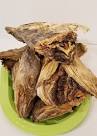
The Norwegian Seafood Council and stockfish stakeholders have stressed the need for the Federal Government to delist stockfish from the list of items banned from accessing foreign exchange from the official window.
They made the call at a one-day interactive workshop with regulatory authorities in Nigerian stockfish and seafood imports on Wednesday in Lagos.
Report says that the Central Bank of Nigeria (CBN) listed pelagic fish and stockfish among 44 items not eligible for foreign exchange (forex) window.
Mr Trond Kostveit, Director Africa, Norwegian Seafood Council, urged the Federal Government to reconsider the removal of stockfish from the list to promote ease of doing business.
“We started the process three years ago to see if it is possible to delist stockfish from foreign exchange ban because there are many good arguments why the product should not be on the list.
“The forex ban has made the price of stockfish in local markets quite expensive, especially for consumers.
“The cost of getting forex at the parallel market is taking a toll on stockfish imports. For consumers, stockfish heads are the only source of proteins.
“It will be very beneficial if we can get access to the official exchange rate and thereby, reduce the cost of the fish for consumers,’’ Kostveit said.
He noted that Norway was not competing with any Nigeria local fish species.
“We understand the ban is made to promote local aquaculture production but the product is not a threat to Nigerian aquaculture.
“When we tried to say that stockfish has become such an important part of the Nigerian diets and it is very important, that we make it cheaper.
“So, we will continue this appeal and hopefully, we can see that soon it is possible to delist stockfish from the foreign exchange ban,” he said.
Mrs Abbey Cheke, Consultant, Norwegian Seafood Council, said that the council would continue to promote aquaculture until the government intervene on the ban.
Cheke reiterated that stockfish was not competing with Nigeria fish by any standard hence, the need to delist it from the forex ban list.
“We understand the need to promote development of non-oil sectors in Nigeria, and we will continue to seek areas of assistance and collaboration for aquaculture sector.
“Stockfish is the cheapest source of protein in this country, we are praying for its delisting from foreign exchange ban because Nigeria does not import more than 10,000 tonnes yearly.
“At the Norwegian Seafood Council, we are also doing a lot of Corporate Social Responsibility locally to assist Nigeria step out of mono oil exports.
“We are assisting Nigeria to get aquaculture produce like tilapia and catfish unbanned from the European markets and other international markets in the U.S,” she said.
However, a regulator, Mr James Umoru, Deputy Director, Department of Fisheries and Aquaculture, Federal Ministry of Agriculture and Rural Development, said the government was not insensitive to the appeals but would continue to work for the entire good of the country.
“What the government has made as a policy, we have to adhere to it. The government has deemed it fit to make the policy because it seems stockfish importation is taking a lot of its forex.
“That decision I believe is taken in the best interest of the nation. The government is aware of the appeal the importers and stakeholders are making.
“The government is sensitive to the appeal and all efforts are being addressed. Collaborations and consultations are ongoing.
“The decision to ban is not taken today; so, the fisheries department and the ministry will continue to collaborate with all relevant stakeholders to see how to make the business environment conducive for everybody,” Umoru said.
An importer, Mr Stephen Eze, the Chairman, Aborigine Stockfish Sellers Association, said that delisting the product from the forex ban would benefit everybody.
Eze said that members of the association would be glad if stockfish was removed from the forex ban as it was an important business in the Nigerian economy.
“Currently, it costs a lot to import stockfish into the country. It is a very vital part of Nigerian cuisine and major source of local protein,’’ he noted.
The chairman said that if stockfish could be removed from the ban, it would help reduce the cost of the product in the country. (NAN)





Some residents in Lagos State have expressed concern over the recent surge in the price of tomatoes, forcing many households to adopt alternatives.
The residents made their views known in separate interviews on Wednesday in Lagos.
A market survey showed that a 50kg basket of tomatoes now sells between N115,000 and N125,000, compared to between N35,000 and N40,000 recorded last month.
Olachi Igwe, a resident of Ago Palace, said the scarcity and high cost of tomatoes had disrupted her household’s meal plans.
“I contacted my usual vendor, but she said tomatoes were scarce and difficult to source.
“A small bowl we used to buy for between N3,500 and N4,000 now sells for as high as N6,000 to N7,000, when available.
“For now, my family will resort to palm nut stew (ofe akwu) until prices stabilise,” she said.
Another resident, Mercy Okeleye of FESTAC, said although her family prefers fresh tomatoes, rising prices have forced her to consider cheaper options.
“I cannot do without fresh tomatoes because of the taste, but I may have to buy broken ones, popularly called ‘esha’, which are relatively cheaper.
“I do not consider tomato paste a suitable substitute because it is not purely made from tomatoes,” she said.
Also speaking, Tope Babalola from Dopemu, said she might adjust her cooking methods if prices remain high.
“I have not bought tomatoes in over a month, but if the price is still high, I will use more onions and peppers.
“I will not resort to artificial additives; I prefer natural ingredients for my meals,” she said.
Joan Ogugua, another resident, said she had already switched to tomato paste to cope with the situation.
“I asked my son to buy tomato paste for our meals. I cannot justify spending excessively on fresh tomatoes when other basic needs must be met,” she said.
Also, Oge Ugwu, a civil servant at Lekki, said she would resort to cucumber stew with the recent price hike.
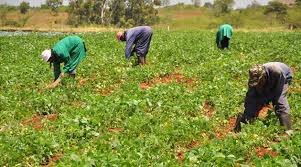
The Tomatoes Growers and Processors Association of Nigeria (TOPAN) has predicted a steady increase in the price of the produce between May and June 2026.
The Kaduna State Chairman TOPAN, Rabiu Zuntu, disclosed this in an interview recently in Lagos.
Zuntu noted that although there is no particular time for tomatoes planting season up north, seasonal weather variations can affect the production of the produce.
“Although we can plant tomatoes all-year-round, we cannot assure quality harvest all-year-round.
“Some farmers are harvesting now, while others are transplanting, and others are harvesting.
“Tomatoes are still available for sale but the price of the produce is gradually on the increase.
“Come May/June, the prices of tomatoes will be very expensive, so now is a good time to stock up the produce. There’s always a scarcity within that period.
“This is because of the nature of the weather in the north around that period, the weather is usually very hot and tomatoes cannot resist such hot temperature,” he said.
Zuntu said the price of tomatoes have started rising up in the north.
“A 50kg rafia basket of tomatoes sells from N20,000 as against N7,000 to N10,000 that was sold earlier in the year.
“While a crate of tomatoes up north is sold between N10,000 and N15,000 as against N5,000 to N6,500 sold earlier in the year.
“In most part of Kano State, where there is bumper harvest, they are rounding off their harvest. So, tomato is not that available there and most buyers have turned to where they can find it now, mostly within Kaduna State and some parts of Plateau State.
“So, that’s why the supply has decreased and the tomato supply and cost is determined by the law of demand and supply,” he said.
A 50kg basket of tomatoes in Lagos, at the moment, sells between N40,000 and N60,000 depending on the size and quality.
The Smallholder Women Farmers Organisation in Nigeria (SWOFON), Oyo State chapter, has said that the lack of irrigation facilities had become a major obstacle to dry season farming in the state.
The Chairperson of SWOFON in Oyo State, Atinuke Akinbade, said this in an interview in Ibadan on Monday.
Akinbade, who shared the experiences of women farmers in the state during the 2025 dry season, said that inadequate access to water for irrigation significantly affected the performance of many farmers during the period.
“It hindered many older farmers from participating in dry season farming and also prevented younger farmers from doing as much as they could in cultivating large acres of land,” she said.
Akinbade explained that farmers who managed to plant during the season struggled to access sufficient water to irrigate their farms, a situation worsened by the effects of climate change.
“Many farmers who depended on streams and wells to water their crops suffered major setbacks because those sources could not provide enough water for irrigation.
“Some farmers had to resort to buying water from commercial water tankers, which increased the cost of production, while at times it was even difficult to get water from the tankers,” she said.
The SWOFON chairperson warned that failure to address the problem could worsen food insecurity in the coming months.
“Even now, rainy season farming has not fully commenced because of the irregular rainfall pattern.
“This is a double burden, and if nothing is done, it may lead to serious hunger later,” she said.
Akinbade, however, acknowledged that the government had organised training for members of the association on home gardening.
She, however, said that little support was provided to address the challenges of dry season farming.
The chairman said that the home garden support package given to members consisted mainly of seedlings and one sprayer.
“They gave us two packs each of maize and pepper seeds, with six seeds in each pack, as well as one sprayer, so that we can grow food for household consumption,” she said.
Earlier, Oluwatoyin Oyedeji, SWOFON Coordinator in Oyo East, explained the severe hardship members of the organisation experienced in sourcing water for irrigation.
“Many farmers are already counting their losses because water was not available to irrigate their farms.
“Those who depended on streams and brooks were badly affected because many of them dried up, while the few that still had water had so little that farmers had to dig deeper into the ground in search of more,” Oyedeji said.
In the same vein, the Women Leader for farmers in Saki East, Musiliu Ashiru, said the absence of irrigation facilities also hampered dry season farming in her area.
According to her, many farmers still engaged in dry season farming have had to pay for water to keep their crops alive.
“Many of them buy water from the dam here to irrigate their crops. It has not been easy for them this year,” Ashiru said.




Customs, American Business Council Deepen Trade Collaboration
ShareBy Tambaya Julius, Abuja The Nigeria Customs Service (NCS) and the American Business Council (ABC) have reaffirmed their commitment to...
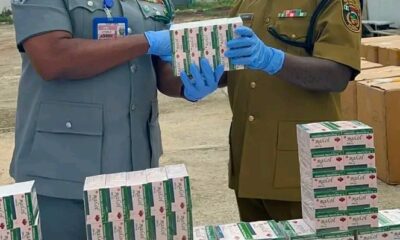

NCS, UAE Customs Foil Tramadol Smuggling Attempt
ShareBy Tambaya Julius, Abuja In collaboration with international partners, the Nigeria Customs Service (NCS) has foiled an attempt to smuggle...


Police Detain Actor Ugezu Ugezu for Defamatory Facebook Post against Prince Daniel Kanu
ShareBy David Torough, Abuja Actor and social commentator Ugezu J. Ugezu, was detained by the Nigeria Police Force following an...

Tinubu Visits Benue, Commissions Projects Tomorrow
ShareFrom Attah Ede, Makurdi Benue State is set to host the First Lady of the Federal Republic of Nigeria and National...

Fifa to Pay Somali Referee Artan Full World Cup fee
ShareSomali referee Omar Artan, who was denied entry to the United States to officiate at the World Cup, will still receive his full...
Delegates in China Denounce Xenophobic Attacks
ShareAfrican delegates attending seminars in China have condemned reported xenophobic attacks against foreign African nationals in South Africa and called for greater unity across the continent. The delegates made the...

Kogi Targets 240,000 Children for Schistosomiasis Mass Drug Administration
ShareFrom Joseph Amedu, Lokoja The Kogi State Government said it will reach over 240,000 children aged 5–14 years in 39 wards across 15 Local...


Anambra Urges Residents to Provide Information on Fake Pastors, Others
ShareFrom Sylvia Udegbunam, Enugu The Anambra State Government, under the leadership of Prof. Chukwuma Charles Soludo, has extended the “War Against Fake Native Doctors”...


Boat Mishap Kills 11 in Benue River
ShareFrom Attah Ede, Makurdi No fewer than 11 persons were Saturday night feared dead when a boat said to be conveying them...


Terrorism: After Gen Rabe’s Death, Buratai Warns of Darker Days Ahead
ShareBy David Torough, Abuja Nigeria’s deepening insecurity crisis has triggered fresh alarm across military, political and religious circles following the...