
NEWS
NPA Expects 25 Ships at Lagos Ports

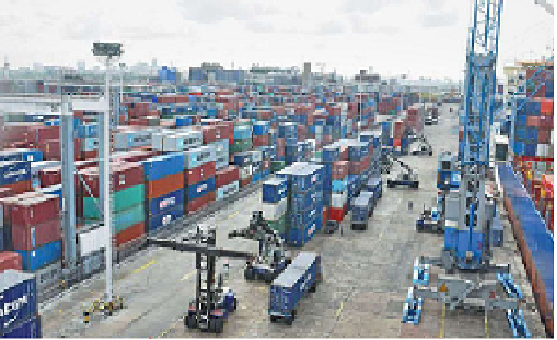
The Nigerian Ports Authority (NPA) on Monday said that 25 ships were expected to arrive at the port from Jan. 31 to Feb. 18.
The NPA made this known in its publication, ‘Shipping Position’, a copy of which was made available to the newsmen in Lagos.
According to it, the ships are expected to arrive at the Lagos Port Complex, laden with petroleum products, food items and other items.
The publication said that the ships contained general cargo, frozen fish, container, bulk sugar, base oil, soya beans, butane gas, bulk wheat and bulk salt.
NPA reports that eight other ships had arrived the ports waiting to berth with bulk sugar, plaster and general cargo.
The organisation also said that 19 ships were at the ports discharging bulk wheat, general cargo, container, ethanol, bulk salt, bulk sugar, and petrol. (NAN).

By Emmanuella Anokam
During the Gulf War which took place between Aug. 2, 1990 and Feb. 28, 1991, Nigeria reportedly earned an oil windfall of approximately 12.2 billion dollars to 12.4 billion dollars in additional oil revenue.
The 1990–1991 Gulf War was an international conflict triggered by Iraq’s invasion of Kuwait, driven by oil disputes and debt.
The war led to a surge in oil prices, and the extra revenue was generated between 1990 and 1991 under the administration of Gen.
Ibrahim Babangida; however, records show the funds were not effectively utilised.The 1994 Pius Okigbo Panel, set up to investigate the Central Bank of Nigeria (CBN), found that 12.
2 billion dollars of the 12.4 billion dollars windfall was spent on non-essential, “off-budget” projects and was unaccounted for’’.Interestingly, a similar situation has unfolded in the ongoing Middle East crisis.
This raises the question of how Nigeria could benefit significantly from the current windfall—a surge in global crude oil prices triggered by escalating regional tensions.
In retrospect, the coordinated military strikes by the U.S. and Israel on Iranian strategic infrastructure on Feb. 28 triggered retaliatory attacks across the Gulf region.
The escalation injected significant geopolitical risk into global oil markets, pushing prices sharply above pre-crisis levels.
The situation got worsened with Iran’s threat to attack ships transiting through the Strait of Hormuz through which roughly one-fifth of global oil supply passes.
Experts say the disruption to shipping through this narrow corridor is affecting global energy markets.
Against this background, Nigerians are upbeat that with Nigeria’s 2026 budget benchmark pegged at 64.9 dollars per barrel, the current international crude oil price hovering between 92 dollars and 100 dollars presents a major revenue opportunity for the country.
Experts say Nigeria’s geographic advantage allows it to benefit from higher global oil prices even when Gulf supply routes are disrupted.
They say Nigeria stands to benefit from a significant fiscal windfall as oil prices rise well above the 2026 budget benchmark of 64.9 dollars per barrel, which also assumes production of 1.84 million barrels per day and an exchange rate of N1, 400 per dollar.
In his submission, Dr Billy Gillis-Harry, National President, Petroleum Products Retail Outlets Owners Association of Nigeria (PETROAN), cautioned that such windfalls must be properly managed to avoid repeating past mistakes associated with poor utilisation of excess oil earnings.
Gillis-Harry urged the Federal Government to invest any windfall from rising crude oil prices into refineries rehabilitation and strategic sectors of the economy to ensure long-term national benefits.
He said Nigeria could benefit significantly from the current surge in global crude oil prices triggered by escalating tensions in the Middle East.
Gillis-Harry recalled that a similar situation occurred during the Gulf War in the 90s when the country reportedly earned over 12 billion dollars in oil windfall from higher oil prices but did not fully convert the earnings into long-term economic gains.
He explained that Nigeria should save a significant portion of the extra revenue in institutions like the Nigeria Sovereign Investment Authority, which manages the country’s sovereign wealth fund.
“The government should channel the additional revenue into productive investments that can generate long-term value for the country.
“We have a sovereign wealth fund that should be strengthened; our refineries that have remained largely comatose need to be revived, and the gas revolution being promoted by the government should also receive stronger funding.”
Gillis-Harry said that while saving excess revenue was important, investing the funds in viable economic ventures capable of generating additional income for the country would be more beneficial.
Speaking on the implications of the U.S.-Israel tensions with Iran on global oil prices, the PETROAN president said geopolitical conflicts in major oil producing regions often disrupted global energy supply chains and pushed crude oil prices higher.
He said that although Nigeria was an oil-producing country, it still felt the impact of international price fluctuations because crude oil was traded and priced globally.
“Domestic refineries must purchase crude oil at international market prices.
“Crude oil is priced internationally; anybody that wants to buy crude oil in Nigeria will buy it at the international price.
“That is why you see fluctuations even in local refining operations.’’
Gillis-Harry cited the operations of the Dangote Refinery, explaining that the refinery purchases crude oil based on the international dollar price, even when payment was made in naira equivalent at the prevailing exchange rate.
“Nigeria cannot simply allocate all its crude oil production to domestic refineries because a large portion of the production is tied to joint venture agreements with international oil companies such as Shell plc. and Chevron Corporation.
“These companies invest in the exploration and production process, so crude oil ownership and allocation are shared under existing partnership arrangements,” he said.
The expert urged the government to focus on expanding Nigeria’s crude oil production capacity to about 4 million barrels per day to meet both domestic refining needs and international obligations.
Sharing similar sentiments, a renowned economist, Dr Chijioke Ekechukwu, argued that Nigeria could have recorded a major economic windfall from the current surge in global crude oil prices if the country’s crude oil production was operating at its full installed capacity.
Ekechukwu, Group Managing Director/CEO, Bristol Investment Limited, said Nigeria would have hit an economic jackpot if its crude oil production had reached its installed capacity or quota under the Organisation of the Petroleum Exporting Countries (OPEC).
According to Ekechukwu, Nigeria is currently producing far below its potential as an oil producing nation, thereby limiting the benefits it can derive from the current rise in global crude prices, triggered by tensions involving the U.S. and Iran.
The economist, however, warned that while government revenue may increase due to higher crude prices, the average Nigerian is already bearing the burden of rising petroleum product costs.
He said the surge in fuel prices had triggered increases in diesel costs, transportation fares and production expenses across multiple sectors of the economy.
“The rising energy costs are already pushing up prices of goods and services, thereby worsening the cost of living pressures on citizens.
“Nigerians are already experiencing high fuel costs, high diesel prices, rising transportation costs and increased production expenses.
“These increases are translating into higher prices of goods and services’, meaning the purchasing power of the average Nigerian is declining rapidly,” he said.
Ekechukwu added that although Nigeria’s treasury would experience some revenue boost from the high crude prices, the gains would be significantly lower than what the country could have realised if crude oil production were at optimal levels.
Deserving no less attention, another economic expert, Mr Yusha’u Aliyu, warned that the ongoing conflict could have far-reaching consequences for both regional and global economies, particularly in the energy sector.
Aliyu said the war, largely centered on regime change, had also exposed the enormous cost of modern technological warfare.
He noted that the deployment of advanced military systems comes with significant economic implications.
According to him, beyond the battlefield, the conflict has already distorted global production and distribution of petroleum products, leading to rising energy prices.
He explained that Iran, a prominent member of the OPEC, played a critical role in the Middle East political economy and controls strategic transport corridors vital to global trade.
The situation, he noted, had implications for the efficiency of international trade and the stability of global oil supply.
“Rising pump prices could continue to trigger a wider adjustment in the prices of goods and services, as energy costs typically have a multiplier effect on the broader economy.
“The instability in global oil supply is also increasing production costs across energy value chains, which ultimately reduces consumers’ purchasing power,’’ he said
Aliyu, however, said Nigeria could record increased oil revenues if crude prices remained above the benchmark contained in the country’s 2026 fiscal projections.
In spite of this potential windfall, the economic experts advise the Federal Government to prioritise advance domestic crude supply to local refineries at pre-war prices.
They recommend using additional oil revenues to stabilise the Forex market and cushion the economy against external shocks. (NAN)
NEWS
Court Adjourns Multiple Taxation Suit as FCT Private School Owners Drag Authorities to Court, Urges Dialogue
By Laide Akinboade, Abuja
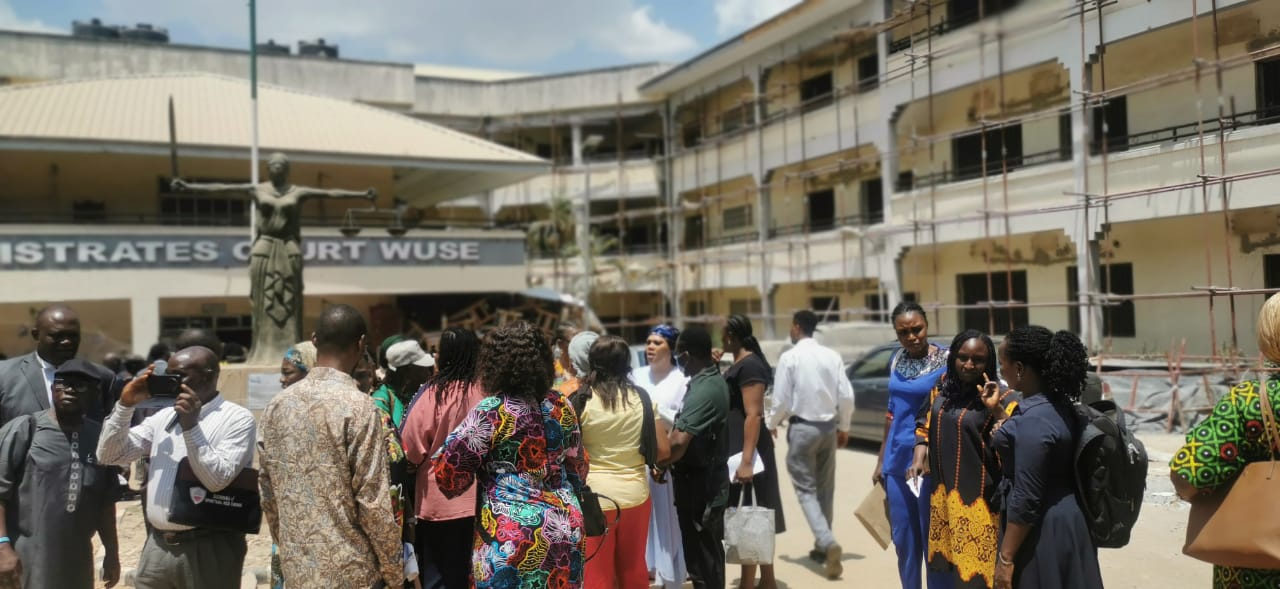
A Magistrates’ Court sitting in Wuse Zone 2, Abuja, on Wednesday adjourned to April 16, 2026, a suit filed by the National Association of Private School Owners (NAPS) against the Federal Capital Territory Administration (FCTA) and the Abuja Municipal Area Council (AMAC) over alleged multiple taxation, while urging all parties to explore amicable resolution through dialogue.
The court, after preliminary proceedings, emphasized the need for restraint and constructive engagement among the parties, noting that dialogue remains a viable path toward resolving the dispute without prolonged litigation.
NAPS had approached the court challenging what it described as overlapping and multiple tax demands imposed on private schools by both the FCTA and area councils, particularly AMAC.
Speaking to journalists shortly after the sitting, counsel to the association, Alexander N. Ogbo, confirmed the adjournment and provided insight into the substance of the case.
According to him, the dispute arose from what ought to be an institutional policy matter ordinarily handled by area councils in their dealings with schools, but which has now seen intervention from the FCTA through its agencies.
He explained that the development has resulted in multiple taxation, with schools receiving similar demands from AMAC, other area councils, and departments of the FCTA on the same issues.
“This overlap is creating institutional conflict and disrupting the smooth operation of schools, including their academic activities,” he said, adding that the situation has become increasingly serious.
Ogbo stressed that the core issue before the court is the challenge against multiple taxation, noting that private schools are caught in the middle of competing authorities.
“As the saying goes, when two elephants fight, the grass suffers. In this case, the schools are the grass, while the ‘elephants’ are the FCTA Health Department and AMAC,” he stated.
He further called on the FCTA and area councils to harmonize their responsibilities and establish a unified regulatory framework that would provide clarity for private school operators.
“Schools are not opposed to regulation; we simply need clarity. At the moment, there is confusion as to whether to comply with AMAC or the FCTA’s Public Health Department,” he added.
On the role of the court, the counsel noted that it is providing a neutral platform for all parties to present their cases and clarify procedural concerns, particularly regarding demand notices issued by the FCTA’s Health Department.
He also reiterated the association’s openness to settlement, emphasizing that dialogue remains the preferred option if the authorities are willing to engage constructively.
In her remarks, President of NAPS, Rukayat Agboola, maintained that private schools recognize regulatory oversight but insisted that such processes should be streamlined through the appropriate authority, particularly the Education Secretariat.
She said the association prefers that all directives concerning schools be channeled through a single regulatory body to avoid confusion and duplication.
Some members of the association who spoke to journalists described private schools as critical partners in national development, contributing to education and employment, and cautioned against treating them as revenue sources.
They decried what they termed excessive and multiple levies, including a controversial child-based tax reportedly pegged at five per cent of tuition fees per term, warning that non-compliance could affect school accreditation.
The plaintiffs are seeking judicial intervention to halt the alleged multiple taxation and compel the relevant authorities to streamline their regulatory and fiscal responsibilities.
From Sylvia Udegbunam, Enugu
A health specialist and founder (O.A.K) diabetic foundation USA, Uche Emeson has charged women to take care of their health so that they can take care of others and be available for their family and community.
Emeson made this call during the celebration of International Women’s day by Refreshing hope unique women at New haven Enugu, noting that women take their health for granted because they are the caregivers of the family.
She encouraged the women not to neglect themselves no matter how much they give to others, advising them not to be the last one to take care of themselves but rather go for annual physical exams.
According to her “Are you in a healthy relationship? I know you take care of someone that is your children, families, communities but at the end of the day, you don’t take care of yourself. You have to be alive and healthy to take care of others”, she said.
Refreshing hope unique women are there to empower women to take care of their community but at the same time, they are the centre of that community. Be in a healthy relationship whether they are married, single or young. Make sure your health counts so that you can give your best.
She further advises women to know their family history. “If cardiac arrest, diabetes or any sickness is in your family, it is very important that you trace it from your mother, grandmother, sisters and your siblings. If you find out that you have cardiac arrest in your family, you make sure you check your blood pressure at least every month”.
“If you know your family history early, you will start to manage it with lifestyle modification. Check the kind of food you eat, the portion of food you eat, if you have to increase your physical activities, monitor your numbers, know the nutrition plans you are giving to your family.
The Chief executive officer of Refreshing Hope Initiative, Adaena Ngozi said that the organization commemorates the women’s day annually which is known as Refreshing hope unique women.
She noted that it is a celebration where women and youths gather to align with what every woman is doing. A period to encourage, appreciate women and check and see how far they have gone in the struggle and fight to be heard, seen and given the opportunity to develop and be a part of developing Society.
However she pointed out that giving is not only cash or material things but one can give out time, advice, commitment, sacrifices and smile to someone depending on the need at that period.
The founder Heroine Foundation, Onyinye Mama in a panel discussion explained that this year’s International Women’s day themed “Give to Gain” connotes Justice, actions and Right. One has to give out something before gain.
“Whatever you expect to get from another person and you have not given to the society, you don’t have to demand for it. You have to give out justice, action and right to another person in your own small living circle so that you can gain something also.
She further advises women to exhibit good character in their various homes stressing that it is the spice of every marriage.
The event featured panel discussion, presentation of goodwill messages and dance by Solidarity school new haven Enugu.



U.S./Israel-Iran War: Lessons for Nigeria from Gulf War Oil Windfall
ShareBy Emmanuella Anokam During the Gulf War which took place between Aug. 2, 1990 and Feb. 28, 1991, Nigeria reportedly...


Safeguarding Nigerians against AI Fakes and Digital Fraud
ShareBy Tolu Aiyegbusi As Artificial Intelligence (AI) continues to advance, creating highly realistic voices, faces, and even emotions, Nigerians are...

FIFA Unveils First Song for 2026 World Cup
ShareFIFA has announced “Lighter,” a cross-genre collaboration between American country-rap artist Jelly Roll and Mexican regional music star Carín León,...


China has suspended a marathon race official for one year after he mistakenly blocked the eventual winner from crossing the finish line at an event in Chongqing.
ShareThe incident, captured in a widely shared video, occurred during Sunday’s Chongqing Wanzhou Marathon and sparked anger online, prompting local...
Nasarawa Marks International Women’s Day, Urges Investment in Women
ShareFrom Abel Zwanke, Lafia The Nasarawa State Commissioner for Women Affairs and Humanitarian Services, Barr. Hauwa Samuel Jugbo, has called...


Court Adjourns Multiple Taxation Suit as FCT Private School Owners Drag Authorities to Court, Urges Dialogue
ShareBy Laide Akinboade, Abuja A Magistrates’ Court sitting in Wuse Zone 2, Abuja, on Wednesday adjourned to April 16, 2026,...
Health Specialist Urges Women to take Care of their Health, Serve Society Well
ShareFrom Sylvia Udegbunam, Enugu A health specialist and founder (O.A.K) diabetic foundation USA, Uche Emeson has charged women to take...


Trump Seeks To Delay Meeting With Xi in China
ShareUS President Donald Trump said on Monday that he is planning to delay a high stakes visit to China later...
Int’l Oil Companies Deepen Economic Engagement of Host Communities in Africa
ShareInternational oil companies operating in Nigeria add other African countries are making significant progress in providing economic growth support to...

Divine Mandate Lauds Alia over Return of IDPs to Ancestral Homes
ShareBy Elijah Oguche, Abuja The group under the auspices of the Divine Mandate Kaduna State Chapter on Monday evening lauded...