
BUSINESS
Number of MSMEs in Nigeria Drops by 2m in Four Years – SMEDAN


The number of micro, small and medium enterprises across the country dropped by about two million between 2017 and 2021, the Small and Medium Enterprises Development Agency of Nigeria has said.
It said the country’s MSMEs reduced from about 41 million in 2017 to 39 million in 2021, as this was due to the impact of COVID-19 and other challenges on small businesses nationwide.
The Director-General, SMEDAN, Dikko Radda, disclosed this at an event organised by the Transparency Advocacy for Development Initiative in collaboration with SMEDAN in Abuja.
He said, “According to the 2021 MSME Survey, there are 39 million MSMEs in Nigeria. This is a significant drop from 41 million MSMEs reported in the 2017 survey report.
“The major reason for the drop in the number of MSMEs could be traced to the COVID-19 pandemic, the challenges MSMEs have in accessing funds to start or grow their enterprise and the problems of globalisation.”
Radda, who was represented by the Director, Planning, Research, Monitoring and Evaluation, SMEDAN, Wale Fasanya, said both the public and private sectors had roles to play in the sustainable development of MSMEs in Nigeria.
He also noted that the contribution of MSMEs to Nigeria’s Gross Domestic Product dropped by 3.5 per cent in 2021, adding that MSMEs accounted for 6.2 per cent of external trade in the same year.
“According to the 2021 MSME survey report, the top priority areas of support that MSMEs need are power, funding/finance, tax and security. This could explain why the total MSMEs’ contribution to GDP dipped by 3.5 per cent in 2021 and only accounted for 6.2 per cent of external trade,” he stated.
Radda added that, “With these in mind, there is an obvious need for all the critical stakeholders to more than ever before put in place mechanisms to ensure that the potentials that lie within the MSMEs are fully exploited to create wealth, employment and reduce poverty in Nigeria.”
The Executive Director, Transparency Advocacy Development Initiative, Yomi David, said the event was organised to boost the roles of MSMEs in building capacity for national development.
He urged the Federal Government to upgrade SMEDAN to a commission for maximum performance.


Some residents in Lagos State have expressed concern over the recent surge in the price of tomatoes, forcing many households to adopt alternatives.
The residents made their views known in separate interviews on Wednesday in Lagos.
A market survey showed that a 50kg basket of tomatoes now sells between N115,000 and N125,000, compared to between N35,000 and N40,000 recorded last month.
Olachi Igwe, a resident of Ago Palace, said the scarcity and high cost of tomatoes had disrupted her household’s meal plans.
“I contacted my usual vendor, but she said tomatoes were scarce and difficult to source.
“A small bowl we used to buy for between N3,500 and N4,000 now sells for as high as N6,000 to N7,000, when available.
“For now, my family will resort to palm nut stew (ofe akwu) until prices stabilise,” she said.
Another resident, Mercy Okeleye of FESTAC, said although her family prefers fresh tomatoes, rising prices have forced her to consider cheaper options.
“I cannot do without fresh tomatoes because of the taste, but I may have to buy broken ones, popularly called ‘esha’, which are relatively cheaper.
“I do not consider tomato paste a suitable substitute because it is not purely made from tomatoes,” she said.
Also speaking, Tope Babalola from Dopemu, said she might adjust her cooking methods if prices remain high.
“I have not bought tomatoes in over a month, but if the price is still high, I will use more onions and peppers.
“I will not resort to artificial additives; I prefer natural ingredients for my meals,” she said.
Joan Ogugua, another resident, said she had already switched to tomato paste to cope with the situation.
“I asked my son to buy tomato paste for our meals. I cannot justify spending excessively on fresh tomatoes when other basic needs must be met,” she said.
Also, Oge Ugwu, a civil servant at Lekki, said she would resort to cucumber stew with the recent price hike.

The President of Dangote Industries Ltd., Alhaji Aliko Dangote, has pledged to construct a N550 million students’ hostel at the Federal University of Technology, Owerri (FUTO) to address accommodation challenges.
Dangote made the pledge at the weekend while delivering a public lecture on: “Enterprise, Leadership and Service to Humanity,” at the institution in Owerri, Imo state.
He also donated N25 million to the students through the Student Union Government.
The industrialist said the hostel project, when completed, would help ease the shortage of on-campus accommodation for students.
Speaking during the lecture, Dangote recounted his entrepreneurial journey, noting that he began as a distributor of bagged cement and other commodities before venturing into large-scale manufacturing.
He said his decision to adopt backward integration was driven by the need to produce locally goods that were previously imported.
Dangote described the importation of finished goods as detrimental to the economy, saying it fuels unemployment, inflation and poverty, while creating jobs and prosperity in exporting countries.
According to him, sustainable economic growth depends on local production and value addition to raw materials.
He urged investors to prioritise domestic investment, stressing that industrialisation must be driven largely by citizens.
“If we refuse to invest in Nigeria and Africa, no foreign investor will be willing to stake their funds here,” he said.
Dangote cited Asian economies as examples of development driven by indigenous investment rather than reliance on foreign capital.
“Asian economies were powered by their own people. They did not wait for foreigners to develop their countries,” he said.
He also highlighted the potential of Nigerian youths, describing them as innovative and globally competitive.
Dangote noted that engineers trained by his companies, including the Dangote Refinery and Fertiliser plants, had been recruited by firms in the Gulf region as expatriates.
He emphasised the role of entrepreneurship in national development, saying it enables young people to create jobs, diversify the economy and drive sustainable growth.
“We face significant economic and social challenges, but we also sit on enormous opportunities, including a young population, abundant natural resources and a strong entrepreneurial spirit,” he said.
Dangote urged students to be innovative, adaptable and committed to acquiring relevant skills that would enable them to contribute meaningfully to society.
He also pointed to China’s large pool of engineers as a key factor behind its emergence as a global manufacturing hub.
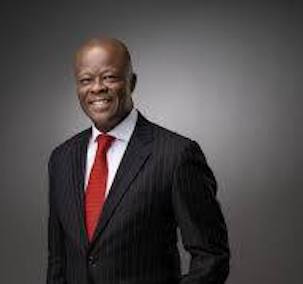
Economic experts have offered mixed assessments of the tenure of the former Minister of Finance and Coordinating Minister of the Economy, Wale Edun, while outlining priorities for the new minister, Taiwo Oyedele.
The experts spoke in Abuja on Monday.
Oyedele was recently elevated to the position of Minister of Finance and Coordinating Minister of the Economy in a major cabinet reshuffle,
He officially assumed office on April 24, succeeding Edun.
They acknowledged Edun’s efforts at macroeconomic stabilisation, while stressing the need for deeper reforms to sustain growth and ease citizens’ hardship.
A development economist, Dr. Gloria Phillips, said Edun’s tenure was marked by fiscal discipline and improved revenue drive, but noted inflationary pressures remained high.
“Stabilisation policies were evident, but transmission to household welfare was weak,” he said.
Phillips commended the government’s coordination of fiscal and monetary policies during Edun’s period.
She, however, urged the new minister to prioritise exchange rate stability and boost investor confidence.
Simon Audu, an economist, said reforms initiated under Edun laid a foundation for long-term growth.
Audu said that consistency and policy clarity would be critical for the incoming administration.
He said that the business environment improved moderately, while calling for stronger support for small and medium enterprises to drive job creation.
Miss Lydia Emerson, a public finance expert, said that debt management strategies were strengthened during the period.
She urged the new minister to focus on reducing debt servicing costs and expanding non-oil revenue sources.
Emerson also emphasised the need for comprehensive tax reforms to widen the revenue base.
She urged the incoming minister to simplify tax administration and improve compliance.
The experts collectively agreed that the new finance minister must prioritise inflation control, economic diversification, and social protection programmes.
They also stressed the importance of transparency, policy continuity, and inclusive growth to consolidate gains recorded in recent years.



Fresh Terrorists Attack Kills One, Injures Two in Kogi
ShareFrom Joseph Amedu, Lokoja A yet to be identified gunmen suspected to be armed terrorists have attacked two communities in Kogi state killing one resident and injuring two others. The...
Prosperity Cup: Okoroma United Battles Akinima-Biogbo FC in Final Match
ShareFrom Mike Tayese, Yenagoa Akinima/Biogbo FC of Ogboloma in Yenagoa Local Government Area and Okoroma United from Okoroma in Nembe LGA will battle for the ₦30,000,000...


Boko Haram Militants Kill 23 Soldiers in Chad
ShareThe Chadian armed forces on Tuesday said that 23 soldiers were killed and 26 hurt in an attack by Islamist militant group Boko Haram on a base on...


Military Debunks Poor Feeding Claims in North-east
ShareThe Theatre Command North East Joint Task Force, Operation HADIN KAI, has described the poor feeding of troops in operational theatres as misleading. The theatre...

Residents Groan Under Rising Tomato Prices, Seek Alternatives
ShareSome residents in Lagos State have expressed concern over the recent surge in the price of tomatoes, forcing many households to adopt alternatives. The residents made their views known...


Dangote Cement Grows Exports by 71.6 Per Cent, Posts N421bn Profit
ShareBy Tony Obiechina, Abuja Dangote Cement Plc delivered a strong first-quarter performance in 2026, with cement and clinker exports from...


Akume, CAN Rally Faith, Traditional Leaders Towards 2027 Polls
ShareBy Laide Akinboade, Abuja The Secretary to the Government of the Federation, George Akume and the President of the Christian...


FG Unveils $500m Research Fund, Sanctions Honorary Degree Abuse
ShareBy Tony Obiechina, Abuja The Federal Government has approved a sweeping reform package aimed at strengthening Nigeria’s research ecosystem and...
We should not weaponize faith but rather harnessed as a force for peace – CAN
ShareBy Laide Akinboade, Abuja The Christian Association of Nigeria (CAN), on Wednesday, appealed that faith should not be weaponized rather...


Bauchi Guber: I’ll Serve With Greater Focus, Efficiency Impact – MA Abubakar
ShareBy Mike Odiakose, Abuja Former Bauchi State governor, Mohammed Abdullahi Abubakar, SAN, has assured the people of the state that...