
Metro
Obasanjo Blames Rice Import Woes on Shagari-era Policy U-turn


Ex-President Olusegun Obasanjo has blamed Nigeria’s long-standing dependence on rice imports on the decision by the civilian administration in 1979 to lift a ban imposed by the outgoing military government, saying the policy reversal set the country back by decades.
Obasanjo made the remarks on Thursday in Abuja at the International Memorial Lecture and Leadership Conference marking the 50th anniversary of the assassination of former Head of State, General Murtala Muhammed.
The memorial lecture focused on General Muhammed’s defining “Africa Has Come of Age” address delivered at the Organisation of African Unity Summit in Addis Ababa.
Obasanjo was the military Head of State who handed over power to Alhaji Shehu Shagari, democratically elected President of the Second Republic.
Recounting events at the end of military rule in 1979, Obasanjo said his government had been on the verge of achieving self-sufficiency in rice production for Nigeria before handing it over to civilians.
“By the time we left in July 1979, we wanted to be self-sufficient in rice production. We asked that a report be prepared on what was in the fields. The report showed that we would be self-sufficient that year,” he said.
Based on the findings, Obasanjo explained, his administration banned the importation of rice before leaving office in October 1979.
“When the civilian administration came in, one of the first things they did was to lift the ban on rice importation so they could allocate import licences to their supporters and political associates,” he added.
Obasanjo cited what he described as a notorious case of abuse involving a politically connected importer who inflated the cost of a rice contract in order to extract kickbacks.
“Let me give you an example. One of the barons who obtained a rice import licence from America ordered rice and then asked the suppliers to add $5 million to the cost. They did. They added the $5 million and supplied the rice. He then went back to New York and demanded $2.5 million out of the $5 million. They refused and gave him only $1 million. He reported the matter to the Nigerian embassy and to the Nigerian representative at the UN, who contacted the suppliers. The suppliers said they did not understand what the issue was.
“Eventually, the suppliers explained that the man had asked them to add $5 million to the cost and that, without doing so, they would have lost the contract. They took the risk and secured the deal. He wanted $2.5 million but had taken no risk, so they gave him $1 million.
“The ambassador said he felt like digging a hole and sinking into it. That was your country,” he said.
The former head of state added: “Since the lifting of the rice import ban in 1979, we have not recovered from it. That is why we are still importing rice today. These are the kinds of things that go wrong, and then we ask whether Africa has come of age. I wonder.”
Obasanjo argued that Nigeria’s inability to sustain sound policies was a major reason both the country and the continent had struggled to “come of age”.
Turning to the economy, he lamented that Nigeria had lost ground over the years despite earlier progress.
“There was a time when Nigeria ranked 37th among the economies of the world. If we had continued at that rate for 20 years, we would by now have been among the top ten. Today, I don’t even know where we stand,” he said.
He urged African leaders to focus on reform and production as the pathway to growth.
“What we need to do is reform and produce. Reform and produce,” he stressed.
Obasanjo emphasised that for Africa to come of age, it must record annual GDP growth of nine to ten per cent.
“We have done something like that before, and we can do it again. When we do, Africa will truly come of age,” he said.
Using agriculture as an example, Obasanjo said cocoa output tripled during his elected presidency but has since declined.
“When I became president, cocoa production in Nigeria was 150,000 metric tonnes. We introduced a new system to boost production, and within four to five years, we were producing 450,000 metric tonnes. We tripled output. President Kufuor once joked that Nigeria, as an oil-producing country, should leave cocoa to them. I told him we would produce cocoa while also producing oil.
“Today, I understand we are producing no more than 300,000 metric tonnes. We have gone backwards. That is not how Africa will come of age,” he said.
Beyond the economy, Obasanjo reflected on leadership, governance and the legacy of General Murtala Muhammed, whom he described as patriotic, disciplined and committed to national service.
“The greatest achievement of Murtala, in my view, was that he created a successor who could continue after him. The failure of all leaders after Murtala, including myself, is that we have not been able to create successors who could go on after us,” he said.
Obasanjo’s military government favoured “Austerity Measures” and “Operation Feed the Nation” to promote self-sufficiency.
Shagari’s civilian administration, however, faced immense pressure to satisfy a populace eager for consumer goods, leading to the “Rice Memo” and the liberalisation of imports that Obasanjo is criticising.
By Laide Akinboade, Abuja
Nigeria said it has concluded arrangement to host the 5th high level ministerial meeting on Antimicrobial Resistance (AMR), in Abuja.
This was announced on Wednesday, at the virtual Global Media Briefing organised by Global AMR Media Alliance (GAMA) in Abuja.
The theme for the meeting, “One Health — Advancing Global AMR Commitments through Local Action”, the high level meeting would hold from 28th to 30th June 2026.
According to the Ministerial Global Envoy on AMR, Government of Nigeria, Dr. Ayoade Alakija, delegations from over 100 countries are expected to participate along with Presidents of a few countries, such as, Botswana, Ghana and Nigeria.
Dr. Alakija also disclosed that President of Nigeria, His Excellency, Bola Tinubu, would welcome participants and declare the meeting open.
“The 5th High Level Ministerial Meeting on AMR would be different because not just ministers of health but also ministers of agriculture, environment and finance are being invited to take part to address AMR in all sectors (such as, animal health and livestock, food and agriculture and our environment) – and not just human health,” said Alakija.
“AMR is not just about human health and protecting just our medicines but also about prevention and protecting our animals, plants and our environment. We need to ensure that not only humans are not harmed due to AMR but also our animals, agriculture and food systems and our environment are kept safe so that we all can live in harmony together,” she said.
She noted, “If we invest US$ 1 on AMR, return on investment is US$ 11 – 11 times.
“This upcoming 5th High Level Meeting in Nigeria would focus more on solutions to address the challenge AMR is posing. We also need to ensure AMR response is fully financed including prevention, surveillance, water, sanitation and hygiene. It is strategic investments that our countries and our communities need.
“If we do not have money to fully fund our AMR multisectoral action plans, then how are we going to get the work done? So, we have to involve those who are involved with finances. Media is critical for accountability but also critical for awareness, and keeping the communities we serve involved,” she added.
Alakija cited Abuja Declaration 2001 where African countries committed to invest 15% of their annual budgets on health.
She hopes that the upcoming meeting will also play a historic role in sustainable financing for AMR response.
“Earlier in April 2026, I was at the One Health Summit in Lyons, France, hosted by President of France Mr Emmanuel Macron, where many of the people at the highest level, who were present there, have confirmed their attendance (for upcoming meet in Nigeria),” said Alakija.
She added that Nigeria had been involved with the integrated approach for a while as it was important for all sectors to speak to one another and work in concert with one another:
“AMR has typically been seen often from the lens of high-income countries. We need to address AMR recognising the gaps in all countries and contexts especially low- and middle-income countries – and ways to bridge the gaps in prevention of infectious diseases as well as gaps in stopping misuse and overuse of medicines in food and agriculture sector, animal health sector and environment along with human health sector. AMR commitments like UNGA Political Declaration 2024 needs to be translated into not just actions but local actions which are critical”, the expert said.
Speaking on the severity of AMR, Quadripartite Joint Secretariat on AMR, Dr. Jean Nyemazi stated: “AMR is a big threat and continue to kill many people, especially in LMICs and the Global South.
“AMR is among top 10 global health threats and threatens our animals, food systems, economies and our environment. All Quadripartite agencies are supporting the upcoming high level ministerial meeting on AMR in Nigeria including the World Health Organization (WHO), Food and Agriculture Organization of the United Nations (FAO), United Nations Environment Programme, and World Organisation for Animal Health (WOAH)”.
Dr. Nyemazi added that the task for this upcoming 5th High Level Ministerial Meeting on AMR in Nigeria would be to enabling the acceleration of implementation of multi-sectoral national action plans on AMR, enabled by effective governance at all levels, sustainable investment at all levels, and walk the talk on the theme of One Health for advancing global AMR commitments through local actions.
He reiterated the role of the Media, stating that it was a strategic partner to “inform, connect and hold us accountable”.
“Evidence-based reporting ensures that AMR is visible as a development, equity and sustainability issue, it shapes the public understanding, support, behaviour change, and sustains pressure for measurable progress”, he said.
Dr. Nyemazi pointed out that the 1st and 2nd High Level Ministerial Meetings that took place in 2014 and 2019 had mostly ministers from European regions in attendance.
Now, ministers of over 100 countries were expected to take part in the upcoming meeting in Nigeria and majority comes from the Global South.
“We see the focus changing from health to One Health – which means we are having more representation from ministries of animal health, food and agriculture, and environment along with human health. When we talk about AMR prevention, we are talking about preventing AMR across all the sectors (and not just in human health)”, he said.
Speaking further, Dr. Nyemazi disclosed that one of the targets of Political Declaration adopted at UN General Assembly High Level Meeting 2024 was to reduce AMR deaths by 10% by 2030 (compared to 4.9 million AMR associated deaths recorded in 2019).
“Simple strategies that are cost-effective and impact public health such as washing hands can help. We also need to ensure equitable access to essential antimicrobials. These are few steps governments can do now”, he said.
On her part, Chairperson, Global AMR Media Alliance (GAMA), Shobha Shukla explained that AMR or drug resistance was a problem driven by misuse and overuse of antimicrobial medicines – including antibiotics, antivirals, antiparasitics and antifungals – and results in critical medicines losing effectiveness to treat infections.
Shukla added that as result of drug resistance, medicines become ineffective, and infections become increasingly difficult or impossible to treat:
“All of us are at risk of AMR. But in absence of strong public systems, those in low- and middle-income countries – and especially those who are underserved are at a much-heightened risk of AMR. We have to do better in protecting the medicines that save us.
“We also have to do better in saving lives from preventable infections as well as ensuring right and timely diagnosis and right treatment, care and support for everyone, leaving no one behind.
“Misuse and overuse of medicines is rampant in animal health and livestock, food and agriculture, human health, as well as polluting our environment”, she said.

From Mike Tayese, Yenagoa
The much awaited 60 megawatts Gas Turbine embarked upon by the administration of Governor Douye Diri has been commissioned by President Bola Ahmed Tinubu on Friday 10th April 2026.
Other projects commissioned by the president includes, the 630 metre Angiama-Oporoma which has given access roads to over 60 communities in Southern Ijaw consistency 3 and 4 and also the commissioning of the dualized road linking the New Yenagoa City.
Speaking during a Stakeholders meeting at state Banquet Hall after the commissioning ceremony, president Bola Ahmed Tinubu commended the hos governor Senator Douye Diri for his laudable infrastructural projects in the state.
“You have done a great job, I have commissioned some projects, very transformative projects, creating opportunities and jobs and hope of our nation. Thank you for that commitment and thank you for being a very progressive governor.
“Diri has demonstrated the power of very purposeful leadership and I am here standing before you promising that the challenges that we face , the memory of those who led this country face the battles and challenges of security. We will work hard, we will continue to train our men of the armed forces, we will defeat terrorism and banditry, regardless of their shenanigans.
“In our party APC, we believe that the people deserve to see governance translated into roads, bridges, power, jobs and real opportunities that affect human beings. The projects that I commissioned today demonstrate and testify to growth and development when the state and federal government work in partnership in shared purpose.
“The IPP is a blessing and I thank you for embarking on it. There can be no industrialization and skill development and empowerment without power, that is a vision. I assure Nigerians that we will have electricity to power our growth.
“I thank you and I will encourage you, and I will support you to do more . The spirit of partnership that you mentioned is there . You are the goose that lays the golden egg, and we will continue to partner to make it a golden Niger Delta, that is my assurance to Bayelsa State and Nigeria, that we will continue to focus on development that make our nation grow. It is very important that we are transparent and honest with our people.”
While speaking, the host governor Senator Douye Diri, prayed the president to extend the same gesture he extended Nembe/Brass road to the Sagbama-Ekeremor – Agge Road and the Yenagoa – Oporoma – Ukubie Road.
“We also respectfully implore Your Excellency to direct the relevant authorities to re-imburse the State for the phases already completed by the Bayelsa State Government.
“With Bayelsa’s extensive coastal assets, we fully align with the Federal Government’s initiative to develop the blue economy. The global marine and blue economy, estimated to generate at least US$2.5 trillion annually, is a vast opportunity, and as the first state to establish a dedicated Ministry of Marine and Blue Economy, we are grateful for the Federal Government’s encouragement and support.
“Equally significant is the iconic 630-metre Angiama-Oporoma Bridge – a project promised by the federal government more than six decades ago, long predating your administration but left to gather dust in bureaucratic files. We are delighted that the modest effort of the Government of Assured Prosperity has finally addressed this pain. It has righted a historical injustice against one of Nigeria’s top oil-producing Local Government Areas.
“Your Excellency, I am pleased to inform you of the far‑reaching benefits of this initiative. Over 60 communities and kingdoms in Constituencies 3 and 4 in the Southern Ijaw Local Government Area, as well as Constituency 3 in Brass Local Government Area, will enjoy significantly reduced travel times and lower transportation costs. This project will act as a catalyst for local development, stimulating economic activity, and strengthening the socioeconomic fabric of these zones”.
Diri speaking further said, the newly commissioned projects, together with the 30,000-seat international stadium, the nine-storey state secretariat under construction, as well as roads and bridges connecting rural communities otherwise separated by water, constitute a coherent and strategic suite of investments anchored in the Assured Prosperity agenda of our government.
“The Yenagoa/Oporoma/Ukubie, Nembe/Brass, and Sagbama/Ekeremor/Agge roads we are aggressively pushing form a trio of senatorial causeways that terminate at the Atlantic Ocean and open up significant prospects in the blue economy.
” With Bayelsa’s extensive coastal assets, we fully align with the Federal Government’s initiative to develop the blue economy. The global marine and blue economy, estimated to generate at least US$2.5 trillion annually, is a vast opportunity, and as the first state to establish a dedicated Ministry of Marine and Blue Economy, we are grateful for the Federal Government’s encouragement and support.
” Permit me to acknowledge the strong partnership between Bayelsa State and the Federal Government — a partnership forged by common purpose and strengthened by co‑operation. Your Excellency’s facilitation of waivers for the importation of turbines and related equipment for our Independent Power Plant and the award of phase two of the Nembe/Brass Road, among others, exemplify that partnership in action”.

By Laide Akinboade, Abuja
The University of Lagos Alumni Association, Federal Capital Territory (FCT), chapter on Thursday, awarded scholarship to about 28 Senior Secondary school students in 6 Area Councils.
The scholarship award covers school fees, levies, West African Examinations Council, (WAEC) and National Examinations Council (NECO), exams.
Vice Chairperson of the Association, the FCT branch.
Mrs. Julia Davis, while speaking to journalists said, 28 brilliant students from the six Area Councils, on Abuja, were carefully selected for their performance.She said, “And these 28 students, that we were given the award today were the ones that came top”.
She noted that among those that were selected were children with special needs, and the association is very proud of them.
She said, “So it’s our joy that we are seeing this kind of improvement in our society, that even though they have this impairment, you know, they are still able to stand with their pair.
“And so we are happy to make them also recipients of this. Well, the amount that we have given to each of them is to take care of their NECO exams, their WAEC and school fees for the year . As a matter of fact, I didn’t tell you at the start that this scholarship award that we’re here giving today, it’s a yearly event for my alumni association”.
Dr. Danlami Hayyois the Mandate Secretary for Education who was represented at the occasion by Director/Secretary, FCT secondary Education Board, Hajiya Fatima Gambo Babba, commended the kind gesture of the association and noted that lots of students cannot afford to pay their fees but these scholarship would cushion some of challenges of their parents.
She lamented, “Some students finds it difficult, to pay their school fees, and this gesture will go a long way in alleviating the suffering of some parents”.
She therefore urged other non governmental organizations and individual to replicate what UNILAG Alumni just did and take up some of the challenges, that some students have, it would go a long way.
Emmanuel Emele, the Chairman of scholaship commiittee, of the association streesed that their focus is on indigent students.
He added that for now the association is concentrating on only SS3 students.
And this scholarship award has been on, for the past 3years and it will continue.
[7:26 PM, 4/9/2026] +234 805 422 4497: Good evening dear, how is your day going, please darling help me use this story



Nigeria To Host 5th High Level Ministerial Meeting On AMR
ShareBy Laide Akinboade, Abuja Nigeria said it has concluded arrangement to host the 5th high level ministerial meeting on Antimicrobial...

Sule Inaugurates N2.8bn Loko Township Roads
ShareNasarawa State Governor, Abdullahi Sule has inaugurated a 3.2-kilometre Loko Link and Township Roads project worth N2.8 billion in Nasarawa...


2026 Unity Cup: Don’t Exclude NPFL Players from Eagles, Ekpo Tells Chelle
ShareFormer Nigerian international Friday Ekpo has advised Super Eagles head coach Eric Chelle not to exclude players from the Nigeria...

Cameroon Separatists Pause Fighting Ahead Pope Visit
ShareAnglophone separatists in Cameroon have announced a period of “safe travel passage” and halted fighting ahead of Pope Leo XIV’s visit to the conflict‑hit region this week. Leaders...


Over 2,000 PhD Candidates Jostle for PTDF Overseas Scholarship
ShareThe Petroleum Technology Development Fund (PTDF) has commenced the second phase of interviews for the 2026/2027 PhD award under its...
Akpabio Ties Worsening Insecurity to Gang up Against Tinubu
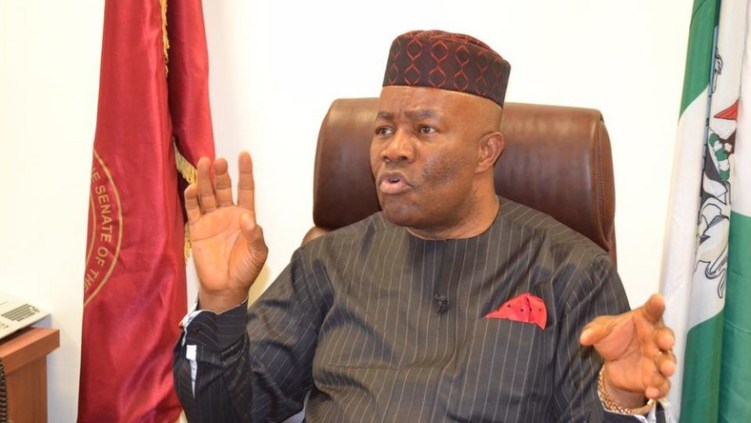
ShareBy Eze Okechukwu, Abuja The Senate President, Godswill Akpabio has linked the worsening insecurity across the country to a gang up by opposition politicians,...

Yobe Hits 100 Per Cent Budget Implementation in Five Years
Share Yobe State Governor, Mai Mala Buni said the state has recorded 100 per cent budget implementation from 2021 to...

ADC Braces Odds, Holds National Convention amid Court Tussle
ShareBy David Torough, Abuja The African Democratic Congress (ADC) on Tuesday held its national convention in Abuja despite ongoing legal...

Tinubu Unveils New Tax Order, Ends ‘Broken’ Revenue System
ShareBy Tony Obiechina, Abuja President Bola Tinubu has declared that Nigeria is charting a new economic course, vowing to abandon...


Otu, Retired Naval Chief Bag UNICAL Honorary Degrees
ShareFrom Ene Asuquo, Calabar The Governor of Cross River State, Prince Bassey Otu, has been conferred with an honorary doctorate...