
NEWS
Obi of Ogwashi-Uku Funds Landmark Maternity Clinic to Boost Maternal, Child Healthcare

From Francis Sadhere, Delta
In a groundbreaking display of community leadership and philanthropy, the revered Obi of Ogwashi-Uku has personally initiated and funded the construction of a state-of-the-art maternity clinic aimed at addressing critical healthcare needs of pregnant women, expectant mothers, and newborns in the town and its surrounding communities.
The facility construction is scheduled for completion by the end of 2025 is expected to significantly alleviate the pressure on urban hospitals and improve maternal and child health outcomes across Delta State. During a ceremonial groundbreaking event, the Obi, accompanied by key members of the Obi-in-Council, was warmly received by the Chief Medical Director (CMD) of the hospital, Dr. Lawrence Afinota, along with his management team.In an emotional address, Dr. Afinota described the project as “unprecedented,” praising the monarch’s decision to use personal funds to support such a vital public health initiative.“In all my years in public health service, I have not heard of a traditional ruler committing personal funds to a project of this scale. We are sincerely grateful,” the CMD said, speaking on behalf of the Permanent Secretary of the Delta State Ministry of Health and the hospital management.Blueprints obtained by our correspondent show that the clinic will include general maternity wards, private delivery rooms, incubator suites for neonatal care, a fully equipped pharmacy, and other essential healthcare amenities.The initiative has drawn widespread admiration, especially from the local community. Present at the ceremony were members of the Ogwashi-Uku Town Union, local leaders, and a large number of residents who gathered to express their support and appreciation.The Omu of Ogwashi-Uku, speaking on behalf of the women of the community, called the project a “blessing.”“This building is a blessing to the women of Ogwashi-Uku. Many of us have had to travel long distances to Asaba for adequate care. With this, our burdens will be greatly eased,” she said.The Obi’s initiative is being hailed as a powerful example of how traditional leadership can directly contribute to development and social welfare. It reinforces the monarch’s ongoing efforts to promote health, security, and the well-being of his people.As the project moves forward, anticipation continues to build for the positive impact it will have on healthcare delivery in the region.
By Alu Azege, Abuja
The first thing Kessy noticed was the silence. Silence that felt like an entity, leaving her with just her thoughts as company. The clinic waiting room was small but tidy, tucked behind a pharmacy on a busy street in Abuja. No one spoke.
Another woman was sitting beside her, staring at her phone. Kessy kept thinking about one phrase.“Don’t get caught.
”Kessy was 22 and a fresh law graduate. With a couple of friends, she went to a house party to celebrate receiving their Federal University certificates after all the hoops they had to jump through. After three dances and one drink in a red cup, received from an acquaintance, Kessy woke up in one of the bedrooms of the house with no memory of the latter hours of the night.
A mental catalogue of herself and body aches revealed the worst fear of many women and girls. That was the beginning of Kessy’s woes.
Though distraught, Kessy decided to forget the night ever happened and move on with life. After all, she “checked” herself and did not find semen, and so, concluded gratefully that her assailant must have used a condom. Her journey to moving on seemed to be going smoothly until she missed her period. Everything came crashing down.
At first, the blame game plagued her. “I should have known better, I read law. I should have known better”. With these words playing repeatedly in her head, she began to do some research.
The more she read, the more one thing became clear: the law in Nigeria was not written for women like her, or women at all.
Nigeria’s abortion laws are among the most restrictive in the world. Under the Criminal Code in southern states and the Penal Code in northern states, abortion is largely criminalized except when a woman’s life is at risk. Doctors, pharmacists, and anyone assisting the procedure can face severe penalties. Beyond the laws, stigma around abortion runs deep, reinforced by these legal restrictions and social norms. Many women navigating unintended pregnancies do so quietly, worried about judgment, discrimination, or even legal consequences.
Yet the reality is that unintended pregnancies still occur, regularly enough that research published on MedRxiv using spatio-temporal modelling estimates that Nigeria experiences around 1.8 million abortions annually, highlighting the gap between restrictive laws and the realities women face. The vast majority of these abortions are taking place outside formal health facilities. Studies also show that unsafe abortion contributes to a significant proportion of maternal deaths in the country, highlighting the public health consequences of limited access to safe services and reliable information.
When laws restrict access without addressing the circumstances women face, the decisions do not disappear. They simply become more difficult, more secretive, and sometimes more dangerous.
Kessy, at her wits’ end, began to consider the advice of a friend she eventually confided in, an unsafe route that she knew at her core would only endanger her life. This is the reality of many women and girls who find themselves in a myriad of contexts and are trapped by restrictive laws. The truth is that Nigeria’s abortion laws were written decades ago, long before the realities of modern healthcare, women’s autonomy, and public health were fully understood.
Globally, countries that have reformed restrictive abortion laws have often done so after recognizing an important fact, that criminalization does not stop abortions. It only determines whether they happen safely or unsafely.
Kessy, on the verge of succumbing to depression and taking drastic measures, eventually learned about safe medical abortion through a confidential counselling service. The information she received was calm, factual, and respectful, which was the opposite of the frightening stories she had encountered online.
For the first time since the pregnancy test turned positive, she felt a small sense of control.
As she sat in that quiet clinic, awaiting her turn to see a physician, the idea of seeking permission from the law to save her life and mental health weighed heavily on her. She thought of the various people who have walked this path, the decisions they were forced to make, amidst stigma and the heavy hand of the law. She thought deeply of those who “didn’t want to get caught” saving their own lives. She wondered what the point of being a woman was, and she was moved to tears.
Public health experts, legal scholars, and human rights advocates increasingly argue that reproductive health policies should prioritize access to accurate information, quality healthcare, and the dignity of women making complex decisions. Nigeria already has important policy frameworks supporting reproductive health, including commitments to maternal health, family planning access, and the protection of women’s wellbeing. We can do better by improving the legal environment surrounding abortion, which remains a source of contradiction.
Kessy lived to tell her story, unlike the many women and girls who have become statistics of maternal mortality.
Across Nigeria, conversations about abortion law reform, reproductive health access, and safe abortion information are slowly becoming more visible. Advocates, healthcare providers, and legal experts continue to call for policies that better reflect the realities women face and prioritize public health, because when women are forced into silence, society loses the opportunity to address the real challenges behind unintended pregnancies, from limited contraception access to gender inequality and economic vulnerability.

From Dan Amasingha, Minna
A tragic domestic incident has left a 60-year-old man dead after he was allegedly assaulted by his son in Minna, the Niger State capital.
The deceased, identified as Ali Haruna, was reportedly attacked by his son, Usman, at the Shango area of Chanchaga Local Government Area on Monday.
Sources said the incident occurred behind a primary school in the community during a family dispute.
Usman was said to have intervened during an alleged altercation between his parents, in which his mother was reportedly being maltreated by the deceased.
In the process, the son allegedly struck his father, causing him to collapse and slip into a coma.
Haruna was rushed to the Ibrahim Badamasi Babangida Specialist Hospital, where he was later confirmed dead.
Residents of the area said there had been long standing reports of domestic violence within the family.
When contacted for confirmation, the spokesperson of the Niger State Police Command, SP Wasiu Abiodun, could not be reached as of the time of filing this report.
The incident has thrown the Shango community into shock, while investigations are expected to commence into the circumstances surrounding the death.
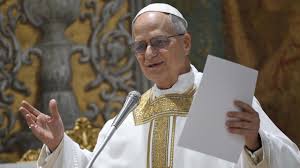
Pope Leo XIV commemorated the first anniversary of the death of his predecessor, Francis, as he addressed worshippers in Equatorial Guinea yesterday.
The pontiff paid tribute to his predecessor’s commitment to the most vulnerable and marginalised groups in society.
As he flew from Angola to Equatorial Guinea, Leo said Francis had given “his witness, his words, and his gestures.
He did so by truly living close to the poorest, to the least, to the sick, to children, and to the elderly.”
In tribute, Leo said, “Let us thank the Lord for the great gift of Francis’ life to the whole Church and to the whole world.
”As Pope, Francis headed the Catholic Church from 2013 to 2025. He died at the age of 88.
The current pope, who was the curia cardinal Robert Francis Prevost, a U.S. and Peruvian citizen, was then elected to succeed him.
Equatorial Guinea is the final stop on the pope’s 11-day tour.
Africa is one of the regions of the world where the Catholic Church is growing.
There are currently around 290 million Catholics living on the continent, and this could rise to more than 700 million by the end of this century, forecasts suggest.



The Weight of “Permission” from the Law
ShareBy Alu Azege, Abuja The first thing Kessy noticed was the silence. Silence that felt like an entity, leaving her...


Son Kills Father While Defending Mother in Niger
ShareFrom Dan Amasingha, Minna A tragic domestic incident has left a 60-year-old man dead after he was allegedly assaulted by...


Man City, Inter, Chelsea, Juventus Face Off in Hong Kong for Preseason
ShareEnglish and Italian football giants Manchester City, Chelsea, Inter Milan and Juventus will square up for pre-season friendlies in Hong Kong in August, the clubs...

Pope Leo XIV Pays Tribute to Predecessor on Anniversary of His Death
SharePope Leo XIV commemorated the first anniversary of the death of his predecessor, Francis, as he addressed worshippers in Equatorial Guinea yesterday. The pontiff paid tribute to his...

Labour Party Fixes National Convention April 28
ShareThe Labour Party has fixed its national convention for April 28 in Umuahia, Abia. The party also officially released the list of chairmen and members of its electoral sub-committees for the forthcoming...


Cross River Confirms Case of COVID-19
ShareFrom Ene Asuquo, Calabar The Cross River State Government has confirmed a case of COVID-19 and swiftly activated its public health emergency response mechanisms to contain any potential...


Nigeria Imports 61.7m Barrels US Crude In Two Years
ShareNigeria imported about 61.7 million barrels of crude oil from the United States between January 2024 and January 2026, underscoring...


FG Slams 13-Count Charge against Alleged Coup Plotters
ShareBy David Torough, Abuja The Federal Government has filed a 13-count charge before the Federal High Court in Abuja against...


Tinubu Restructures Economic Team, Drops Wale Edun, Dangiwa
ShareBy Tony Obiechina and Raphael Atuu, Abuja President Bola Tinubu has approved a minor reshuffle of the Federal Executive Council,...


Nasarawa Lawmaker Supports Wadada Endorsement
ShareBy Tambaya Julius, Abuja The Nasarawa State House of Assembly Member Representing Keffi West Hon. Ibrahim Aliyu Nana has pledged...