
BUSINESS
Oborevwori Signs N1.729trn 2026 Budget, Three Other Bills into Law

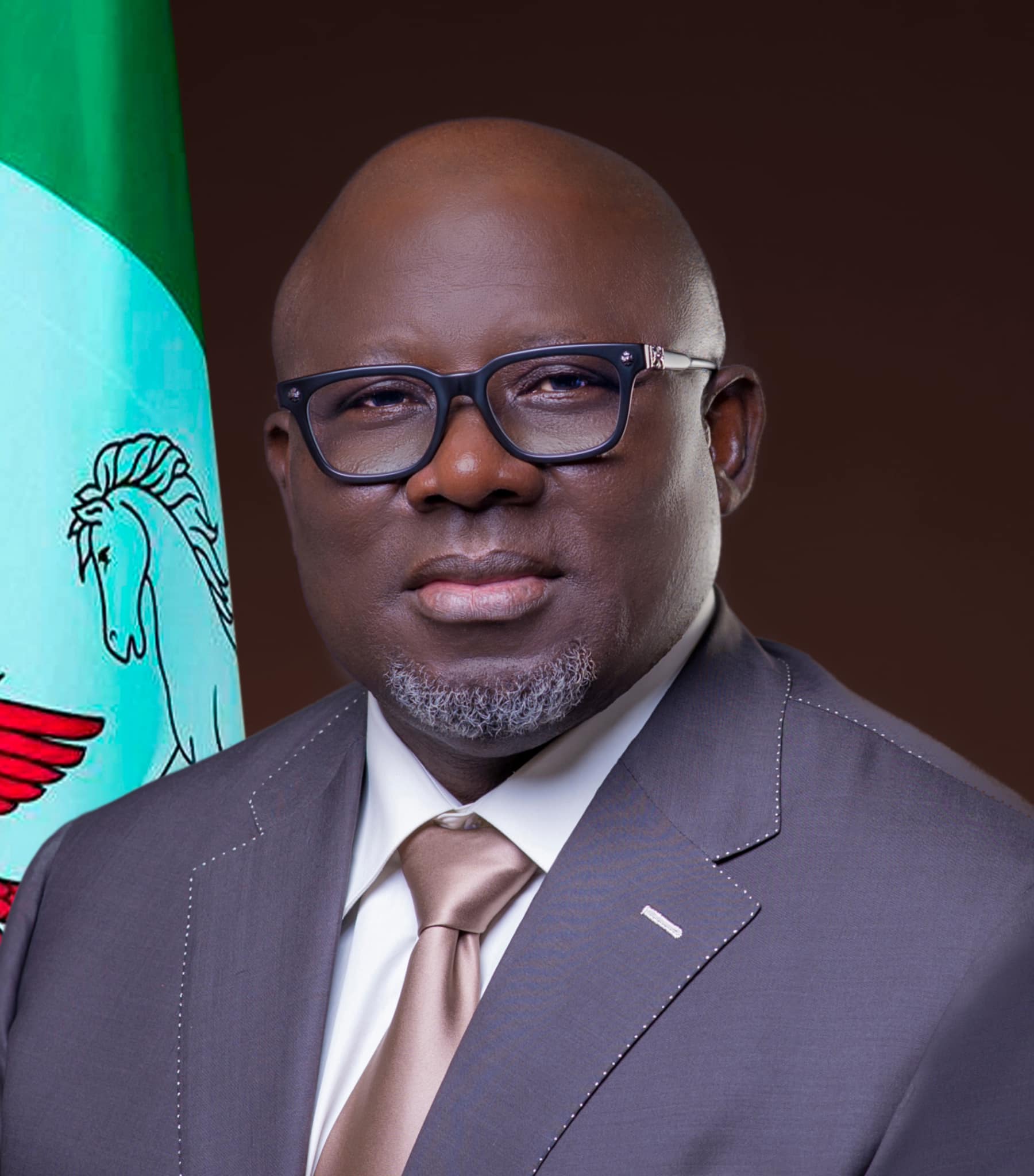
From Francis Sadhere, Delta
Delta State Governor, Sheriff Oborevwori on Tuesday signed the 2026 Appropriation Bill of N1.729 trillion, tagged “Budget of Accelerating the MORE Agenda,” alongside three other key bills passed by the Delta State House of Assembly into law.
The assent paves the way for accelerated development, improved security and strengthened social welfare across the state.
The three additional laws are the Delta State Social Investment Programme Law, the Delta State Colleges of Education Law, 2025, and the Delta State Anti-Terrorism and Anti-Cultism (Amendment) Law, 2025.
Speaking during the signing ceremony, Governor Oborevwori described the 2026 budget as “not just a budget of figures, but a budget of vision, action and expected deliverables for the next twelve months,” assuring that the state would hit the ground running in 2026 to fast-track development across critical sectors.
The N1,729,881,208,779 budget represents an increase of over 70 per cent compared to the 2025 budget. The Governor said the estimate, though ambitious, was achievable, noting that 70 per cent of the budget is allocated to capital expenditure, while 30 per cent is for recurrent spending. According to him, the spending plan reflects his administration’s commitment to infrastructure-led growth and sustainable development.
Oborevwori said that in 2025, the state intensified investments in infrastructure, security, fiscal discipline and revenue generation, resulting in improved internally generated revenue without placing additional burdens on citizens. He noted that these gains underscore the success of the administration’s reforms and its resolve to further strengthen the state’s economy.
Explaining the significance of the accompanying laws, the Governor said the Social Investment Programme Law provides a legal framework for equitable, grassroots-focused access to resources and services, especially for vulnerable and underserved populations, without discrimination.
He added that the Colleges of Education Law, 2025, standardised the operations of state-owned colleges of education, enabled them to award Nigerian Certificate in Education (NCE) and education degrees concurrently, and expanded their capacity to train more qualified teachers.
On security, Oborevwori said the Anti-Terrorism and Anti-Cultism (Amendment) Law strengthens the legal framework to tackle terrorism, cultism and related crimes, bringing state laws in line with contemporary security realities.
The Governor commended the Speaker, leadership and members of the Delta State House of Assembly, as well as the Clerk and staff of the House, for the timely passage of the budget and other bills, noting the strong synergy between the executive and legislature. He also thanked stakeholders, cabinet members, civil servants and citizens for their contributions, while wishing Deltans a Merry Christmas and a prosperous New Year.
Earlier, Speaker of the Delta State House of Assembly, Rt. Hon. Emomotimi Guwor, said the passage of the four bills followed rigorous legislative engagement, wide consultations and thorough scrutiny in line with the Assembly’s constitutional responsibilities.
Guwor explained that the Social Investment Programme Law institutionalized social intervention initiatives aimed at protecting vulnerable citizens and promoting inclusive growth and social justice. He said the Colleges of Education Law, 2025, establishes a uniform framework to enhance the quality and efficiency of teacher education and reduce disparities among state-owned colleges.
He added that the Anti-Terrorism and Anti-Cultism (Amendment) Law addresses emerging security challenges and corrects gaps in the principal legislation, including the absence of a clear definition of cultism.
On the 2026 Appropriation Law, the Speaker said the House scrutinised the budget sector-by-sector in line with the MORE Agenda before passing the N1.729 trillion estimate.
According to him, the assent to the bills further highlights the cordial and productive relationship between the legislature and the executive, driven by a shared vision for a peaceful, secure and prosperous Delta State, and will significantly advance good governance and socio-economic development in the state.

The Nigerian Export Promotion Council (NEPC) says exporters in Imo generated a total of 1,244,095 dollars as proceeds from export trade in 2025.
The Imo Coordinator of the council, Mr Anthony Ajuruchi, disclosed this during a follow-up engagement with cocoa farmers in the state on Thursday in Owerri.
50 cocoa farmers and exporters in Imo received 30 cocoa seedlings each in 2025 as part of interventions to boost production for export.
Ajuruchi said the amount was derived from proceeds of both formal and informal export transactions carried out by the farmers within the 2025 fiscal year.
He commended the Executive Director of NEPC, Mrs Nonye Ayeni, and the management team for their support and commitment to the growth of the export market in Imo and across the country.
According to him, the council recorded notable achievements in 2025, including the organisation of capacity-building programmes on non-oil export, product packaging and labelling.
“In addition to our interventions for cashew farmers, we conducted trainings on product development and adaptation, export contracts, market penetration, product certification and export documentation procedures.
“We also trained about 600 exporters and small and medium-scale enterprises,” he said.
Ajuruchi said the engagement with the cocoa farmers was aimed at obtaining feedback and brainstorming on strategies to increase production and export volume in 2026.
One of the beneficiaries, Mrs Sophia Orji, said the cocoa seedlings she received were doing well and had started fruiting after 17 months.
Another farmer, Mrs Mary Okeke, said her cocoa plants were thriving and appealed to NEPC to extend similar support to farmers during the rainy season.
Also speaking, Mr Canice Nze, Director of Produce in the Imo Ministry of Trade, Commerce and Investment, urged the farmers to register with the ministry to enable them benefit from cooperative structures and access possible government grants. (NAN)
The Federal Government has proposed a total allocation of N87.31bn for the Ministry of Aviation and Aerospace Development and its agencies in the 2026 Appropriation Bill, with the bulk of the funding directed towards capital expenditure.
Details of the budget proposal show that N70.
19bn, representing more than 80 per cent of the total allocation, is earmarked for capital projects. At the same time, N14. 78bn is set aside for personnel costs and N2.34bn for overheads.The document contained no provisions for retained independent revenue or aid and grant funding.
The Federal Ministry of Aviation and Aerospace Development received the highest allocation of N50.65bn, with N48.
55bn for capital projects. Personnel and overhead costs were budgeted at N1.35bn and N745.74 million, respectively.The Nigerian Meteorological Agency was allocated N11.84bn, with personnel costs accounting for N9.15bn, overheads N393.73m, and capital expenditure N2.29bn, highlighting the agency’s labour-intensive operations.
Similarly, the Nigerian College of Aviation Technology, Zaria, is to receive N11.28bn, comprising N4.28bn for personnel, N464.44m for overheads, and N6.54bn for capital projects.
The Nigeria Airspace Management Agency was allocated N6.3bn, entirely for capital expenditure, with no provision for personnel or overhead costs in the budget breakdown.
Also, the Nigerian Safety Investigation Bureau is expected to receive N7.24bn, with N734.09m for overheads and N6.51bn for capital projects, again with no allocation for personnel costs.
The strong tilt towards capital spending aligns with the position of the Minister of Aviation and Aerospace Development, Festus Keyamo, who has consistently argued that infrastructure renewal remains critical to improving safety, efficiency and service delivery in the aviation sector.
On 22 January 2025, the ministry formally presented its 2025 budget to the Joint National Assembly Committee on Aviation and Aviation Technology at the National Assembly Complex. During the presentation, Keyamo emphasised the ministry’s commitment to transparency and accountability in the management of public resources.
He provided a breakdown of the ministry’s 2024 budget performance, noting that capital appropriation achieved an utilisation rate of 30.9 per cent, personnel costs were fully utilised at 100 per cent, while overhead expenditure recorded a near-complete utilisation rate of 99.97 per cent.
The minister told lawmakers that the proposed 2025 budget of N71.12bn for the ministry reflects its strategic priorities in advancing the aviation and aerospace sectors. The proposal comprised N69.22bn for capital expenditure, N1.16bn for personnel costs and N745.74m for overheads.
According to Keyamo, the capital-heavy structure of the budget is designed to support infrastructure upgrades, enhance service delivery and strengthen safety oversight across the sector.

The Securities and Exchange Commission’s revised minimum capital requirement for capital market operators is expected to trigger mergers and acquisitions in Nigeria, with smaller players likely to exit the market, experts say.
In an interview on Monday, the Chief Economist and Managing Editor of Proshare, Teslim Shitta-Bey, explained that fund managers and asset managers operate differently from banks.
“Fund managers take money from third parties. They don’t invest their own money. If I’m managing assets that are in excess of N500 bn, but it’s not my money, why should I be capitalised at N2 bn or N3 bn?” he asked.Shitta-Bey stressed that capitalisation requirements designed for banks may not be appropriate for capital market operators.
“Banks lend money to third parties, so they need a capital buffer in case loans go bad. Fund managers manage assets on behalf of clients; most of the money they use is not their own. It is intended to purchase assets with a market value that are tradable. So, the nature of capitalisation is different,” he said.He noted that many top-tier operators have already exceeded the required capital thresholds. “Many of them already have skin in the game. They have traded on their own accounts. If you value the assets under management, their own assets are far in excess of N2 bn. These are fairly liquid assets that are tradable on an exchange. So, I’ve already met the requirements,” Shitta-Bey said.
Warning about the potential market impact of overcapitalisation, he added: “If you have N2bn and you don’t know what to do, you could decide to buy equities. Now, if everybody is buying equities at the same time, you are likely to push up the value of any particular stock. And once the stock becomes overvalued, you are generating a potential for market correction.”
Shitta-Bey also highlighted the implications for smaller operators. “For marginal players, yes, there might be some challenges. Well-run smaller ones may merge to meet the capital requirement. Others will gradually exit the system. You will see a lot of mergers and acquisitions going on, but the lesser, smaller ones will just melt out of the system,” he said.
The SEC recently issued a circular revising minimum capital requirements across all regulated capital market entities. The move targets core and non-core operators, market infrastructure institutions, fintechs, virtual asset providers, and commodity market intermediaries. For instance, full-scope portfolio managers are now required to maintain a minimum capital of N5bn, while brokers handling client execution only must hold N600m. Compliance is expected by 30 June 2027, with transitional arrangements considered on a case-by-case basis.
Also commenting, the National Coordinator of the Independent Shareholders Association of Nigeria, Moses Igbrude, criticised the policy, saying it risks concentrating market power and excluding ordinary investors. “Stockbrokers do not lend money and therefore do not require massive capital buffers. They receive money from investors to buy shares and manage custody. That is their job,” he said.
Igbrude questioned the rationale behind requiring N1bn for stockbrokers. “Why do we need people to come and buy penny stocks or small amounts when I have N2bn at my disposal to trade, pay staff, and run operations efficiently?” he asked.
He warned that the new requirements could create an elitist market. “You are creating an elitist investment, cutting off a group of people. If you want to grow an economy of over 270 million people, you don’t cut off your people from the system,” Igbrude said.
He argued that the policy appears to concentrate business in the hands of a few. “The Commission is deliberately forcing consolidation. They are trying to remove some categories of investors from the system. It’s only for the big money holders. The Nigerian economy is not only made for the big boys. It’s made for everybody,” he said.


Zamfara Disengages 109 Non-indigenous Teachers, Declares 500 Vacancies
ShareFrom Ifeanyichukwu Nwannah, Gusau Zamfara State Teachers Service Board has disengaged the teaching Services of 109 non-indigenous teachers employed on contract...


OPWS Troops raid illegal arms factory in Nasarawa, recover six guns
ShareFrom Attah Ede, Makurdi Troops of Sector 2, Joint Task Force codenamed Operation Whirl Stroke (OPWS), on Monday uncovered an illegal arms manufacturing factory in...

FG’s Technical C’ttee Releases New Housing Data, Pegs Deficit at 15m Units
ShareBy Raphael Atuu, Abuja The National Housing Data Technical Committee, inaugurated by the Federal Ministry of Housing and Urban Development, has released new housing sector data...

Minister of Livestock Development, Alhaji Mukhtar Idi Maiha, DAILY ASSET MINISTER OF THE YEAR (PEACE AND LIVESTOCK SECTOR TRANSFORMATION )
ShareThe Minister of Livestock Development, Dr. Idi Mukhtar Maiha perhaps one of the greatest patriots serving in the administration of...


Dr. Mustapha Salihu- National Vice Chairman, North East Politician of the Year
ShareNational Vice Chairman (North East), All Progressives Congress is a politician with a difference. His rise to the very top...

Ganduje Hands Yusuf Automatic 2027 Ticket as Governor Formally Joins APC
ShareBy Mike Odiakose, Abuja Kano State Governor, Abba Kabir Yusuf has formally defected from the New Nigeria Peoples Party (NNPP)...

After Denials, DHQ Confirms Coup Plot, Orders Military Trial for Indicted Officers
ShareBy David Torough, Abuja The Defence Headquarters (DHQ) has confirmed that investigations into alleged misconduct by some military officers’ uncovered...


When will Trump Auction the Statue of Liberty?
ShareBy Chidi Amuta Under Donald Trump, the United States is fast approaching the dead end of a curious transactional presidency. Even...

FCT AMAC Election: Tiv Community Roots for SDP Candidate
ShareBy Mike Odiakose, Abuja The candidate of the Social Democratic Party (SDP) for the Abuja Municipal Area Council (AMAC) in...

Ganduje’s Ex-Aide, Okpala, Slams Buba Galadima Over Attack on Buhari
ShareBy Mike Odiakose, Abuja The Senior Special Assistant on public Enlightenment to former National Chairman of APC, Chief Oliver Okpala,...