
NEWS
Ogun: Stakeholders Express Concerns over Continued Hike in Prices of Foodstuffs


Stakeholders in Ogun have raised concerns over the continued hike in prices of food items across the nation.
The stakeholders, in separate interviews in Abeokuta on Monday, identified the causes and proffered solutions to the challenges, amidst reported government’s interventions in the agricultural sector.
Mr Abiodun Ogunjimi, the Secretary of All Farmers’ Association of Nigeria (AFAN), Ogun chapter, noted that the situation had reached an alarming state.
Ogunjimi listed the possible causes of soaring prices of foodstuffs to include: high cost of transportation, increasing inability of farmers to go to farms due to insecurity, foreign exchange crisis, climate change and lack of access to loan facilities by farmers.
He advised the Federal Government to synergise with state governments to create enabling environment to boost food production.
The AFAN secretary also urged the Ogun government to check the adverse effects of urbanisation on agriculture.
“The increasing rate of migration from rural areas in the state to urban centres has led many farmlands to be abandoned and converted to other uses that are not beneficial to agriculture.
“Government needs to pay adequate attention to rural dwellers and ensure that its presence is felt so as to discourage such migration,” he said.
He also called on government to embark on effective irrigation projects across the state to reduce sole dependence on rain for farming.
“This measure will enable farmers to farm all-year round and boost production, thereby forcing prices of food items down,” he said.
Ogunjimi stressed the need for the state government to engage in buying farm produce directly from farmers to discourage movement of food items to neighborhouring countries.
He noted that such step had become necessary to address the loss being incurred by farmers through the activities of middlemen who usually buy from them at ‘ridiculously low prices’ and sell at high prices to consumers.
Ogunjimi also advised the government to ensure that farmers were involved in the formulation and implementation of policies on agriculture.
“It is the farmers who know better what their challenges are and the way to resolve them.
“It is not government officials who sit in the comfort of their offices and just imagining the problems and proffering solutions,” he said.
In his contribution, Mr Austin Owezie, an agriculture expert, called for deployment of more security personnel in rural areas, particularly the forests from where kidnappers, bandits and herders often operate.
“Security of farmers is crucial to food production and unless this is priotitised, all other efforts will just be a waste,” he said.
Owezie, who frowned at importation of seedlings for planting, noted that doing this would mean that Nigeria had indirectly handed over its food production to foreign countries.
According to him, such situation will engender ‘food colonialism’.
He, therefore, called for increased funding of the various agricultural research institutes across the country to enable them assist in the development and use of indigenous seedlings to boost agriculture.
The Commissioner for Agriculture and Food Security, Hon. Bolu Owotomo, said that the state government had continued to invest in agriculture to boost food production.
Owotomo said that government had massively supported farmers with inputs and also built their capacities toward increased productivity.
He said that more than 30,352 farmers had benefitted from various input distributions at subsidised rate of 50 per cent under various intervention programmes.
The commissioner listed some the inputs distributed to the farmers to include: fertilisers, urea, herbicides, cassava bundles, faro and ofada rice seeds as well as maize seeds.
“Capacity building was also organised for more than 46,000 small-holder farmers on sustainable agriculture, improved knowledge and productivity under the Value Chain Development Programme (VCDP), OG-CARES Fadama RA 2 project and Ogun State Agricultural Development Programme (OGADEP).
“The ministry carried out reforms on agricultural land allocation to investors to enhance access to agricultural land in which a total of 8,550 hectares had been allocated to private investors across the state on different agricultural value chains,” he said.
On loan facilities, Owotomo said that government had disbursed N50 million loan to Ijebu Development Initiative on Poverty Reduction (IDIPR), Eriwe, Ijebu-Ode.
He further stated no fewer than 587 VCDP beneficiaries across the eight participating council areas had been linked with FCMB for financial credit.
Ogunjimi added that 95 small-holder farmers had been able to access loans from FCMB for cassava and rice production, valued at N26.7 million.
The commissioner explained that the government had already mapped out strategies to ensure that farmers and their produce were secured to enhance productivity.
Dr Samuel Nzekwe, a former President of Association of National Accountants of Nigeria (ANAN), in his submission, emphasised the need for fixing the economy for agricultural sector to thrive.
Nzejwe urged governments at various levels to invest in provision of critical infrastructure, such as stable power supply, good road network and adequate security, among others, to drive the economy.
“The availability of stable electricity supply will help both small and medium businesses to thrive, as their impacts will positively contribute to the nation’s gross domestic product (GDP).
“Government needs to proactively address the challenges that are not making the real sector to produce enough goods and services for local consumption,” he said.
The former ANAN president also urged the federal government to repair all the nation’s refineries and halt importation of crude oil.
This, according to him, is also a contributing factor to the continuous rise in inflation rate and volatility in foreign exchange.
Dr Tunde Adeoye, a Senior Lecturer in the Department of Economics, University of Lagos, said government needed to exercise political will to address the current security challenge in the country.
Adeoye noted that once the country is seen to be secure, foreign investors would be attracted, foreign earnings increased and the economy stabilised. (NAN)
By Laide Akinboade, Abuja
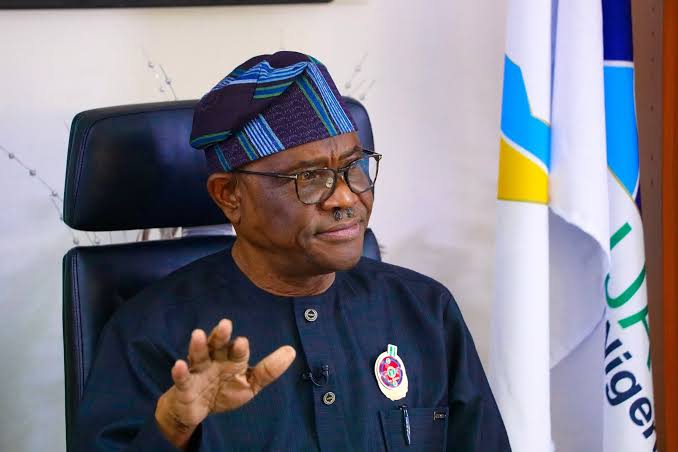
The Minister of the Federal Capital Territory (FCT), Nyesom Wike, has declared that he will step down from his cabinet position if President Bola Tinubu fails to secure victory in both the FCT and Rivers State in the upcoming 2027 presidential election.
Speaking during an engagement with leadership and members of the Apo Mechanics and Traders Association in Abuja, Wike stated that his continued tenure as a cabinet minister is directly tied to his ability to deliver political results for the president in his primary areas of influence.
Setting a specific timeline, the Minister announced that should the ruling party lose in the FCT and Rivers State at the presidential poll scheduled for January 16, 2027, he will formally tender his resignation the very next day.
“If I cannot deliver where I work, then I’m not worthy to be here,” Wike said, emphasizing that his political mandate requires concrete electoral success.
“If I lose FCT, I’m not supposed to be FCT Minister. By January 17, 2027, I will announce my resignation as FCT Minister should the President lose in Rivers State and the FCT,” he stressed.
Outlining his political strategy for the territory, Wike revealed that the administration is building a multi-party coalition to secure victory across various elective offices in the FCT.
He explicitly endorsed candidates across legislative tiers while reiterating total support for the president’s re-election bid.
“Let us be clear on direction: for the Presidency, it is Bola Ahmed Tinubu! For the Senate, Philip Aduda is a man of the people, unlike those who only appear on television. The two House of Representatives candidates we are supporting are also here. They are former Area Council chairmen.
“In the FCT, we are running a unified coalition across parties to deliver results.
“If I cannot deliver FCT as Minister, then I am not qualified to hold this office. We have a firm agreement, and today is the final affirmation.”
The announcement comes amid ongoing efforts by the FCT Administration to resolve the long-standing relocation and land allocation exercise for thousands of traders and mechanics operating within the Apo Mechanic Village corridor.

The Joint Admissions and Matriculation Board (JAMB) has extended the deadline for candidates with outstanding admission offers from the 2021 to 2025 admission exercises to Nov. 30, 2026.
JAMB spokesman, Dr.
Fabian Benjamin, made this known in a statement on Wednesday in Abuja.Benjamin said the extension followed the temporary unavailability of the Central Admissions Processing System (CAPS) for about 96 hours.
He said the extension would give affected candidates a final opportunity to either accept or reject their outstanding admission offers.
“The Board has approved Nov. 30, 2026 as the final deadline for candidates in this category to indicate whether they wish to accept or reject their outstanding admission offers,” he said.
He recalled that the Board extended the deadline to Sept. 30, 2026, adding that the recent disruption to CAPS necessitated the further extension.
Benjamin warned that candidates who failed to act by Nov. 30 would no longer be allowed to accept or reject the outstanding offers within the current window.
“Any subsequent request to update an admission record relating to these previous years will attract the applicable penalty fee,” he said.
He said candidates whose admissions were not on the matriculation list could face difficulties accessing benefits, including participation in the National Youth Service Corps (NYSC) scheme.
The spokesman advised all affected candidates to take action before the deadline rather than wait until the last day.
He said candidates who accepted their offers would be able to print their admission letters, while those who rejected them would have their dashboards reverted to “Not Admitted”.
According to him, the process would enable JAMB to update its records and ensure that the national admission database accurately reflected candidates’ current status.
Benjamin said candidates no longer studying at the institutions where they were offered admission could accept the offer and later apply for correction or deletion, where applicable.
He added that candidates currently pursuing a second degree programme, but still having an unaccepted admission offer from a previous year could reject the old offer and continue with their current programme.
“Candidates who have been offered admission in the 2026 admission exercise but still have an outstanding admission offer from an earlier year have no cause for apprehension.
“Such candidates may reject the previous admission offer, and doing so will not affect their 2026 admission,” he said.
Benjamin said the extension was also aimed at helping JAMB maintain accurate and reliable national admission records.
He reiterated that Nov. 30, 2026 was the final deadline for accepting or rejecting outstanding admissions from the 2021 to 2025 admission exercises.
“At the expiration of the deadline, all outstanding admission offers from these years that have neither been accepted nor rejected will automatically revert to ‘Not Admitted’ status on the Board’s records,” he said.
He urged all affected candidates to take immediate action, stressing that failure to accept an admission offer within the stipulated period could render the offer invalid.(NAN)

From Attah Ede, Makurdi
The Board of Directors of the Benue Investment and Property Company Limited (BIPC) has inspected the ongoing maintenance and rehabilitation works at Taraku Mills Limited, ahead of the planned test run of the factory.
The inspection, led by the Group Managing Director of BIPC, Dr.
Raymond Asemakaha, CFA, provided members of the Board with an opportunity to assess the level of work carried out at the facility and preparations for the commencement of operations.Conducting the Board around the factory, Dr. Asemakaha explained the progress made so far and assured that the facility would be test-run during the weekend as part of efforts to prepare the mill for full-scale production.
The Board Chairman, Lady Elizabeth M.N. Shuluwa, commended the GMD, the technical team and staff of Taraku Mills for their commitment and dedication towards restoring the facility to productive use.
Lady Shuluwa also expressed appreciation to the Benue State Governor, Rev. Fr. Dr. Hyacinth Iormem Alia, for his support and commitment to the revival of the state’s industrial assets.
She called on the people of Benue State to support the efforts to revive Taraku Mills and other state-owned industries, stressing the importance of collective ownership and support for initiatives aimed at creating jobs, boosting economic activities and improving the state’s industrial base.



Insecurity: FCTA Completes Ushafa, Saburi Divisional Police Headquarters, 10 Underway
ShareBy Laide Akinboade, Abuja In order to boost security, the Federal Capital Territory Administration (FCTA) on Wednesday said it has...

2027: I ‘ll Resign As Minister If Tinubu Loses FCT, Rivers – Wike
ShareBy Laide Akinboade, Abuja The Minister of the Federal Capital Territory (FCT), Nyesom Wike, has declared that he will step...


JAMB Extends Deadline for 2021–2025 Outstanding Admissions to Nov 30
ShareThe Joint Admissions and Matriculation Board (JAMB) has extended the deadline for candidates with outstanding admission offers from the 2021...

BIPC Board Inspects Taraku Mills Preparatory to Test Running
ShareFrom Attah Ede, Makurdi The Board of Directors of the Benue Investment and Property Company Limited (BIPC) has inspected the...


UBEC Renovates 287 Schools, over 4,000 Classrooms Nationwide
ShareThe Universal Basic Education Commission (UBEC) said it has renovated 287 schools and more than 4,000 classrooms across the country...

Nigeria at 66: FG Declares Thursday, Public Holiday
ShareThe Federal Government has declared Thursday as a public holiday to mark Nigeria’s 66th Independence Anniversary. The Minister of Interior,...

Tinubu Signs 2025 Budget Amendment Bill
ShareBy David Torough, Abuja President Bola Tinubu has signed the Appropriation (Amendment) (No. 4) Bill, 2025, extending the implementation period...

NAN Backs Insurance Sector’s Transformation Agenda, hails NAICOM
ShareBy Tony Obiechina, Abuja The National Association of Nigerian Students (NANS) National Secretariat, the umbrella body representing over 40.1 Million...


Don Calls for More Investment in Entrepreneurship/Innovation in Nigeria
ShareFrom Joseph Amedu, Lokoja A Professor of Entrepreneurship and Corporate Strategy at the Federal University, Lokoja, John Alabi has called...


Tinubu Submits NDDC 2026 Appropriation Bill
SharePresident Bola Tinubu has submitted the 2026 Statutory Budget Proposal of the Niger Delta Development Commission (NDDC) to the House...