
Health
One out of every four children in Benue suffering nutritional deficiencies- UNICEF


From Attah Ede, Makurdi
The United Nations Children’s Fund (UNICEF), has revealed that one out of every four Benue State is stunted and experiencing nutritional deficiencies.
The International organisation further intimated that findings from the 2024 Nigeria Demographic and Health Survey showed that 25.
5 percent of children under five years in the state are stunted, an indication of chronic malnutrition.The UNICEF Nutrition Specialist with UNICEF’s Enugu Field Office, Mrs. Ngozi Onuora, disclosed this during a High-Level Engagement and Planning Meeting for Policymakers, Local Government Councils and Stakeholders on the United States Government-funded initiative, “Preventing Malnutrition in the First 1,000 Days of Life” held in Makurdi, the State capital.
Mrs. Onuora further revealed that only 6.4 percent of children in the state consume the minimum acceptable diet, a figure she described as evidence of poor dietary diversity and inadequate feeding practices.
She appealed to the Benue State Government to make adequate investments in nutrition programmes and release counterpart funding for the Child Nutrition Fund, stressing that malnutrition continues to threaten the health and development of thousands of children in the state.
Mrs. Onuora, explained that the programme was designed to address malnutrition during the critical period from conception to a child’s second birthday, regarded globally as the most important window for physical growth and brain development.
According to her, the initiative is being implemented with funding support from the United States Government and aligns with Nigeria’s Multisectoral Plan of Action for Nutrition.
“Benue and Enugu were among seven states selected nationwide to benefit from the programme, with 12 local government areas chosen in Benue for implementation.
“Nutrition is a foundation of human capital development and investments made during the first 1,000 days of life determine a child’s future health, educational attainment and economic productivity.
“The first 1,000 days of life, from conception to a child’s second birthday, provide a unique opportunity to influence growth, brain development and future productivity. It is during this period that the foundation for a healthy and prosperous society is laid.
“Despite Benue’s reputation as Nigeria’s food basket, the state continues to record worrying nutrition indicators. Findings from the 2024 Nigeria Demographic and Health Survey indicated that 25.5 percent of children under five years in the state are stunted, an indication of chronic malnutrition.
“One out of every four children in Benue is stunted. This means these children are not attaining the expected height for their age because of prolonged nutritional deficiencies,” the Specialist said.
She noted that poverty, displacement caused by insecurity and limited access to nutrition services have compounded the challenge.
According to her, UNICEF recently conducted nutrition screenings in one of the affected local government areas and discovered alarming levels of acute malnutrition among children.
“We screened 127 children and found that only 26 percent were normal. About 46 percent were suffering from Severe Acute Malnutrition, while many others had moderate acute malnutrition. These are figures that require urgent intervention,” she said.
The UNICEF official also highlighted the prevalence of anemia in the state, disclosing that 56 percent of pregnant women and 61 percent of children under five suffer from the condition.
To address the challenge, she said the programme would support the procurement and distribution of nutritional commodities including Small Quantity Lipid-Based Nutrient Supplements (SQLNS), Ready-to-Use Therapeutic Foods (RUTF) and Multiple Micronutrient Supplements (MMS).
She explained that the supplements help prevent malnutrition, reduce anemia and improve the nutritional status of pregnant women and young children.
Mrs. Onuora, however, stressed that the success of the programme would depend largely on the willingness of the Benue State Government to take ownership of it.
“Our request is simple. The state government must own this programme. Development partners can provide technical assistance and support, but sustainability can only come when government invests resources and drives implementation,” she stated.
She also called for nutrition-focused budgets across key ministries and agencies, including Health, Agriculture, Education and Women Affairs, to ensure effective implementation of the state’s nutrition action plan.
Speaking with journalists on the sidelines of the meeting, the Benue State Commissioner for Health and Human Services, Dr. Paul Ogwuche, assured UNICEF and other stakeholders that Governor Hyacinth Alia’s administration remained committed to improving healthcare and nutrition outcomes in the state.
He described the US Government-supported initiative as a welcome intervention and pledged the state’s cooperation.
“We are grateful to the United States Government and UNICEF for this initiative. The Benue State Government is committed to working with partners to ensure that our children are protected from malnutrition and that the programme succeeds,” he said.
Dr. Ogwuche maintained that the present administration had introduced reforms across various sectors and would provide the necessary support for nutrition interventions.
“The Governor has consistently demonstrated commitment to the wellbeing of the people. I can assure you that this programme will receive the needed attention and support from government,” he added.
Also speaking, the Director-General of the Benue State Budget and Economic Planning Commission, Prof. Jerome Andohol, said the fight against malnutrition requires coordinated action across several sectors.
He identified health, education, agriculture, social protection and water, sanitation and hygiene as critical sectors that must work together to improve nutrition outcomes.
Prof. Andohol disclosed that the state was considering budget realignments to create dedicated nutrition funding lines and strengthen monitoring mechanisms to track implementation.
“We want to ensure that nutrition is adequately captured in the budgets of relevant sectors. We also intend to engage local governments so they can contribute to the Child Nutrition Fund alongside the state government,” he said.
The Commissioner for Education and Knowledge Management, Dr. Margaret Adamu, emphasized the link between nutrition and learning, noting that malnourished children often struggle academically.
“A child who is not properly nourished cannot effectively learn. Nutrition is therefore not only a health issue but also an education and development issue,” she said.
She advocated greater public awareness on healthy feeding practices and the use of locally available food products to improve children’s diets.
The meeting attracted commissioners, local government chairmen, development partners and other stakeholders who deliberated on strategies for reducing malnutrition and improving maternal and child nutrition across Benue State.
Stakeholders agreed that stronger government commitment, increased funding and sustained multi-sectoral collaboration would be essential to achieving lasting improvements in nutrition and securing a healthier future for children in the state.
By Abiemwense Moru
For millions of Nigerians, viral hepatitis remains a silent health threat, progressing unnoticed for years without obvious symptoms.
It often manifests as severe liver disease, cirrhosis or cancer, by which time treatment may be limited, more complex and costly.
As the world marked the 2026 World Hepatitis Day recently, health experts renewed calls for increased awareness, wider screening and improved access to treatment to reduce infections and prevent avoidable deaths.
The global theme, “Hepatitis: Let’s Break It Down,” underscores the need to remove barriers to information, testing, vaccination and treatment while ensuring equitable access to quality healthcare.
According to the World Health Organisation (WHO), viral hepatitis causes about 1.3 million deaths annually, mainly from liver cirrhosis and liver cancer.
Hundreds of millions of people live with chronic hepatitis B and C globally, many unaware of their infection because symptoms often appear only after significant liver damage.
Nigeria bears one of Africa’s highest hepatitis burdens, with more than 20 million people estimated to be living with hepatitis B and C.
Many remain undiagnosed, fuelling continued transmission within communities.
Health experts therefore advocate greater awareness, wider screening and timely treatment to reduce infections and prevent complications.
Consultant Gastroenterologist and Hepatologist, Dr Adaeze Oreh, says hepatitis B and C remain major public health challenges because many infected Nigerians are unaware of their status until extensive liver damage occurs.
She says widespread misconceptions, including beliefs that hepatitis results from spiritual attacks or witchcraft, discourage testing in spite of the availability of effective prevention and treatment.
According to Oreh, delayed diagnosis allows infections to progress silently and increases transmission within families, communities and healthcare settings.
She says simple blood tests can detect hepatitis early, enabling treatment that prevents liver failure, cirrhosis and liver cancer.
Oreh also advocates routine screening and administering hepatitis B vaccines within 24 hours of birth to prevent mother-to-child transmission, noting that many infections are detected only during routine medical examinations.
For Grace James, a hepatitis B diagnosis during antenatal screening initially brought fear and uncertainty.
However, counselling and regular medical follow-up reassured her that proper care could protect both mother and child.
She says adherence to medical advice and strong family support have enabled her to remain healthy.
James believes her experience demonstrates how early diagnosis and accurate information can transform fear into confidence while reducing the risk of complications and transmission.
Similarly, Musa Abdullahi discovered his hepatitis status during a routine medical examination conducted for employment.
Although he had no symptoms, doctors placed him on regular monitoring and advised him on healthy lifestyle practices to protect his liver.
Today, Abdullahi says he continues to live and work normally, urging Nigerians to embrace screening because knowing one’s status is the first step towards prevention and treatment.
While personal experiences illustrate hepatitis’ human impact, state governments are expanding interventions to improve early detection, vaccination and awareness.
In Adamawa, authorities say more than 240,000 residents have been screened under an ongoing campaign targeting about 300,000 people in Yola South Local Government Area.
The Commissioner for Health and Human Services, Mr Muhammed Jada, says many infected persons remain unaware of their status until serious complications develop.
He says awareness, testing, vaccination and timely treatment are essential to reducing hepatitis-related deaths while urging stronger efforts to combat stigma that discourages people from seeking care.
The state has also strengthened routine childhood immunisation, blood safety measures, infection prevention and public awareness campaigns.
Executive Chairman of the Adamawa Health Management Service Board, Dr Aiden Amzaranda, says the state’s hepatitis burden is worrying, citing findings from Garkida General Hospital where about 120 of 400 people screened tested positive.
In Plateau, the Commissioner for Health, Dr Nicholas Ba’amlong, reports hepatitis B and C prevalence rates of 13.9 per cent and 6.8 per cent respectively, while studies among pregnant women indicate a prevalence of 9.2 per cent.
Data from the hepatology unit of Jos University Teaching Hospital also point to increasing numbers of chronic hepatitis B and liver cancer patients, underscoring the need for wider screening and vaccination.
Consultant Gastroenterologist and Hepatologist, Prof. Duguru John, says hepatitis is commonly transmitted through unscreened blood transfusions, unprotected sex, mother-to-child transmission and the sharing of unsterilised sharp objects.
He urges Nigerians to receive vaccinations, insist on properly screened blood and practise safe infection-prevention measures.
Medical Director of Mercy Way Medical Centre, Dr Patrick Omogbohun, says viral hepatitis accounts for about 80 per cent of liver cancer deaths globally.
According to him, more than 800,000 people develop liver cancer annually while over 700,000 die from the disease, highlighting the need for stronger prevention, screening and treatment programmes.
Although millions remain unaware of their infection, he notes that effective vaccines, diagnostic tools and treatments are available and should be made more accessible.
Lagos State has also intensified free screening, vaccination and awareness campaigns across communities, including Ikorodu, Isolo and Ajeromi.
The initiative provides hepatitis screening, counselling, vaccination and referral services, while public awareness campaigns use radio, television, social media and community outreach to educate residents.
State AIDS Programme Coordinator, Dr Oladipupo Fisher, identifies poor awareness as a major obstacle to hepatitis prevention.
The state has trained 28 health facilities to provide hepatitis services and vaccinated thousands of healthcare workers, with development partners supporting the effort through donations of vaccines, testing kits and outreach activities.
Beyond state interventions, the Africa Centres for Disease Control and Prevention says Africa has the knowledge and tools needed to eliminate viral hepatitis if governments sustain investment and collaboration.
The agency advocates expanded testing and treatment, timely birth-dose vaccination, stronger laboratory systems and increased domestic financing.
Globally, WHO aims to reduce new hepatitis infections by 90 per cent and hepatitis-related deaths by 65 per cent by 2030, but warns that millions remain undiagnosed and untreated, especially in low-resource settings.
For Nigeria, the message from this year’s World Hepatitis Day is clear; awareness, routine screening, vaccination and timely treatment must become integral to healthcare delivery.
Although viral hepatitis remains a major public health challenge, experts say it is largely preventable, detectable and, in many cases, treatable.
They urge sustained investment in prevention, improved access to care and stronger public awareness to reduce infections and prevent avoidable deaths.
Such efforts, they say, will help Nigeria achieve the global goal of eliminating viral hepatitis as a public health threat by 2030. (NAN)
The World Health Organisation (WHO) has warned that years of progress in tackling HIV, viral hepatitis and Sexually Transmitted Infections (STIs) are at risk of stalling.
The global health agency raised an alarm that millions of people are being left without access to life-saving prevention, testing and treatment.
Tuesday marks World Hepatitis Day, the birthday of the Nobel-prize winning scientist who discovered the hepatitis B virus.
A new report by WHO found that while countries have made significant advances over the past decade, funding shortfalls, humanitarian crises and persistent inequalities are widening gaps in care for those most at risk.
“This report tells two stories. It demonstrates what is possible when countries invest in health, communities and science.
“But it also shows how quickly progress can be undone with funding disruptions, humanitarian emergencies and persistent inequalities,” WHO Director-General Tedros Adhanom Ghebreyesus said.
WHO said by the end of 2025, an estimated 32 million people living with HIV were receiving treatment worldwide.
The UN health agency added that since 2010, new HIV infections have fallen by 42 per cent and AIDS-related deaths by 57 per cent.
WHO estimated that around nine million people still lack access to life-saving HIV medicines.
It added that infections continue to rise in several regions, particularly among populations facing stigma and discrimination, including sex workers, people who inject drugs, transgender people and people in prisons.
The picture is similarly mixed for viral hepatitis, with annual hepatitis ‘B’ infections declining by nearly one-third since 2015, and deaths linked to hepatitis ‘C’ have fallen.
In spite of the gains, viral hepatitis remains one of the world’s deadliest infectious diseases, claiming an estimated 1.3 million lives in 2024.
Meanwhile, progress against sexually transmitted infections has slowed.
WHO warned that reductions in international donor funding disrupted HIV prevention programmes in several countries during 2025.
The reduced funding affect access to pre-exposure prophylaxis (PrEP), a medicine that significantly reduces the risk of acquiring HIV, according to WHO.
The agency also highlighted continuing barriers to diagnosing and treating hepatitis ‘B’, in spite of the availability of highly effective medicines capable of preventing millions of deaths.
WHO said integrating HIV, hepatitis and STI services into primary health care is one of the fastest ways to expand access while building more resilient health systems.
The report also highlights innovations such as long-acting HIV prevention medicines, improved diagnostic tools and stronger digital health systems as key opportunities to accelerate progress.
Among the most promising advances is the WHO-recommended, twice-yearly injectable lenacapavir, which is now being introduced in 10 countries, with rollout planned in a further 14.
Lenacapavir is a highly effective HIV prevention tool administered as an injection just twice a year with the potential to transform the HIV response by preventing new infections, particularly among populations at greatest risk.
WHO also stressed the importance of strengthening community leadership, ensuring that people most affected by HIV, hepatitis and STIs help shape health programmes and monitor whether services are reaching those who need them most.
“Over the next five years, we must build integrated, resilient health systems that reach those furthest behind,” Tedros said.

By Obi Light Ogbonnia
“Can an SS father and an AA mother give birth to a child with sickle cell disease?”
That was the question a curious student asked during one of our recent school awareness campaigns.
It is the kind of question every Nigerian should know the answer to because it lies at the heart of preventing sickle cell disease.The answer is simple: No.
Science teaches us that an individual with genotype SS carries two sickle haemoglobin genes and can only pass the S gene to each child.
Likewise, an individual with genotype AA carries two normal haemoglobin genes and can only pass the A gene. Every child from such a union will inherit the AS genotype, making them carriers of the sickle cell trait but not sufferers of sickle cell disease.If this scientific principle is so clear, why do we occasionally hear heartbreaking stories of couples who insist they were told they were SS and AA, yet they gave birth to a child with SS?
In most cases, the explanation is not a failure of genetics but a failure of our healthcare system. Wrong genotype results remain a silent public health crisis. Poor laboratory practices, expired or counterfeit reagents, poorly calibrated equipment, sample mix-ups, inadequate quality control, and, in some instances, corruption and the falsification of laboratory reports have combined to create a dangerous environment where life-changing decisions are made using unreliable medical information.
The consequences are profound. Young people proceed into marriage believing they are genetically compatible, only to discover years later that both are carriers of the sickle cell gene. Families are thrown into emotional distress. Trust is broken. Parents struggle with the lifelong financial and psychological burden of caring for children living with sickle cell disease. What should have been prevented becomes another painful statistic.
To be clear, medicine recognizes a few exceptionally rare situations, such as unusual haemoglobin variants or the need for advanced molecular testing, where routine tests may require confirmation.
However, these rare exceptions do not alter the established law of inheritance: SS × AA produces AS offspring.
Nigeria accounts for one of the largest numbers of babies born with sickle cell disease every year. We cannot win this battle if the very tests designed to prevent the disease cannot be trusted. Every inaccurate genotype result represents a potential family tragedy waiting to unfold.
The Federal Ministry of Health, regulatory agencies, and professional bodies must intensify oversight of diagnostic laboratories, eliminate counterfeit laboratory reagents, enforce external quality assurance programmes, and sanction facilities and individuals found guilty of malpractice. Laboratory diagnosis must become a matter of public trust, not public doubt.
Equally, Nigerians should avoid relying on a single genotype test, especially when the result will influence marriage or childbearing decisions. Confirmatory testing in accredited laboratories should become the standard practice.
The fight against sickle cell disease does not begin in the hospital ward; it begins in the laboratory. When corruption enters the laboratory, science is compromised, prevention fails, and innocent children bear the consequences. Protecting the integrity of genotype testing is not merely a professional obligation, it is a moral responsibility and a national priority.
If we truly desire a Nigeria with fewer children born with sickle cell disease, then we must first ensure that every genotype result tells the truth.
About the Author
Obi Light Ogbonnia is the Founder and President of the Obi Ogbonnia Sickle Cell Foundation (OOSCF), a sickle cell survivor, public health advocate, and international speaker. He has dedicated his life to promoting genotype awareness, patient support, policy advocacy, and equitable access to quality healthcare. Through education and community engagement, he continues to champion efforts aimed at reducing the burden of sickle cell disease in Nigeria and across Africa. His guiding message remains: “It’s Sickle Cell, Not Sickle Life.”




Troops Rescue 359 Victims, Arrest Terror Suspects, Destroy Oil Theft Networks Nationwide – DHQ
ShareBy David Torough, Abuja The Defence Headquarters (DHQ) has announced significant operational gains by the Armed Forces of Nigeria (AFN)...

UNICEF Support Benue Govt With 400 School-in-a-Box Kits For BRACE-UP Project.
ShareFrom Attah Ede, Makurdi The United Nations Children Fund, UNICEF with funding from Swedish International Development Cooperation Agency(SIDA), has supported...

Nigeria, Benin Republic Collaborate on Regional Security
ShareBy Tony Obiechina, Abuja The Minister of Defence, General Christopher Gwabin Musa has successfully concluded a strategic three-day working visit...


Nigerian Army Expands Combat Capability, Tasks Newly Trained Troops on Professionalism
ShareBy David Torough, Abuja The Nigerian Army has intensified efforts to strengthen its operational capability with the graduation of soldiers...


RMAFC Set to Enforce Oil Host Community Accountability
ShareBy Tony Obiechina, Abuja The Revenue Mobilisation Allocation and Fiscal Commission (RMAFC) has given the Nigerian Upstream Petroleum Regulatory Commission...
UNICEF Renovates Classrooms, Donates Educational Materials to IDPs Children in Benue
ShareFrom Attah Ede, Makurdi The United Nations Children’s Fund (UNICEF) with support from Swedish International Development Agency (Sida) has renovated...


NAMA Demands 56 Per Cent Share, Aviation Varsity 10 Per Cent of Aviation Statutory Charges
ShareBy Ubong Ukpong, Abuja The Nigerian Airspace Management Agency (NAMA) on Thursday, asked the National Assembly to increase its share...
FCT Closes Unregulated Motor Parks as New Bus Terminals Become Operational
ShareBy Laide Akinboade, Abuja The Federal Capital Territory (FCT) Administration (FCTA), on Thursday, said it has concluded arrangements to clamp...
Mahmoud Urges MAN to Embrace Smart Technology, Capital Restructuring For Growth
ShareBy Laide Akinboade, Abuja The Minister of State, Federal Capital Territory (FCT), Dr. Mariya Mahmoud, has called on manufacturers to...
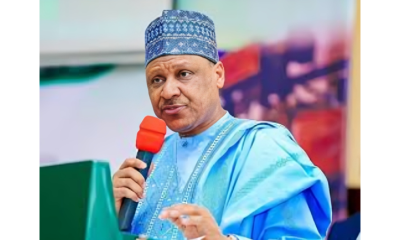

Advertising, Creative Industries Key Drivers of Economic Growth – Idris
ShareBy David Torough, Abuja The Minister of Information and National Orientation, Mohammed Idris, has said the Tinubu Administration recognises Nigeria’s...