
NEWS
Otu Seeks Closer Ties with Equatorial Guinea, Cameroon

From Ene Asuquo, Calabar
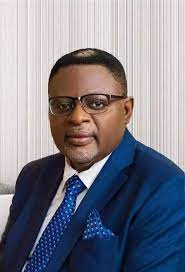
Cross River State Governor, Bassey Otu has called for closer diplomatic ties between Nigeria, Equatorial Guinea and Cameroon.
The Governor made the call when the Consuls General of both countries paid him a courtesy call in his office in Calabar, the state capital.
Speaking when he received the Consul General of the Republic of Equatorial Guinea, His Excellency Iideonso Ondo Mchama, Governor Otu disclosed that plans are underway for the commencement of flight operations as well as marine transportation to the country.
His words; “We are happy to receive you on behalf of all Cross Riverians, I believe that your main aim is for us to build stronger ties with the Republic of Equatorial Guinea.”
Otu stressed on the need for an aviation and maritime transportation between both countries through Cross River state, the governor stated that “at the moment, there are a lot of gaps we should fill that would be mutually beneficial.
According to him, we are planning to get some international flight that would be flying direct from Calabar to Equatorial Guinea. I believe it will do our commerce a lot of good.
He said further, “Statistically, Nigerians are the highest number of immigrants in the Equatorial Guinea; and flying through Calabar to Equatorial Guinea is about 20-25 minutes, unlike other longer routes.
“The marine economy is also something that is majorly lacking. And what we need is a vessel that would convey cargo between Nigeria and Equatorial Guinea directly. And there are lot of cargo movement between these two countries.”
Speaking earlier, the Equatorial Guinea envoy, Mr. Mchama, said the visit was to identify with the Cross State Government for its hospitality and how to strengthen the relationship between his country, Nigeria and Cross River in particular.
Otu also hosted His Excellency Patrice Onana Consul General of Cameroon for the South-South, South East and Benue State.
He noted that Nigeria and Cameroon have had long standing relationship and there was need to strengthen it in the face of security threats that has undermined trade and commerce between both countries.
He said the state was keen on boosting security especially along its maritime corridor, welcoming a meeting of the Nigeria/Cameroon Mixed Commission with his counterpart across the border.
The governor assured his guest that Nigeria will not harbour separatist elements in the country, but Cameroon must work hard on border control.
Delivering his message at the visit, the Consul-General, Patrice Onana, noted that Governor Otu’s leadership has been exemplary as the Calabar, the State Capital, was showing signs of progress, hinting of his desire to continue in the state.
He commended the Cross River State Government for hosting over 60, 000 Cameroonian refugees following crisis in two of its 10 provinces.
The Consul-General stressed that the visit is to maintain good collaboration with the State, assuring that the peaceable nature of Cross Riverians will not be abused.
The Envoy also maintained that the long maritime border between both countries require robust security collaboration to safeguard and boost trade and business.

By Ayanyinka Ayanlowo
Nigerian Economic Summit to Chart the Next Phase of Nigeria’s Economic Transformation
The Nigerian Economic Summit Group (NESG) has announced the 32nd Nigerian Economic Summit (NES #32), scheduled to hold on 26–27 October 2026 at the Transcorp Hilton Hotel, Abuja, under the theme: “Growth that Works: Delivering Jobs, Productivity and Shared Prosperity.
At a critical moment in the nation’s economic journey, the Summit will convene policymakers, business leaders, development partners, investors, civil society organisations, and young Nigerians in charting a practical pathway from economic stabilisation to investment-led growth, productive enterprise, quality jobs, and broad-based prosperity.
Over the past three years, Nigeria has implemented significant macroeconomic reforms aimed at restoring fiscal sustainability and strengthening economic fundamentals. Whilst these reforms have laid an important foundation for long-term growth, the challenge now is ensuring that economic progress translates into tangible improvements in the lives of citizens.
This year’s summit theme reflects national priority. The Summit will focus on how Nigeria can move beyond growth measured solely by economic indicators and deliver growth that creates jobs, improves productivity, raises incomes, reduces poverty, and expands opportunities across all regions of the country.
From Stabilisation to Shared Prosperity
Nigeria possesses immense economic potential. With a population exceeding 220 million people, abundant natural resources, a growing entrepreneurial class, and a youthful workforce, the country has the ingredients required to become one of the world’s leading emerging economies.
Yet millions of Nigerians continue to face unemployment, low productivity, limited economic opportunities, and vulnerability to shocks. Economic growth remains essential, however growth alone is no longer sufficient. The true measure of progress lies in whether economic expansion creates meaningful employment, strengthens businesses, improves household welfare, and delivers prosperity that is widely shared.
NES#32 will therefore focus on strengthening the link between macroeconomic reforms and outcomes that matter most to Nigerians: jobs, productivity, income growth, and improved living standards.
Five Strategic Dialogue Tracks
To advance the overarching theme, NES #32 will adopt a performance-driven dialogue architecture built around five interconnected sub-themes designed to address the key dimensions of inclusive and sustainable economic transformation.
Work Nigeria will explore strategies for building a job-rich economy capable of absorbing Nigeria’s rapidly growing workforce through labour-intensive sectors, MSME development, workforce readiness, and stronger labour market systems.
Produce Nigeria will focus on strengthening productivity through industrialisation, innovation, investment promotion, digital transformation, and the development of competitive value chains across agriculture, manufacturing, and services.
Invest Nigeria will seek to examine how targeted investments in people and systems can reduce poverty, expand access to essential services and economic opportunities, strengthen social protection architecture, and build the resilience of vulnerable populations to economic and environmental shocks.
Scale Nigeria will explore how growth can be expanded across states, sectors, and communities by strengthening subnational competitiveness, regional value chains, infrastructure, and local investment coordination.
Secure Nigeria will address strategies for protecting critical economic assets, restoring confidence in production zones, improving access to farmlands, safeguarding infrastructure, and creating a secure environment for investment and enterprise growth.
Anchoring Dialogue Around Three Pillars
To ensure focused and outcome-driven deliberations, discussions at NES #32 will be anchored around three interdependent pillars: Productivity, Human Capital, and Resilience. These pillars will guide conversations on how Nigeria can improve competitiveness and efficiency, equip citizens with the skills needed for a modern economy, and strengthen social and economic systems capable of withstanding domestic and global shocks.
Advancing a National Growth Agenda
This year the 32nd edition of the summit will seek to generate actionable policy recommendations and build consensus around a new phase of economic transformation focused on driving jobs-rich growth through agriculture, manufacturing, infrastructure, and the digital economy; raising productivity and competitiveness through innovation, improved infrastructure, and regulatory efficiency; strengthening the investment climate to attract domestic and foreign investment; advancing human capital development to align workforce skills with labour market demand; and expanding economic opportunities while reducing poverty across regions and communities.
The Summit is expected to produce concrete policy directions that strengthen the connection between economic reforms, enterprise growth, employment generation, and household welfare outcomes.
A Call for Collective Action
The scale of Nigeria’s economic opportunity requires collaboration across sectors and institutions. Government, the private sector, development partners, academia, labour organisations, civil society, and young people all have critical roles to play in shaping a future where growth delivers measurable benefits for every Nigerian.
NES #32 provides a unique platform for these stakeholders to engage in evidence-based dialogue, forge strategic partnerships, and develop solutions capable of accelerating inclusive economic transformation.
As Nigeria enters the next phase of its development journey, the Summit will serve as a national platform for answering one fundamental question: How can economic growth work better for Nigerians?
The answer will shape the country’s path toward a future defined by jobs, productivity, resilience, and shared prosperity.
About the Nigerian Economic Summit Group (NESG)
The Nigerian Economic Summit Group (NESG) is Nigeria’s foremost private sector-led policy advocacy and think tank organisation. For over three decades, the NESG has provided a credible platform for public-private dialogue, shaping policies and strategies that drive Nigeria’s economic progress. The annual Nigerian Economic Summit remains the premier gathering of business leaders, policymakers, and development stakeholders committed to Nigeria’s transformation.
- Ayanlowo is Head, Strategic Communication and Advocacy (NESG)
By David Torough, Abuja
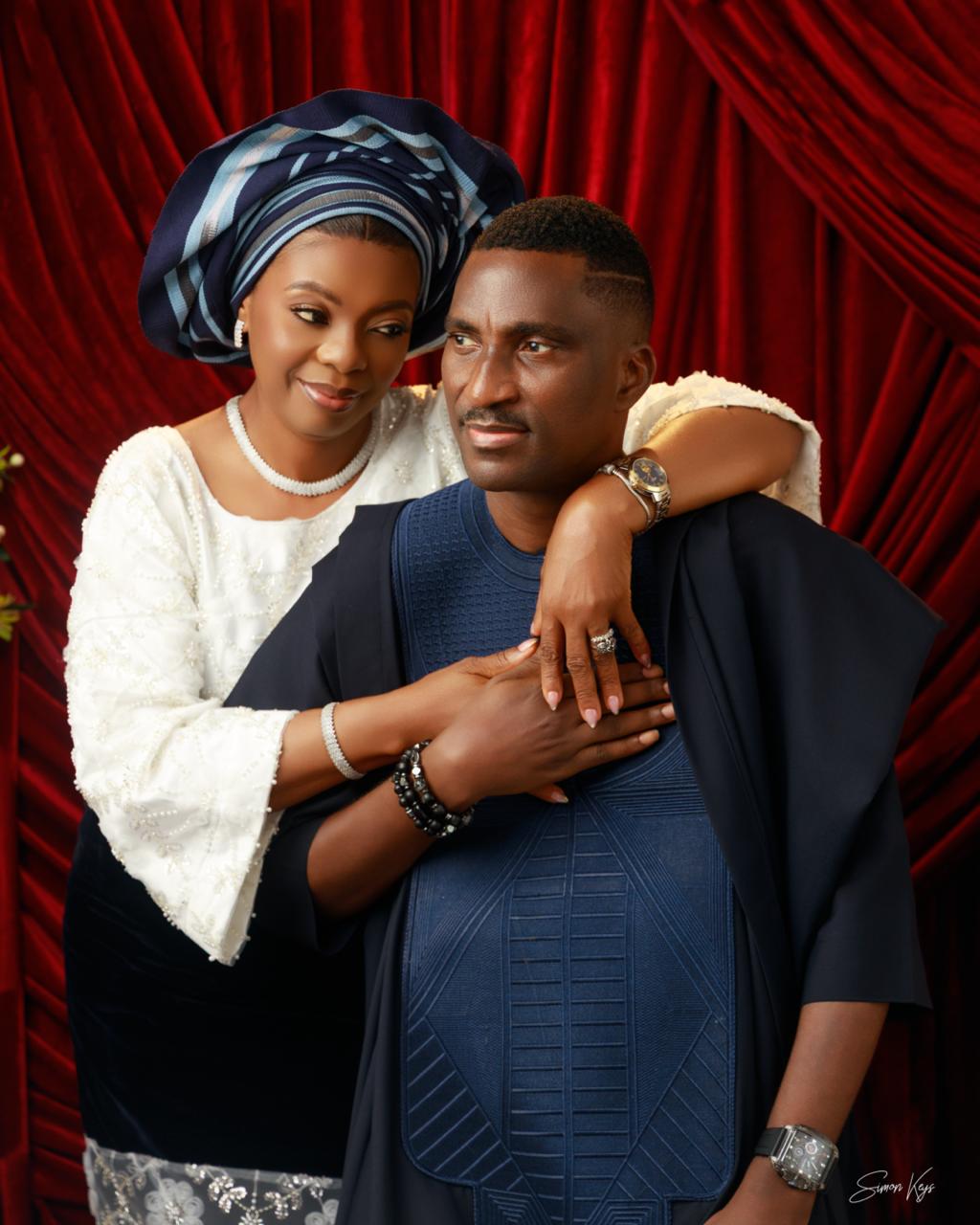
Pastor Mrs Esther Komaiya has poured out heartfelt tributes to her husband, Pastor Korede Komaiya, as the couple celebrated 29 years of marriage on Saturday, August 16.
In a moving anniversary message titled “To My King,” Pastor Esther described their union as a living testimony of God’s faithfulness, recalling that “Twenty-nine years ago today, on the 16th of August 1997, heaven stood still as Ps.
Mrs. Faith Oyedepo joined our hands and sealed our forever.”“What began as a sacred vow has become a living testimony of love, peace, sacrifice, growth, and the unshakable faithfulness of God,” she wrote.
The Senior Pastor of The Master’s Place International Church took time to appreciate her husband for his strength, patience and sacrifices over the years.
“Thank you for the strength that never bowed under pressure. Thank you for the patience that held the line when the journey tested every fibre of us,” she said.
“Thank you for the support that covered me, lifted me, and made room for me to bloom. Thank you for the understanding that saw beyond my words and still chose me.”
She paid special tribute to the “silent ones, the costly ones” sacrifices her husband made for their home.
“And above all, thank you for the sacrifices — the silent ones, the costly ones, the ones that demanded your comfort, your time, and sometimes your very self — so that our home could remain a place of peace and rest,” she stated.
Pastor Esther noted that their marriage taught her that commitment comes before reward. “You showed me that marriage is first sacrificial before it becomes beneficial. And because you lived that truth with quiet fire and unwavering commitment, I have never once regretted the day I said ‘I do.’”
Describing her husband as more than just a partner, she called him “a rare gift from God.”
“You are a rare gift from God. Not a good man. Not a strong partner. A divine covering. A rare gift,” she wrote.
Reflecting on their journey, she said God’s hand has been evident all through. “I look at these 29 years and I see the hand of the Lord all over us. We are not just a couple who endured. We are a couple helped by God. So today I stand in awe — of you, of us, and of the God who has kept every promise.”
She ended the tribute with a renewed pledge of love to her husband, whom she fondly called “My Oba.”
“To my King — I still choose you. I still honour you. I still thank God for the privilege of calling you husband,” she said.
“All glory to the One who wrote this story and continues to write it better than we ever dreamed. Happy 29th Anniversary, my love, my Oba. The best is still ahead of us. I love you more than yesterday… and less than tomorrow. My Oba.”
The anniversary message has since drawn congratulatory messages from members of The Master’s Place International Church and well-wishers across the country, who celebrated the couple’s example of faith, sacrifice and enduring love.
The Federal Road Safety Corps (FRSC) has apprehended one Umar Muhammadu for allegedly mixed loading a Mitsubishi Canter with no fewer than 15 persons and 8 motorcycles concealed under its trampoline.
This was contained in a statement on Saturday in Abuja, by the Corps Public Education Officer (CPEO), Osondu Ohaeri.
According to Ohaeri, FRSC personnel intercepted the vehicle, registration number GDD 815 ZP, after professional suspicion prompted a closer inspection of its sealed trampoline.
He said that marshals discovered 15 persons and eight motorcycles dangerously concealed among goods, beneath the covering in clear violation of road safety regulations and with grave implications for the safety of the occupants and other road users.
“The driver, who allegedly attempted to sway an FRSC Marshal with N500 and could not produce a valid driver’s licence, was arrested.
“The vehicle and its occupants were handed over to the Divisional Police Officer, Mararaba, for further investigation and prosecution, following the directive of the Sector Commander, RS7.1 FCT, CC Tijjani Iliyasu,”he said.
The CPEO also said that similarly, in Abia, a Mobile Court sitting and presided over by Magistrate C. E. Nwankpa, sentenced Azubuike Dominic to one month imprisonment at the Afara Correctional Centre after he was apprehended for driving without a valid driver’s license.
He said that Dominic was driving a Toyota Hiace commercial vehicle, registration number GWB 298 XY, without a valid driver’s licence and absconded while being escorted to court.
“The driver was re-apprehended several kilometres away following a coordinated pursuit involving FRSC personnel and the military.
“The development underscores the corps’ determination that enforcement actions will not be frustrated by attempts to evade lawful arrest or judicial proceedings,” the CPEO said.
According to him, the corps views the incidents as compelling evidence that its enforcement architecture is moving beyond routine interception to intelligence led, evidence based and technology conscious road safety enforcement.
He said that in the enforcement, professional observation and adherence to Standard Operating Procedures were deployed to uncover concealed violations and protect lives.
He also said that the Corps Marshal, Shehu Mohammed, had consistently charged personnel to remain vigilant, professional and uncompromising in the discharge of their statutory responsibilities, while strengthening inter-agency synergy.
Ohaeri warned motorists, particularly commercial vehicle operators, against attempting to evade enforcement, concealing passengers or motorcycles, overloading vehicles or driving without valid licences.
According to him, any of these offences will attract appropriate sanctions.
“The corps will continue to combine intelligence, professional enforcement, mobile courts and strategic inter-agency collaboration to protect road users and make Nigeria’s roads safer,” he said.
He emphasised that there would be no hiding place for reckless and dangerous driving on the road to a safer Nigeria.




NES 32 to Drive National Dialogue on Jobs, Productivity, Shared Prosperity
ShareBy Ayanyinka Ayanlowo Nigerian Economic Summit to Chart the Next Phase of Nigeria’s Economic TransformationThe Nigerian Economic Summit Group (NESG)...


Komaiya Wife Celebrates 29 Years of Marriage, Calls Husband ‘Divine Covering’
ShareBy David Torough, Abuja Pastor Mrs Esther Komaiya has poured out heartfelt tributes to her husband, Pastor Korede Komaiya, as...


FRSC Apprehends Mixed Loader
ShareThe Federal Road Safety Corps (FRSC) has apprehended one Umar Muhammadu for allegedly mixed loading a Mitsubishi Canter with no...
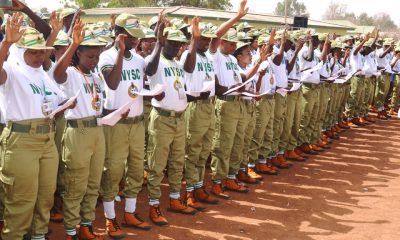

NYSC Hails Corps Members’ Discipline, Commitment during Osun Governorship Election
ShareThe Osun Coordinator of National Youth Service Corps (NYSC), Ekeng Kubiangha, has commended corps members deployed as ad hoc staff...

NiMet Predicts Three-day Cloudy, Thundery Weather Activities
ShareThe Nigerian Meteorological Agency (NiMet) has predicted cloudiness and thunderstorms from Sunday to Tuesday across the country. NiMet weather outlook...
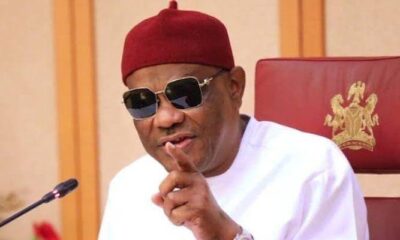

Wike Signs 26,272 C of Os in Three Years of Tinubu’s Administration
ShareThe Minister of the Federal Capital Territory (FCT), Mr Nyesom Wike, has signed 26,272 Certificates of Occupancy (C of Os)...

TAJBank’s PBT Rises by 74 Per Cent, Pays Higher Dividends
ShareBy Tony Obiechina, Abuja TAJBank Limited, Nigeria’s most innovative-driven and largest non-interest bank (NIB) by assets, has sustained its frontline...


Again, Terrorists Invade Benue Communities, Kill Three, Injure Scores
ShareFrom Attah Ede, Makurdi Terrorists suspected to be herdsmen have attacked communities in Ukum Local Government Area of Benue State,...
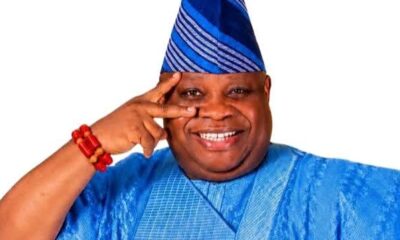

Osun Poll: Adeleke Scores 511,067 to Defeat Oyebamiji by 66,252 Votes
ShareBy David Torough, Abuja Governor Ademola Adeleke has won a second term in office after the Independent National Electoral Commission...
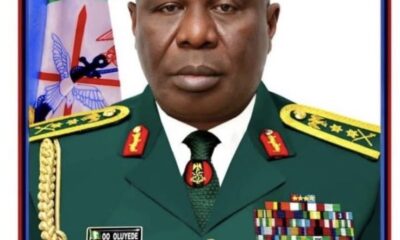

Troops Kill Terrorists, Rescue 39 Kidnap Victims in One Week – DHQ
ShareBy David Torough, Abuja The Armed Forces of Nigeria says its troops killed scores of terrorists, rescued dozens of kidnapped...
0 Comments