
NEWS
Tinubu Launches Construction of 3,112 Renewed Hope City in Abuja

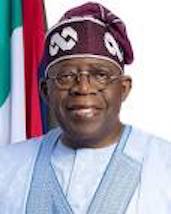
President Bola Tinubu has performed the groundbreaking of the 3,112 housing-unit Renewed Hope City in Karsana, Abuja and reiterated his administration’s resolve to provide decent and affordable housing for Nigerians.
The project is a part of 20,000 housing units to be delivered in the Federal Capital Territory under a Public Private Partnership Arrangement being implemented by the Federal Ministry of Housing and Urban Development and it represents the first practical expression of the administration’s desire to implement a New City Development Plan under the Renewed Hope Agenda.
Tinubu said under this plan, integrated living communities that will redefine the essence of residential living for Nigerians nationwide will be built, emphasizing that his vision is to build dynamic, integrated, and self-sustaining communities, equipped with amenities to enhance the quality of living for residents.
“This includes well-connected access and internal roads, provision of reliable and uninterrupted electricity, healthcare facilities to offer accessible and quality medical services and educational institutions to provide learning environments that nurture knowledge and skills.
“Our goal is to increase the sense of togetherness, improve health and productivity of our citizens and reduce pressure on city centres. On this note, I am today directing the Minister of the Federal Capital Territory and the Minister of Works to provide access roads to all Renewed Hope Cities and Estates Projects to increase accessibility and livability starting with this site in Karsana.
“This is because my administration believes that every Nigerian deserves to have access to shelter that is affordable and adequate,” he said.
Tinubu stated that beyond the moral imperative of providing decent and affordable housing for citizens, his administration also recognizes the immense potential of housing as a catalyst for inclusive economic growth.
He added, “it is with this understanding that we have classified housing as essential social infrastructure and made it a major priority area towards delivering economic growth and Job Creation.
At 25 direct and indirect jobs per house, the 20,000 housing units planned for the Federal Capital Territory alone will create 500,000 jobs.”
On the determination of his administration to ensure that Nigeria’s housing deficit is bridged, the President said he is resolved to facing this challenge with the boldness and urgency that it requires.
“We aim to promote Public Private Partnership (PPP) collaborations that attract domestic, foreign, and diaspora investments. We also aim to design and implement incentive schemes, boost our capital market while enhancing the governance and risk management frameworks to ensure their stability, transparency and integrity.
“We are resolved to facing the housing challenge with the clarity of purpose and determination that is required to break all the barriers that stand in our way of success.
“That is why I took the historic decision of separating the Federal Ministry of Housing and Urban Development from Works so it can be fully aligned towards tackling the nation’s massive housing problem. That is also why I have appointed experienced professionals with proven track records of delivering in the housing sector to lead the Ministry,” he said.
The President also said he is committed to providing the Federal Ministry of Housing and Urban Development with the political will that is required to ensure that his administration makes a historic difference in the housing and urban development landscape of the country.
“I am happy to hear that the Federal Ministry of Housing and Urban Development has already awarded contracts for the construction of 200 housing units in twelve (12) states (2 per geo-political zone) as Renewed Hope Estates. In this regard, the Minister is to proceed with the groundbreaking ceremonies in the twelve (12) locations and the estates must be completed before the end of 2024.
“I am also delighted to hear that the Renewed Hope Cities are being developed in three locations: Kano 1,500 housing units; Lagos 2,500 housing units and Abuja 3,112 under a variety of funding arrangements. The Ministry’s plan to kickstart a National Urban and Slum Upgrading Programme covering 26 sites nationwide is also commendable,” he said.
President Tinubu said in the next couple of weeks he will also be performing the groundbreaking of a similar project to deliver 2,500 housing units at the Ibeju–Lekki coastal city, Lagos.
“This project will also provide a practical demonstration of cross-subsidisation where out of the 1,500 housing units to be funded by FMBN, 400 will be sold at concessionary rates to low and medium income Nigerians who are members of the Nigeria Labour Congress and the Trade Union Congress,” he added.
From Mike Tayese, Yenagoa
Officials of the Niger Delta Development Commission (NDDC), and journalists on Monday inspected the ongoing construction of the 600-metre Otuogori Bridge in Ogbia Local Government Area of Bayelsa State following an incident at the project site.
The inspection was as a result of an earlier post on social media that the bridge under construction collapsed due to structural failure.
The bridge, if completed will serve and benefit over 100 communities in Ogbia local government area of Bayelsa state. Thereby reducing the cost of transportation and the stress of crossing rivers.
During the inspection on Monday, the NDDC State Director in Bayelsa, Godknows Alamieyeseigha, while answering questions from journalists said the commission had commenced an on-the-spot assessment to establish the circumstances surrounding the incident.
The state Director dismissed concerns that the incident was caused by structural failure, describing it as an accident that occurred during construction.
Alamieyeseigha expressed confidence in the competence of the contractor, Jillian Group of Companies, to address the issues identified by the commission and deliver the project to the people of Otuogori.
He said preliminary investigations were ongoing and that the commission would make its findings public at the conclusion of the exercise.
Also speaking during the inspection, the Managing Director of Jillian Group of Companies, Engr. Christian Omiezor, explained that the bridge was still at the preparatory stage, with the contractor yet to complete the construction of the bridge structure.
According to him, the incident occurred during the launching of the bridge beams, which were being positioned on their bearings as part of the construction process.
Omiezor explained that the beams were not yet permanently secured and could slide while resting on the bearings, adding that this was what happened during the incident.
He said the occurrence was a minor accident and attributed the absence of casualties to the safety measures put in place at the construction site.
“We are constructing a 600-metre bridge, but as you can see, we have not constructed a bridge yet. What you are seeing is just preparations for the bridge,” he said.
“What was going on was the launching of the beams, and in the process, there was a slight accident. Because the beam was resting on a bearing and had not been secured, it could slide. That was what happened. The good thing is that, with the safety measures put in place, no life was lost.”

By David Torough, Abuja
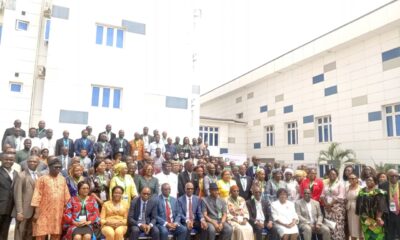
The West African Health Organisation (WAHO) has reaffirmed its commitment to harmonising the training, accreditation and recognition of health professionals’ qualifications across the Economic Community of West African States (ECOWAS), as part of efforts to address workforce shortages and improve access to quality healthcare in the sub-region.
The commitment was reiterated at the opening ceremony of the 11th Statutory Meeting of the Regional Council for Health Professionals Education in the ECOWAS Region, held on Monday at the WACOP Hotel, Abuja.
WAHO Director-General, Prof.
Palokinam Pitche, said qualified, motivated and equitably distributed health professionals remained fundamental to building resilient health systems and achieving Universal Health Coverage (UHC) in West Africa.He noted that the availability of health facilities alone could not guarantee quality healthcare without sufficient numbers of appropriately trained professionals to provide services, particularly in underserved and vulnerable communities.
According to him, the unequal distribution of health workers across countries, coupled with inadequate training, retention challenges and gaps in professional development, continues to constrain healthcare delivery in the region.
Pitche said that despite efforts by member states to strengthen their health workforce, implementation of relevant strategies had been slow and uneven, with issues relating to training curricula, continuing professional development, professional regulation, inter-professional conflicts and staff retention requiring more coordinated attention.
He stressed that achieving UHC would remain difficult without qualified health personnel who are adequately trained, motivated, retained and fairly distributed across the region.
The WAHO Director-General explained that the organisation’s efforts were backed by several regional and continental frameworks, including the WAHO Creation Protocol of 1997, the 2003 Dakar Convention on education and training, resolutions on harmonised training curricula adopted in Abuja in 2006, and the 2007 Dakar Convention on the recognition and equivalence of diplomas and certificates.
He also cited the organisation’s collaboration with the African and Malagasy Council for Higher Education (CAMES) on curriculum harmonisation and accreditation, as well as the 2014 Additional Act of ECOWAS Heads of State on improving higher education and research.
Pitche described WAHO’s human resources development programme as one of the organisation’s major achievements, noting that countries with different educational traditions, including Anglophone, Francophone and Lusophone systems, had worked together to harmonise curricula, accreditation processes and the recognition of professional qualifications.
He said the programme had attracted interest from other African regions seeking to learn from the West African experience.
However, he called for an evaluation of the programme to identify its achievements, shortcomings and areas requiring improvement.
He disclosed that WAHO would launch the evaluation process in 2027, adding that the findings would provide evidence to guide future interventions and support engagement with political authorities in member states.
The Director-General identified cross-border training, mobility of health professionals, exchange of knowledge and skills, training of trainers and joint research networks as important measures for strengthening regional cooperation and improving healthcare delivery.
He said WAHO would continue working with governments, professional bodies and development partners to implement decisions aimed at strengthening health workforce capacity across the region.
Earlier, Head of Training and Human Resources for Health at WAHO, Prof. Joseph Olorunda, outlined the objectives of the 11th statutory meeting, emphasising the need to establish and regularly review regional standards for the training of health professionals.
He said the council was also expected to ensure that harmonised training curricula complied with regional standards and to facilitate the accreditation of health training programmes and institutions across ECOWAS in partnership with relevant regulatory and professional bodies.
Olorunda added that the council would intensify advocacy with governments of member states to secure the political commitment required to strengthen health professionals’ education and training.
He listed the major deliverables of the meeting to include reviewing draft guidelines for harmonising university education systems across the ECOWAS region and submitting a revised regional framework for the recognition and equivalence of certificates awarded to health professionals.
Other deliverables include reviewing the roadmap for capacity development and health workforce training in the region, deliberating on criteria for the recognition and equivalence of professional certificates, and making recommendations to improve the functioning of the Regional Council.
He said WAHO would continue to pursue its mandate of scaling up coordinated efforts in health workforce training, development, motivation and retention, while promoting Universal Health Coverage and the recognition of professional qualifications across West Africa.
He also highlighted the importance of borderless training, professional mobility, skills exchange, joint research and greater integration among ECOWAS member states.
In his remarks, the representative of the West African Colleges, Prof. Yao Tettey, congratulated Pitche on his appointment as WAHO Director-General and pledged the cooperation of postgraduate professional colleges in advancing the organisation’s regional health agenda.
Tettey commended WAHO for involving professional colleges in the development of regional policy documents and frameworks designed to promote uniform training, professional practice and the free movement of health workers across the sub-region.
He disclosed that some postgraduate colleges had already incorporated WAHO’s harmonised curricula into their training programmes and accreditation criteria.
However, he expressed concern that some of the regional policy documents requiring adoption and implementation at national level were not receiving adequate attention from governments.
He therefore urged WAHO to use its engagement with the Assembly of Health Ministers to encourage member states to adopt and implement the harmonised frameworks.
According to him, effective implementation would help improve health workforce retention, facilitate the movement of professionals across borders and address the uneven distribution of health workers in the region.
He further expressed optimism that the documents being considered at the meeting would help address the growing migration of health professionals, commonly described as the ‘japa syndrome’, by strengthening training and retention frameworks.
Tettey reaffirmed the commitment of the postgraduate colleges to working with WAHO and other stakeholders to advance the harmonisation agenda.
The meeting is expected to produce recommendations and regional frameworks that will guide the recognition of professional qualifications, harmonisation of health education systems and development of the health workforce across ECOWAS member states.
The outcomes are also expected to strengthen cooperation among governments, universities, professional councils and postgraduate colleges in building a more integrated and responsive West African health system.
By David Torough, Abuja
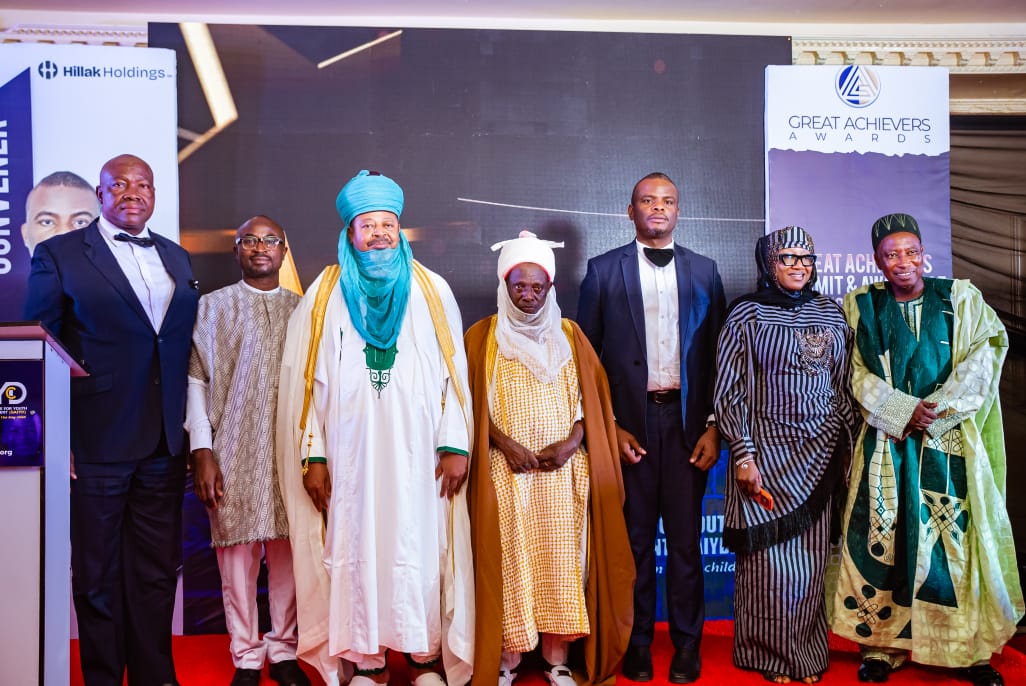
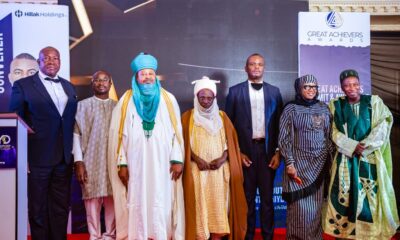
The Great Achievers Initiative for Youth and Community Development (GAIYD) says it reached more than 49,585 direct and indirect beneficiaries in 2026 through its youth development, boychild advocacy and community engagement programmes.
The initiative also extended its activities to 37 schools across three states, distributed more than 4,300 copies of its book, Unheard Voices of the Boychild, and provided learning facilities to five schools during the year.
The President of GAIYD, Dr Hillary Akpua, disclosed this at the fourth edition of the Great Achievers Awards 2026, held in Abuja on Saturday, where he announced plans to achieve at least 100 per cent growth in the organisation’s impact in 2027.
Akpua explained that GAIYD, which commenced its boychild advocacy campaign in 2021 and was formally registered in 2023, was established to address challenges affecting boys and equip them with the values and skills needed to become responsible members of society.
According to him, the initiative believes that raising responsible boys contributes to stronger families and a better society.
“We found out that our society is going through a lot of challenges, and we believe that if there is a better boychild, there will be a better family. If there is a better family, there is going to be a better society,” he said.
He said the organisation had sustained its interventions through school sensitisation programmes, community engagements and parental initiatives designed to provide boys with the guidance and support necessary to fulfil their potential.
Providing details of the year’s activities, Akpua said GAIYD engaged 435 students and 33 teachers in secondary schools across Nasarawa and Niger states on drug abuse, mental health, personal hygiene, personal responsibility and positive decision-making.
The sensitisation programmes were conducted with the support of partners, including personnel of the National Drug Law Enforcement Agency (NDLEA).
The organisation also distributed copies of Unheard Voices of the Boychild, a book launched at its 2025 summit, to encourage students to understand and reflect on the experiences and challenges confronting boys.
It further donated boards and markers to beneficiary schools to improve teaching and learning.
As part of activities commemorating the International Day of the Boychild, GAIYD organised a football and athletics competition between April 23 and May 16, involving 641 boys from eight schools.
The competition featured football matches and 100-metre, 200-metre and 400-metre races, with the aim of promoting teamwork, discipline, confidence and sportsmanship among participants.
The campaign culminated at the Moshood Abiola National Stadium, Abuja, on May 16, attracting nine schools, 18 teachers and coaches, and three media organisations.
Akpua said the campaign reached 49,151 people through direct engagements, online platforms and other activities, while the organisation’s year-end assessment put its overall direct and indirect beneficiaries at more than 49,585.
He added that GAIYD would expand its interventions to additional states and schools in 2027, with a target of doubling its overall impact.
Speaking on the theme, “Raising Responsible Leaders, Building Sustainable Nations,” the keynote speaker, Professor Okey Ikechukwu, called for a change in Nigeria’s approach to leadership, emphasising the importance of tolerance, fairness and respect for others.
Ikechukwu argued that leadership should not be defined by official positions or titles but by an individual’s ability to influence decisions and make meaningful contributions to society.
“Leadership is not about whether you have a title or whether you are heading an office. Even self-leadership is a form of leadership,” he said.
He identified cultural, religious and personal prejudices as major obstacles to responsible leadership, urging Nigerians to acknowledge their biases and avoid imposing them on others.
The professor also called for boys and girls to be raised with values that encourage mutual respect and peaceful coexistence, warning against gender stereotypes capable of limiting their development.
He challenged young Nigerians to avoid repeating the mistakes of previous generations, particularly corruption and the abuse of public positions, stressing that nation-building was a collective responsibility rather than the exclusive preserve of political officeholders.
In a goodwill message, the Chairman of the Economic and Financial Crimes Commission (EFCC), Mr Ola Olukoyede, represented by the Head of the Commission’s Enlightenment and Re-orientation Unit, Aisha Muhammad, said responsible leadership and the fight against corruption were closely connected.
He warned that sustainable development would remain difficult to achieve in an environment where financial crimes and indiscipline were tolerated.
Olukoyede noted that the commission’s experience showed that many financial crimes were rooted in a failure of values, explaining that its mandate went beyond arresting and prosecuting offenders to include corruption prevention through public enlightenment and early value re-orientation.
He identified integrity education, financial discipline and deterrence as important measures for nurturing responsible leaders.
According to him, the EFCC had established Integrity Clubs in primary and secondary schools and Zero Tolerance Clubs in tertiary institutions to promote honesty, accountability and responsible conduct among young Nigerians.
He urged youths to shun internet fraud, Ponzi schemes and get-rich-quick practices, encouraging them instead to embrace legitimate earnings, savings and financial discipline.
“The youth are not just the leaders of tomorrow; they are the leaders of today. In your homes, in your classrooms, in your social media spaces, and in your communities, you are already leading,” he said.
Olukoyede commended GAIYD for its contributions to youth integrity, civic responsibility and community development, expressing the EFCC’s willingness to partner with initiatives promoting such values.
Also speaking, the Chairman of the Code of Conduct Tribunal, Justice Mainasara Kogo Umar, identified money politics, weak ideological foundations and divisive sentiments as challenges affecting Nigeria’s democratic development.
He expressed concern that political parties were increasingly becoming platforms for personal interests rather than organisations guided by clear ideologies and policy programmes.
Umar attributed the frequent movement of politicians between political parties to a lack of ideological commitment, while noting that the high cost of nomination forms continued to limit participation in the political process.
He also criticised the practice of inducing voters with money and material gifts, observing that economic hardship had made many Nigerians vulnerable to such practices.
The tribunal chairman urged Nigerians to place national unity, peace and development at the centre of their political choices, emphasising that sustainable democracy required accountability from both leaders and citizens.
Other speakers at the event included Imran Hassan and Mrs Hauwa Aminu Wambai, while Ms Oma Favour Igboanua served as discussion lead.
The awards ceremony also recognised individuals and organisations for their contributions to youth development, community service, leadership and boychild advocacy.
Among the recipients, HRH Queen Haukawulu Adamu Ibrahim received the Community Development Advocate and Champion for Gender Equality and Justice Award, while HRH Alhaji Dr Usman Nga-Kupi was honoured as Champion of Education and Cultural Preservation.
Frank Nwike received the Outstanding Organisation of the Year Award, while Chief Eleduma Gbenga Abiodun was named Humanitarian of the Year. Mr Samuel Biboye Luwei received the Entrepreneur of the Year Award.
Dr Hassan’s Hospital was presented with the GAIYD Legacy Award, while Mr Salihu Abdulahmed Dembos received the Outstanding Leadership in Broadcasting Award.
Other awardees included Mr Okeke Chidozie, recognised as Africa’s Trailblazer of the Year; Mr David Ogidinta, Youth Mentor of the Year; and Mrs Princess-Ekwi Ajide, Mental Health Advocate of the Year.
GAIYD acknowledged the support of the NDLEA, EFCC, National Emergency Management Agency (NEMA), Hillak Holdings, Rockbase Developers, Homadil Reality, Dr Hassan’s Hospital, Heladi Prime Limited, De Ace Cribs, Etazuma M&I, Boys2Men Coaching and Mentoring, Neovantage Foundation, Vinael Wines and other partners for their contributions to the organisation’s programmes and activities.



NDDC Officials, Journalists Inspect 600-Metre Otuogori Bridge Project in Bayelsa
ShareFrom Mike Tayese, Yenagoa Officials of the Niger Delta Development Commission (NDDC), and journalists on Monday inspected the ongoing construction...

WAHO Seeks Uniform Standards for Health Professionals’ Education in ECOWAS
ShareBy David Torough, Abuja The West African Health Organisation (WAHO) has reaffirmed its commitment to harmonising the training, accreditation and...

2027: INEC Engages Adamawa PWDs on Electoral Process
ShareThe Independent National Electoral Commission (INEC) in Adamawa has sensitised Persons Living with Disabilities (PWDs) on the electoral process ahead...

GAIYD Reaches 49,585 People, Targets 100 Per Cent Growth in Youth Devt Impact
ShareBy David Torough, Abuja The Great Achievers Initiative for Youth and Community Development (GAIYD) says it reached more than 49,585...


NUPRC Offers 40 Oil, Gas Blocks to Prospective Investors
Share By Tony Obiechina, Abuja The Nigerian Upstream Petroleum Regulatory Commission (NUPRC) has called on international oil and gas investors...
Ebola: NCDC Defends N10bn Health Security Fund
ShareBy Laide Akinboade, Abuja The Nigeria Centre for Disease Control and Prevention (NCDC) has clarified that the N10 billion emergency...

After Sacred Ka’abah Visit in Makkah, Tinubu Recommits to Peace, Prosperity.
ShareBy David Torough, Abuja President Bola Tinubu has reaffirmed his commitment to national development, peace and prosperity, declaring that he...

WAHO Seeks Uniform Standards for Health Professionals’ Education in ECOWAS
ShareBy David Torough, Abuja The West African Health Organisation (WAHO) has reaffirmed its commitment to harmonising the training, accreditation and...


Firm Promises No Storage Charges On Subscribers’ Wallets
ShareBy David Torough, Abuja A telecommunications firm, ESDIAC Global, has said it does not impose storage charges on subscribers’ wallets,...


GIGM Brings hireX, PASS to Abuja Nov 4
ShareBy Tony Obiechina, Abuja Premium vehicle hire and all-in-one travel booking are coming to Nigeria’s capitalGIG Mobility (GIGM) has announced...