
Uncategorized
Our Next Vice President

By Dakuku Peterside
In the race to breast the tape of the presidency in 2023, the most consequential decision as to who would fly the flag of the major parties is made by delegates – a new set of power brokers, thanks to section 84(8) of the amended Electoral Act.
PDP delegates chose Atiku Abubakar, and APC delegates will select one from a pack of 13 ”shortlisted” aspirants shortly.
The other parties, often referred to as fringe parties, will also choose presidential candidates.The next most consequential decision would be outside the purview of these “new gods of presidential nomination” called delegates.
And it will be made by the nominated presidential candidates in consultation with a handful of party leaders. I am referring to the choice of presidential running mates, one of whm would be our next Vice President.The choice of the vice-presidential candidates made by the presidential candidates is not always a straightforward affair depending on the maturity of the democracy. In advanced democracies, the prominent basis for choosing a vice-presidential candidate is geopolitical electoral balancing or partnership that culminates in a qualified candidate to help the presumptive president run the state.
The vice president, although having a limited constitutional role compared with the president, plays a vital role in leading the country. But most importantly, he must be very presidential as he is a heartbeat away from the president under emergency, for example, when the President is incapacitated, resigns or dies.
Even though the first US Vice President, John Adams said the position was “the most insignificant invention ever contrived by man”, the position has come a long way since the 18th century.
The selection of a running mate is complex, with all sorts of consideration outside the severe issues of a candidate’s suitability based on presidential qualities and capacity to lead. Whether in the APC, PDP, Labour, or any of the other parties in Nigeria, five things are topmost in choosing a vice president, and none of these affects the quality of governance.
The first is ethnic or geopolitical balancing. It is an unwritten rule that the president and the vice will not come from the same region, zone, or ethnic group. There is a North/South divide in this case, where if the president comes from the North, the vice president will come from the South and vice versa.
The second primary consideration is religious balancing, often Christian versus Muslim and vice versa. Rarely will both the presidential and vice-presidential candidates be of the same religion. The case of Abiola/Kingibe in 1993 is an exception . The third and fourth factors are intra-party group interest; and the ability of the vice president to raise money to prosecute the election because presidential elections are very capital intensive.
The fifth consideration is the ability of the vice president to win votes in the presidential elections. This is considered by looking at the political structure of the VP candidates or their popularity and electability.
For now, PDP has produced a presidential candidate, Atiku Abubakar. However, he is playing a cat- and-mouse game, waiting for APC to choose its flag bearer first before deciding on a running mate. This has not stopped clandestine manoeuvres, speculations, high-wire politicking, and intrigues. In the APC, the potential running mate is a matter of conjecture, permutation, and strategic positioning by all those who are interested.
I advocate that we have a paradigm shift in choosing VPs in Nigeria. Although the factors considered above in selecting a VP emanate from our peculiar political circumstances and history, and although some of them make sense and may be logical considerations, we must make them peripheral and auxiliary factors in choosing a VP candidate by the presidential candidates.
At the bottom of the issues that will influence the choice of a running mate who is a potential vice president, in our clime , is the capacity to function as president. The potential VP must have a deep understanding of policies and economic issues in the country.
He must understand and buy into the vision of the likely president and how he fits in with executing policies and projects to achieve that vision. Another important consideration would seem to be that of compatibility between the president and his deputy. Our next VP must have a demonstrable and proven ability to be a provider of solutions to national problems.
It is becoming increasingly apparent that the club of governors in APC and PDP have emerged as the most crucial bloc in deciding who a potential running mate should be. My primary concern is not where the VP candidates come from but their suitability.
Even the electorate does not pay much attention to who the vice-presidential candidates are. Often, the issue of VP is reduced to ethnic or regional sentiments. The common misconception that VPs do not matter in the political equation and are powerless in the scheme of things is wrong and must change with time.
In the absence of linking the potential VPs to the quality of input and output of governance, three key issues stare us in the face as parties and presidential candidates choose VP candidates. First, Nigerians should demand to know our potential VP as much as we want to know our presidential hopefuls so we can make an informed decision.
Second, there are certain minimal qualities a potential VP must possess for the joint ticket to earn our confidence. And finally, a VP is a president in the waiting, so he must share his idea of how he can turn around the country with the Nigerian people. The choice of a VP candidate should send a signal on what matters to our presidential candidates.
Is it politics, mundane governance issues, economy, or new thinking on how to salvage Nigeria? We must acknowledge our time and realise that we need our best hands to bring us out of the political and economic quagmire. VP candidature is not a souvenir but a call to salvage the nation at a time of national economic and security crisis.
The net effect of my proposition is that in the presidential democratic system, the executive at the centre of government is embodied in the president. As the executive head of the government, the president appoints and assembles all other members of the executive to collaborate with him to execute and enforce the law and lead the people to prosperity.
One person the president must choose and run within the election is his VP. The VP is a critical stakeholder in the presidency and, as such, must be selected carefully. The choice of the VP must transcend parochialism and pedantic reasoning. The VP candidature is serious business and must be treated as such.
I must argue that the choice of a president’s VP says a lot about the psychology and direction of the presidency if the presidential candidate wins. One can extrapolate, albeit unscientifically, about the presidency’s mood, feel, and impact. If the presidential candidate gets his first choice of appointment (the VP) wrong, how can we trust him to get other essential appointments to the executive arm of government right?
Peterside is a policy analyst


From Attah Ede, Makurdi
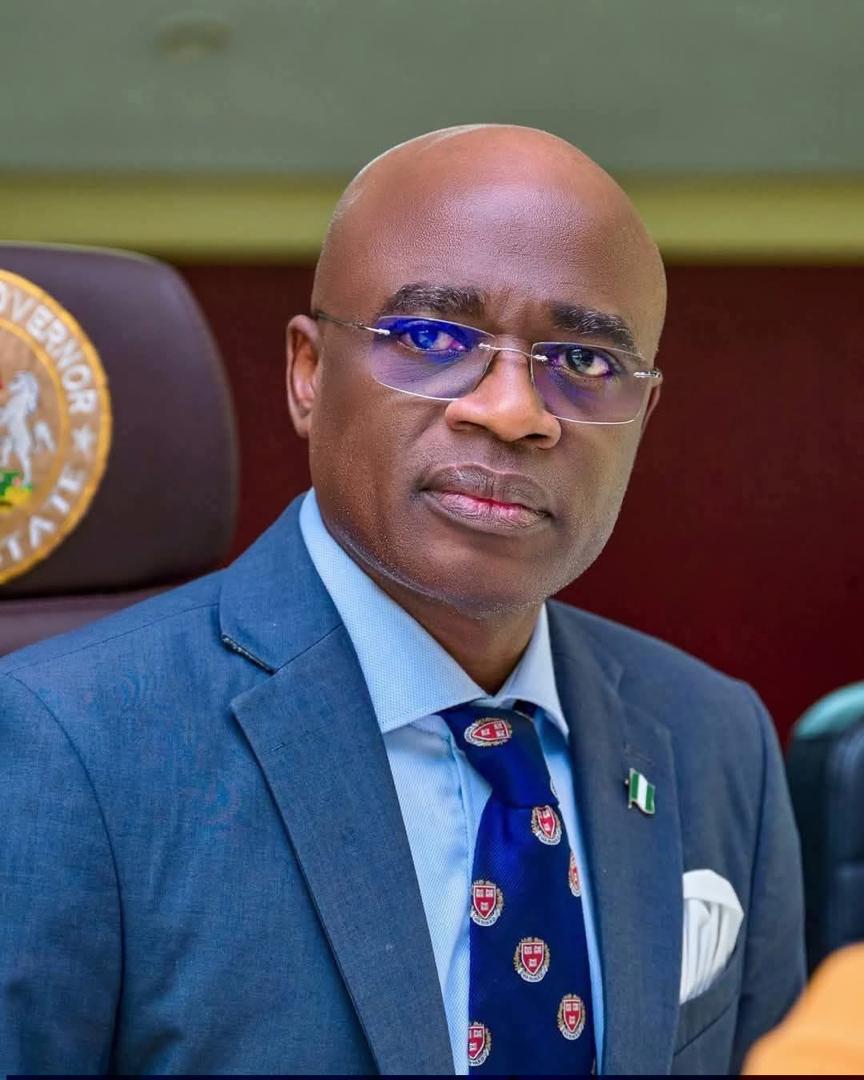
Benue State Governor, Rev Fr .Hyacinth Alia has approved the appointment of Dr. Ihu Eunice Ogbenyi as new Acting Head of Service (HoS) of Benue State.
The appointment followed the unfortunate demise of Dr.
Agbogbo Ode who was Head of Service from 2023 – 2026.The acting HoS, Dr. Ogbenyi hails from Oju Local Government Area of Benue and was born on the 12th June 1973.
Before her appointment, she was Permanent Secretary in the Ministry of Lands and Survey.
She obtained her Nigeria Certificate in Education (NCE) Maths/Physics in 1996 from College of Education, Oju and further obtained B.Sc. 2005, Masters 2010 and Ph.D 2021 all in Mathematics Education at the Fr. Adasu University, Makurdi.
She was employed into the Benue State Teaching Service Board as Principal Assistant Education Officer (PAEO II) in 1998.
Her service was deployed in February 2012 to the Benue State Ministry of Education.
She later served variously as Deputy Director Education (DDE) in the department of Planning, Research and Statistic (DPRS) heading Joint Consultative Committees on Education/National Council on Education (JCCE/NCE) unit and assistant Head of Education Management Information System (EMIS) unit.
While congratulating the Acting HoS, Governor Alia stated that “As you assume this critical role, I charge you with the responsibilities, principles, and priorities that will guide your stewardship and ensure continuity, professionalism, and service to the public.
“You must ensure your official actions conform with the vision and principles of this administration to continue with the reforms in the civil service and uphold at all times the sanctity and dignity of your office.
“You must ensure in all your official dealings that the interest of the state comes first”.
The governor in a statement by his chief press secretary Kula Tersoo, said the appointment takes immediate effect.
Uncategorized
Children’s Day 2026: CAN Urges Urgent Action To Protect Nigerian Children From Fear, Violence And Neglect
By Laide Akinboade, Abuja
The Christian Association of Nigeria, (CAN,) has tasked Nigerian leaders, three tiers of government and security agencies in Nigeria to make protection of schools and children as an urgent national responsibility.
President CAN, Archbishop Daniel Okoh, stated this in a message to commemorate the 2026 Children’s day in Abuja.
Okoh lamented that CAN deeply concern over the growing dangers confronting children across the country.
Adding that this is not acceptable due to the spate of kidnapping and abductions of children in schools in Oyo state.
The CAN President, therefore called for the immediate release of the children and teachers, in captivity.
The message reads, “This year’s celebration comes at a painful time for many families following recent attacks on schools in Oyo State, where pupils and teachers were abducted by gunmen, leaving parents traumatised and communities shaken. For many Nigerians, the incident has once again raised painful questions about the safety of children and the future of education in an atmosphere of worsening insecurity.
“CAN is deeply troubled by the plight of children who remain in captivity and by the emotional agony their families continue to endure. No child should have to experience fear and violence in a place meant for learning, protection and hope.
“We are equally concerned for the teachers caught in these tragic situations alongside their pupils. Teachers do far more than teach lessons in classrooms. They guide, protect, encourage and nurture children entrusted to their care every day. In many ways, they become trusted guardians and second parents to the young lives they help shape.
“The thought of teachers facing fear and uncertainty together with the children they were trying to protect should weigh heavily on the conscience of the nation”.
Okoh decried the facts that parents are now scared to send their children to school in Nigeria and this is unacceptable.
“A country where parents are afraid to send their children to school and teachers are uncertain about their safety cannot claim to be securing its future”.
He lamented the level of hunger, insecurity, poverty, in the country,
“Beyond insecurity, millions of Nigerian children continue to struggle with poverty, hunger, abuse, trafficking, child labour and limited access to quality education and healthcare. These challenges are steadily denying many children the stability, dignity and opportunities they deserve”.
CAN therefore calls on governments at all levels and security agencies to treat the protection of schools and children as an urgent national responsibility. Children must never become victims of a failing security system or repeated targets for criminal violence.
“We also urge leaders to recognise that every attack on a school damages public confidence, weakens national development and leaves emotional scars that can shape the future of a generation.
“Parents, faith communities, traditional institutions, schools, media organisations and community leaders must also work together to protect children, strengthen moral values and create environments where young people can grow without fear.
“To every Nigerian child living under difficult conditions or in communities troubled by insecurity, CAN encourages you not to lose hope. Your future remains important, your lives have value and your dreams deserve protection and support”, he said..
The CAN President prayed, *As the nation marks Children’s Day 2026, may this occasion awaken a deeper sense of responsibility among leaders and citizens alike to build a Nigeria where every child can live, learn and grow in peace, safety and dignity”.
CAN therefore reiterated its commitment in advocating for justice, responsible leadership and policies that protect the welfare and future of every Nigerian child.
By David Torough, Abuja
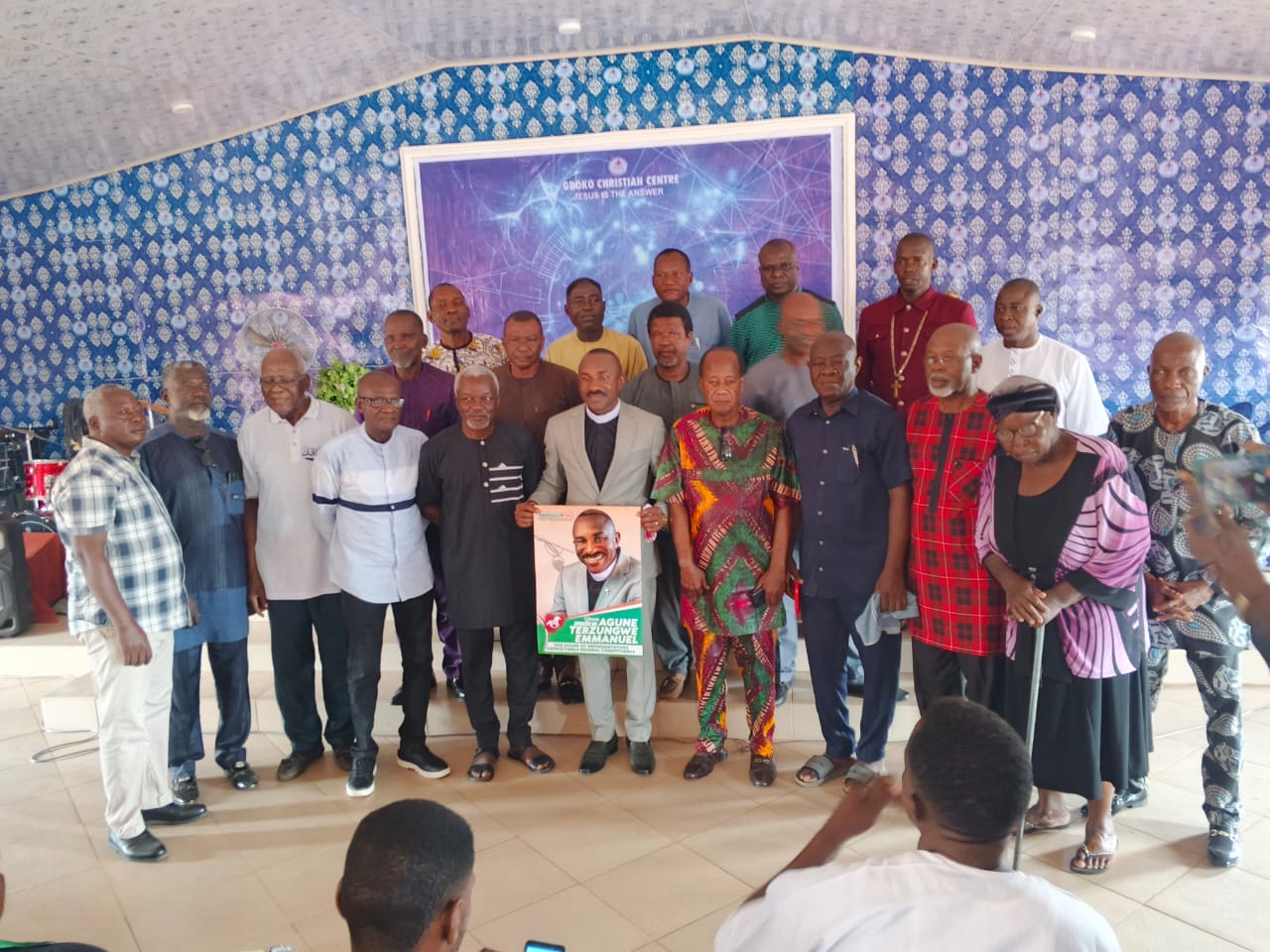
The Christian Association of Nigeria (CAN), Gboko Chapter, on Tuesday held a special prayer session in support of the aspiration of Hon. Emmanuel Agune, candidate of the Social Democratic Party (SDP), to represent the people of Gboko/Tarka Federal Constituency at the House of Representatives in Abuja.
Speaking during the event, Rev.
Aule Aluamu said the association would mobilize and sensitize members of the constituency to ensure victory for Agune, whom he described as a committed member of the Christian community.In his response, Agune expressed gratitude to the association for what he called a noble initiative aimed at committing his 2027 ambition into the hands of God.
He assured the gathering that if elected into the National Assembly, he would ensure that CAN is carried along in development and intervention programmes, acknowledging the role the Christian body has played in his life over the years.
Agune also reflected on his humble beginnings as a carpenter, noting that his life’s mission has always been to support the less privileged in society.
He cited his involvement in scholarship schemes, healthcare support, community projects and human capacity development programmes as evidence of his commitment to service.
The SDP House of Representatives hopeful pledged to expand such interventions if given the mandate to serve at the National Assembly.
As part of his engagements, Agune also paid a courtesy visit to the Gboko Women Integrative Group led by Mrs. Bridget Jir, where he reportedly received strong endorsements and prayers for his political ambition.




Benue CAN Deputy Chair Makes Case for Less Privileged, Vulnerable in Society
ShareBy Attah Ede, Makurdi The Deputy Chairman Christian Association of Nigeria CAN Benue State Chapter, Rev. Jonathan Terwase Ugbede has...

FG Saves N61.58bn Through Early Fertiliser Procurement, Secures Supply for 2026 Farming Season
ShareBy Raphael Atuu ,Abuja The Federal Government has saved approximately ₦61.58 billion (US$43.99 million) and secured fertiliser supplies for the...

Democracy Day: Renewed Hope Agenda Laying Foundation for Sustainable Growth, Says Nasarawa SSG
ShareFrom Abel Zwanke, Lafia. The Secretary to the Government of Nasarawa State and Renewed Hope Ambassador, Shuaibu Magaji Labaran, has...


One out of every four children in Benue suffering nutritional deficiencies- UNICEF
ShareFrom Attah Ede, Makurdi The United Nations Children’s Fund (UNICEF), has revealed that one out of every four Benue State...
Niger Debunks School Attack Rumours
ShareThe Niger Government has reassured parents, guardians, students, and the general public that schools across the state remain safe and conducive for teaching and learning. This was contained in a statement signed by...


Pope Leo Visits Canary Islands, Highlights Perilous Journeys of Migrants
ShareBakary Jaiju was 19 when he climbed into a wooden boat in the Gambia and set out for Europe. He...

Diri Signs PWDs, BMUTH Bills into Law
ShareFrom Mike Tayese, Yenagoa Bayelsa State Governor, Senator Douye Diri, has signed the Persons with Disabilities (PWDs) and the Bayelsa Medical...

Democracy Day: FG Declares Friday Public Holiday
ShareThe Federal Government has declared Friday, public holiday to commemorate Nigeria’s 27 years of unbroken democratic rule. This was contained in a statement on Thursday in Abuja, by...
NUJ Osun Condemns Arrest of Secretary, Demands Public Apology from Police
ShareFrom Ayinde Akintade, Osogbo The Osun State Council of the Nigeria Union of Journalists (NUJ) has condemned the arrest and detention of its Secretary, Olalekan Akindoju, by...

FCMB names Bismark Rewane Board Chairman
Share First City Monument Bank Limited has appointed Bismarck Rewane as a Non-Executive Director and Chairman of its Board of...