
BUSINESS
Petroleum Marketers Resume Loading from Depots – NMDPRA


The Nigerian Midstream and Downstream Petroleum Regulatory Authority (NMDPRA), has said operations in depots have fully resumed following the restriction of movements during the recently concluded Presidential and National Assembly elections.
The elections prompted many truck drivers to travel to different parts of the country to exercise their civic duty, the agency said.
In a statement on Sunday, the agency said it is working with other stakeholders to mitigate the challenge being experienced in the distribution of Premium Motor Spirit (PMS).
The NMDPRA said the current stock sufficiency stands at 35.
39 days for PMS, 34.86 days for diesel (AGO) and 31.36 days for aviation turbine kerosene (ATK).It said it continues to strive towards guaranteeing supply and distribution reliability nationwide and strongly advises against panic buying.
Last Saturday, fuel queues resurfaced in petrol stations across Abuja, the nation’s capital city, with many motorists scrambling to get petroleum products.
Our correspondent who visited petrol stations on Saturday found that some filling stations were shut to buyers while others along Lugbe airport road, Wuse and Gwagwalada were besieged by end-users queuing to buy petrol.
The same trend was witnessed around Kubwa Road, Wuye, Bwari, Jabi and Utako areas of the city.
The development is coming days after Nigeria’s presidential and National Assembly elections.
The Nigerian National Petroleum Company Ltd (NNPCL), however, attributed the fuel queue in Abuja and some parts of the country to restrictions on businesses and movement during the presidential and National Assembly elections.
It reassured Nigerians of the robust supply of petrol in the country and advised against panic-buying.
It added that operations have now resumed at the depots and trucks are being dispatched to various parts of the country. (Premium Times)





By Tambaya Julius, Abuja
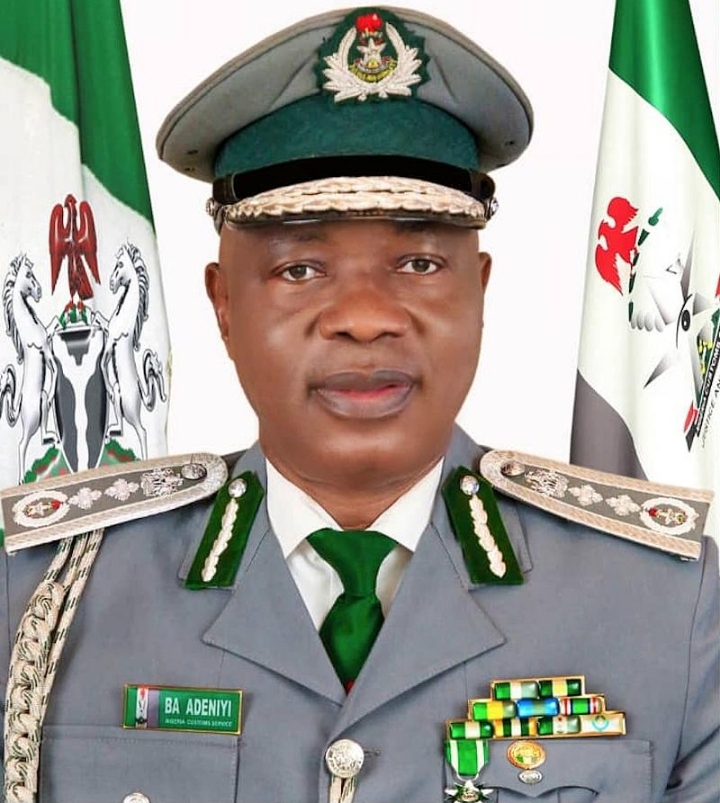
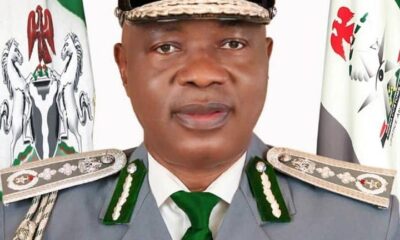
The Comptroller-General of the Nigeria Customs Service (NCS), Bashir Adewale Adeniyi, has called on officers and men of the Customs Police Unit (CPU) to uphold discipline, professionalism and integrity, stressing that accountability must begin within the Service.
Adeniyi made the call while delivering the keynote address at the inaugural Customs Police Summit 2026, held at the NAF Conference Centre and Suites, Abuja.
The summit, with the theme, “Reimagining Customs Policing: Learning From the Past, Responding to the Present, and Preparing for the Future,” brought together customs personnel and representatives of security and law enforcement agencies to discuss ways of strengthening the unit and preparing it for emerging enforcement challenges.
The Customs boss, who is also the Chairperson of the World Customs Organization (WCO) Council, said the Service must first demonstrate the discipline and integrity it expects from traders and members of the public.
He described the Customs Police Unit as a critical part of the Service’s internal control system, noting that its responsibility goes beyond investigating misconduct to ensuring that officers exercise their powers within the confines of the law.
According to him, the unit, formally inaugurated in July 2019, was established to investigate erring personnel, prevent crime and promote compliance, guided by the principle that no officer is above the law.
He said the experience of the Service over the years had reinforced three important lessons: integrity must begin at home, enforcement powers must be exercised responsibly, and effective policing requires cooperation among relevant institutions.
The Comptroller-General expressed concern over the growing sophistication of criminal networks, which he said were increasingly exploiting legitimate trade routes and digital platforms to move illicit goods, including firearm components, narcotics, counterfeit medicines, protected wildlife and proceeds of illegal activities.
He maintained that tackling these threats required more than aggressive enforcement, calling instead for smarter, intelligence-driven operations supported by technology and international best practices.
Adeniyi pointed to several World Customs Organization instruments, including the SAFE Framework, Authorised Economic Operator (AEO) Programme, advance rulings, Time Release Study and Revised Kyoto Convention, as important tools for promoting compliance, facilitating legitimate trade and reducing opportunities for corruption.
He also highlighted the role of technology and data management in strengthening customs operations, citing the B’Odogwu platform, which integrates declarations, valuation, risk management and AEO processes.
He added that the INTERPOL Data Centre at Customs Headquarters had provided the Service with access to global criminal databases, while the Nigeria Customs Service Act 2023 had strengthened the legal foundation for intelligence-led operations, joint border activities and mutual administrative assistance.
The CGC identified Consolidation, Collaboration and Innovation as the three pillars that must shape the future of customs policing.
He explained that consolidation would require stronger operational procedures, improved investigations, properly documented cases for prosecution and continuous professional development of personnel.
He called for closer working relationships with the Nigeria Police Force, Armed Forces, National Drug Law Enforcement Agency (NDLEA), National Agency for Food and Drug Administration and Control (NAFDAC), Department of State Services (DSS), Independent Corrupt Practices and Other Related Offences Commission (ICPC), Nigeria Agricultural Quarantine Service (NAQS), neighbouring countries and border communities.
He also encouraged the Service to take advantage of emerging technologies, including artificial intelligence, advanced scanners, geospatial tools and electronic cargo tracking, to improve investigations and strengthen enforcement operations.
Adeniyi urged participants to use the summit to develop practical recommendations, including a Customs Police doctrine based on the NCS Act 2023 and Revised Arusha Declaration, improved protocols for joint operations and evidence management, guidelines for the responsible use of artificial intelligence in investigations, and better training and welfare for CPU personnel.
Addressing officers of the unit, he reminded them that their red berets represented the confidence Nigerians placed in the Service and must therefore be worn with discipline, restraint and pride.
He stressed that integrity remained the greatest badge of honour for every customs officer.
The Acting Provost Marshal of the NCS, Deputy Comptroller TS Sanusi, described the summit as an important step towards strengthening the institutional capacity and repositioning the Customs Police Unit.
Sanusi said the unit was established to provide a dedicated structure for maintaining discipline, investigating misconduct and ensuring compliance with professional standards among personnel and stakeholders.
He observed that the Service could not effectively enforce laws and regulate international trade without having strong mechanisms to promote discipline and accountability within its own ranks.
He added that the increasing challenges of transnational organised crime, illicit financial flows, corruption and emerging security threats had made the work of the Customs Police Unit more important.
The Acting Provost Marshal expressed appreciation to the Comptroller-General for his leadership, support and approval of funds for the inaugural summit, noting that the gesture reflected management’s commitment to strengthening the unit.
He also recognised the contributions of former Provost Marshals and personnel who helped establish the unit’s operational structures and professional standards.
Sanusi urged serving personnel to lead by example, insisting that discipline must begin with them if they were to earn the respect and confidence required to enforce it among others.
In his remarks, Assistant Comptroller-General of Customs at Headquarters, MS Shuaibu, called for a renewed approach to customs policing, with greater emphasis on professionalism, intelligence gathering and institutional accountability.
Shuaibu said the summit provided an opportunity to reflect on the unit’s achievements, address existing challenges and develop strategies to respond to changing global trade patterns and security threats.
He acknowledged the unit’s contributions to internal discipline, investigation of infractions and the protection of the Service’s interests, but stressed the need to continually improve its operational capacity.
He identified intelligence gathering, surveillance, risk analysis, inter-agency cooperation and modern investigative techniques as key areas requiring attention.
The ACG further emphasised that the exercise of police powers must be guided by respect for human rights and due process, warning that enforcement must never become an excuse for unjust treatment.
He urged officers to remain firm but lawful, courageous but responsible, and impartial in carrying out their responsibilities.

The Federal Government has called for a stronger agricultural value chains, increased agro-industrialisation and improved market access to boost food security in Nigeria.
The Permanent Secretary, Federal Ministry of Agriculture and Food Security, Dr.
Marcus Ogunbiyi, made the call on Monday in Enugu during the Technical Session of the National Council on Agriculture and Food Security.The theme of the event is “Enhancing Agricultural Value Chains, Agro-Industrialization and Market Access for Economic Growth.”
Ogunbiyi, who doubled as the Chairman of the Technical Session, said that the country must move beyond subsistence farming and embrace a commercially driven agricultural system capable of supporting industries, improving farmers’ incomes and expanding export opportunities.
“Our task goes beyond increasing the volume of food produced.
“We must build an agricultural economy that creates wealth, supports industries, generates decent employment, expands exports, improves rural livelihoods and contributes meaningfully to national economic growth,” he said.
The Permanent Secretary identified inadequate storage and processing facilities, limited access to finance, poor logistics and weak links between farmers and processors as major challenges affecting the competitiveness of agricultural products.
He called for increased investment in agro-processing facilities, rural roads, irrigation, electricity, cold-chain infrastructure and modern technologies to reduce post-harvest losses and promote local value addition.
“Agro-industrialisation is central to the transformation we seek to achieve. It provides the bridge between agriculture and industry.
“It also enables agricultural production to serve as a reliable source of raw materials for manufacturing and other productive sectors of the economy.
“The value of this Council will ultimately be determined by the quality of its resolutions and the extent to which those resolutions are implemented,” Ogunbiyi stated.
He also urged state governments to identify priority commodities, establish clear production and processing targets, attract private-sector investment and strengthen partnerships with research institutions and development partners.
In his remarks, the Enugu State Commissioner for Agriculture and Agro-industrialisation, Patrick Uburu, said that the state government was committed to agro-industrialisation to boost farmers’ income, create jobs and generate wealth.
Uburu, who described the technical sessions as a platform for translating policies into practical solutions, urged delegates to prioritise farmers and agribusiness operators in their deliberations.
He emphasised the need for stronger collaboration among state governments, federal agencies and development partners to address food security challenges, noting that recommendations from the meeting should be measurable and implementable.
The commissioner called for practical policies and investments that would improve farmers’ productivity and expand market access for agricultural produce.
Technical Lead Policy Advisory, GIZ ECOWAS & Nigeria, Dr Abiodun Ihebuzor, advocated for stronger partnerships and increased investment in agricultural value chains to reduce post-harvest losses and improve food security in Nigeria.
Ihebuzor noted that previous engagements at the 46th Council in Calabar and the 47th Council in Kaduna had provided opportunities to advance agricultural development.
He expressed optimism that the current meeting would strengthen collaboration among government institutions, development partners and private-sector operators.
According to him, healthy soils, efficient markets and improved storage systems were essential to sustainable food security.
On her part, Geraldine Onu, Deputy Director, Administration and Supply, Enugu State Ministry of Agriculture and Agro-Industrialisation, disclosed that the State Government had intensified efforts to transform agriculture from subsistence farming to commercial and mechanical farming as part of its economic development agenda.
She noted that investments in irrigation, storage, processing and agricultural infrastructure were aimed at increasing production, attracting private investment, reducing post-harvest losses and improving farmers’ livelihoods.
“In Enugu State, under the visionary leadership of Gov. Peter Mbah, agriculture occupies a strategic position in the state’s economic transformation agenda.
“The initiatives include the 300,000-hectare agricultural land bank, the development of Smart Farm Estates across the 17 Local Government Areas, the 260 Farm Estate Programme and the establishment of a tractor assembly plant,” Onu added.(NAN)

A graduate of the University of Maiduguri, Shianya Ebwaseh, said the Nigerian Education Loan Fund (NELFUND) helped improve her Grade Point Average (GPA) to 3.50 through financial support that enabled her to concentrate on her studies.
Ebwaseh, who graduated from the Department of Zoology, Faculty of Life Sciences, said this in an interview on Monday in Maiduguri.
She said financial difficulties had previously affected her academic performance, as she struggled to meet her daily needs while pursuing her degree.
The graduate said she resorted to selling fried chips and groundnuts on campus to support herself, sometimes missing lectures because of the time and energy required to run the business.
According to her, the introduction of NELFUND’s student loan scheme relieved her financial burden through tuition support and a monthly N20,000 upkeep allowance.
“Before NELFUND, I struggled with my GPA because of financial challenges. I sometimes missed lectures after spending hours frying and packaging chips for sale.
“But when NELFUND came, I stopped the business and concentrated on my studies. My GPA improved to 3.50, which is Second Class Upper,” she said.
Ebwaseh said the financial support also enabled her to attend lectures regularly, purchase learning materials and prepare adequately for tests and examinations without constant worries about money.
She added that her examination scores improved significantly after she began receiving the support, attributing the change to increased concentration and financial stability.
The graduate, who said she accessed the scheme in her third year, described the application process as simple and encouraged other eligible students to apply.
She also said the programme had helped financially disadvantaged students remain in school, particularly those whose parents could not afford tuition fees and upkeep.
Ebwaseh appealed to the Federal Government to sustain the initiative, emphasising that withdrawing the support could expose many students to financial difficulties and possible dropout.
She said the scheme had given beneficiaries an opportunity to pursue their academic ambitions with fewer financial distractions.(NAN)



Customs CG Tasks Officers on Discipline, Integrity
ShareBy Tambaya Julius, Abuja The Comptroller-General of the Nigeria Customs Service (NCS), Bashir Adewale Adeniyi, has called on officers and...

Bayelsa Deputy Gov Tasks Nigerians on Effective Service
ShareFrom Mike Tayese, Yenagoa The Deputy Governor of Bayelsa State, Dr. Peter Akpe, has urged Nigerians to make selfless service...
CIPPON Urges FG to Protect Nigerian Printing Industry
ShareBy David Torough, Abuja The Chartered Institute of Professional Printers of Nigeria (CIPPON) has renewed its call on the Federal...


Mbah Declares Emergency on Nsukka-Adani Road
ShareFrom Sylvia Udegbunam Enugu Enugu State Governor, Peter Mbah has declared an emergency on the Nsukka-Adani Road, describing it as...


Oborevwori Mobilises Support for Tinubu, APC 2027 Victory
ShareFrom Francis Sadhere, Delta Delta State Governor, Rt. Hon. Sheriff Oborevwori, has called for massive support for President Bola Ahmed...
Growing Threat to Opposition Politics and Democracy
ShareBy Pius Mordi Democracy thrives on competition, tolerance, freedom of expression and the willingness of those in power to accommodate...

NCDMB, NLNG Commit $9m to Endowment of Professorial Research Chairs in Six Varsities
ShareFrom Mike Tayese, Yenagoa The Nigerian Content Development and Monitoring Board (NCDMB) and the Nigeria LNG Limited (NLNG) have launched...


2027: Obi Visits Benue, Vow to Unite Nigeria if Elected
ShareFrom Attah Ede, Makurdi The presidential candidate of the Nigeria Democratic Congress (NDC), Peter Obi, has vowed to unite Nigeria,...

Wike Targets Tourist Destination Status for Apo-Karshi Road
ShareBy Laide Akinboade, Abuja The Minister of the Federal Capital Territory (FCT), Nyesom Wike, has announced plans to transform the...


Alt Bank Appoints Gul Khan as Managing Director
ShareThe Alternative Bank Ltd (Alt Bank) has appointed Gul Khan as its new Managing Director, following approval by the Central...