
NEWS
Police Order Detention of 3 Inspectors over Alleged Extortion in Anambra


The Police Command in Anambra has ordered the detention and orderly room trial of three police Inspectors over the alleged extortion of an unsuspecting member of the public.The command’s Public Relations Officer (PRO), SP Tochukwu Ikenga, disclosed this in a statement on Thursday in Awka.
Ikenga disclosed that the State Commissioner of Police( CP) Ikioye Orutugu, had condemned the conduct of some officers who, during a patrol in Awka, unlawfully accosted an unsuspecting member of the public, searched his phone, and extorted money from him. According to the statement, the CP Anambra Command, Ikioye Orutugu on June 11 ordered the detention of three police Inspectors over an allegation of corruption.“The CP further directed the immediate commencement of internal disciplinary proceedings of the force against the officers.“The CP during interrogation of the officers frowned at the poor character exhibited when they accosted an unsuspecting member of the public during a security patrol, forcibly searched his phone and extorted money from the victim.” Ikenga quoted the CP as reaffirming that the Nigeria Police Force remained a disciplined, transparent, responsible, responsive, and accountable institution that would never condone any form of abuse of office or unprofessional conduct.“The CP noted that such anomalies, aside from negating the professional calling of the police, are unacceptable as they affect the entire execution of policies and directives.“Your character will widen the trust gap between the citizens and the force,” the CP said.(NAN)
By Innocent Okwuosa
The implementation of IFRS S1 and S2 must not be approached strictly from a regulatory compliance perspective. Rather, it should lead to a change in responsible business behaviour.
For there to be this change, sustainability practices must be integrated and embedded in an entity’s operations. Today I want to provide more clarification and guidance on this.One of the documents in the Financial Reporting Council’s (FRC) Phase Two implementation, requires an entity to identify all Sustainability Related Risks and Opportunities (SRROs) that could reasonably be expected to affect its prospect and carry out a materiality assessment of each identified SRRO.
The materiality assessment enables the entity to zero in on those relevant SRROs for prioritisation. Materiality assessment is predicated on the likelihood/probability and magnitude of occurrence.The magnitude of occurrence speaks directly to financial materiality i.e. SRRO’s effect on financial performance, position, cash flow, and access to or costs of capital. Prioritisation should be predicated on the SRROs with the highest financial effect, determined as likelihood/probability of occurrence multiplied by the magnitude. It is not my intention to go into the intricacies involved in this determination, but ultimately the entity would identify and prioritise the SRROs that could affect its prospect.
As such, the integration of sustainability begins with the entity identifying the sustainability practices that address the identified and materially assessed SRROs. Then, the entity must first update its Risk
Register to include all the identified and materially assessed sustainability related risks. By doing this it would have acknowledged that they are part of the risks that it will now have to deal with and manage, going forward. If after Phase Two, an entity has not updated its Risk Register to include sustainability related risks, then there is outstanding work to be done. These form part of the risks to be integrated in the entity’s wider Enterprise Risk Management (ERM) framework. The ERM is a Phase Three document, and so it will be covered in future series.
Let us now focus on the sustainability practices to address the identified and materially assessed sustainability related risks. The implementation of IFRS S1 and S2 should embed sustainability practices within an entity’s operation, but this is not always the case, especially when implementation has been approached from a regulatory compliance perspective. The starting point in addressing the identified sustainability related risks is for the entity to come up with sustainability practices that will help manage these risks.
By instituting practices that address the SRRO, sustainability disclosures will now be about an entity’s sustainability practices. Such practices can be articulated in a document called its Sustainability Practices Framework or Policy. The implementation of IFRS S1 and S2 should result in the production of this Framework or Policy. Let us take the example of a brewery where the industry guidance shows that water is a sustainability risk facing that industry. Having identified and materially assessed this risk, then the question would be what practice the entity is putting in place to manage water. This would then form part of what is contained in the Sustainability Practices Framework or Policy.
Energy management is a material sustainability risk in the hotel business, hence the practices an entity in this industry puts in place to manage energy are part of its sustainability practices. In the financial sector, integration of ESG in credit analysis and investment management is a sustainability risk. What practices a financial institution has put in place to address this forms part of what is captured in its Sustainability Practices Framework or Policy. We can go on and on. You can now understand why identification and materiality assessment holds the key to the integration of sustainability practices in an entity’s operation.
The above explains why IFRS S2 requires the disclosure of certain industry specific metrics as a way of measuring performance on sustainability practices. That is why IFRS S2 will require an entity, for instance, in the food and beverage industry to disclose its energy management practices through metrics like (1) operational energy consumed, (2) percentage grid electricity, and (3) percentage renewable and water management practices through other metrics like (1) total water withdrawn, (2) total water consumed; percentage of each in regions with High or Extremely High Baseline Water Stress. Sustainability practices are what lead to reduction in energy and water consumption, thereby mitigating their impacts on the environment.
Evidence from the field shows that what I have stated above about a Sustainability Practices Framework or Policy is challenged, and I want to dwell a little bit on this. The first challenge stems from the fact that the FRC documentation does not require an entity to submit a Sustainability Practices Framework or Policy. Rather, what FRC requires in Phase Two is a Sustainability Disclosure Policy, and this is understandable since FRC’s focus is on reporting and disclosures, which are its mandate.
During implementation, some entities show that they have ESG or Sustainability Policy or Framework, and when one looks at these, one discovers that they are full of aspirational statements such as: “we believe the environment should be good for all,” “we will ensure we cause no damage to people and the environment and will work harmoniously with communities where we operate,” etc. In all, we see genuine intentions to evolve sustainability practices by these entities, but the missing link is evolving actual practices that address the identified and materially assessed sustainability-related risks, as opposed to just crafting aspirational statements.
Another challenge is that the existing ESG or Sustainability Framework or Policy serves different purposes and does not always mean the same thing from one entity to another. In one entity, it may contain those aspirational statements and embed the entity’s ERM and list of operational and conventional risks the entity is managing. In others, it tends towards a disclosure framework and risk governance structure. Thus, existing ESG or Sustainability Framework or Policy does not strictly address Sustainability Practices deployed to manage identified and materially assessed SRRO.
However, there are some entities in the financial sector that have done very well in articulating practices around how ESG has been integrated into their credit analysis following sustainable banking principles, but limitations still exist as these do not address financed emission, which is understandable. Similarly in other sectors, sustainability practices to manage sustainability risks are in place. In all, they do not always address all identified SRROs which IFRS S1 and S2 implementation will trigger.
Where the entity is now asked to produce the right Sustainability Practices Framework or Policy in line with the exigencies of IFRS S1 and S2 implementation, the challenge becomes the fact that it is not part of what FRC has specified, leaving it at the discretion of the entity to produce as an internal document. Yet, it is advisable for entities to still produce Sustainability Practices Frameworks or Policies, as if it is part of what should be submitted to FRC, even if they are internal documents, as these mark the beginning of embedding sustainability practices within the operation of the entities.
In a future amendment of the Sustainability Reporting Guideline (SRG Two), we will advocate for FRC to include Sustainability Practices Framework or Policy as an additional document to be submitted to it. Sustainability Practices should speak to a Sustainability Strategy to present an overall picture of how an entity is responding to or plans to respond to Sustainability Related Risks and Opportunities. In this lies
the integration of sustainability practices into an entity’s operation and a change in business behaviour, since practices are bound to change behaviour.
Innocent Okwuosa is the immediate past chair, NIRC; the 59th president of the Institute of Chartered Accountants of Nigeria, and an adjunct associate professor at Pan Atlantic University, Lekki, Lagos.
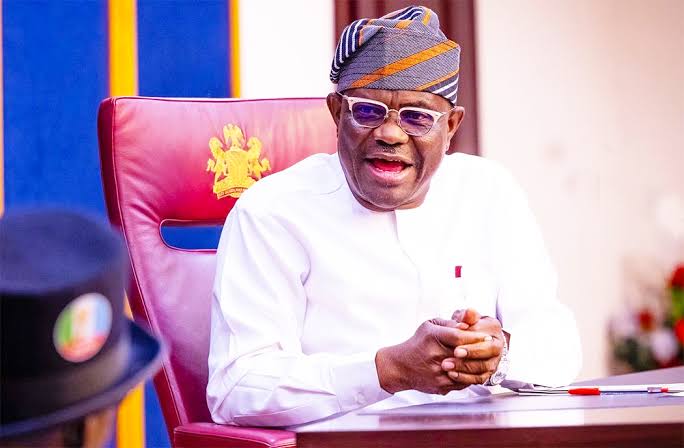
By Laide Akinboade Abuja
The Minister of the Federal Capital Territory, Nyesom Wike, has said the Ogoni people of Rivers State will reward President Bola Tinubu with their votes in the 2027 general elections for giving them a Federal University of Environment and Technology and appointing their sons and daughters into key federal positions.
The Minister, who said the Federal University of Environment Technology will become a major driver of employment, economic growth and development in the Ogoni area, spoke on Wednesday at a Rainbow Coalition town hall meeting with the people of Tai at Gbenegininwa Hall, Saakpenwa, Tai Local Government Area of Rivers State.
He urged residents to appreciate the long-term benefits of the institution, describing its establishment as a significant achievement that could transform the fortunes of the area.
Wike said the university was the product of sustained efforts by the late Senator Barry Mpigi, who worked to secure federal approval for its establishment before his death.
According to Wike, the process of establishing a federal university requires extensive legislative and executive procedures, making the institution a major opportunity for the people of Tai and the wider Ogoni community.
“If you don’t know what it is, even me as a minister, it would be difficult to go through the National Assembly. The National Assembly will pass it, it will now go to the President. Sometimes, the bill will stay there for years,” he said.
The minister urged the people not to underestimate the institution’s potential, noting that its benefits would become more evident as it expanded its academic programmes and operations.
“You don’t know what you have because the university just started. By the time this university stays four years, five years, then you will know the development,” he said.
Wike added that the institution would create employment opportunities for young people and generate economic activities that would benefit residents and businesses in the host community.
He said the university’s presence would provide opportunities for qualified indigenous people to secure jobs while stimulating demand for accommodation, transportation, trade and other services.
At the town hall meeting, Wike also welcomed political associates who had returned to the Rainbow Coalition after disagreements, describing their reunion as an opportunity to strengthen cooperation among leaders and supporters.
He said the group had not broken into separate political parties, adding that the disagreements that arose among members should not prevent them from working together.
“Let me first of all welcome my brothers. They didn’t go anywhere. There was no fight, they didn’t go to any other party, the same party, but there was a small fight and so we’ve all come back together to work as a team,” he said.
The minister commended the local government chairman for his commitment to reconciliation and urged the leadership to ensure that returning members were treated fairly.
He said the reintegration process should be genuine and inclusive, stressing that political differences should not be allowed to undermine the group’s cohesion.
Wike said the meeting was also intended to enable political stakeholders to assess their options and consider what would best serve the interests of Tai, Ogoni and the Rivers South-East Senatorial District.
He urged residents to examine the records of political leaders seeking their support rather than rely solely on campaign promises.
The minister questioned what some political figures had done for the area while occupying public offices, arguing that voters should assess their contributions to the development of Rivers State and the country.
Wike also challenged political leaders in Tai to meet a proposed target of securing 70 per cent of votes for President Tinubu and other candidates supported by the Rainbow Coalition in the forthcoming elections.
He clarified that the target was based on votes cast in favour of the candidates, rather than 70 per cent of registered voters.
The minister recalled that Tai had traditionally been among the first local governments to deliver its election results in the Rivers South-East Senatorial District.
He encouraged the local government to maintain its record, adding that it could receive additional support if it achieved the target.
Wike said the proposed incentive was intended to encourage political mobilisation and strengthen the coalition’s grassroots organisation.
The minister’s remarks came as the Tai Local Government Council disclosed plans to partner with him on an estate project intended to provide accommodation for students, parents and visitors to the institution.
The Council Chairman and Rainbow Coalition Coordinator in Tai, Mbakpone Okpe, said the necessary processes had been concluded, with developers expected to sign an agreement ahead of the project’s commencement.
Okpe also disclosed that the council had constructed the university’s entrance gate and an approximately one-kilometre dual carriageway within the premises to complement the Federal Government’s investment.
The local government chairman had earlier told the gathering that Tai recorded 4,568 collected Permanent Voter Cards during the first-quarter distribution exercise.
Okpe said the coalition was working to integrate former members and mobilise supporters across the local government’s 10 wards.
He also said the council had set aside N100 million in an account in preparation for the proposed incentive scheme.
The meeting also provided an opportunity for the people of Tai to pay tribute to the late Senator Barry Mpigi and thank Wike for his support following the senator’s death in March 2026.
Okpe said the minister took responsibility for the burial arrangements, easing the burden on the deceased’s family and the community.
He described Wike’s intervention as evidence of his long standing relationship with the late senator and the people of Tai.
The chairman also disclosed that his administration spent about N120 million monthly on an empowerment programme benefiting at least 3,400 people.
He said the council would continue to support the university’s development and pursue additional projects to improve infrastructure and living conditions across Tai.
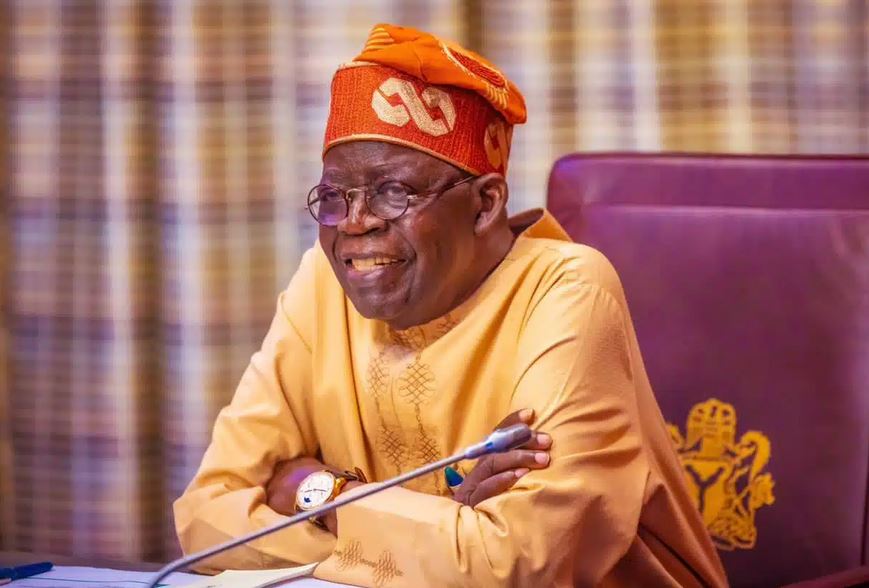
President Bola Tinubu is presiding over a meeting of the Federal Executive Council at the Council Chamber of the State House, Abuja.
The meeting began shortly after Tinubu arrived at the venue at 2:34pm, accompanied by Vice President Kashim Shettima.
Our correspondent observed that the Ministers of Defence, Foreign Affairs, the Federal Capital Territory and Aviation, among others, were absent from Wednesday’s meeting.
The council is expected to consider a new National Policy on Small and Medium Enterprises as one of the items on the agenda.
The Director-General of the Small and Medium Enterprises Development Agency of Nigeria, Charles Odii, had on Tuesday hinted at the pending policy while speaking at the rollout of a free digital training platform designed to improve SME access to government contracts in Abuja.
Odii said, “SMEDAN welcomes this partnership as the apex agency for MSME development. We see this portal as a practical step towards making the government a more accessible market for entrepreneurs.
“When capable SMEs can compete for public contracts on clear terms, they gain avenues and experience, the government broadens its supplier base, and more value stays in the local economy.
“This is fully consistent with the national policy on MSMEs. We are reviewing the national policy on SMEs right now and we are just awaiting the FEC approval for the policy, from 2026 to 2030, and the policy expressly provides for improved MSME participation in public procurement under its market access provisions, recognising public contracts as a strategic route for enterprise growth, formalisation, and local content.”



A Guide to IFRS S1 and S2 Sustainability Implementation (4)
ShareBy Innocent Okwuosa The implementation of IFRS S1 and S2 must not be approached strictly from a regulatory compliance perspective....


2027: Reward Tinubu with Votes for Federal University – Wike
ShareBy Laide Akinboade Abuja The Minister of the Federal Capital Territory, Nyesom Wike, has said the Ogoni people of Rivers...


FCSC, Soft Alliance Explore IPPIS Integration to Improve Civil Service Management
ShareThe Federal Civil Service Commission (FCSC) and Soft Alliance and Resource Ltd. are exploring ways to integrate the commission’s statutory...


Tinubu Presides over FEC Meeting
SharePresident Bola Tinubu is presiding over a meeting of the Federal Executive Council at the Council Chamber of the State...


Wike Question Atiku, Obi, Contributions to Rivers State
ShareBy Laide Akinboade Abuja Minister of the Federal Capital Territory, Nyesom Wike, has challenged former Vice-President Atiku Abubakar and former...


Police Arrest NSCDC Officer for Firing Gun at Abuja Market
ShareThe Federal Capital Territory Police Command has arrested a Deputy Superintendent of Corps with the Nigeria Security and Civil Defence...


World Bank Projects 23 Per Cent Surge in Global Commodity Prices
ShareBy Tambaya Julius, Abuja The World Bank Group has projected a 23 per cent increase in global commodity prices in...


NELFUND Mounts Tight Monitoring System over Students Loan Payment
ShareBy Tambaya Julius, Abuja The Nigerian Education Loan Fund (NELFUND) has announced plans to strengthen its payment and monitoring systems...

TUC Rejects FG Wage Award, Demands N300,000 Minimum Salary
ShareBy Tambaya Julius, Abuja The Trade Union Congress of Nigeria (TUC) has rejected the Federal Government’s proposed N70,000 wage award,...

NCS Warns Drug Smugglers After N5.8m Seizure
ShareBy Tambaya Julius, Abuja The Nigeria Customs Service (NCS), Sokoto/Zamfara Area Command, has intercepted unregistered pharmaceutical products worth ₦5.8 million...