
POLITICS
Preliminary Register of Voters stands at 93.5m:INEC

The Independent National Electoral Commission (INEC) says the number of registered voters in Nigeria, has risen from 84,004,084 to 93,522,272, following the addition of 9,518,188 newly registered voters.
Prof. Mahmood Yakubu, the Chairman, INEC Chairman, said this at third quarterly meeting with political parties for 2022 on Wednesday in Abuja.
Yakubu said that the figure was preliminary as Section 19(1) and (2) of the Electoral Act 2022 required the commission to display the hard copies of the register of voters for each Registration Area (ward) and Local Government Area (LGA).
He added that INEC was also required to simultaneously publish the entire register on its website for two weeks for scrutiny, claims and objections by citizens not later than 90 days to a general election.
“Accordingly, in the next few days, the commission will print 9,352,228 pages of the register.
“The hard copy will be displayed for each of the 8,809 Registration Areas (Wards) and 774 LGAs nationwide while the entire register will be published on our website for claims and objections as required by law.
“The display of the physical register will take place at the designated centers from Saturday ,Nov. 12 to Friday, Nov. 25.
“Further details, including the procedure for filing claims and objections, would be released by the commission next week,’’ he said.
Yakubu appealed to the electorate to seize the opportunity of the display to scrutinise the list and help INEC to clean it up further so that the final register of voters for the 2023 general election can be compiled and published.
He said that 12,298,944 Nigerians successfully completed the registration as new voters during the Continuous Voter Registration (CVR) which started on June 28 before its suspension on July 31.
Yakubu said that after a rigorous cleaning-up of the data using the Automated Biometric Identification System (ABIS), a total of 2,780,756 (22.6 per cent) was identified as ineligible registrants and invalidated from the record.
The INEC chairman said among those affected were double/multiple registrants, under aged persons and out rightly fake registrations that failed to meet the commission’s business rules.
“Consequently, the number of valid registrations (post-ABIS) is 9,518,188.
“In terms of demographic distribution, 7.2 million new voters or 76.5 per cent are young people between 18-34 years while there is a slightly higher number of female (4.8 million or 50.82 per cent) than male (4.6 million or 49.18 per cent) voters.
“In terms of occupation, 3.8 million (40.8 per cent) are students. Hard copies giving the full details of the distribution of the new voters are included in your folders for this meeting.
“The soft copy has already been uploaded to the Commission’s website and social media platforms,’’ he said.
He said that INEC was working to ensure the completion of printing of remaining PVCs for new voters as well as those that applied for transfer or the replacement of their lost or damaged cards.
Yakubu said that in the coming days, INEC would inform Nigerians of its detailed plans to ensure a seamless collection of the PVCs.
He said that INEC had so far successfully implemented nine of the 14 activities for the 2023 general election.
He added that the commission was making a steady progress in other critical areas of preparations for the election.
This according to Yakubu, includes the provision of sensitive and non-sensitive materials, the recruitment of staff and planning for the movement of personnel and materials for the election.
“Only last week, we commenced the training of master trainers on election technology to ensure a seamless process.
“Beginning from tomorrow, we will commence the same training at zonal level and subsequently train all the ad hoc staff for the 176,846 polling units nationwide,’’ he said.
Yakubu said that incidence form would not be used in 2023 general election, saying there was no going back on the deployment of technology for the election.
“On this note, let me once again reassure Nigerians that there is no going back on the deployment of the Bimodal Voter Accreditation System (BVAS) for voter accreditation.
“There is no going back on the transmission of results to the INEC Result Viewing Portal (IReV) in real-time on Election Day.
“There will be no Incident Form that enables ineligible persons to vote using other people’s Permanent Voters Cards (PVCs) during election.
“We are committed to ensuring that the 2023 general election is transparent and credible, reflecting the will of the Nigerian people,’’ he said.
it has added 9,518,188 new voters to the existing register of 84,004,084 voters, as the preliminary register of voters in Nigeria now stands at 93,522,272.
The Independent National Electoral Commission (INEC) says it has added 9,518,188 new voters to the existing register of 84,004,084 voters, as the preliminary register of voters in Nigeria now stands at 93,522,272.






From Abel Zwanke, Lafia
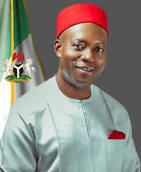
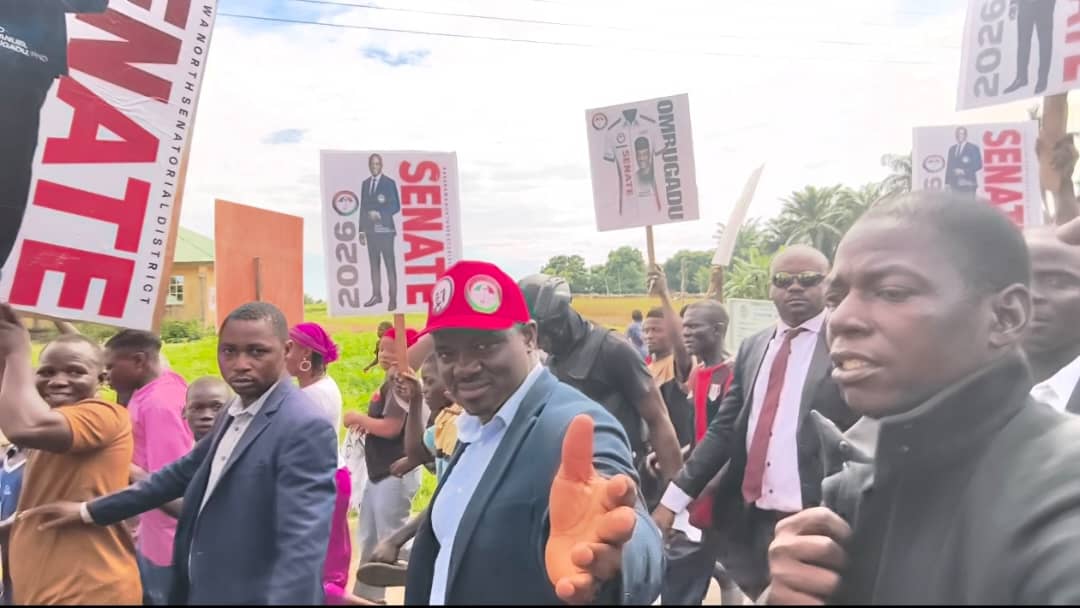
The Peoples Democratic Party (PDP) candidate for the Nasarawa North Senatorial bye-election, David Emmanuel Ombugadu on Wednesday intensified his grassroots engagements across Nasarawa Eggon Local Government Area, receiving widespread support from residents, traditional leaders, women, youths, elders, and religious leaders ahead of the poll.
Earlier in his consultations across the constituency, Ombugadu visited Igga-BrumBrum, Ikka-Wangibi, Mada Station, Lambaga/Arikpa, and Kagbu wards, where he was warmly received by enthusiastic supporters.
The visits formed part of his ongoing efforts to mobilise support and engage directly with the electorate ahead of the forthcoming election.The PDP candidate also paid a visit to the hometown of the late Senator Godiya Akwashiki, where he met with members of the family. During the visit, the father of the late senator described Ombugadu as his son and symbolically adopted him as “Ombugadu Akwashiki.” He prayed for the success of the PDP candidate and urged him to remain committed to the ideals of service, unity, and development championed by the late senator.
In his latest round of engagements, Ombugadu visited Ezen/Lizzi, Agunji/Ogbagi, and Alogani/Gale communities, where large crowds turned out to welcome him. Women groups, youths, elders, and pastors offered prayers for the PDP candidate and publicly endorsed his senatorial ambition, expressing confidence in his ability to provide quality representation at the National Assembly.
Speaking during the meetings, several community leaders recalled projects executed by Ombugadu during his tenure in the House of Representatives, noting that the impact of those interventions remains visible years after he left office.
According to them, many communities continue to benefit from the developmental projects he attracted, a record they said has strengthened public confidence in his leadership.
“The projects Ombugadu brought to our communities are still fresh in our minds. We have not forgotten what he did for our people, and that is why we are supporting him for the Senate,” a community representative said during one of the engagements.
Addressing supporters, Ombugadu expressed gratitude for the overwhelming reception and assurances of support from the various communities. He pledged to provide effective representation and attract more development projects to Nasarawa North if elected.
“I am humbled by the love, prayers, and confidence the people continue to show me. This support is a call to greater service, and I assure our people that I will continue to work for the progress and development of every community in Nasarawa North,” he said.
The former Lawmaker reiterated his commitment to promoting infrastructure development, education, youth empowerment, agriculture, and improved social services, stressing that his campaign remains focused on issues that directly affect the lives and wellbeing of the people.
Political observers say the growing turnout at Ombugadu’s campaign engagements across Nasarawa Eggon reflects increasing grassroots momentum as candidates intensify consultations and voter outreach ahead of the highly anticipated senatorial bye-election.
By Ubong Ukpong, Abuja
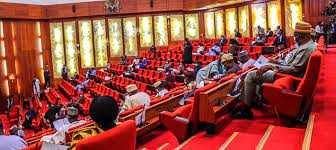
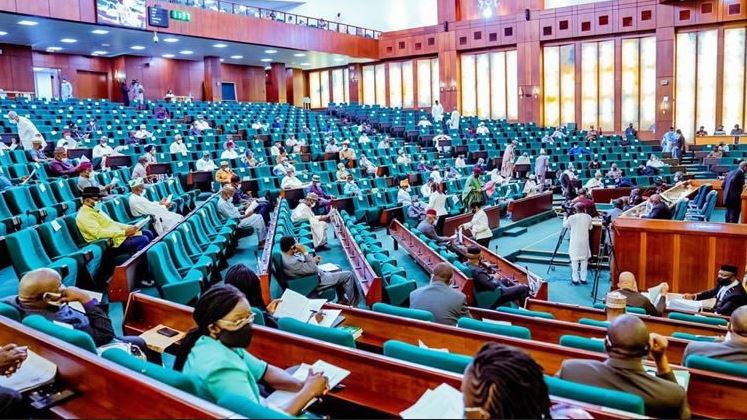
The House of Representatives yesterday raised fresh concerns over Nigeria’s worsening security situation, warning that the nation’s service chiefs should consider honourably resigning if they fail to restore public confidence and reverse the tide of insecurity within a reasonable period.
The lawmakers also called on President Bola Tinubu to immediately deploy a comprehensive and aggressive security strategy aimed at dismantling bandit, terrorist and kidnapping networks operating across the country.
The resolution followed the adoption of a motion of urgent public importance moved by Rep.
Ibe Osonwa during plenary. The motion highlighted the rising cases of banditry, mass abductions, attacks on schools and places of worship, and the growing sense of insecurity among Nigerians.Leading the debate, Osonwa lamented the continued targeting of vulnerable communities, educational institutions and worship centres by criminal groups, warning that the situation was disrupting education, deepening poverty and threatening constitutional rights.
The House reminded the Federal Government of its constitutional obligation to protect lives and property, stressing that the security and welfare of citizens remain the primary responsibility of government.
Lawmakers condemned the persistent wave of kidnappings and attacks across the country and resolved to formally appeal to President Tinubu, in his capacity as Commander-in-Chief, to intensify efforts to secure schools, communities and religious centres while ensuring the rescue of citizens held captive by criminal elements.
The House further directed its Committees on Defence, National Security and Intelligence, and the Army to strengthen oversight of security operations and report back within two weeks.
Meanwhile, prominent Islamic cleric, Sheikh Ahmad Gumi, has defended his visit to Ibadan, Oyo State, dismissing allegations that he was promoting the Islamisation of the South-West or advancing northern religious interests in the region.
Responding to criticisms in a social media post, Gumi said his attendance at an Islamic gathering in Ibadan was in his capacity as a representative of the Coalition of Northern Muslim Ulama and not at the invitation of any South-West Muslim group.
The cleric maintained that no individual or organisation could prevent him from travelling to any part of Nigeria, insisting that his constitutional rights entitled him to move freely across the country.
Gumi also linked the controversy surrounding his visit to what he described as growing Islamophobia in parts of the South-West, arguing that his participation in the event had been unnecessarily politicised.
His comments came amid renewed public debate over security and religious issues following reports surrounding the abduction of residents in Oyo State, although one of the victims recently dismissed claims that the kidnappers demanded the introduction of Sharia law as a condition for their release.
The developments underscore growing national concerns over security, social cohesion and the need for stronger government action to address the challenges confronting the country.
By Mike Odiakose, Abuja
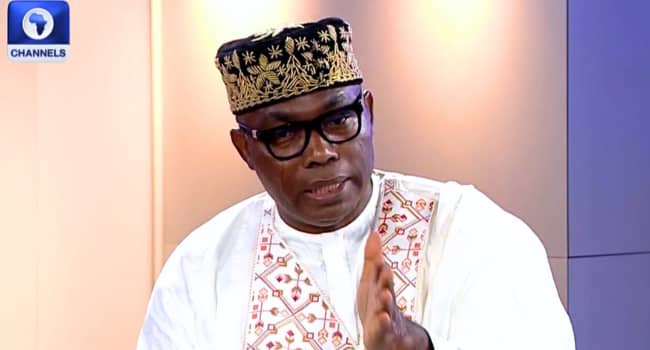
As Nigeria moves closer to renewed constitutional conversations around the creation of state police, comments made about four years ago by former Social Democratic Party (SDP) presidential candidate, Prince Adewole Adebayo, are drawing fresh relevance.
In an interview conducted during the build-up to the 2023 presidential election, Adebayo strongly defended the creation of state and local government policing, arguing that Nigeria’s highly centralised security structure had become ineffective and disconnected from local realities.
According to him, any level of government empowered to make laws should also possess the authority to enforce them.
He argued that it was contradictory for states to legislate on issues including criminal offences, sanitation, public order and local administration while depending almost entirely on a centrally controlled police system headquartered in Abuja.
Adebayo maintained that most offences affecting everyday life — including murder, theft, arson and other serious crimes — are prosecuted under state laws, raising questions about why states have little operational control over policing.
Using Lagos as an example, he questioned situations where incidents occurring entirely within a state still require intervention and decisions from federal authorities.
He said such arrangements weaken accountability and delay justice.
The former presidential candidate also called for wider police reforms beyond decentralisation, arguing that policing in Nigeria should move away from what he described as a culture of force toward one rooted in public service and community trust.
According to him, police should belong to the people rather than function as an extension of government power.
He further proposed stronger institutional links between policing and the justice system, including reforms that would reinforce the role of legal institutions in ensuring accountability.
Beyond security, Adebayo linked Nigeria’s security challenges to broader failures in economic governance.
He rejected arguments that Nigeria’s fiscal problems stem primarily from insufficient taxation, insisting instead that the country loses substantial revenue through leakages, resource theft and weak administration.
He argued that government should prioritise recovering legally due revenues rather than imposing additional tax burdens on citizens and businesses.
Adebayo pointed to crude oil theft and illegal extraction of solid minerals as examples of areas where stronger governance could significantly improve national income.
He also criticised arbitrary tax practices, warning that unrealistic assessments discourage productivity and encourage corruption.
According to him, economic recovery requires efficient revenue collection, transparent administration and stronger protection of public resources.
While the interview was held years ago, many of the issues raised — particularly around decentralised policing, insecurity and economic management — remain central to Nigeria’s ongoing governance debate.
With discussions on state police once again gaining policy attention, Adebayo’s earlier arguments are returning to public conversation as part of wider calls for security and structural reforms.



Customs, American Business Council Deepen Trade Collaboration
ShareBy Tambaya Julius, Abuja The Nigeria Customs Service (NCS) and the American Business Council (ABC) have reaffirmed their commitment to...

NCS, UAE Customs Foil Tramadol Smuggling Attempt
ShareBy Tambaya Julius, Abuja In collaboration with international partners, the Nigeria Customs Service (NCS) has foiled an attempt to smuggle...

Police Detain Actor Ugezu Ugezu for Defamatory Facebook Post against Prince Daniel Kanu
ShareBy David Torough, Abuja Actor and social commentator Ugezu J. Ugezu, was detained by the Nigeria Police Force following an...
Tinubu Visits Benue, Commissions Projects Tomorrow
ShareFrom Attah Ede, Makurdi Benue State is set to host the First Lady of the Federal Republic of Nigeria and National...

Fifa to Pay Somali Referee Artan Full World Cup fee
ShareSomali referee Omar Artan, who was denied entry to the United States to officiate at the World Cup, will still receive his full...
Delegates in China Denounce Xenophobic Attacks
ShareAfrican delegates attending seminars in China have condemned reported xenophobic attacks against foreign African nationals in South Africa and called for greater unity across the continent. The delegates made the...

Kogi Targets 240,000 Children for Schistosomiasis Mass Drug Administration
ShareFrom Joseph Amedu, Lokoja The Kogi State Government said it will reach over 240,000 children aged 5–14 years in 39 wards across 15 Local...


Anambra Urges Residents to Provide Information on Fake Pastors, Others
ShareFrom Sylvia Udegbunam, Enugu The Anambra State Government, under the leadership of Prof. Chukwuma Charles Soludo, has extended the “War Against Fake Native Doctors”...


Boat Mishap Kills 11 in Benue River
ShareFrom Attah Ede, Makurdi No fewer than 11 persons were Saturday night feared dead when a boat said to be conveying them...

Terrorism: After Gen Rabe’s Death, Buratai Warns of Darker Days Ahead
ShareBy David Torough, Abuja Nigeria’s deepening insecurity crisis has triggered fresh alarm across military, political and religious circles following the...