
Health
Presidential Taskforce on COVID-19 Moves to Kano

By Mathew Dadiya, Abuja
The Presidential Taskforce on the novel Coronavirus said it has moved into Kano State to curtail the spread of the pandemic from becoming the next epicenter in the country.
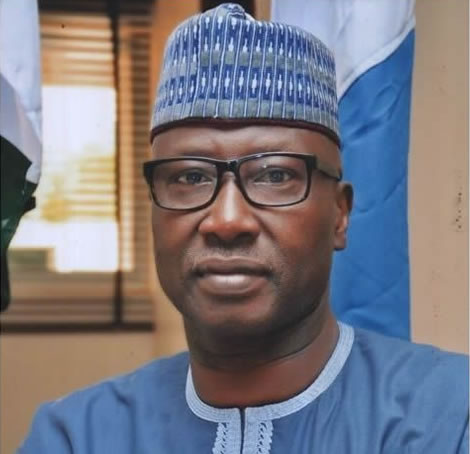
The Secretary to the Government of the Federation (SGF) and Chairman of PTF on COVID-19 Pandemic, Mr Boss Mustapha made this known on Thursday, during the daily press briefing by the task force.
Mustapha said that the PTF has instructed the Nigeria Centre for Disease Control (NCDC) to work in conjunction with the Kano state government, mobilise for immediate contacts tracing to contain the speed of the spreading of the disease.
The SGF also mentioned the concerns over the refusal of private healthcare facilities to comply with the directive to get accredited by the Federal Ministry of Health before proceeding to commence treatment of cases related to COVID-19, noting that this posed serious danger, not just to the health and life of the personnel working in such facilities, but to those of their loved ones as well as the general public.
On the situation in Kano, Mustapha said “the situation in Kano is still being assessed and monitored closely. Based on preliminary findings, the PTF has directed the NCDC to send an enhanced support team, mobilize resources for contact tracing and immediately ensure that necessary steps are taken in conjunction with State Government to contain the spread of the pandemic in Kano and stop the city from becoming the next epicentre”.
Speaking on non-compliance to instructions by privately owned healthcare facilities, he said “the PTF views with some measure of concern the non-compliance by private medical facilities with the directive to seek accreditation before treating COVID-19 related cases.
“The highly infectious nature of COVID-19 if not well managed in purpose-built facilities and specialists, pose a lot of danger not just to the medical staff in such hospitals but also to other patients and loved ones at home. We therefore appeal strongly to operators of private medical facilities wishing to continue to treat COVID-19 cases to apply to the Federal Ministry of Health urgently, for accreditation”, he said.
He, however, appealed to all Nigerians to continue obeying all the advisories issued so far to stay safe from the danger of contracting the dreaded disease, charging further that these were the times that all citizens need to show love and concern to each other, especially towards those categorised as the most vulnerable among the population.
“I encourage you to comply with all the advisories and to continue to be your brothers’ keeper especially given the unintended impact of the lockdown on the poor, the needy, the aged, the vulnerable, persons living with disabilities and the sick. This is the time to show the essence of the fear of God and love for humanity in us.
“The PTF notes that the number of cases reported have risen to 873 across 25 states and the FCT with 197 discharges and 28 fatalities. I have mentioned these numbers in order to underscore the need for citizens to comply with advisories strictly so that we can slowdown the spread of the virus. These advisories still remain the most effective way of flattening the curve.
“Thee issue of stigmatization still persists and it is counter-productive to our efforts. This disease does not discriminate on status, creed, tribe or color and anybody can be infected.
“It is my humble appeal that once you are infected by this disease, you should immediately report to appropriate medical facilities in your own interest and the interest of your loved ones. COVID-19 is not a condition and there is no need to stigmatize anybody. I must remind all of us that over 90% of infected persons recover from this disease. In this regard, I urge all those who have recovered from this disease to tell their stories.
“The PTF has continued to collaborate with the Governors in the various states and the outcome of the conversation with the NGF will form a critical part of the recommendations to be made to Mr. President in the coming days”, he said.





The Niger State Private Health Facilities Agency (NiSPHFA) has sealed 12 unregistered Islamic medicine stores in Minna and a health facility in Katcha Local Government Area (LGA).
The Executive Chairman of NiSPHFA, Dr.
Abdullahi Suleiman, disclosed this while receiving members of the Islamic and Prophetic Medicine Practitioners’ Association of Nigeria (IPMPAN) in Minna.The enforcement is part of the agency’s renewed efforts to protect residents from unsafe healthcare practices and ensure compliance with minimum standards.
Suleiman said the facilities were sealed over alleged non-compliance with regulatory standards.
According to him, the enforcement is not aimed at persecuting healthcare providers but at ensuring residents have access to safe, quality, and standard-compliant healthcare services.
“Our responsibility is to protect the people by ensuring that anyone providing healthcare services operates within the required standards,” he said.
He urged genuine alternative medicine practitioners to register with NiSPHFA, saying registration would enable the agency to identify operators, monitor their activities, and protect residents from unsafe products and practices.
Suleiman also announced plans to organise a trade fair for verified alternative medicine practitioners to promote legitimate practices and improve public confidence in alternative healthcare.
He emphasised the need for practitioners to maintain minimum standards of hygiene, sanitation, safe preparation and storage of medicines, proper packaging, and infection prevention.
“Practitioners should refer patients whose conditions are beyond their capacity to appropriate health facilities. Such referrals will help reduce avoidable health risks,” he said.
The chairman said sustained enforcement, stakeholder collaboration, and improved compliance would enable NiSPHFA to safeguard residents and promote a safer, more accountable, and quality-driven healthcare system across the state.
He said the NiSPHFA enforcement team inspected 10 health facilities in Katcha local government and identified various irregularities requiring improvement.
Suleiman said the affected facilities were issued 21-day notices to correct the identified deficiencies.
“One of the facilities inspected was sealed for non-compliance with established standards,” he said.
He added that the agency also secured the support of the local government area in identifying and addressing facilities operating with irregularities.
IPMPAN Chairman, Abdullahi Haske, commended the state government for establishing NiSPHFA.
He pledged the association’s cooperation in ensuring that its members complied with regulatory requirements.
Stakeholders have called for improved implementation, tracking and accountability of health sector budgets to strengthen healthcare delivery and advance Universal Health Coverage (UHC) in Kaduna State.
They made the call during an engagement on strengthening participatory budget processes, health budget tracking and advocacy on Saturday in Kaduna, with emphasis on the 2027 budget process and implementation of the Annual Operational Plan (AOP) for the health sector.
Seth Luke, a Civil Society Coach on strengthening participatory budget processes under the Open Government Partnership (OGP) Kaduna, said the engagement was aimed at strengthening the capacity of OGP Technical Working Groups and state and local government accountability mechanisms to effectively participate in budget processes and advocacy.
Seth said the engagement was particularly focused on the health sector, including tracking the implementation of the Annual Operational Plan as the state commenced preparations for the 2027 budget.
“We want to see how we can track the implementation of the Annual Operational Plan for the health sector and, from our findings, bring out recommendations around improving funding and other areas that require attention,” he said.
He said the government needed to prioritise health financing beyond budgetary allocation by ensuring effective implementation of approved programmes and projects.
According to him, budget allocation represents government plans based on expected revenue, but available resources should be prioritised toward activities capable of improving healthcare and service delivery at the grassroots.
Seth urged participants to use the knowledge and findings from the engagement to engage relevant government stakeholders on improving health financing and budget implementation.
He also encouraged them to extend the knowledge gained to other sectors and continuously engage government on budgeting, accountability and service delivery.
Similarly, Garba Mohammed, Co-Chair of the Kaduna Maternal Accountability Mechanism (KADMAM), said the engagement was aimed at reviewing health budget performance against key indicators linked to maternal mortality reduction and child survival.
Mohammed said participants examined first and second quarter performance, particularly in areas such as family planning, Maternal, Newborn and Child Health (MNCAH), nutrition, malaria, immunisation and essential medicines.
He said family planning interventions largely involved commodities at the primary healthcare level, while MNCAH activities remained largely donor-dependent.
Mohammed commended the Kaduna State Government for meeting the Abuja Declaration benchmark of allocating at least 15 per cent of its annual budget to health.
He, however, expressed concern over gaps in the implementation of some critical health budget lines, stressing that allocation alone was not enough to improve health outcomes.
“We have looked at the budget allocation, and Kaduna State has met the 15 per cent Abuja Declaration benchmark. We commend the state for that. However, there are still issues around budget performance in critical health indicators,” he said.
He said the findings would be used to identify advocacy priorities and engage key government decision-makers, including the Ministry of Health, Planning and Budget Commission, Ministry of Finance and other relevant authorities.
Mohammed said participants were expected to understand the relevant health budget lines and their implementation status and use the knowledge to undertake evidence-based advocacy in their respective organisations.
Meanwhile, Yusuf Guje, Executive Director, Civic Impact for Sustainable Development Foundation (CISDF), and a participant at the programme, told the News Agency of Nigeria (NAN) that the engagement was timely in strengthening the capacity of civil society and accountability mechanisms.
Guje said the programme would deepen participants’ capacity in budget tracking, project monitoring and social auditing, particularly within the health sector.
He described the health sector as a critical pillar of development, saying civil society organisations had an important role to play in complementing government efforts through effective monitoring and accountability.
He said CSOs needed to strengthen their ability to analyse budgets, track expenditure and visit healthcare facilities to determine whether appropriated and released funds were being properly utilised.
“Civil society needs to really improve on how effectively we analyse the budget, how we track the spending, and go down to the various facilities to see how well the money appropriated and released is being utilised,” Guje said.
He said effective monitoring would help determine the extent to which communities benefited from government investments in healthcare.
According to him, Kaduna State’s commitment to Universal Health Coverage could only be strengthened through sustainable health financing and effective accountability mechanisms.
Guje described CSOs as representatives of communities that often lacked the knowledge, skills and platforms required to engage government on public policies and resource allocation.
He therefore urged civil society actors to continuously strengthen their capacity to represent citizens effectively, particularly in health financing advocacy and accountability.
“As civil society, we need to remain committed to holding the government accountable where necessary and tracking the entire health financing process,” he said.
Guje said the ultimate objective of budget tracking and social accountability was to ensure value for money in public expenditure on health.
He added that effective monitoring of public finances would contribute to improved healthcare delivery and better health outcomes at the grassroots. (NAN)
Cross River Government has made enrolment in the state Health Insurance Scheme compulsory for all civil and public servants in the state.
The Head of Service, Bassey Okon, announced this in a circular dated Sept.
3, following the official relaunch of the Formal Sector Enrolment Programme of the Cross River State Health Insurance Agency.According to the circular in Calabar, at the weekend, the directive takes immediate effect.
Okon stated that the policy was meant to ensure that all the civil and public servants had access to affordable, quality, and timely healthcare services, while strengthening the welfare and productivity of the state workforce.
He directed all the civil and public servants to enroll in the scheme and comply with the registration and documentation requirements of the agency.
The circular also introduced a mandatory requirement for officers to attach valid health insurance enrolment cards to official correspondences relating to personnel matters.
“Correspondences concerning promotion, confirmation of appointment, loan applications, study leave, training or sponsorship, transfer or secondment, as well as other personnel-related requests or benefits, would not be processed without the attachment of a valid health insurance enrolment card,” it stated.
To facilitate the enrolment process, the government established enrolment points at the Office of the Head of Service, New Secretariat, Calabar, and the Ministry of Health, Old Secretariat, Calabar.
Okon directed all Heads of Ministries, Departments, and Agencies (MDAs) to ensure that officers under their supervision were duly informed about the circular and made to comply with the enrolment requirement without delay.
He also urged concerned officers to take advantage of the designated enrolment points for guidance and assistance and to complete their enrolment as required.
He further directed all the heads of the MDAs to bring the contents of the circular to the attention of all civil and public servants under their supervision. (NAN)




Tinubu’s Return: An Update
ShareBy Reuben Abati Exactly a week ago, President Bola Ahmed Tinubu, now jokingly renamed a citizen of Kano with a...


NDLEA Seizes over 10 Tonnes of Illicit Drugs, Recover Firearms in Kogi
ShareBy Elijah Oguche, Abuja The National Drug Law Enforcement Agency (NDLEA) in Kogi said it has seized more than 10...


CAN Mourns Victims of NAF Aircraft Crash in Ondo
ShareBy Laide Akinboade, Abuja The Christian Association of Nigeria (CAN) on Tuesday, mourned the crash involving a Nigerian Air Force...


Trust is Democracy’s Invisible Currency, Says Akpabio
ShareThe National Assembly remains the bridge through which the hopes and aspirations of ordinary Nigerians must translate into government decisions,...

Why Women Must Equip Themselves – Minister
ShareBy Laide Akinboade Abuja The Minister of Women Affairs and Social Development, Imaan Suleiman-Ibrahim, on Tuesday, tasked Nigerian women to...

Horrors Must Never be Repeated, Says UN Chief
ShareUN Secretary General António Guterres on Monday called for a peaceful future for Israelis and Palestinians ahead of the third...


Kenya Confirms its First Ebola Death as Outbreak Spreads
ShareKenya has confirmed its first case of Ebola, a Kenyan citizen who has been living in the Democratic Republic of...


NAF Names Crew, Passengers on Board ill-fated Flight
ShareThe Nigeria Air Force (NAF) has released the names of personnel and passengers in the crashed NAF 931 aircraft. This...

SUBEB Begins Training of 75 SMOs in Zamfara
ShareThe Zamfara State Universal Basic Education Board (ZSUBEB) has flagged off the training of 75 State and Local Government Education...
Kano Approves Promotion of Over 18,000 SUBEB Staff, Releases N235.1m
ShareKano State Governor, Abba Kabir Yusuf, has approved the implementation of the January and July 2026 promotions of 18,984 teaching...