
Education
Private School Operators Deny Charging Exorbitant Fees, Hiring Unqualified Teachers

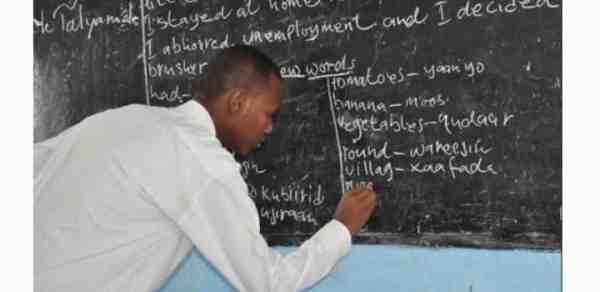
Some owners of private schools in the South-South region say they only charge school fees that are commensurate with the quality of service being offered.The private school owners made the expression during a News Agency of Nigeria (NAN) survey in Akwa Ibom, Cross River and Rivers.
Mr Godwin Okwu, the Chairman, National Association of Proprietors of Private Schools, (NAPPS), Cross River chapter, said that the fees charged by private school in the state were not exorbitant. Okwu further said that it was untrue that private schools employed unqualified teachers.“Whatever we charge as school fees is commensurate with the quality of service we provide.“Private schools may look expensive, this is because the government does not subsidise their services the way they do for public schools.“In some public schools, the government pays for everything including staff, and still collect fees from the students,” he said.He said it was wrong and unfair to compare the public school system to the private school system in terms of fees because public schools enjoyed the full support of government.“What we should consider is the quality of service and the product. It is not in doubt that the private school system is producing better results.“So it is unfair and contradictory to say that private schools employ substandard teachers, how then are we able to produce good results if our teachers are of low quality?” he said.The NAPPS chairman however said that private school owners were sometimes forced by economic realities to carry out minimal increase in fees.“Currently, the minimum wage for workers has increased, and private schools are expected to pay. How else do we raise the money to pay salaries?Okwu urged the state ministries of education to be more proactive and thorough in undertaking their inspectorate and monitoring functions.“As the regulator, the ministry should ensure uprightness. The interest of the children should be in the forefront,” he said.On his part, Mr Daniel Effiong, a Director of Inspection in Cross River Ministry of Education, said it was misleading to say that private schools employed low quality teachers.He said that the ministry had been resilient in monitoring the activities of private schools in the state.“We check the qualifications of the teachers, the environment, toilets among others before approval and upgrading.“This exercise is not just once, we do it regularly. Surely there are bad eggs in the system, we penalise them when they are uncovered,” he said.Also speaking on the issue, Mr Ubokmfon Williams, NAPPS Chairman in Akwa Ibom, said that private school owners in the state had not increased fees in a long time.Williams said that the economic situation in the country had made it difficult for private school owners to increase school fees.“With the way the economy is, any unnecessary increment in school fees may lead to massive withdrawal of students.“If you understand school business, if you truly want to remain in business, you have to avoid unnecessary increase in fees,” he said.The NAPPS chairman however said that sometimes, economic realities force private owners to increase fees in order to meet up.“Take salary as an example, if you don’t increase fees, how do you pay salaries of your workers. When you can’t pay salaries, your employees will go elsewhere.“As private school operators, we look critically at the interest of parents and the economic situation in the country before taking decisions.“We also want to remain in business, we are aware that the priority of every parent at the moment is food. We are very careful not to lose our market,” he said.Speaking on the reason private schools do not have uniform school fees, Williams said that criteria such as location and quality of service are considered by schools before fixing their fees.“Some schools pay for excursions, school bus, medicals, security, and some schools are located far away from town.“One thing is that no private school unilaterally fixes school fees, every private school liaises with its Parents Teacher Association before deciding what the fees will be,” he said.Speaking on the quality of services being offered by private schools, the NAPPS chairman, said that private schools did not treat the issue of teachers qualification with levity.“We hire not just good and professional teachers, we ensure that our teachers posses the skills to impart knowledge.“We are aware that a teacher may be a professional but may not skillful, so in the private school system, we are goal oriented,” he said.Mr Assam Abia, an Eket-based parent whose children are in private schools, said that more families took interest in sending their children and wards to private schools because the public school system failed at some point.“Parents are only seeing the fees charged by private schools as exorbitant because of the current economic challenges.“What I see is that school proprietors are responding to the basic economic law of demand and supply by increasing their fees,” he said.He said that the employment situation in the country had left many graduates without jobs, and that those who did not train to become teachers were now working as teachers.“Private schools are in business, they must make profits. The remedy lies in the monitoring agencies to do their jobs effectively.“The ministry or department that supervises private school should be more thorough and proactive, we want to see them in action,” he said.Abia also called for an overhaul of the education sector through legal and policy frameworks that would put the sector on the right track.“There is an urgent need for the Federal Government to declare a state of emergency in the education sector. Governments need to pay attention to the activities of private schools.In Rivers, a Legal Expert, Dr Hilda Desmond, blamed the fees being charged by private schools on the lack of supervision by regulatory authorities.Desmond, the Chairman, Nigerian Bar Association, Ahoada Chapter, said that poor regulation and supervision of private schools had negatively affected primary and secondary school education in the state.“The education sector has been grossly bastardized particularly by private operators. Private operators exploit parents without making efforts to step up operational standards.“What we call exorbitant fee is purely class driven. Some elite see high school fees as a sign of quality, and prefer to enroll their children in such schools.“It is a matter of choice, here are still schools with qualified teachers, affordable school fees and appreciable learning environment,” she said.The lawyer expressed concerns that some schools greedily converted child minders to classroom teachers and pay meagre salaries.She said that it was an act of wickedness for school operators to use poor quality teachers at the nursery and primary school levels.“Once there is a faulty nursery and primary education, the entire learning process of the child becomes ruined. So we must strive to get it right from the first stage.”Sadly, most private schools are in business, rather than employ qualified teachers that should impart knowledge, they compromise examination standards,” she said.Mr Isijana Adasi, a Port Harcourt-based Education Consultant, said that all tiers of government had failed to provide the atmosphere for quality education to thrive.Adasi, also the Lead Advisor, Adasi Science Project, identified inadequate budgetary provisions for education as a major reason for the inefficiency in supervision and monitoring of the private school system in the country.“This is part of the reasons that education inspectors have become vulnerable, and are now compromising standards.”Most school inspectors visit high profile schools with the mindset of receiving money and other packages without being thorough about their duties.“So, until regulatory authorities become committed to their duty of enforcing standards, the average Nigerian child may not get the best education, it does not matter how much parents pay as fees.Mr Isaiah Uwa, a Bori-based parent, urged the Federal Government to take more stringent steps towards improving the quality of service being offered by private schools.“Part of the efforts should also be to monitor what they charge as school fees. Quality and standard should be the primary consideration.“Some private schools claim to adopt British or American curriculum instead of the government approved curriculum. This shouldn’t be allowed.“Some of these schools make their pupils to skip classes and some statutory examinations, this is a gross disservice to the society,” he said.(NAN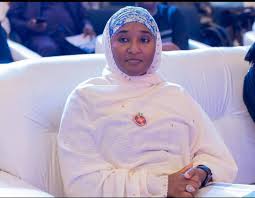
The Minister of State for Education, Prof. Suwaiba Ahmad has expressed satisfaction with the conduct of the National Examinations Council (NECO) Computer-Based Test (CBT) Senior School Certificate Examination,
Ahmad, while monitoring the ongoing examination at Redeemers Teap School and Anglican Girls’ Grammar School on Wednesday in Abuja, described the exercise as a major step towards eliminating examination malpractice.
She said feedback from candidates at both centres indicated that most of them preferred the CBT format to the traditional paper-based examination.
According to her, the candidates also confirmed that they experienced no technical glitches and that the examinations commenced on schedule.
”I spoke with a lot of the students and most of them said they prefer the CBT examination.
”They also confirmed that they had not seen the examination questions before the test and that each candidate answered a different set of questions randomly.
”The CBT makes communication between candidates impossible and is one of the best ways of tackling examination malpractice,” she said.
The minister said the successful deployment of CBT represented significant progress in the education sector, adding that the government would only proceed with full transition after ensuring adequate infrastructure nationwide.
”We will not begin the full transition until we have everything in place because we do not want to put any student at a disadvantage.
”We are working with the National Assembly, state governors, private partners and other stakeholders to provide the facilities required for a seamless nationwide transition,” she said.
Ahmad added that the adoption of CBT would ultimately improve the quality of education by promoting merit and integrity in examinations.
Also speaking, the Registrar of NECO, Prof. Ibrahim Wushishi, said the council recorded no technical hitch since the commencement of the examination.
”They assured me that since the commencement of this year’s examination, they have not experienced any technical glitch. The exams were ready, they started on time, no hiccups, no network problems, nothing like that.”
He disclosed that 1,378,048 candidates registered for this year’s Senior School Certificate Examination, with female candidates slightly outnumbering their male counterparts.
According to him, the increasing participation of girls reflects the impact of government policies promoting girl-child education.
Wushishi also said NECO had about 10 CBT centres in the Federal Capital Territory (FCT), adding that the council is expected to release the examination results by the first week of September to support the 2026 admission process.
He reaffirmed that the CBT system, through question randomisation, had greatly reduced opportunities for examination malpractice while enhancing the credibility of the examination process.
One of the candidates, Ambassador Alabi, from Redeemer’s teap described the CBT experience as seamless and more convenient than the traditional paper-based examination.
Another Candidate from the Anglican girls school Isaac Abioro said CBT examination has been efficient and easy to answer questions and there have not been any technical glitch in the process so far
On her part the Principal of Anglican Girls’ Grammar School, Mrs Nkiruka Nwafor, said the transition to CBT was preparing students for a technology-driven future.
According to her, the school adopted the system early to familiarise students with computer-based examinations before external assessments.
”The CBT experience is what we’ve all been waiting for. The future our girls are going into is dynamic and heavily ICT-driven.
”We are excited that our proprietor got on board. We have also introduced CBT for some of our internal examinations so that from JS1 and JS2, the students gradually get used to the system. So it’s about time, and it’s good that it’s happening,” she said.
The monitoring exercise at Redeemer’s Teap Secondary School and Anglican Girls’ Grammar School showed candidates writing the examination in an orderly environment without reported technical challenges.
By Tony Obiechina, Abuja
The Federal Government has suspended the proposed review of registration fees for the 2027 West African Senior School Certificate Examination (WASSCE) and the National Examinations Council (NECO) Senior School Certificate Examination (SSCE).
The federal government last week announced the jacking up of the fees from N27,500 to N50,000.
However, in a statement on Monday July 13, 2026, signed by Director, Press and Public Relations, Boriowo Folasade, the Federal Ministry of Education announced that the letter conveying the proposed fee adjustment, dated June 18, 2026, has been withdrawn to allow for a comprehensive review and broader consultations with all relevant stakeholders before a final decision is taken.
According to the statement, the Ministry acknowledged the concerns and constructive feedback received from the public and appreciates the keen interest shown by Nigerians in matters relating to access to quality education.
The statement read: “The proposed review was informed by the prevailing economic realities and the rising cost of conducting credible national examinations.
“The current examination registration fees have remained largely unchanged for several years despite significant increases in operational costs, including logistics, security, printing of examination materials, technology deployment, quality assurance and other essential services required to maintain the integrity and credibility of public examinations across the country.
“Nevertheless, the Honourable Minister of Education, Dr. Maruf Tunji Alausa, has directed that the proposal be placed on hold in line with the Federal Government’s commitment to inclusive, transparent and evidence-based policymaking.
“This decision underscores the Ministry’s determination to ensure that policies affecting millions of Nigerian students and their families are carefully considered, socially responsive and reflect the collective interest of the nation.
“As part of the fresh review process, the Ministry will further engage extensively with examination bodies, State Ministries of Education, school proprietors and administrators, parents’ associations, organised labour, education stakeholders and other critical partners to ensure that any future decision is fair, sustainable, transparent and responsive to prevailing realities while safeguarding access to education.
“Accordingly, the proposed review of examination registration fees will not take effect, as earlier communicated, pending the conclusion of the consultation process.
“The Federal Ministry of Education reassures Nigerians that the welfare of students, equitable access to quality education and responsible policy decisions remain at the heart of the Renewed Hope Agenda of President Bola Tinubu, for the education sector.
“The Ministry appreciates the understanding, patience and continued support of all stakeholders and remains committed to keeping the public fully informed throughout the consultation process.”, it added.

The Federal Government’s approval of a N50,000 registration fee for National Examinations Council (NECO) and West African Examinations Council (WAEC) from 2027 has attracted mixed reactions from education stakeholders.
In separate interviews on Sunday in Abuja, some of the stakeholders described the increase as excessive and unaffordable, warning it could worsen financial pressure on families and students.
Others urged the government to review the decision, introduce subsidies for vulnerable candidates, and ensure any fee adjustment reflects prevailing economic realities and wider stakeholder consultations.
However, some stakeholders supported the review, arguing that improved funding could strengthen certificate verification, digital infrastructure and service delivery if implemented with transparency and affordability safeguards.
The approval was conveyed by the Federal Ministry of Education in a memo dated June 18, 2026, signed by the Director of Senior Secondary Education, Adeniji Ibrahim.
The memo was signed on behalf of the Minister of Education, Dr. Tunji Alausa, following a directive to harmonise WAEC and NECO Senior School Certificate Examination registration fees.
Under the approval, NECO’s SSCE internal fee will rise from N30,000 to N50,000, while WAEC’s will increase from N27,000 to N50,000 from 2027.
An educationist, Beatrice Oke, described the increase as excessive despite acknowledging rising operational and logistics costs.
“The percentage increase is too high, although we expected a review after some time due to rising logistics costs.
“However, many average Nigerians may not afford the new fees, and this could force some students out of school,” she said.
Oke urged the government to review the increase or introduce measures to cushion its impact on low-income households.
She said affordable examination fees were vital to sustaining access to education and preventing more children from dropping out of school.
She also urged governments at all levels to expand subsidies and intervention programmes for vulnerable students to guarantee equitable access to education.
A private school owner, Funmilayo Soyoye, also described the increase as excessive.
She said many graduates seeking employment or admission for further studies might struggle to pay the new fee.
“Certificate verification is a mandatory requirement for many academic and employment processes and should remain affordable.
“The government should consider the economic realities facing Nigerians before approving such a sharp increase.
“This policy may discourage many young people from pursuing opportunities that require certificate verification,” she said.
Another school owner, who preferred anonymity, urged the government to justify the increase.
The proprietor said any fee review should be transparent and reflect improvements in service delivery.
According to the school owner, certificate verification should become faster, more efficient and more accessible.
A parent, Alhaji Abdulfatai Ibrahim, appealed to the government to rescind the decision in the interest of students and job seekers.
He said the increase would worsen hardship for families already grappling with rising education costs.
Ibrahim urged the authorities to engage stakeholders and adopt a more moderate pricing structure.
However, an education consultant, Olamide Ogunkoya, said the review might be justified if it strengthened certificate verification and digital infrastructure.
She said investment in secure verification systems would curb certificate fraud and enhance the credibility of Nigerian examination bodies.
Ogunkoya urged the government to balance cost recovery with citizens’ access to essential public services.
She also called for wider consultations before implementing major education policies, stressing that affordability and accessibility should remain central to reforms.
The memo, directed to the Registrar, NECO, conveying the increase, read:
“Re: Upward review of registration fees for examinations conducted by NECO.
“The West African Examinations Council has requested an upward review of the examination fees for the Senior School Certificate Examination for school candidates, with effect from 2027.
“You may recall that at a meeting of examination bodies held with the Honourable Minister of Education on March 31, 2026, where the need for upward review of examination fee was discussed, the Honourable Minister of Education directed that WAEC and NECOshould adopt a uniform fee for the conduct of the SSCE.
“Consequently, I am directed to convey the Honourable Minister of Education’s approval of the sum of Fifty Thousand Naira (N50,000) only, as the new examination fee for candidates with effect from NECO SSCE internal 2027.
“You are to bring the content of this letter to all stakeholders.
“Please accept the Honourable Minister’s warm regards.”




Troops Kill Terrorists, Rescue 39 Kidnap Victims in One Week – DHQ
ShareBy David Torough, Abuja The Armed Forces of Nigeria says its troops killed scores of terrorists, rescued dozens of kidnapped...

Nigeria’s Diversity, Our Greatest Asset, Says Idris
ShareBy David Torough, Abuja The Minister of Information and National Orientation, Mohammed Idris, has described Nigeria’s diversity as a source...


Groups Reject Grazing Reserves, Insist on Resettlement of IDPs in Benue
ShareFrom Attah Ede Makurdi The three Socio Cultural Organizations in Benue State(Mdzough U Tiv, Ochetoha K’ Idoma and Omi Ny’Igede,...
Babangida: Why I Could Not Save Vatsa From Coup Conviction
ShareBy Dan Amasingha,Minna. Former Military President, General Ibrahim Badamasi Babangida (rtd.), has broken his silence on one of the most...
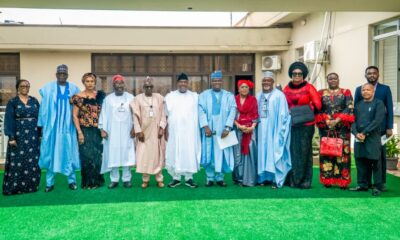

FG Inaugurates New NSIWC Board, Tasks Members on Fair Wages, Productivity
ShareBy David Torough, Abuja The Federal Government has inaugurated a new Board of the National Salaries, Incomes and Wages Commission...


Nigeria’s Celebrity Golfer, Leo Edochie Shines at London’s Shire
ShareBy Julius Tambaya, Abuja Chief Leo Edochie, Nigeria’s number one celebrity golfer turned heads with a jaw-dropping appearance at The...
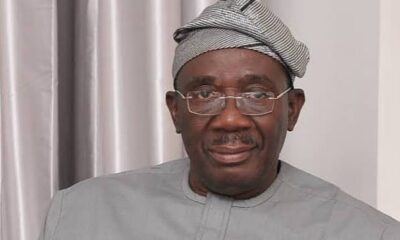

Fadahunsi, Osun and the Price of Political Rhetoric
ShareBy Willie Adegbite A video clip has placed Senator Francis Fadahunsi at the centre of a political firestorm. In it,...
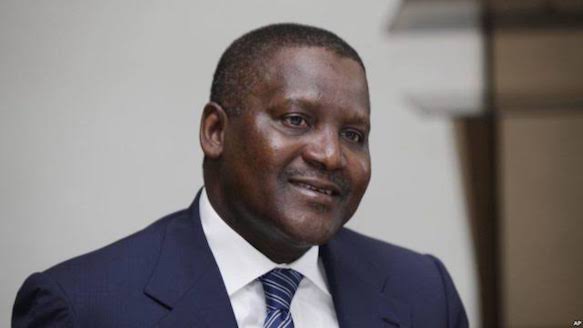
What Investing in Africa Means to Aliko Dangote
ShareBy Ehi Braimah When conversations turn to investment in Africa, one name consistently dominates the discussion: Aliko Dangote. Over the...
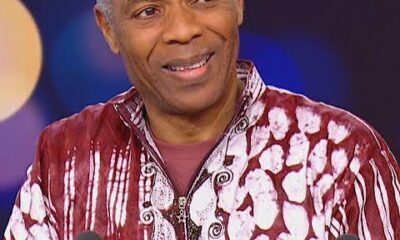

It’s not Tinubu’, Femi Kuti Reveals Nigeria’s Real Problem
ShareAfrobeat legend, Femi Kuti has claimed that President Bola Tinubu is not the major problem facing Nigeria. He argued that...


Brain Jotter Cries out after Harassment by Lagos Touts
ShareNigerian content creator, Brain Jotter, has cried out on social media after being harassed by Lagos touts, popularly known as...